

Updated

Bird guides

How long should training sessions be?

Bird training sessions should usually be short: often one to five minutes, or even less for a new, scared, young, or easily distracted bird. End while the bird is still interested, not after it quits.

The right session length is the one that keeps the bird eager to train again.

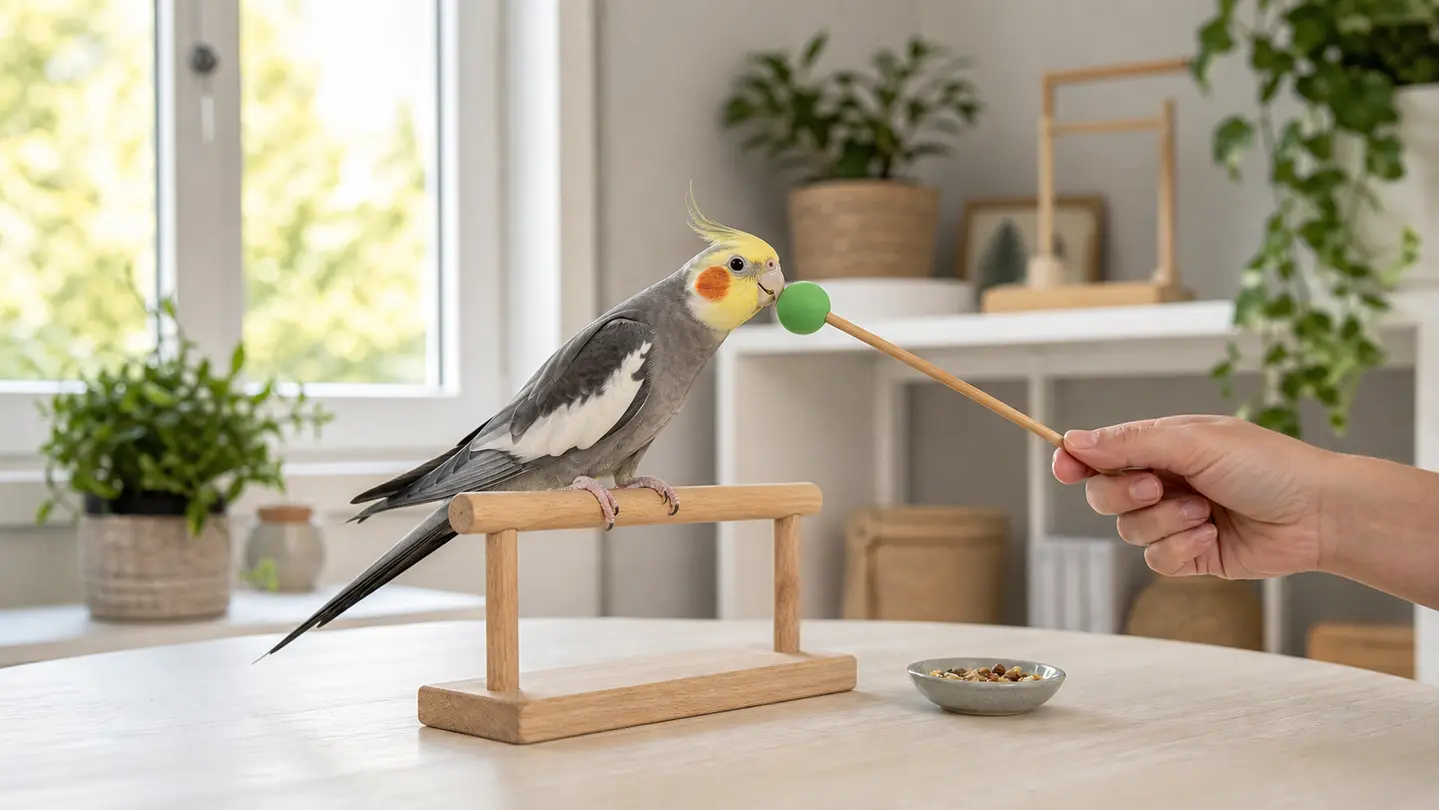
Cockatiel touching a target stick on a tabletop training perch with tiny treats nearby.

Handling and Training

Answer first

Bird training sessions should usually be short: often one to five minutes, or even less for a new, scared, young, or easily distracted bird. End while the bird is still interested, not after it quits.

What to check before you act

Short

One to five minutes is often enough.

Interest

Participation matters most.

Reward

Tiny and valuable.

Skill

Hard tasks need shorter asks.

Ending

Stop after success.

Notes

Track what works.

01

How to act on this

Do a few clean repetitions, reward well, and stop on an easy win. Several short sessions beat one long session.

02

Watch the bird, not the clock

If the bird looks away, walks off, starts biting, freezes, screams, or stops taking rewards, the session is already too long.

03

Match the skill

Recall, step-up, carrier work, and taming all need different pacing. Harder or scarier skills need shorter sessions.

04

Keep rewards tiny

Small rewards let you train without filling the bird up or turning the session into a meal.

05

Best ending

Stop when the bird just succeeded and still wants more.

Before you decide

  • Is the bird still choosing to participate?
  • Are rewards still valuable?
  • Did you get a clean repetition?
  • Is the bird showing stress or distraction?
  • Can you stop before the behavior falls apart?

Next best moves

  • Start with one-minute sessions for new or nervous birds.
  • Train several times a day only if the bird stays eager.
  • Record what works so sessions get cleaner, not longer.

Common questions

Can I train every day?

Yes, if sessions stay short, positive, and the bird remains healthy and interested.

How many repetitions should I do?

A few good reps are enough. Quality matters more than count.

What if the bird flies away?

Make the task easier, shorten the session, and improve the reward or setup.

Can sessions be too short?

Rarely. Ending early on success is usually better than pushing too long.

Useful setup pieces

Use these after the care plan is clear. Match size and materials to the bird you actually keep.

Affiliate links: Furball Cove may earn from qualifying purchases at no extra cost to you.

Tabletop bird training perch with a cockatiel standing on the perch beside small training treats.

Training perch

Gives short trust-building sessions a low, predictable place to happen.

Open blank bird care notebook with pencil, small supplies, and a cockatiel on a tabletop stand.

Care notebook

Tracks food, weight, sleep, droppings, behavior, and vet questions in one place.

Bird foraging tray with covered cups, pellets, greens, and a curious budgie beside the puzzle.

Foraging toy

Turns part of the meal into a simple job instead of a full bowl of boredom.

Airtight bird food storage containers with scoop, blank labels, and a canary perched nearby.

Food storage

Keeps pellets and seed portions sealed, labeled, dry, and separate from treats.

References