

Updated

Bird guides

Should birds sit on shoulders?

Shoulder time should be earned, not automatic. A bird should sit on shoulders only if it is calm, trained to step down, not biting faces or ears, and safe around hair, jewelry, glasses, and household hazards.

A shoulder gives a bird access to your face and less control for you.

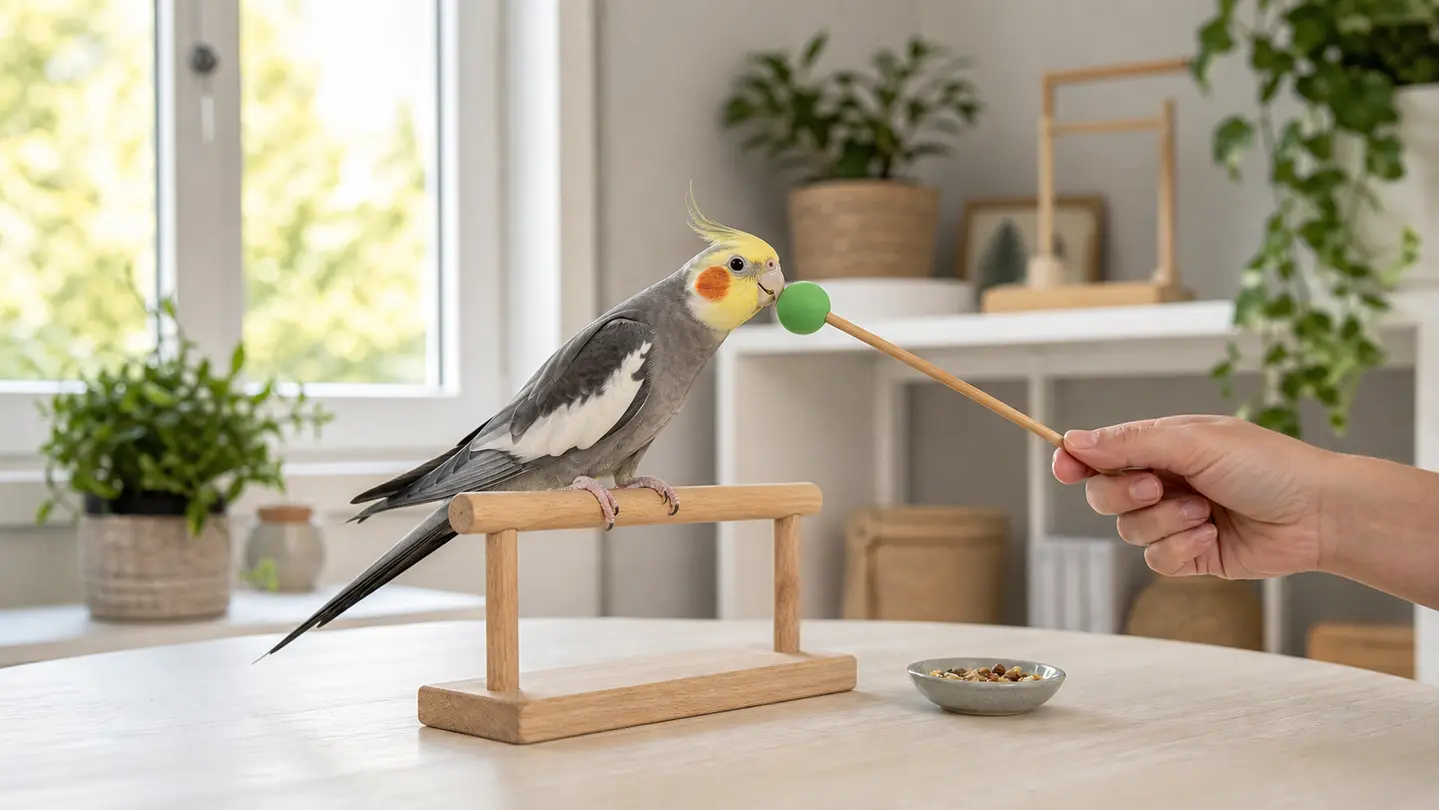
Cockatiel touching a target stick on a tabletop training perch with tiny treats nearby.

Handling and Training

Answer first

Shoulder time should be earned, not automatic. A bird should sit on shoulders only if it is calm, trained to step down, not biting faces or ears, and safe around hair, jewelry, glasses, and household hazards.

What to check before you act

Reliability

Step-down must work.

Face risk

Eyes and ears are vulnerable.

Mood

Hormones and fear change safety.

Access

Shoulders are hard to manage.

Room

Hazards still matter.

Kids

Be much more conservative.

01

How to act on this

Keep new, bitey, hormonal, fearful, or untrained birds off shoulders until step-up, step-down, and stationing are reliable.

02

Face safety matters

A startled bird can bite lips, ears, eyes, glasses, jewelry, or hair. Even a small bird can hurt a person near the face.

03

Teach step down first

The bird should leave the shoulder calmly when asked. If it runs behind your neck or bites hands, shoulder access is too much.

04

Watch context

Doors, kitchens, dogs, cats, guests, and sudden noises make shoulder time riskier because the bird is close to your face and harder to manage.

05

Better default

Use hands, perches, and play stands until the bird is reliable enough for shoulder access.

Before you decide

  • Does the bird step down calmly every time?
  • Has the bird bitten faces, ears, or hands recently?
  • Is the bird hormonal, scared, or overstimulated?
  • Are hair, jewelry, glasses, and cords controlled?
  • Is the room safe if the bird launches suddenly?

Next best moves

  • Teach step-down before allowing shoulder time.
  • Keep shoulder sessions short and calm.
  • Remove shoulder access after biting, guarding, or refusal to step down.

Common questions

Are shoulders bad for all birds?

No, but they are not safe for every bird or every situation.

Why does my bird bite when I remove it?

The bird may be guarding the shoulder, avoiding hands, or overstimulated.

Can children have birds on shoulders?

Usually no. Face injury and supervision risks are higher.

How do I get a bird off my shoulder?

Train step-down to a perch or hand before shoulder access becomes a habit.

Useful setup pieces

Use these after the care plan is clear. Match size and materials to the bird you actually keep.

Affiliate links: Furball Cove may earn from qualifying purchases at no extra cost to you.

Tabletop bird training perch with a cockatiel standing on the perch beside small training treats.

Training perch

Gives short trust-building sessions a low, predictable place to happen.

Open blank bird care notebook with pencil, small supplies, and a cockatiel on a tabletop stand.

Care notebook

Tracks food, weight, sleep, droppings, behavior, and vet questions in one place.

Hard-sided bird carrier with towel liner, stainless bowl, and a cockatiel calmly beside the open carrier.

Hard-sided bird carrier

Keeps transport secure for adoption day, avian-vet visits, and emergencies.

Bird foraging tray with covered cups, pellets, greens, and a curious budgie beside the puzzle.

Foraging toy

Turns part of the meal into a simple job instead of a full bowl of boredom.

References