

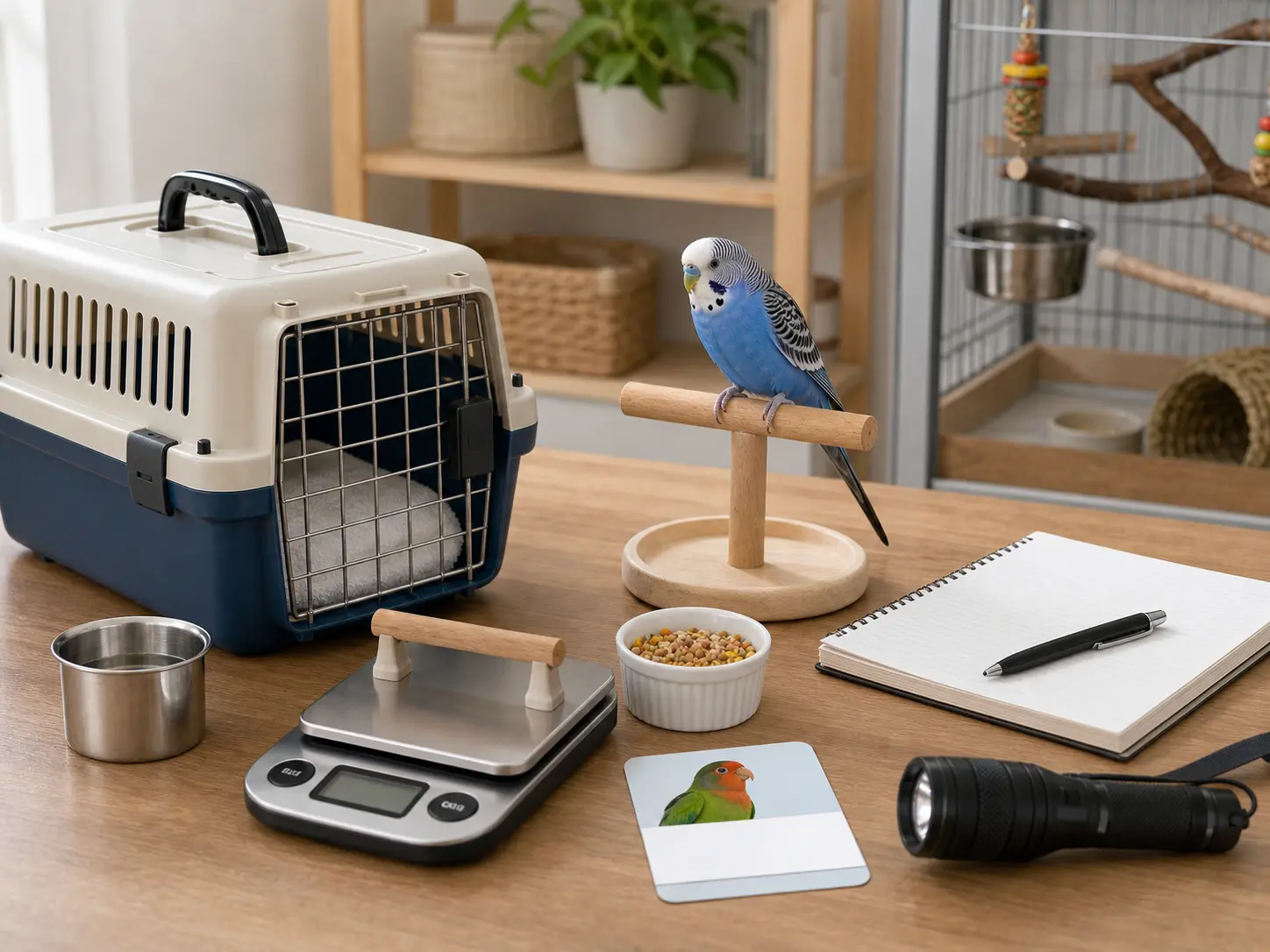
Baseline
Know normal before illness.
Updated
Bird guides
Yes. Pet birds should have regular wellness visits with an avian vet, often yearly for healthy birds and more often for young, older, sick, breeding, or medically managed birds. Do not wait until a bird looks sick.
A wellness visit gives you a baseline before there is a crisis.

Health and Vet Care
Yes. Pet birds should have regular wellness visits with an avian vet, often yearly for healthy birds and more often for young, older, sick, breeding, or medically managed birds. Do not wait until a bird looks sick.
Build the full health routine.
Use the hub for nearby questions after this answer.
Use supplies after the care plan is clear, not before.
Pick gear that makes the daily routine easier to repeat.
Know normal before illness.
Bird experience matters.
Bring useful notes.
Needs an intake exam.
Some birds need more visits.
Know where to go.
Use a yearly avian-vet visit to review weight, body condition, diet, droppings, behavior, nails, beak, feathers, and home setup.
A bird can look normal while losing weight, changing droppings, or developing early problems.
Recent weight, diet, photos of droppings, medication history, and behavior changes make the visit more useful.
Chronic illness, egg laying, older age, new adoption, feather damage, or diet transition may need closer follow-up.
Find the avian vet before the emergency, not during it.
Birds hide illness, and a baseline helps catch changes earlier.
Yes. A new bird should have an avian-vet intake exam and quarantine plan.
Some can help, but avian experience matters for bird exams and diagnostics.
Ask about diet, weight, droppings, sleep, nails, beak, emergency signs, and household hazards.
Use these after the care plan is clear. Match size and materials to the bird you actually keep.
Affiliate links: Furball Cove may earn from qualifying purchases at no extra cost to you.

Keeps transport secure for adoption day, avian-vet visits, and emergencies.

Tracks food, weight, sleep, droppings, behavior, and vet questions in one place.

Makes weight checks easier before small appetite changes become big problems.

Plain paper makes droppings easier to monitor without scented products.