

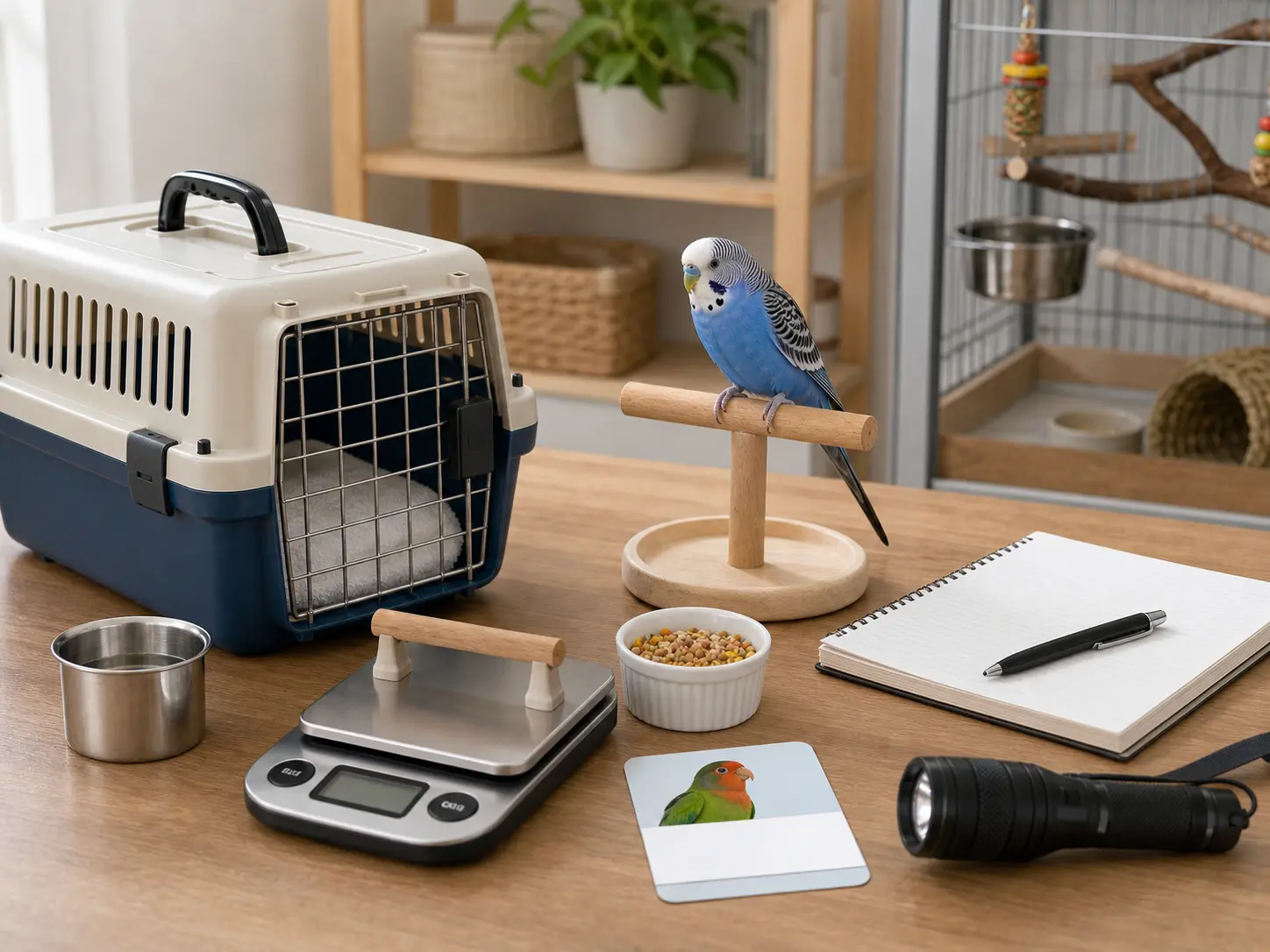
Hard-sided, ventilated, clean, and sized so the bird is protected during the ride.
Updated
Bird guides
Bird Emergency Kit
A good bird emergency kit helps you act quickly: put your bird in a safe carrier, call an avian vet, and bring notes that make the visit easier.
Keep the carrier, paper liners, towel, scale, vet contacts, and care notes in one place so a stressful moment does not turn into a scramble.

Start here
The kit has one job: get your bird to expert help with less confusion.
Set up the carrier and notes before there is a problem. During an emergency, the best kit keeps the bird contained, keeps the facts clear, and keeps you from improvising.
Normal weight, diet, symptoms, timing, possible exposure, and medication details.
White paper makes droppings, bleeding, food, and water changes easier to see.
Daytime clinic, after-hours option, and poison-help information where everyone can find them.
Leave these out
- Medicine that was not prescribed for this bird.
- Feeding tools you do not know how to use.
- Heat pads or lamps unless the clinic specifically recommends one.
- Supplements, powders, or online fixes instead of a call.
Emergency? Call an avian vet now
Breathing trouble, heavy bleeding, collapse, seizure-like activity, egg trouble, severe injury, toxin exposure, burns, or a bird that will not eat should not wait for internet research.
Start with safe transport
Use a hard-sided ventilated carrier with a plain paper liner or towel on the bottom. Keep it clean, easy to reach, and ready before the first emergency.
Keep the ride calm and comfortable
A sick bird usually needs a quiet, draft-free carrier and as little handling as possible. Do not add heat unless the clinic tells you how; birds can overheat fast.
Bring useful facts, not guesses
Write down the species, age, usual weight, current weight if you can get it safely, what changed, when it started, food eaten, droppings, breathing, possible exposure, and any medication history.
Use paper liners for clues
Plain white paper lets you see droppings, blood, food, and water changes. Swap the liner after taking a photo if the vet asks you to track what is happening.
Pack a normal-food sample
Bring a small sealed sample or photo of the bird's usual pellets, seed mix, treats, supplements, and anything the bird may have chewed, breathed, touched, or eaten.
What not to do
Do not give human medications, force food or water, delay during breathing trouble or toxin exposure, or add heat without a safe cool area unless an avian vet tells you to.
Kit check
- The small carrier is clean, secure, ventilated, and easy to grab.
- Avian-vet, after-hours clinic, and poison-help contacts are current.
- The notebook has normal weight, diet, medication, and recent concern notes.
- Plain paper liners, a clean towel, and cleaning cloths are packed.
- Small bags are ready for a recent food sample or product packaging/photo after a toxin exposure.
- The carrier can be kept quiet and dim during transport if the clinic advises it.
- Everyone in the home knows where the kit is kept.
Use it this way
- Build the kit before you need it.
- Practice calm carrier time on normal days.
- Call the avian vet as soon as breathing, bleeding, weakness, egg trouble, toxin exposure, or not eating is involved.
Emergency kit pieces
These supplies do not treat the bird. They help you transport safely, track changes, and give the vet useful details.
Affiliate links: Furball Cove may earn from qualifying purchases at no extra cost to you.

Hard-sided bird carrier
Keeps transport secure for adoption day, avian-vet visits, and emergencies.

Paper cage liners
Plain paper makes droppings easier to monitor without scented products.

Digital gram scale
Makes weight checks easier before small appetite changes become big problems.

Care notebook
Tracks food, weight, sleep, droppings, behavior, and vet questions in one place.

Bird-safe cleaning cloths
Keeps daily cage wipe-downs simple without fragrance or harsh residue.

Food storage
Keeps pellets and seed portions sealed, labeled, dry, and separate from treats.
Emergency kit questions
What belongs in a bird emergency kit?
Keep a hard-sided carrier, plain paper liners, small towel, gram scale, care notebook, vet contacts, food sample bags, cleaning cloths, and the bird's normal diet details together.
Should I keep medicine in the kit?
Only keep medicine your avian vet prescribed for this bird, with current instructions. Anything else belongs outside the kit.
How should I transport a sick bird?
Use a secure carrier with good ventilation, a stable floor, and minimal stress. Keep the ride quiet and call the clinic before you leave so they can tell you what to bring.
How often should I update the kit?
Check it every month or two, and any time your bird's diet, weight, medication, vet clinic, or emergency contact details change.


