

Breathing
Effort is urgent.
Updated
Bird guides
A bird may be sick if it is fluffed for long periods, quiet, weak, breathing harder, tail bobbing, eating less, losing weight, vomiting, bleeding, sitting low, sleeping more, or producing unusual droppings. Birds hide illness, so subtle changes matter.
With birds, small changes can be the early warning.

Health and Vet Care
A bird may be sick if it is fluffed for long periods, quiet, weak, breathing harder, tail bobbing, eating less, losing weight, vomiting, bleeding, sitting low, sleeping more, or producing unusual droppings. Birds hide illness, so subtle changes matter.
Use the full health guide for warning signs.
Use the hub for nearby questions after this answer.
Use supplies after the care plan is clear, not before.
Pick gear that makes the daily routine easier to repeat.
Effort is urgent.
Not eating is serious.
Small losses matter.
Changes tell a story.
Long fluffing or floor sitting matters.
Call early.
Compare today's bird with its normal routine: appetite, weight, droppings, posture, voice, balance, breathing, and energy.
Tail bobbing, open-mouth breathing, wheezing, clicking, or effort at rest should be treated as urgent avian-vet concerns.
A bird that is not eating, losing weight, or only pretending to eat around seed hulls can become fragile quickly.
Hiding, sudden tameness, irritability, falls, sitting on the cage floor, or refusing favorite activities can all be health clues.
If you are wondering whether a bird is sick, call an avian vet sooner rather than hoping it passes.
Yes. Many birds hide weakness, so early changes deserve attention.
No, but prolonged fluffing with quiet behavior, appetite change, or breathing signs is concerning.
Yes. Major changes in color, amount, wetness, blood, or frequency can matter.
For breathing trouble, bleeding, not eating, weakness, injury, or egg-binding signs, get urgent advice.
Use these after the care plan is clear. Match size and materials to the bird you actually keep.
Affiliate links: Furball Cove may earn from qualifying purchases at no extra cost to you.

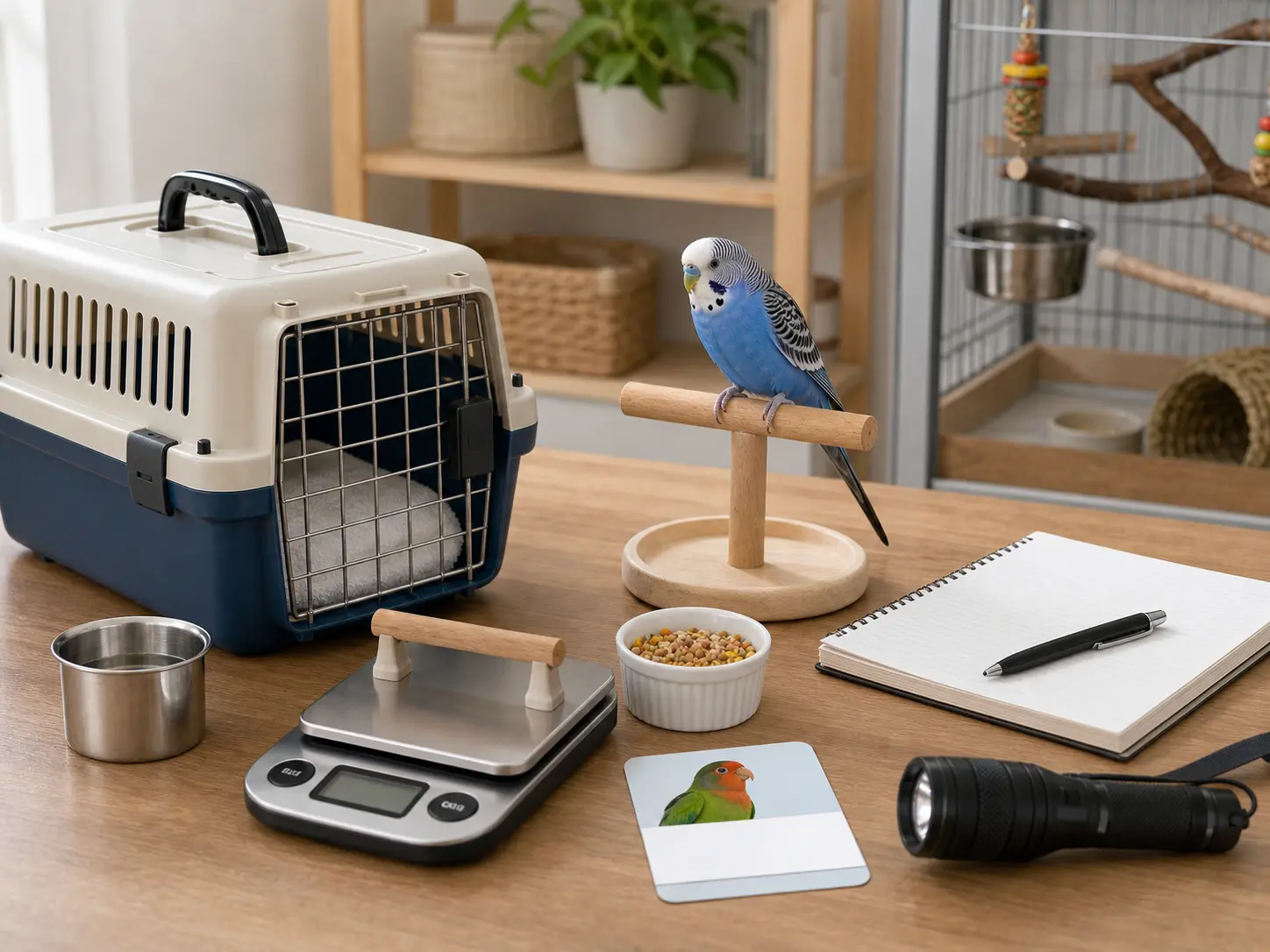
Makes weight checks easier before small appetite changes become big problems.

Tracks food, weight, sleep, droppings, behavior, and vet questions in one place.

Keeps transport secure for adoption day, avian-vet visits, and emergencies.

Plain paper makes droppings easier to monitor without scented products.