

Eating
Appetite should stay normal.
Updated
Bird guides
If your bird lays an egg, stay calm, make sure she is bright, eating, perching, and passing droppings, and call an avian vet if she strains, sits low, looks weak, breathes hard, has a swollen abdomen, or keeps laying repeatedly.
Egg laying can happen without a male, but it still deserves careful monitoring.

Health and Vet Care
If your bird lays an egg, stay calm, make sure she is bright, eating, perching, and passing droppings, and call an avian vet if she strains, sits low, looks weak, breathes hard, has a swollen abdomen, or keeps laying repeatedly.
Reduce nesting and courtship triggers.
Use the hub for nearby questions after this answer.
Use supplies after the care plan is clear, not before.
Pick gear that makes the daily routine easier to repeat.
Appetite should stay normal.
Output should continue.
Urgent warning sign.
Effort raises concern.
Remove nesty cues.
Needs a plan.
Do not panic and do not keep handling her unnecessarily. Check her posture, appetite, droppings, breathing, and whether another egg seems stuck.
Straining, sitting on the cage floor, weakness, fluffed posture, tail bobbing, swollen belly, or not passing droppings can be urgent.
Remove nesty huts, boxes, dark cavities, and body petting. Protect sleep and review diet and calcium with an avian vet.
Repeatedly removing eggs can sometimes encourage more laying. Ask an avian vet how to manage the clutch for your species.
A hen that looks unwell around egg laying needs urgent avian care.
Yes. The eggs will not be fertile, but the health demands are real.
Do not keep removing eggs without a plan. Ask an avian vet or experienced avian professional for species-specific guidance.
It is when an egg is stuck or difficult to pass. It can be life-threatening.
Yes. Nutrition, calcium, light, sleep, nest sites, and handling can all matter.
Use these after the care plan is clear. Match size and materials to the bird you actually keep.
Affiliate links: Furball Cove may earn from qualifying purchases at no extra cost to you.

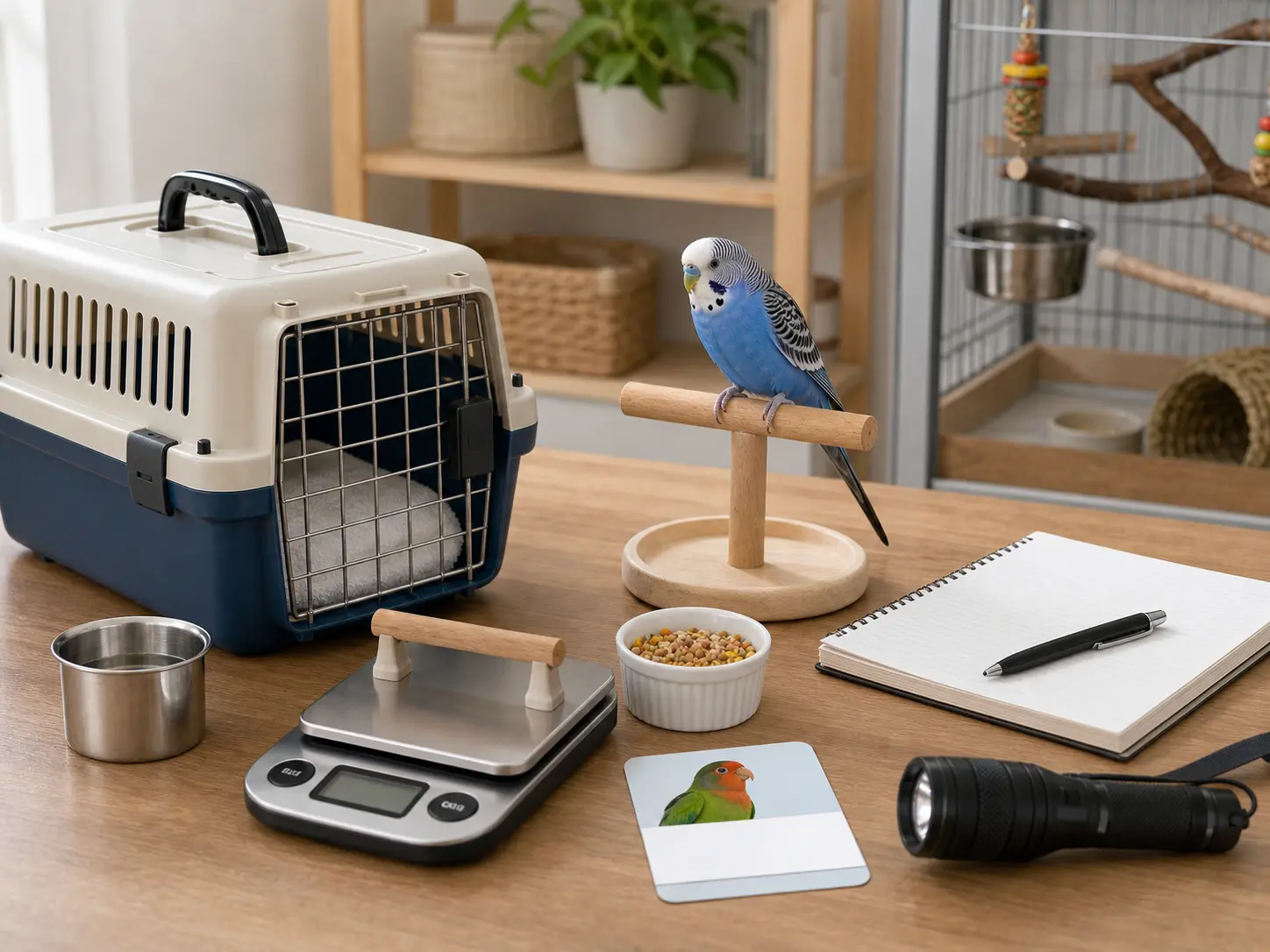
Makes weight checks easier before small appetite changes become big problems.

Tracks food, weight, sleep, droppings, behavior, and vet questions in one place.

Keeps transport secure for adoption day, avian-vet visits, and emergencies.

Keeps pellets and seed portions sealed, labeled, dry, and separate from treats.