

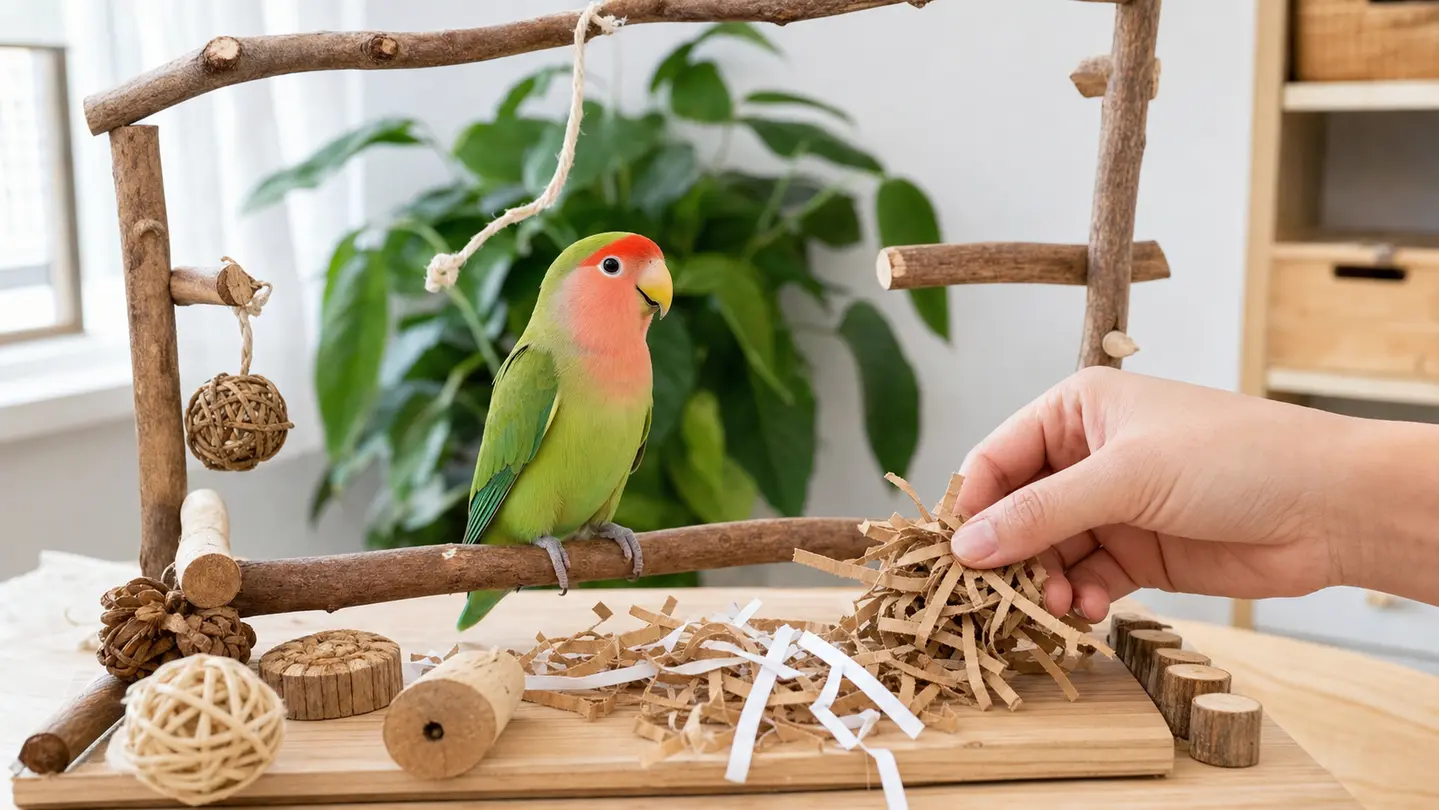
Know the common signs
Watch for nesting in dark spaces, shredding with a purpose, regurgitation, crouching, tail lifting, sudden guarding, favorite-person intensity, or new aggression around cages and toys.
Updated
Bird behavior
Hormonal behavior is normal biology, but the home routine can make it easier or harder.
Seasonal aggression, nesting, regurgitation, clinginess, egg laying, and guarding favorite spaces need calm management, not punishment or constant petting.

Watch for nesting in dark spaces, shredding with a purpose, regurgitation, crouching, tail lifting, sudden guarding, favorite-person intensity, or new aggression around cages and toys.
Dark boxes, fabric huts, drawers, under-furniture spaces, paper piles, and cozy enclosed areas can push some birds toward nesting behavior. Keep enrichment open and easy to inspect.
For many parrots, stroking the back, wings, tail base, or belly can be sexual stimulation. Keep affection friendly and brief, then redirect to training or play.
Long bright evenings, irregular sleep, and high household excitement can make seasonal behavior harder. A predictable dark, quiet sleep period helps many birds stay steadier.
Too many rich treats, warm soft foods, constant access to one favorite person, or endless shoulder time can feed the pattern. Use measured treats and reward calm independence.
Repeated egg laying, straining, fluffed posture, weakness, appetite change, or major behavior changes deserve avian-vet help. Do not try to solve possible reproductive or health problems with training alone.
Use supplies as structure, not shortcuts. The goal is to make calm choices easier for the bird.
Affiliate links: Furball Cove may earn from qualifying purchases at no extra cost to you.

Plain bird-safe chewing work gives busy beaks something useful to do.

Turns part of the meal into a simple job instead of a full bowl of boredom.

Gives short trust-building sessions a low, predictable place to happen.

Tracks food, weight, sleep, droppings, behavior, and vet questions in one place.
No. It is normal biology. Your job is to avoid making the triggers stronger and to keep the bird safe.
Not for a typical pet routine unless you are working with an experienced avian professional for a specific breeding plan.
Seasonal hormones, sleep, favorite-person bonding, pain, or learned patterns can all contribute. Reduce triggers and check health if the change is sudden.