

Vet input
Ask before UVB.
Updated
Bird guides
Birds do not automatically need UV lights, and the wrong bulb or setup can be risky. Natural daylight, safe diet, and avian-vet guidance matter more than buying a light because the box says full spectrum.
Lighting can help routine, but it is not a shortcut for diet or outdoor sun.

Supplies
Birds do not automatically need UV lights, and the wrong bulb or setup can be risky. Natural daylight, safe diet, and avian-vet guidance matter more than buying a light because the box says full spectrum.
Balance light with heat and glass safety.
Use the hub for nearby questions after this answer.
Use supplies after the care plan is clear, not before.
Pick gear that makes the daily routine easier to repeat.
Ask before UVB.
Bird can move away.
Avoid overheating.
Bulb placement matters.
Light is not nutrition.
Window sun has limits and risks.
Ask an avian vet before adding UVB lighting, especially for birds with medical issues, egg laying, eye problems, or unusual housing.
Sun through glass is not the same as unfiltered UV exposure, but direct sun through windows can still overheat a bird.
Distance, strength, heat, flicker, fixture safety, replacement schedule, and the bird's ability to move away all matter.
UV lighting does not fix a poor diet, calcium problem, or lack of veterinary care.
Use safe daylight routines and vet-guided lighting instead of guessing with specialty bulbs.
Glass blocks much UVB, but window sun can still create dangerous heat.
The term is not enough. Bulb type, output, distance, and safety matter.
Poor setup can cause overheating, eye issues, burns, stress, or electrical hazards.
They need healthy light routines, but exact UV needs should be discussed with an avian vet.
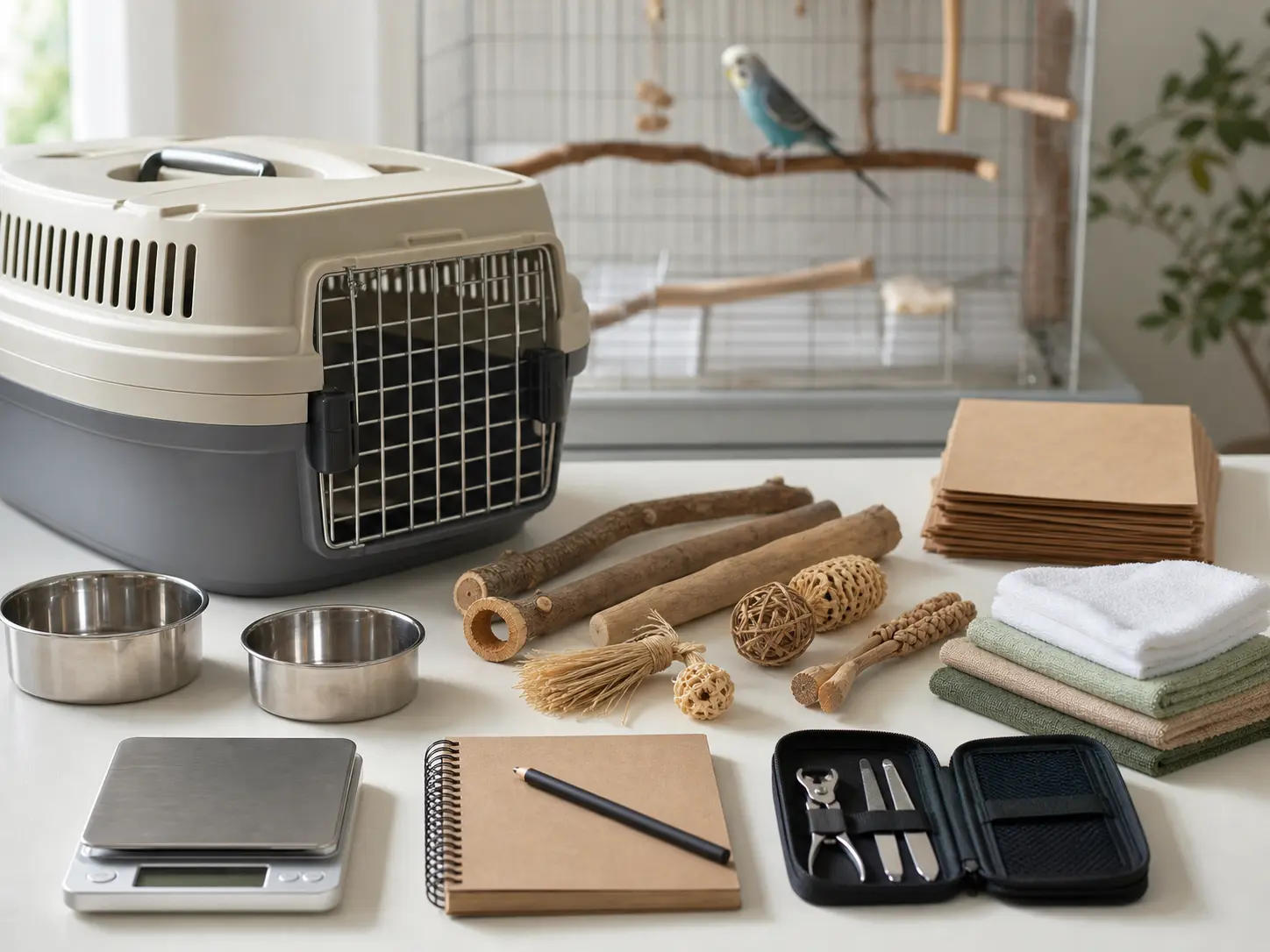
Use these after the care plan is clear. Match size and materials to the bird you actually keep.
Affiliate links: Furball Cove may earn from qualifying purchases at no extra cost to you.

Tracks food, weight, sleep, droppings, behavior, and vet questions in one place.

Start with safe space, ventilation, bar spacing, and room for natural perches.

Keeps transport secure for adoption day, avian-vet visits, and emergencies.

Makes weight checks easier before small appetite changes become big problems.