

Sun
Direct heat can become dangerous.
Updated
Bird guides
Birds can live near a window only when the spot is protected from direct hot sun, cold drafts, sudden scares, predator views, and glass collisions during out-of-cage time. A bright room is useful; an unsafe window spot is not.
Window placement needs more thought than simply giving the bird a view.

Cages and Setup
Birds can live near a window only when the spot is protected from direct hot sun, cold drafts, sudden scares, predator views, and glass collisions during out-of-cage time. A bright room is useful; an unsafe window spot is not.
Choose cage placement for light, sleep, and safety.
Use the hub for nearby questions after this answer.
Use supplies after the care plan is clear, not before.
Pick gear that makes the daily routine easier to repeat.
Direct heat can become dangerous.
Cold air at perch height matters.
The bird needs a cooler option.
Views can scare as well as entertain.
Flight time needs collision prevention.
A cage spot should still feel secure.
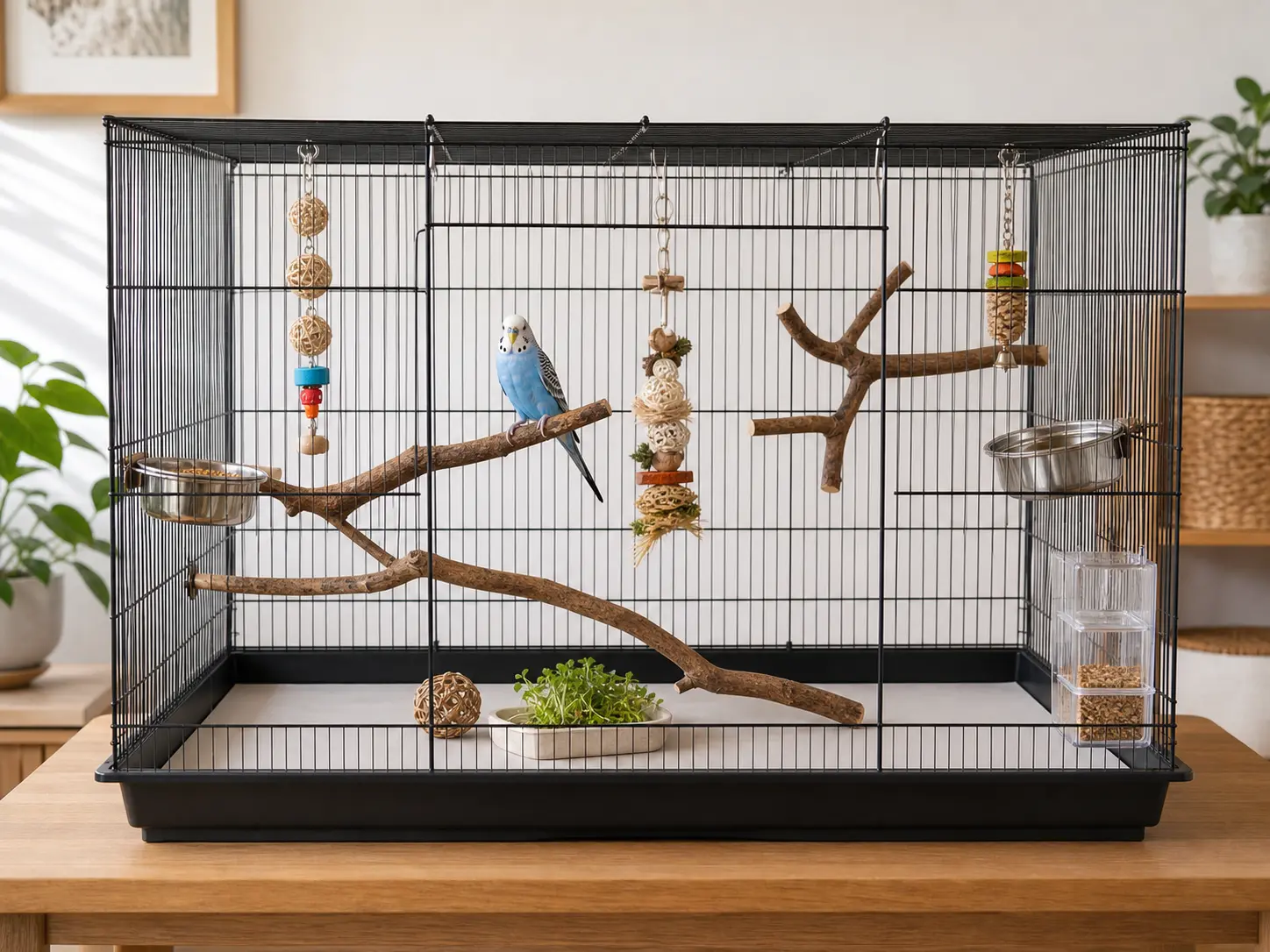
A cage can be near natural light if the bird has shade, stable temperature, clean air, and a secure side of the cage. It should not bake in sun or sit in a draft.
Glass can create hot spots, cold drafts, and fast temperature swings. Check the cage at the bird's perch height, not from across the room.
Outdoor cats, hawks, crows, traffic, reflections, shadows, and window washers can startle birds. A scared bird may crash or stop relaxing.
When the bird is out, cover or mark glass clearly, close blinds as needed, and prevent panic flights into windows.
Bright, indirect light with shade and no drafts is useful. Direct heat, predator stress, and collision risk are not.
Natural light can help routine, but direct hot sun through glass can overheat a bird quickly.
Avoid cold drafts and temperature swings. Check where the bird actually perches.
Outdoor animals, shadows, reflections, traffic, or sudden movement may look threatening.
Usually no. Give the cage some distance, shade, and a protected side so the bird can relax.
Use these after the care plan is clear. Match size and materials to the bird you actually keep.
Affiliate links: Furball Cove may earn from qualifying purchases at no extra cost to you.

Start with safe space, ventilation, bar spacing, and room for natural perches.

Varied perch diameters support normal feet better than one smooth dowel.

Tracks food, weight, sleep, droppings, behavior, and vet questions in one place.

Keeps transport secure for adoption day, avian-vet visits, and emergencies.