

Updated

Bird guides

What carrier is best for birds?

The best bird carrier is secure, hard-sided or otherwise escape-resistant, well ventilated, easy to clean, correctly sized, and fitted with safe footing. It should be ready for adoption day, vet visits, travel, and emergencies.

A carrier is not optional gear. It is part of basic bird safety.

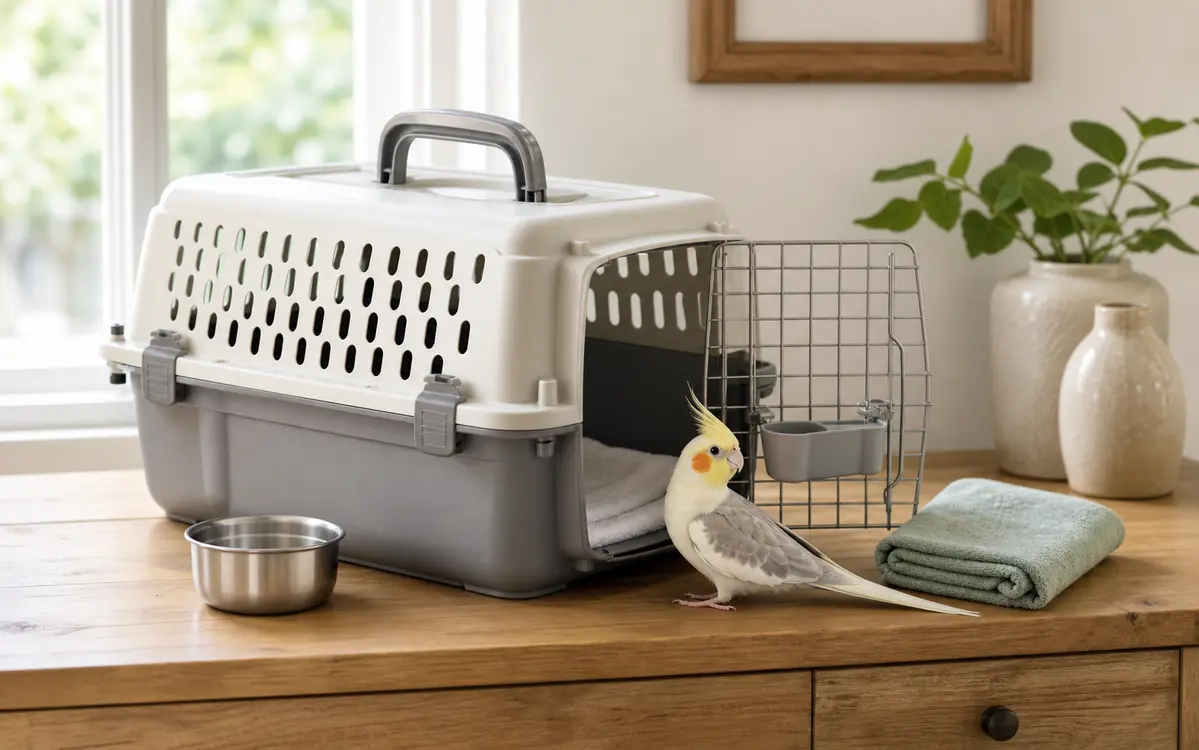
Hard-sided bird carrier with towel liner, stainless bowl, and a cockatiel calmly beside the open carrier.

Supplies

Answer first

The best bird carrier is secure, hard-sided or otherwise escape-resistant, well ventilated, easy to clean, correctly sized, and fitted with safe footing. It should be ready for adoption day, vet visits, travel, and emergencies.

What to check before you act

Secure

No escape points.

Ventilated

Air without overheating.

Sized

Stable but not cramped.

Footing

Perch or liner by need.

Washable

Clean after use.

Familiar

Practice before emergencies.

01

How to act on this

Choose a carrier the bird cannot chew open, slip out of, overheat in, or slide around inside.

02

Size matters

The bird should be able to stand naturally, turn, and stay stable without being tossed around in a huge empty box.

03

Footing matters

Use a safe perch only if the bird can balance during travel; otherwise towel or paper footing may be safer for some birds.

04

Train before stress

Let the bird see and enter the carrier on normal days so vet trips are not the only carrier experience.

05

Best carrier

Secure, simple, ventilated, washable, and familiar.

Before you decide

  • Can the bird escape or chew out?
  • Is ventilation good without drafts or overheating?
  • Is footing secure for this bird?
  • Can it be cleaned and dried easily?
  • Has the bird practiced entering it?

Next best moves

  • Buy the carrier before the bird comes home.
  • Practice carrier entry with treats and short calm sessions.
  • Keep clean liners and vet notes with the carrier.

Common questions

Can I use a cardboard box?

It is not a good normal carrier. Birds can chew, escape, or shift around, and cleaning is poor.

Should a carrier have a perch?

Sometimes. It depends on bird size, balance, trip length, and injury risk.

Can I use a travel cage?

Yes if it is secure, correctly sized, ventilated, and easy to carry safely.

How big should it be?

Large enough for natural posture, small enough to keep the bird stable during movement.

Useful setup pieces

Use these after the care plan is clear. Match size and materials to the bird you actually keep.

Affiliate links: Furball Cove may earn from qualifying purchases at no extra cost to you.

Hard-sided bird carrier with towel liner, stainless bowl, and a cockatiel calmly beside the open carrier.

Hard-sided bird carrier

Keeps transport secure for adoption day, avian-vet visits, and emergencies.

Plain paper cage liners stacked beside a clean removable cage tray and a small finch on a nearby stand.

Paper cage liners

Plain paper makes droppings easier to monitor without scented products.

Open blank bird care notebook with pencil, small supplies, and a cockatiel on a tabletop stand.

Care notebook

Tracks food, weight, sleep, droppings, behavior, and vet questions in one place.

Tabletop bird training perch with a cockatiel standing on the perch beside small training treats.

Training perch

Gives short trust-building sessions a low, predictable place to happen.

References