

Updated

Bird guides

What should I buy for foraging?

Buy simple, inspectable foraging supplies first: a forage tray, paper cups, untreated paper, bird-safe shredding material, food skewers where appropriate, and puzzle feeders sized for your bird. Start easy so the bird succeeds.

Foraging works best when it is simple enough for the bird to use today.

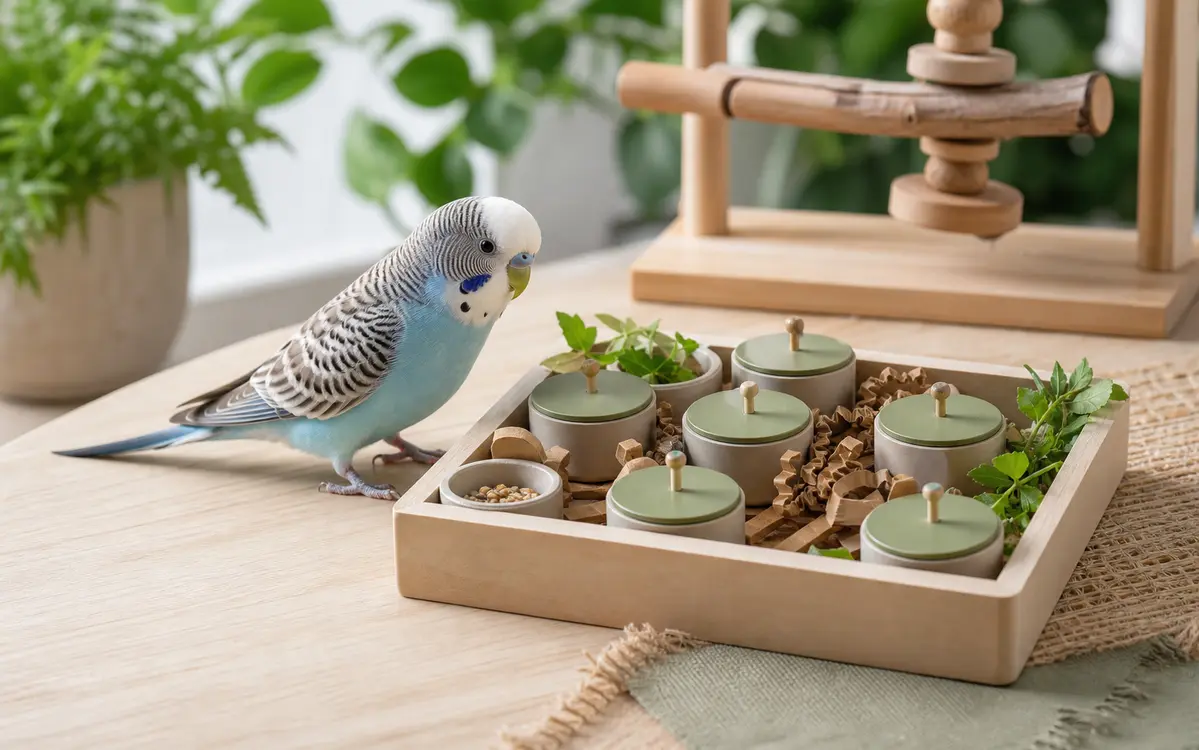
Bird foraging tray with covered cups, pellets, greens, and a curious budgie beside the puzzle.

Supplies

Answer first

Buy simple, inspectable foraging supplies first: a forage tray, paper cups, untreated paper, bird-safe shredding material, food skewers where appropriate, and puzzle feeders sized for your bird. Start easy so the bird succeeds.

What to check before you act

Easy first

Let the bird win.

Material

No unsafe fibers or glue.

Size

Match the beak.

Measured

Use diet, not endless treats.

Cleanable

Food toys get dirty.

Progress

Increase difficulty slowly.

01

How to act on this

Choose one easy foraging setup and put a small part of the normal diet inside it.

02

Start with visible rewards

Hide food only slightly at first. A bird that cannot find the reward may give up or get frustrated.

03

Match the material

Use bird-safe paper, cardboard, wood, palm, stainless hardware, and washable trays. Avoid fibers, glue, staples, and tiny swallowable parts.

04

Build difficulty slowly

Move from open trays to wrapped cups, then simple puzzles, then harder work once the bird understands the game.

05

Best buy

The best foraging toy is safe, cleanable, and easy to refill with measured food.

Before you decide

  • Is the material bird-safe?
  • Can the bird find the reward?
  • Is the toy sized for the beak?
  • Can it be cleaned or replaced easily?
  • Is foraging using measured food, not endless treats?

Next best moves

  • Start with an open tray and paper-based hiding games.
  • Use part of the normal diet before adding extra treats.
  • Rotate difficulty and inspect for damage daily.

Common questions

What is the easiest foraging setup?

A shallow tray with paper and a few visible food pieces is a good start.

Can I use toilet paper rolls?

Only if the material is clean, unscented, and safe, with no glue or residue concerns.

Should treats go in every toy?

Use treats sparingly. Normal pellets, greens, or measured favorites can work.

What if my bird ignores foraging?

Make it easier and place rewards more visibly.

Useful setup pieces

Use these after the care plan is clear. Match size and materials to the bird you actually keep.

Affiliate links: Furball Cove may earn from qualifying purchases at no extra cost to you.

Bird foraging tray with covered cups, pellets, greens, and a curious budgie beside the puzzle.

Foraging toy

Turns part of the meal into a simple job instead of a full bowl of boredom.

Bird-safe chew toys made from natural wood, paper, vine, and vegetable-dyed pieces with a lovebird nearby.

Safe chew toys

Plain bird-safe chewing work gives busy beaks something useful to do.

Airtight bird food storage containers with scoop, blank labels, and a canary perched nearby.

Food storage

Keeps pellets and seed portions sealed, labeled, dry, and separate from treats.

Open blank bird care notebook with pencil, small supplies, and a cockatiel on a tabletop stand.

Care notebook

Tracks food, weight, sleep, droppings, behavior, and vet questions in one place.

References