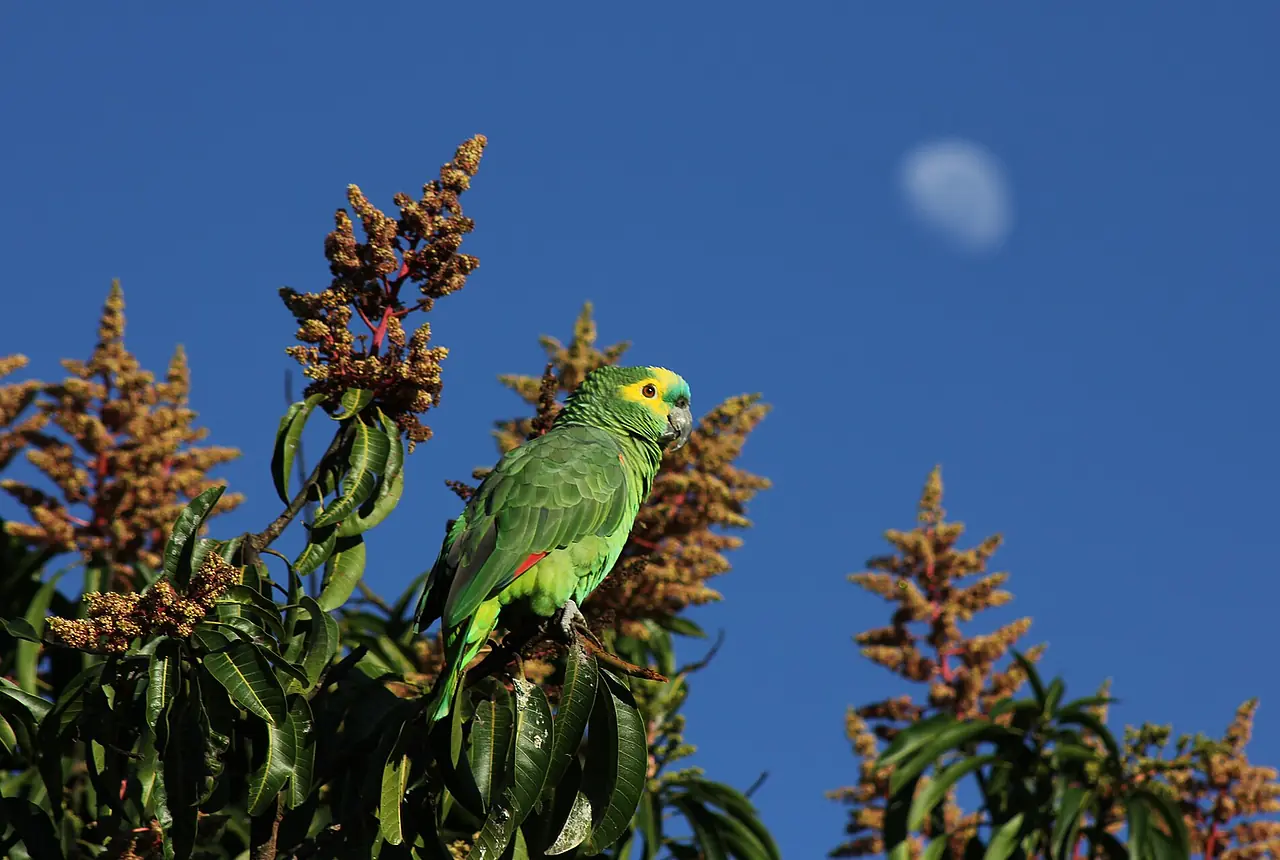
Amazon parrots are bold, vocal New World parrots known for play, expressive body language, and powerful social energy. The group contains several species, so size and temperament vary, but normal calls and excited behavior can challenge even prepared homes. They fit experienced people who can read posture, manage weight, and pause interaction before excitement becomes unsafe.
Meet the exact adult species, hear its full voice, and watch its body language before deciding that an Amazon belongs in your home.
Lifespan
40-60+ years
Noise
Often very loud, especially during excited or hormonal seasons
Daily social time
Bold, expressive, and sometimes seasonal in behavior
Space
Needs a large cage, sturdy perches, foraging, and safe out time
Handling style
Learn the bird's early signals: pinned eyes, flared tail, stiff posture, excited pacing, or leaning away
Experience
Usually not a first bird
The honest fit
Could this bird fit your life?
The match may work if…
A good Amazon home enjoys a big personality and plans around it. These parrots need large housing, daily training, weight control, and people who respect mood changes instead of pushing through them.
You are comfortable with the bird's normal sound, movement, and daily social rhythm.
You have room for the recommended enclosure, safe movement, and a practical cleaning area.
Think twice if…
The home cannot tolerate powerful calls, expensive gear, destructive chewing, daily training, and decades of care.
The routine would likely rely on snacks and handling pressure instead of training, enrichment, balanced food, and mood awareness.
The household expects instant cuddles instead of patient, choice-based trust.
The daily rhythm
A normal day with Amazon Parrots
Amazon parrots bring powerful voices, confident body language, and energetic social periods into the day. Watch posture and excitement closely, use short training sessions, and give the bird room to settle before handling becomes too intense.
The surprise with Amazons is intensity. A friendly bird can still become louder, more excited, or less tolerant during certain seasons.
Amazon parrots are a group in the genus Amazona rather than one interchangeable companion-bird species.
Common companion Amazons include blue-fronted, yellow-naped, double-yellow-headed, lilac-crowned, and orange-winged species.
Home and movement
Use a large sturdy cage, strong perches, foraging, and clear sleep routines. Make it easy to move the bird with training rather than hands in high-excitement moments.
Food and daily care
Build meals around a nutritionally balanced avian diet and vegetables, with fruit, nuts, seeds, and table-food treats kept measured. Amazon parrots can gain excess weight, so weigh the bird and use tiny training rewards rather than leaving rich foods available.
Amazon parrots combine food scatter, bath splash, and heavy chewing around their favorite stations. Make those areas washable with plain products, and protect the bird from smoke, aerosols, candles, perfume, and overheated nonstick cookware.
Social life, sound and handling
Amazon parrots can produce ringing calls, whistles, song, and speech that carry well beyond one room. Excitement often shows in both the voice and posture; protect uninterrupted sleep, but do not expect a cover or training to erase ordinary adult calling.
Learn the bird's early signals: pinned eyes, flared tail, stiff posture, excited pacing, or leaning away. Step back early and reward calm behavior.
Careful, not fearful
Health and safety considerations
Sudden changes in appetite, breathing, posture, droppings, weight or usual voice deserve a call to an avian veterinarian.
Before adoption
Before you bring one home
Listen to the bird's full voice and ask about adult seasonal behavior, diet history, weight, and how the bird is moved in and out of the cage.
Confirm what species the bird is and ask for any available health and history records.
Ask what the bird currently eats, how it uses its enclosure, and how it responds to handling.
Measure the enclosure location, doorway route, and safe out-of-cage area before committing.
Confirm an avian veterinarian is accessible before the bird comes home.