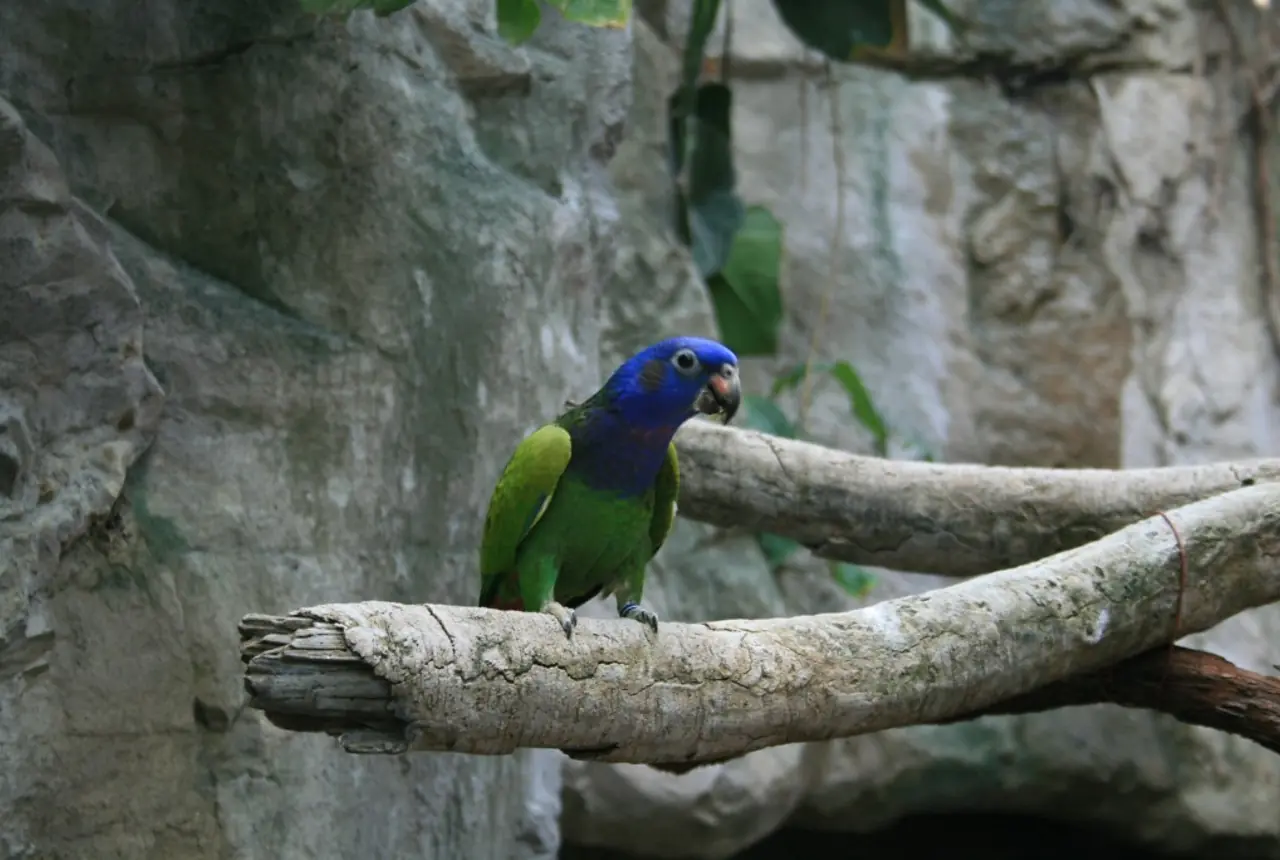
Blue-headed Pionus are medium Central and South American parrots recognized in adults by a blue head over a mostly green body. Their comparatively quiet reputation does not remove the need for space, bathing, diet care, and patient social contact. They suit steady homes that prefer subtle body language to nonstop performance.
Hear the adult bird indoors and learn its relaxed posture before assuming that quietness means comfort with handling.
Lifespan
25-40 years
Noise
Often calmer than many parrots, but not silent
Daily social time
Steady, observant, and usually less frantic than some parrots
Space
Needs a medium-large cage, perches, baths, and foraging
Handling style
Reward step-up and quiet companionship
Experience
Better for prepared homes that can support flight space, independent behavior, and species-specific care
The honest fit
Could this bird fit your life?
The match may work if…
Blue-headed Pionus fit homes that want a medium parrot with quieter habits than many Amazons, while still accepting daily care, sound, and mess.
You are comfortable with the bird's normal sound, movement, and daily social rhythm.
You have room for the recommended enclosure, safe movement, and a practical cleaning area.
Think twice if…
The room cannot fit a medium-large cage, safe placement, and a cleaning routine you can actually repeat.
The food routine would likely become seed-only, treat-led, or inconsistent instead of careful weight checks.
The household expects instant cuddles instead of patient, choice-based trust.
The daily rhythm
A normal day with Blue-headed Pionus
Blue-headed Pionus parrots often alternate quiet observation with deliberate climbing, chewing, bathing, and social contact. A steady day with room to move and step away fits them better than nonstop handling.
The surprise with blue-headed pionus is independence. A Pionus may enjoy company without wanting to be handled every minute.
Blue-headed Pionus are Pionus menstruus, medium parrots native to Central and South America.
Adults are primarily green with a distinct blue head, while juveniles begin greener and develop mature color through molts.
Home and movement
Use medium-parrot housing, safe chewing, foraging, bathing, and a calm play area. Keep the routine predictable and low drama.
Food and daily care
Use a nutritionally balanced parrot diet with suitable vegetables and measured fruit, seeds, nuts, and treats. Track weight and discuss vitamin balance with an avian veterinarian instead of diagnosing a deficiency or adding supplements from appearance alone.
Blue-headed Pionus parrots scatter fresh food and bath water around deliberate climbing and feeding stations. Use washable surfaces and plain cleaning products, with no smoke, sprays, candles, perfume, or overheated nonstick cookware in the room.
Social life, sound and handling
Blue-headed Pionus parrots are comparatively quiet and may speak in a raspy voice, but individuals still call and react to household volume. Hear the exact adult indoors and protect a dark, uninterrupted sleep period.
Reward step-up and quiet companionship. Do not mistake reserved body language for a bird that wants more pressure.
Careful, not fearful
Health and safety considerations
Compare Blue-headed Pionus as a pionus, with the final choice based on noise, space, diet, social routine, legal sourcing, and avian-vet access.
Sudden changes in appetite, breathing, posture, droppings, weight or usual voice deserve a call to an avian veterinarian.
Before adoption
Before you bring one home
Ask about hand comfort, diet, noise, bathing, and whether the bird has been confident with normal household activity.
Confirm what species the bird is and ask for any available health and history records.
Ask what the bird currently eats, how it uses its enclosure, and how it responds to handling.
Measure the enclosure location, doorway route, and safe out-of-cage area before committing.
Confirm an avian veterinarian is accessible before the bird comes home.