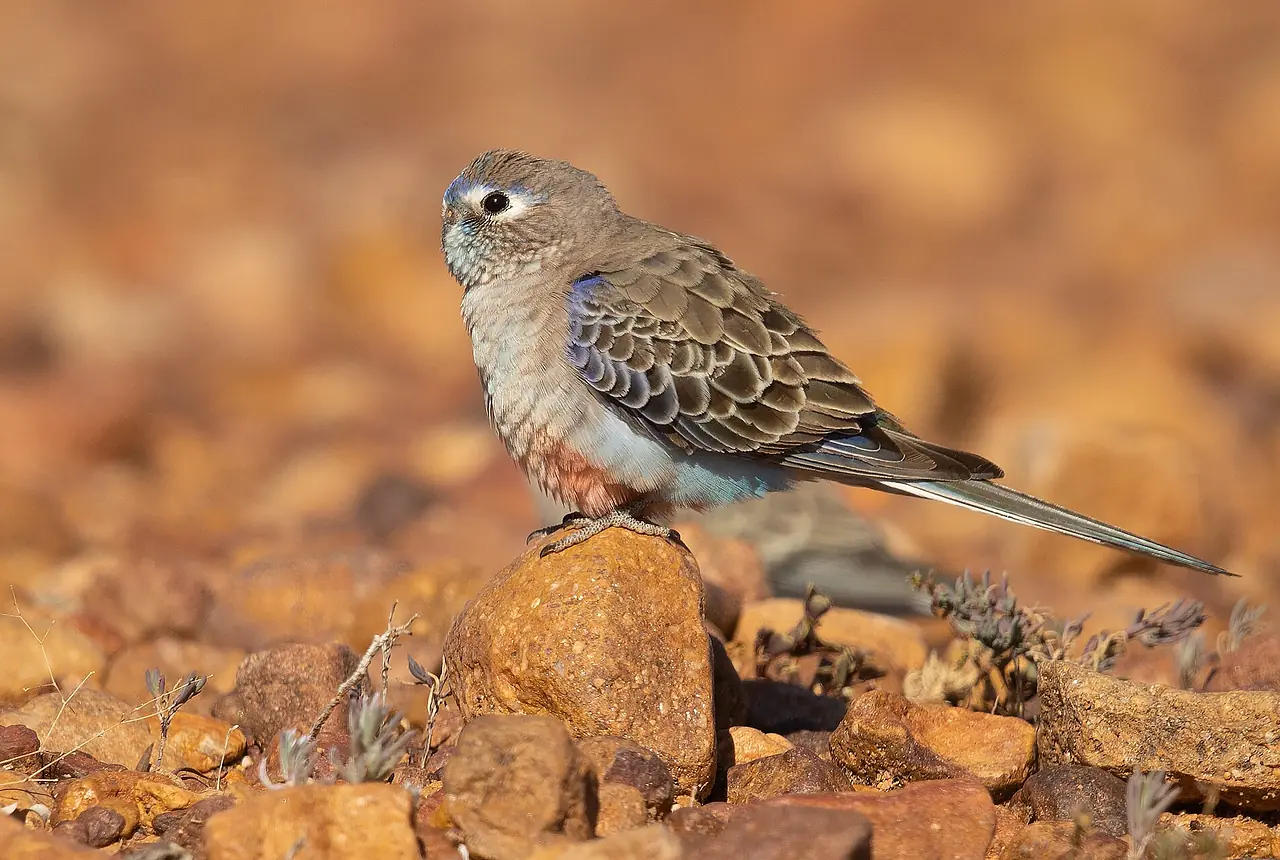
Bourke's Parakeets are small Australian grass parrots whose quiet daytime manner changes around dawn and dusk. They are usually gentler and less noisy than many companion parrots, yet they still need real flight room, compatible company, and careful observation. They suit calm homes that enjoy soft calls and movement without expecting a cuddly, high-energy parrot.
A wide flight cage, an undisturbed evening routine, and low-pressure interaction fit this crepuscular bird better than a small decorative cage.
Lifespan
Typical group range: 10-30 years
Noise
Usually active and vocal, with calls that still matter in shared walls
Daily social time
Needs daily interaction, safe flight or movement, and respectful training
Space
Needs a roomy cage with correct bar spacing, varied perches, toys, and safe out-of-cage time
Handling style
Build trust with quiet presence and predictable feeding
Experience
Better for prepared homes that can support flight space, independent behavior, and species-specific care
The honest fit
Could this bird fit your life?
The match may work if…
Bourke's fit homes that want soft activity, evening movement, and a quieter bird routine. They still need flight space, safe perches, and daily care.
You are comfortable with the bird's normal sound, movement, and daily social rhythm.
You have room for the recommended enclosure, safe movement, and a practical cleaning area.
Think twice if…
The room cannot fit a roomy small-bar cage, safe placement, and a cleaning routine you can actually repeat.
The food routine would likely become seed-only, treat-led, or inconsistent instead of pellets, greens, and measured seed.
The household expects instant cuddles instead of patient, choice-based trust.
The daily rhythm
A normal day with Bourke's Parakeets
Bourke's parakeets are often busiest around dawn and dusk, moving quickly through wide flight space while the house is quieter. Their routine suits patient observation, compatible company, bathing, and gentle interaction rather than constant hands-on play.
The surprise with bourke's parakeets is how easily a calm bird can be overwhelmed. Loud rooms, grabby handling, and chaotic cage placement work against them.
Bourke's Parakeet is the Australian grass parrot Neopsephotus bourkii, also called Bourke's Parrot.
Wild-type Bourke's combine muted brown, blue, pink, and violet tones; rosy and other color mutations can look very different.
Home and movement
Use a wide flight cage with calm placement, gentle lighting, safe perches, and uncluttered flight paths. Keep predator pets and kitchen air far away.
Food and daily care
Bourke's Parakeets eat grass seeds in the wild, but a captive diet should not be seed alone. Use a species-appropriate balanced base with suitable greens and vegetables, introduce changes slowly, and watch the bird reach each feeding station.
Bourke's Parakeets move seed hulls and fine feather debris through their flight lanes, especially during active dawn and dusk periods. Damp-wipe rather than raising dust, use plain liners, and keep smoke, sprays, fragrance, candles, and overheated nonstick cookware away.
Social life, sound and handling
Bourke's Parakeets are usually quiet through much of the day and become chirpier around sunrise and sunset. Preserve those natural active periods while giving the bird a dark, calm night rather than assuming evening movement is misbehavior.
Build trust with quiet presence and predictable feeding. Some Bourke's become hand-comfortable, but many are happiest with low-pressure interaction.
Careful, not fearful
Health and safety considerations
Compare Bourke's Parakeets as a parakeet, with the final choice based on noise, space, diet, social routine, legal sourcing, and avian-vet access.
Sudden changes in appetite, breathing, posture, droppings, weight or usual voice deserve a call to an avian veterinarian.
Before adoption
Before you bring one home
Ask whether the bird is kept alone, paired, or in an aviary, and whether it is used to people near the cage without panic.
Confirm what species the bird is and ask for any available health and history records.
Ask what the bird currently eats, how it uses its enclosure, and how it responds to handling.
Measure the enclosure location, doorway route, and safe out-of-cage area before committing.
Confirm an avian veterinarian is accessible before the bird comes home.