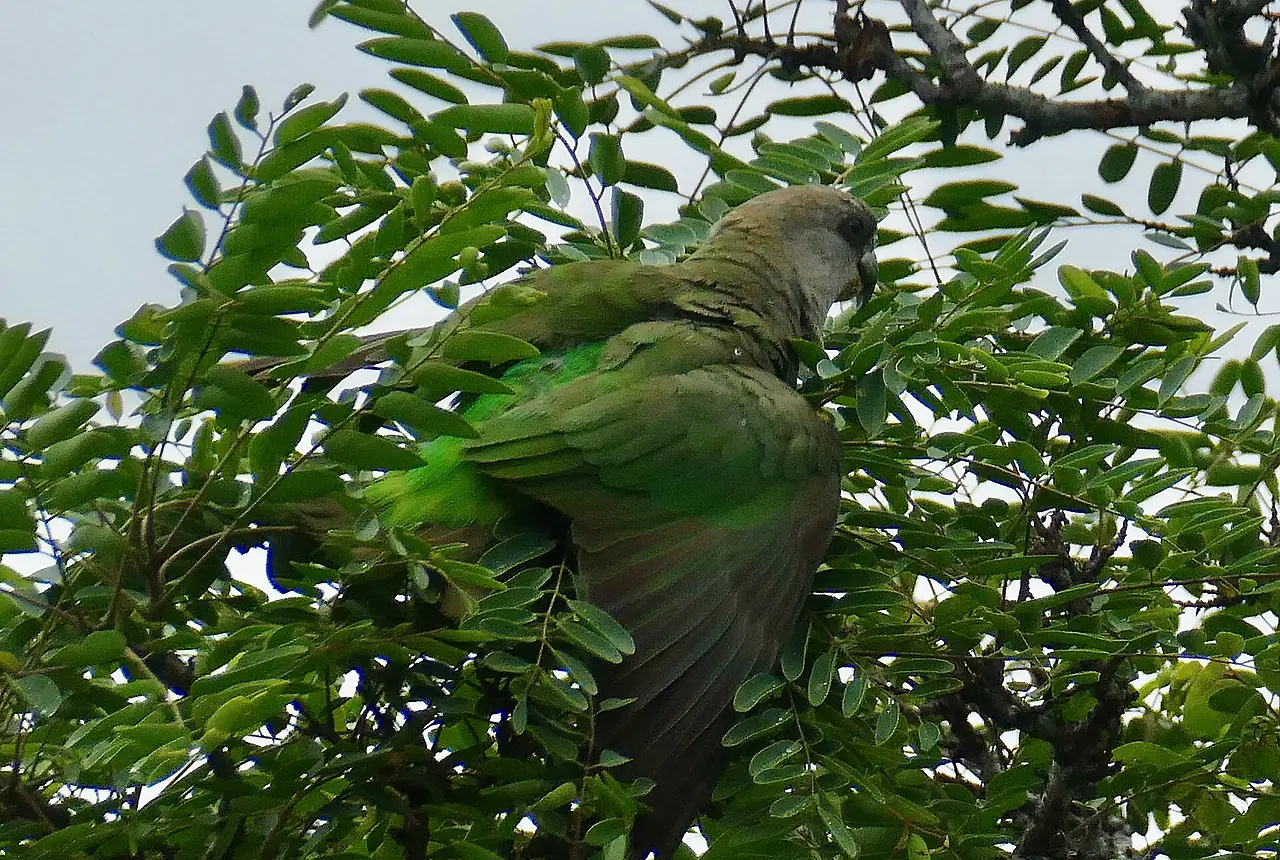
Brown-headed Parrots are small African Poicephalus parrots with green bodies, grey-brown heads, and bright yellow concealed beneath the wings. Their muted appearance can hide strident flight calls, capable beaks, and a real need for movement and enrichment. They suit calm homes that prefer gradual trust to instant handling.
Verify the exact species and source, then plan wide usable housing, bathing, food-finder toys, chew work, and low-pressure training.
Lifespan
20-25 years
Noise
Moderate for a parrot, but still vocal and apartment-sensitive
Daily social time
Smart, watchful, and sometimes selective about favorite people
Space
Needs chew work, safe doors, daily interaction, and foraging
Handling style
Let trust grow through short, calm sessions
Experience
Better for prepared homes that can support flight space, independent behavior, and species-specific care
The honest fit
Could this bird fit your life?
The match may work if…
Brown-headed Parrots fit calm homes that can provide wide housing, bathing, climbing, foraging, chew work, and positive interaction.
You are comfortable with the bird's normal sound, movement, and daily social rhythm.
You have room for the recommended enclosure, safe movement, and a practical cleaning area.
Think twice if…
The room cannot fit a medium parrot cage, safe placement, and a cleaning routine you can actually repeat.
The food routine would likely become seed-only, treat-led, or inconsistent instead of limit fatty extras.
The household expects instant cuddles instead of patient, choice-based trust.
The daily rhythm
A normal day with Brown-headed Parrots
Brown-headed Parrots often spend the day moving between quiet observation, climbing, foraging, bathing, and chew work. Their subtle color and comparatively measured style do not reduce the need for space, daily enrichment, or close health observation.
Muted perched color hides bright yellow underwings, while the normal voice still includes strident flight notes and staccato calls.
Brown-headed Parrots are Poicephalus cryptoxanthus, also called Concealed-yellow Parrots.
Adults are mainly green with a grey-brown head and bright yellow underwings that may remain hidden while perched.
Home and movement
Use wide usable housing with varied perches, bathing, destructible toys, food-finder puzzles, and secure supervised movement.
Food and daily care
Build meals around a nutritionally balanced parrot diet and suitable vegetables, keeping fruit, seeds, nuts, and treats measured. Follow weight and appetite, and ask an avian veterinarian before adding supplements.
Brown-headed Parrots create food scatter, bath splash, and fragments from destructible enrichment. Damp-clean with plain products and exclude smoke, sprays, candles, perfume, and overheated nonstick cookware from their air.
Social life, sound and handling
Brown-headed Parrots use loud rising flight notes, high staccato calls, and soft chatter while feeding. A quieter companion reputation is relative; hear the individual and keep nights dark and predictable.
Let trust grow through short, calm sessions. Reward the bird for choosing contact instead of reaching in and taking it.
Careful, not fearful
Health and safety considerations
Compare Brown-headed Parrots as a poicephalus, with the final choice based on noise, space, diet, social routine, legal sourcing, and avian-vet access.
Sudden changes in appetite, breathing, posture, droppings, weight or usual voice deserve a call to an avian veterinarian.
Before adoption
Before you bring one home
Ask about hand confidence, diet, social history, feather condition, and whether the bird has lived alone or with other parrots.
Confirm what species the bird is and ask for any available health and history records.
Ask what the bird currently eats, how it uses its enclosure, and how it responds to handling.
Measure the enclosure location, doorway route, and safe out-of-cage area before committing.
Confirm an avian veterinarian is accessible before the bird comes home.