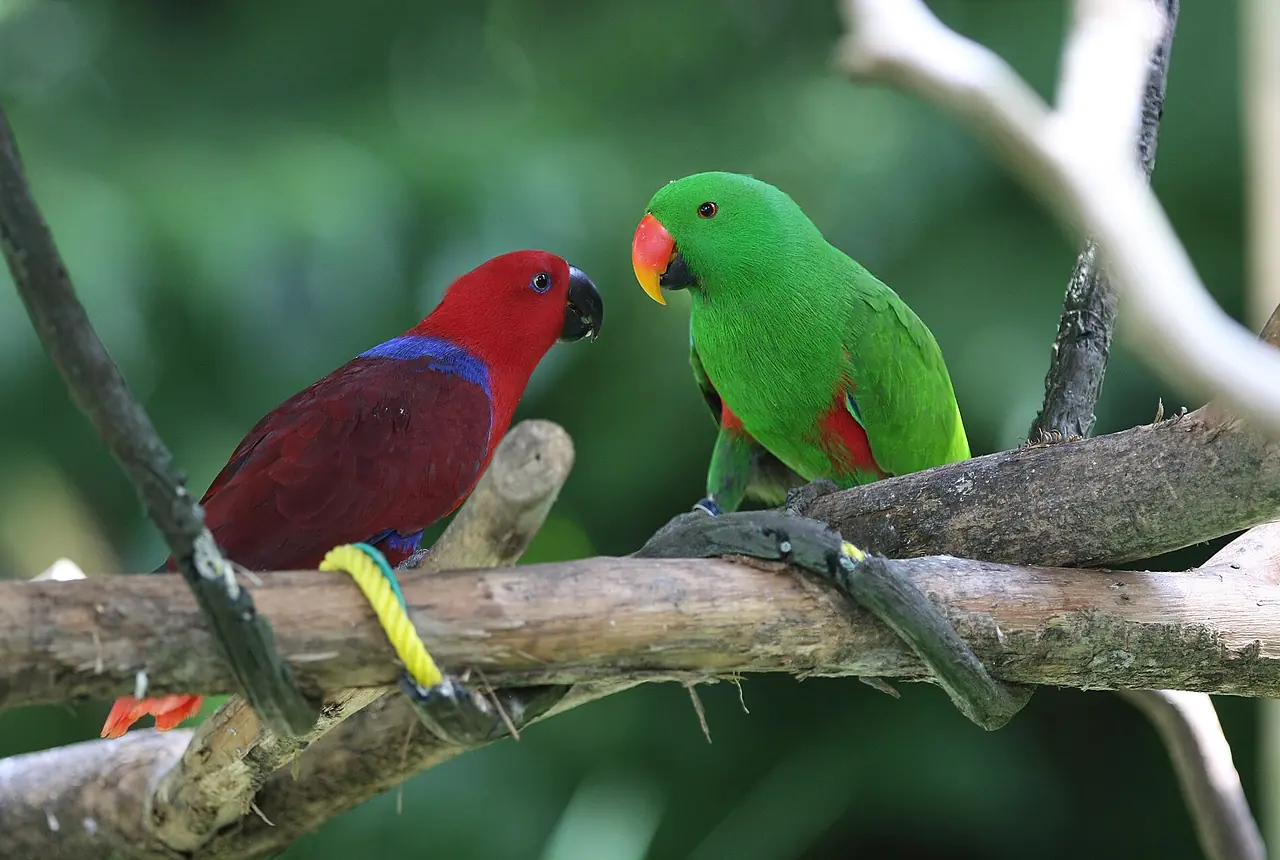
Eclectus parrots are medium-sized parrots whose adult males are predominantly green and adult females predominantly red and blue-purple. Their calm appearance can hide a demanding routine of movement, enrichment, food preparation, and close observation. They suit organized homes willing to discuss diet and supplements with an avian veterinarian instead of following internet folklore.
Plan spacious housing, washable feeding areas, safe chewing work, and a consistent routine that makes appetite, droppings, feathers, and energy easy to compare.
Lifespan
30-50 years
Noise
Can be loud, with distinct male and female behavior patterns
Daily social time
Sensitive to routine, diet, and stress
Space
Needs large housing, steady routine, foraging, and careful food hygiene
Handling style
Use calm, predictable handling and avoid overwhelming the bird with noise, constant touching, or chaotic ro…
Experience
Usually not a first bird
The honest fit
Could this bird fit your life?
The match may work if…
A good Eclectus home is organized about food and routine. These birds can be wonderful companions, but diet, stress, sleep, and household consistency matter more than casual parrot advice.
You are comfortable with the bird's normal sound, movement, and daily social rhythm.
You have room for the recommended enclosure, safe movement, and a practical cleaning area.
Think twice if…
The home cannot tolerate powerful calls, expensive gear, destructive chewing, daily training, and decades of care.
The routine would likely rely on snacks and handling pressure instead of training, enrichment, balanced food, and mood awareness.
The household expects instant cuddles instead of patient, choice-based trust.
The daily rhythm
A normal day with Eclectus Parrots
Eclectus parrots need a steady food-preparation routine, careful observation of droppings and appetite, safe movement, and social time that respects individual boundaries. Their composed appearance should not be mistaken for low enrichment or simple nutrition needs.
The surprise with eclectus parrots is how much diet and routine can shape daily life. Eclectus care often feels different from seed-loving small parrots or high-treat training birds.
Eclectus males are predominantly green with a pale beak, while females are predominantly red and blue-purple with a dark beak.
The striking sex difference once led people to mistake males and females for separate species.
Home and movement
Use large housing, easy-to-clean food stations, foraging, and calm out time. Keep the routine stable enough that appetite, droppings, feather condition, and energy are easy to read.
Food and daily care
Use an avian-veterinary plan for a balanced Eclectus diet rather than assuming that more fruit, fewer pellets, or added vitamins are automatically safer. Keep portions and ingredients consistent enough to track weight, appetite, droppings, feathers, and any abnormal movements.
Eclectus food stations can accumulate moist produce and scattered fragments quickly. Change dishes promptly, wipe surfaces with unscented products, and exclude smoke, aerosols, candles, perfume, and overheated nonstick cookware from the bird's air.
Social life, sound and handling
Eclectus parrots can talk and produce loud calls even though many are less continuously noisy than louder parrot groups. Hear the individual adult indoors and protect a dark, uninterrupted sleep period.
Use calm, predictable handling and avoid overwhelming the bird with noise, constant touching, or chaotic routines. Reward relaxed participation.
Careful, not fearful
Health and safety considerations
Sudden changes in appetite, breathing, posture, droppings, weight or usual voice deserve a call to an avian veterinarian.
Before adoption
Before you bring one home
Ask detailed diet questions: exact foods, portions, supplements, droppings, weight, and what the bird refuses. Vague diet answers are a warning sign.
Confirm what species the bird is and ask for any available health and history records.
Ask what the bird currently eats, how it uses its enclosure, and how it responds to handling.
Measure the enclosure location, doorway route, and safe out-of-cage area before committing.
Confirm an avian veterinarian is accessible before the bird comes home.