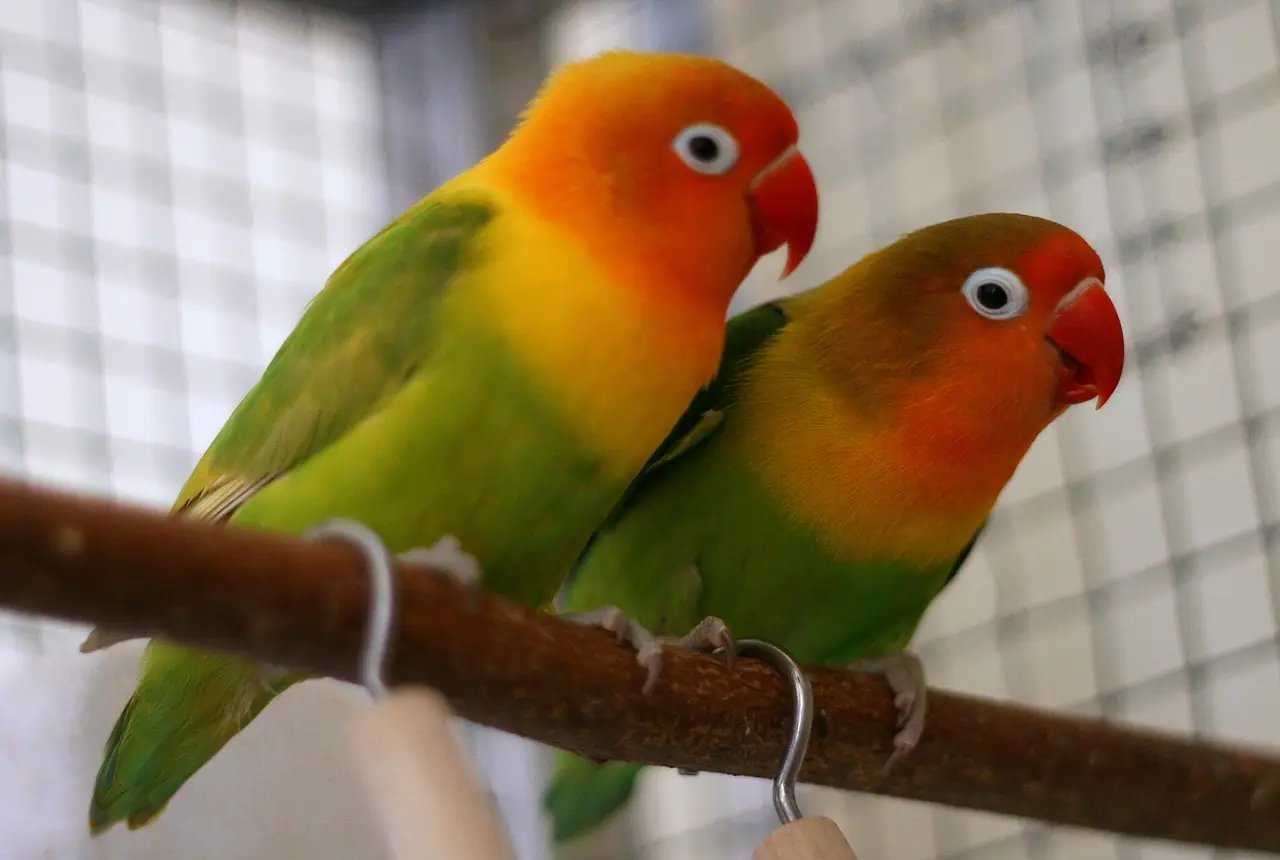
Fischer's Lovebirds are compact African parrots with white eye rings, orange-red faces, and high-energy social behavior. They chatter, climb, chew, and form strong attachments, but a pair is not automatically peaceful or interested in people. They suit active small-bird homes prepared for daily observation and respectful handling.
Confirm the species and pairing history, then plan generous movement, safe shredding, and more than one feeding point.
Lifespan
10-20 years
Noise
Small bird, sharp calls
Daily social time
Very attached to favorite people or bird partners
Space
Needs chew-safe enrichment, secure doors, and room for fast movement
Handling style
Fischer's Lovebirds do best with calm, choice-based handling
Experience
Better for prepared homes that can support flight space, independent behavior, and species-specific care
The honest fit
Could this bird fit your life?
The match may work if…
Fischer's lovebirds fit homes that want active little parrots and can handle sharp calls, chewing, and strong preferences without taking it personally.
You are comfortable with the bird's normal sound, movement, and daily social rhythm.
You have room for the recommended enclosure, safe movement, and a practical cleaning area.
Think twice if…
The room cannot fit a chew-safe cage, safe placement, and a cleaning routine you can actually repeat.
The food routine would likely become seed-only, treat-led, or inconsistent instead of pellets, greens, and measured seed.
The household expects instant cuddles instead of patient, choice-based trust.
The daily rhythm
A normal day with Fischer's Lovebirds
Fischer's Lovebirds spend the day climbing, calling, shredding, bathing, and tracking a favored bird or person. Give them movement and safe chew work without assuming that a bonded pair is automatically tame or conflict-free.
The surprise with fischer's lovebirds is how fast confidence turns into nipping when people push too quickly. Small birds still need consent and training.
Fischer's Lovebirds are Agapornis fischeri, small African parrots with a prominent white eye ring.
The wild-type adult has an orange-red face, green body, yellow upper breast, blue rump, and red bill.
Home and movement
Use secure latches, safe chew toys, room for quick movement, and a cage layout that keeps feeding and cleaning low-stress.
Food and daily care
Use a nutritionally balanced lovebird diet with suitable vegetables and measured extras rather than an all-seed bowl. Provide more than one feeding point for a pair, introduce changes slowly, and discuss reproductive or calcium concerns with an avian veterinarian.
Fischer's Lovebirds spread hulls, wet produce, bath splash, and shredded toy pieces around favored areas. Make those surfaces washable with unscented products and exclude smoke, sprays, candles, perfume, and overheated nonstick cookware.
Social life, sound and handling
Fischer's Lovebirds chatter and whistle throughout active periods, with louder calls around dawn, dusk, and social excitement. A pair adds voices rather than reducing them, so preserve a consistent dark night and hear adults before adoption.
Very attached to favorite people or bird partners. They do best when you give them daily attention and do not force handling. Short, calm training sessions work better than chasing, grabbing, or forcing contact. Let the bird choose to step closer, then reward the behavior you want to see again.
Careful, not fearful
Health and safety considerations
Compare Fischer's Lovebirds as a lovebird, with the final choice based on noise, space, diet, social routine, legal sourcing, and avian-vet access.
Sudden changes in appetite, breathing, posture, droppings, weight or usual voice deserve a call to an avian veterinarian.
Before adoption
Before you bring one home
Ask whether the bird is truly Fischer's, a hybrid, or paired with another lovebird species, because that can matter for responsible breeding and expectations.
Confirm what species the bird is and ask for any available health and history records.
Ask what the bird currently eats, how it uses its enclosure, and how it responds to handling.
Measure the enclosure location, doorway route, and safe out-of-cage area before committing.
Confirm an avian veterinarian is accessible before the bird comes home.