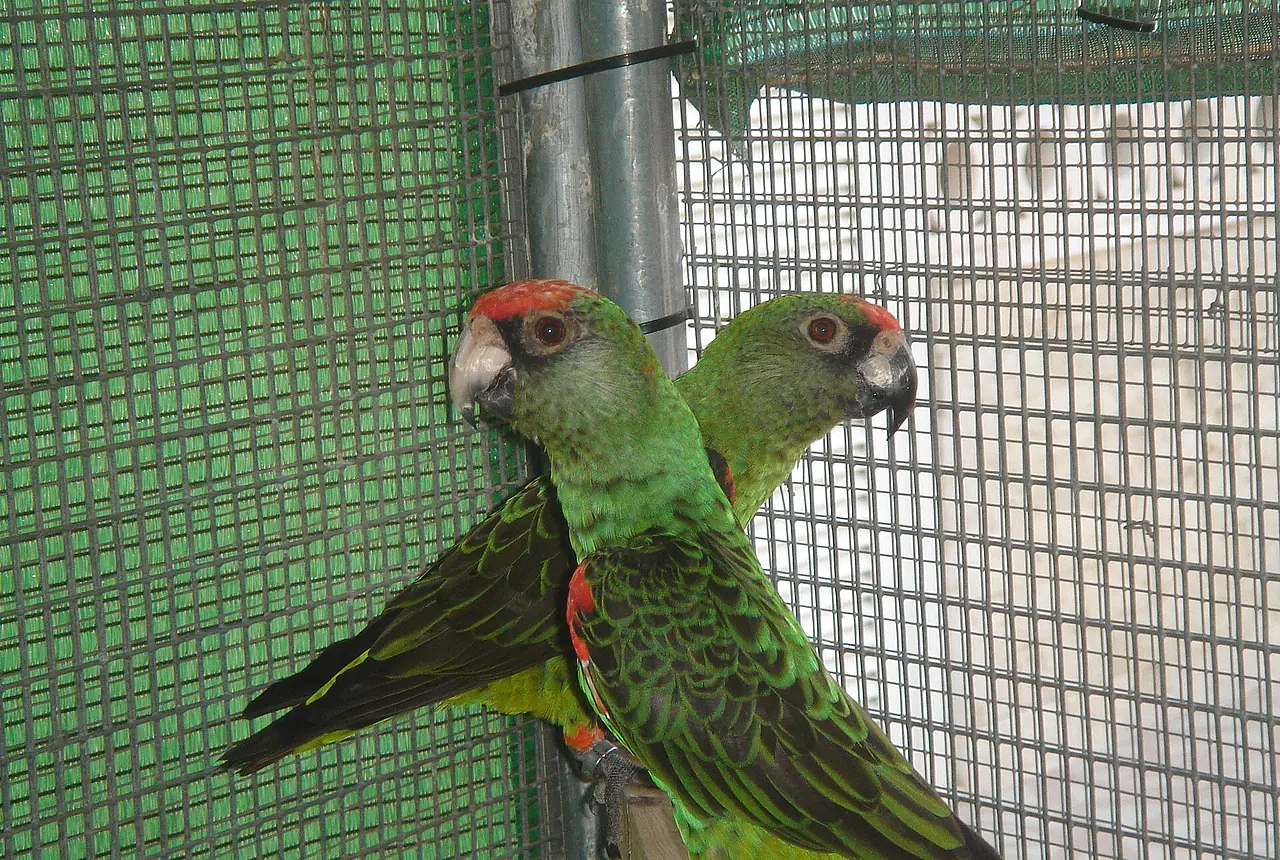
Jardine's Parrots, also called Red-fronted Parrots, are larger Poicephalus parrots with green scalloped plumage and red on the forehead, wing bend, and legs that varies by subspecies and age. Their strong beaks and active chewing need serious provision. They suit experienced homes that can offer room, training, and respectful boundaries.
Confirm identity and source, meet the adult bird, and decide whether its size, voice, chewing, and long care horizon fit before adoption.
Lifespan
Up to 30 years
Noise
Moderate for a parrot, but still vocal and apartment-sensitive
Daily social time
Smart, watchful, and sometimes selective about favorite people
Space
Needs chew work, safe doors, daily interaction, and foraging
Handling style
Reward cooperation and avoid power struggles
Experience
Better for prepared homes that can support flight space, independent behavior, and species-specific care
The honest fit
Could this bird fit your life?
The match may work if…
Jardine's Parrots fit experienced homes able to provide roomy housing, substantial chew work, foraging, training, and calm social choice.
You are comfortable with the bird's normal sound, movement, and daily social rhythm.
You have room for the recommended enclosure, safe movement, and a practical cleaning area.
Think twice if…
The room cannot fit a medium parrot cage, safe placement, and a cleaning routine you can actually repeat.
The food routine would likely become seed-only, treat-led, or inconsistent instead of limit fatty extras.
The household expects instant cuddles instead of patient, choice-based trust.
The daily rhythm
A normal day with Jardine's Parrots
Jardine's Parrots are sturdy African parrots whose day needs strong chew materials, roomy movement, foraging, training, and calm social choice. Their larger Poicephalus build and capable beak make carrier skills and respectful handling practical priorities.
The amount and placement of red vary, so plumage alone should not be used to promise a documented subspecies.
Jardine's Parrots are Poicephalus gulielmi, also called Red-fronted Parrots.
Adults are robust green parrots with dark scalloped feathering and red on the forehead, wing bend, legs, and sometimes crown depending on subspecies and age.
Home and movement
Use roomy housing with strong perches, safe branches, durable chew materials, food puzzles, bathing, and a neutral training station.
Food and daily care
Use a nutritionally balanced parrot diet with suitable vegetables and measured fruit, seed, nuts, and treats. Track weight and appetite from the start, and keep supplements tied to an avian-veterinary recommendation.
Jardine's Parrots can reduce branches and strong toys to substantial debris. Plan washable surroundings and unscented cleaning, with no smoke, sprays, candles, perfume, or overheated nonstick cookware in the bird's air.
Social life, sound and handling
Jardine's Parrots produce high whistles and harsh or grating calls that can carry, even though Poicephalus are often comparatively quieter parrots. Hear adults indoors and protect uninterrupted sleep.
Reward cooperation and avoid power struggles. Step-up, stationing, carrier work, and calm independent play matter more than constant cuddling.
Careful, not fearful
Health and safety considerations
Compare Jardine's Parrots as a poicephalus, with the final choice based on noise, space, diet, social routine, legal sourcing, and avian-vet access.
Sudden changes in appetite, breathing, posture, droppings, weight or usual voice deserve a call to an avian veterinarian.
Before adoption
Before you bring one home
Ask about subspecies/source if known, age, handling, bite history, diet, and whether the bird accepts multiple caregivers.
Confirm what species the bird is and ask for any available health and history records.
Ask what the bird currently eats, how it uses its enclosure, and how it responds to handling.
Measure the enclosure location, doorway route, and safe out-of-cage area before committing.
Confirm an avian veterinarian is accessible before the bird comes home.