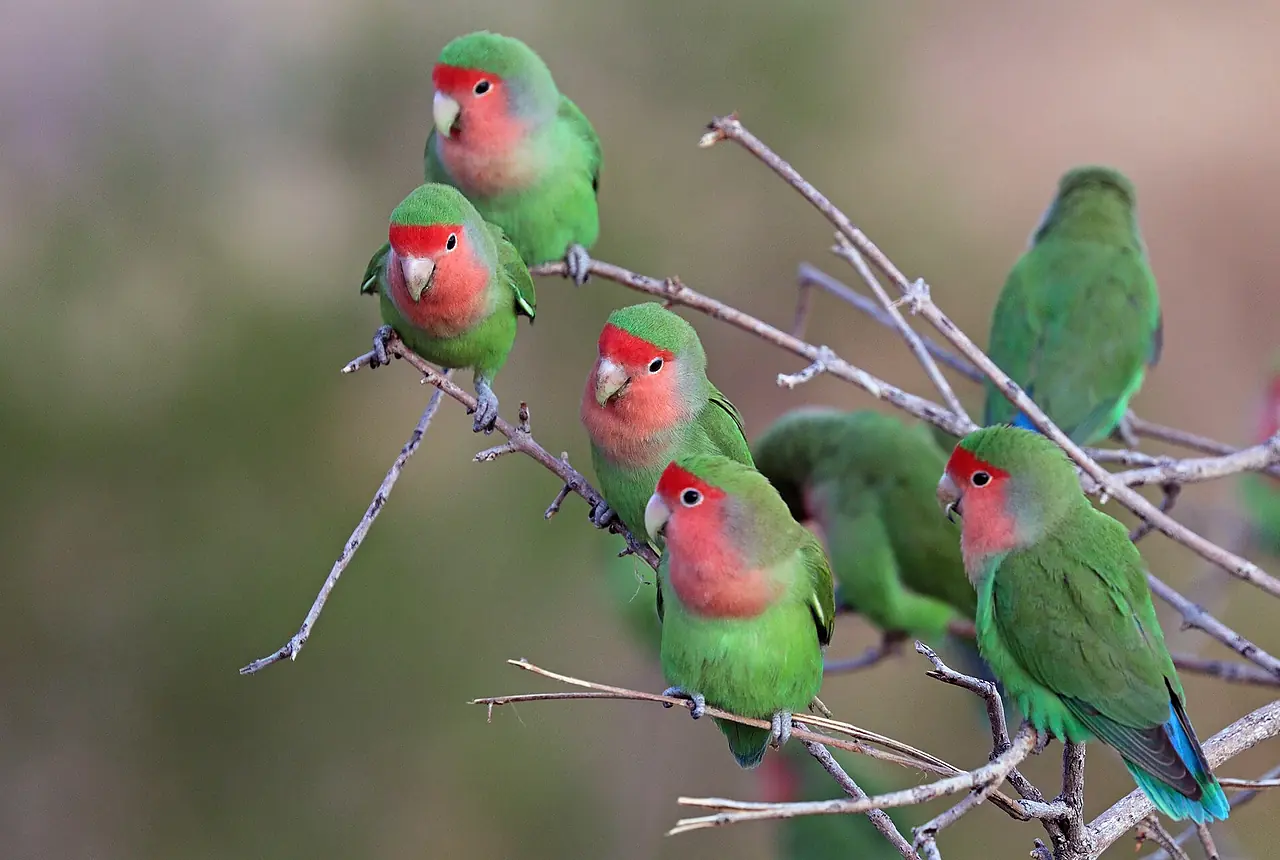
Lovebirds are a group of nine compact African parrot species, not a single color or temperament. Common companion species are energetic, social, vocal, and capable of forceful territorial behavior despite their size. They suit people who enjoy busy small parrots and can plan companionship without treating a pair as automatically compatible.
Identify the exact species, hear adult chatter, and decide how chewing, pairing, nesting behavior, and daily interaction will be managed before adoption.
Lifespan
10-15 years
Noise
Small bird, sharp calls, and plenty of attitude
Daily social time
Often very attached to a favorite person or bird partner, so daily attention and gentle handling matter
Space
Needs chew-safe enrichment, secure doors, and room for fast movement
Handling style
Short, respectful training matters
Experience
Not my first pick for a first bird unless you are ready to train gently and watch warning signs
The honest fit
Could this bird fit your life?
The match may work if…
Lovebirds suit people who enjoy a small bird with big confidence. Plan for daily interaction, safe chewing, secure doors, and a routine that works whether the bird prefers you, another lovebird, or a careful mix of both.
You are comfortable with the bird's normal sound, movement, and daily social rhythm.
You have room for the recommended enclosure, safe movement, and a practical cleaning area.
Think twice if…
The room cannot fit a chew-safe cage, safe placement, and a cleaning routine you can actually repeat.
The food routine would likely become seed-only, treat-led, or inconsistent instead of pellets, greens, and measured seed.
The household expects instant cuddles instead of patient, choice-based trust.
The daily rhythm
A normal day with Lovebirds
Lovebirds are compact, busy parrots that chew, defend favorite spaces, and form strong social preferences. Provide daily movement and foraging while watching pair dynamics and avoiding nest-like spaces that can intensify territorial behavior.
The surprise with lovebirds is intensity. A lovebird can be sweet and funny, then very clear when it does not want a hand, toy, cage corner, or partner bothered.
Lovebird is a group name for nine Agapornis species rather than one interchangeable companion bird.
Peach-faced, Masked, and Fischer's Lovebirds are the species most commonly encountered in companion homes.
Home and movement
Use a sturdy small-parrot cage with secure latches, plenty to chew, safe out time, and a layout that does not force the bird to defend one cramped corner.
Food and daily care
Use a nutritionally balanced small-parrot diet with suitable vegetables and measured extras rather than an all-seed bowl. Identify the exact species, introduce changes gradually, and discuss calcium or reproductive concerns with an avian veterinarian instead of adding supplements casually.
Lovebirds scatter food and turn paper or wood into fine fragments around favored spaces. Make those areas easy to damp-wipe without fragrance, and keep smoke, aerosols, candles, perfume, and overheated nonstick cookware away.
Social life, sound and handling
Lovebirds chatter, whistle, and call in lively bursts, especially around activity and social contact. The exact species and individual matter, and a pair is not silent; give them a consistent dark night without expecting training to remove normal flock communication.
Short, respectful training matters. Watch the bird's posture, slow down before nips happen, and reward stepping up or moving away calmly instead of turning every interaction into a contest.
Careful, not fearful
Health and safety considerations
Sudden changes in appetite, breathing, posture, droppings, weight or usual voice deserve a call to an avian veterinarian.
Before adoption
Before you bring one home
If adopting a pair, ask whether both birds eat well and whether they are actually compatible. If adopting one bird, ask how much daily attention it is used to and how it reacts when hands enter the cage.
Confirm what species the bird is and ask for any available health and history records.
Ask what the bird currently eats, how it uses its enclosure, and how it responds to handling.
Measure the enclosure location, doorway route, and safe out-of-cage area before committing.
Confirm an avian veterinarian is accessible before the bird comes home.