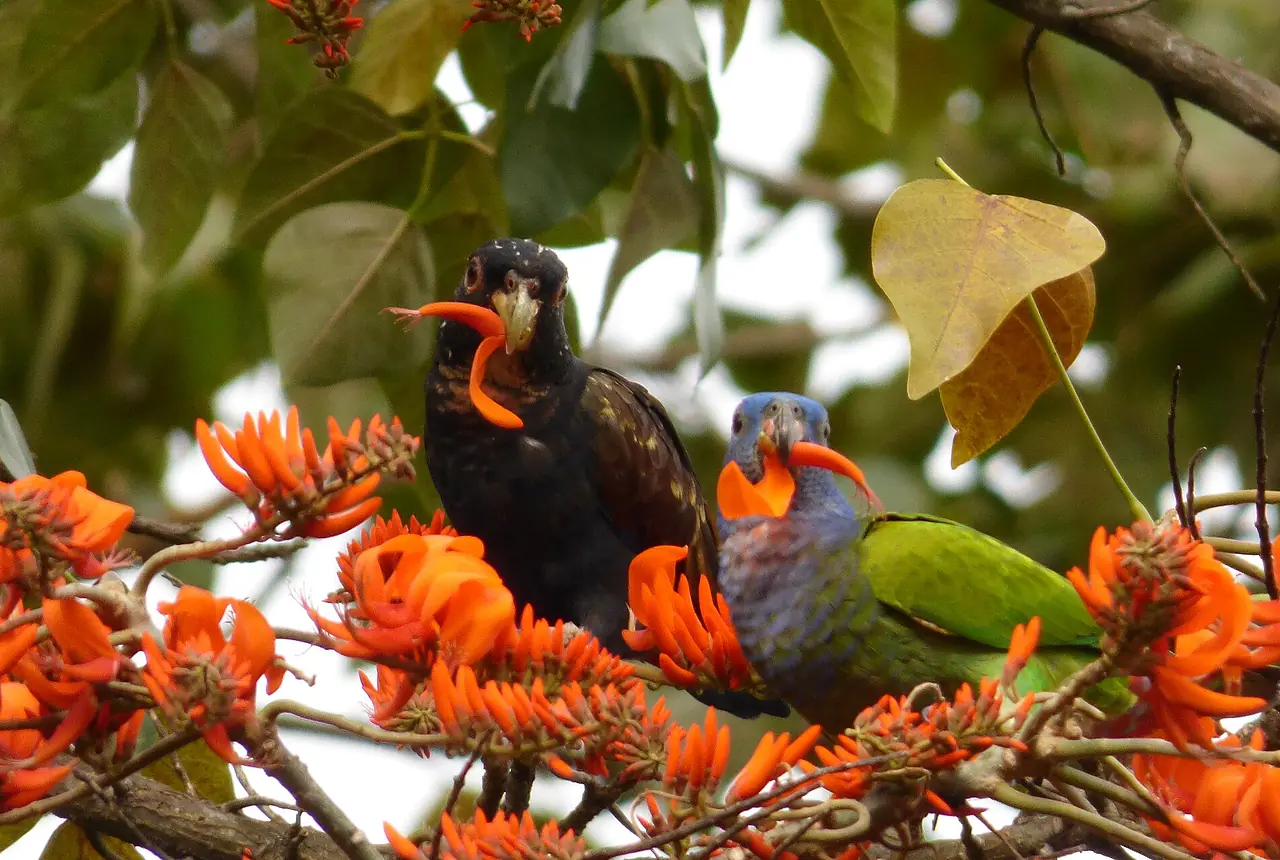
Pionus parrots are a group of medium Central and South American parrots with short square tails, bare eye rings, and red feathers beneath the tail. They are often quieter than Amazons or conures, but they are not silent or low-maintenance. They suit steady homes that value subtle body language, bathing, movement, and low-pressure companionship.
Meet the exact Pionus species and adult bird, then plan decades of care around its real voice and individual comfort with handling.
Lifespan
25-40 years
Noise
Often calmer than many parrots, but not silent
Daily social time
Steady, observant, and usually less frantic than some parrots
Space
Needs a medium-large cage, perches, baths, and foraging
Handling style
Calm attention usually works better than big reactions
Experience
A calmer shortlist bird for well-prepared homes that still want a real parrot
The honest fit
Could this bird fit your life?
The match may work if…
A good Pionus home values steady routines over constant excitement. These birds suit people who can read subtle signals, offer daily enrichment, and keep weight and bathing on the normal care list.
You are comfortable with the bird's normal sound, movement, and daily social rhythm.
You have room for the recommended enclosure, safe movement, and a practical cleaning area.
Think twice if…
The room cannot fit a medium-large cage, safe placement, and a cleaning routine you can actually repeat.
The food routine would likely become seed-only, treat-led, or inconsistent instead of careful weight checks.
The household expects instant cuddles instead of patient, choice-based trust.
The daily rhythm
A normal day with Pionus Parrots
Pionus parrots often prefer steady company, deliberate movement, and low-pressure training over frantic play. Give them room to climb and fly, regular bathing, and a quiet place to step away when household activity becomes too much.
The surprise with pionus parrots is subtle stress. A Pionus may look composed while still needing a break, a bath, better sleep, or a slower introduction.
Pionus is a group of medium parrots from Central and South America rather than a single species.
Pionus parrots share a short square tail, a bare eye ring, and red feathers beneath the tail despite different body colors.
Home and movement
Use a medium-large cage, varied perches, regular bathing options, foraging, and a calm out-time area where the bird can explore without being crowded.
Food and daily care
Use a nutritionally balanced parrot diet with suitable vegetables and measured fruit, seeds, nuts, and treats. Track body weight and ask an avian veterinarian about vitamin balance rather than diagnosing a deficiency or adding supplements from appearance alone.
Pionus parrots spread bath water, fresh food, and chewing debris around their preferred stations. Use washable surfaces and plain cleaning products, and exclude smoke, sprays, candles, perfume, and overheated nonstick cookware from the bird's air.
Social life, sound and handling
Pionus parrots are comparatively quiet, yet they still call and may copy words in a raspier voice. A noisy household can encourage more calling; protect uninterrupted sleep and judge shared-wall fit by the actual adult bird.
Calm attention usually works better than big reactions. Let the bird approach, reward relaxed body posture, and keep training quiet and consistent.
Careful, not fearful
Health and safety considerations
Sudden changes in appetite, breathing, posture, droppings, weight or usual voice deserve a call to an avian veterinarian.
Before adoption
Before you bring one home
Ask about the bird's preferred people, bathing habits, weight history, and how it acts around noise or new rooms.
Confirm what species the bird is and ask for any available health and history records.
Ask what the bird currently eats, how it uses its enclosure, and how it responds to handling.
Measure the enclosure location, doorway route, and safe out-of-cage area before committing.
Confirm an avian veterinarian is accessible before the bird comes home.