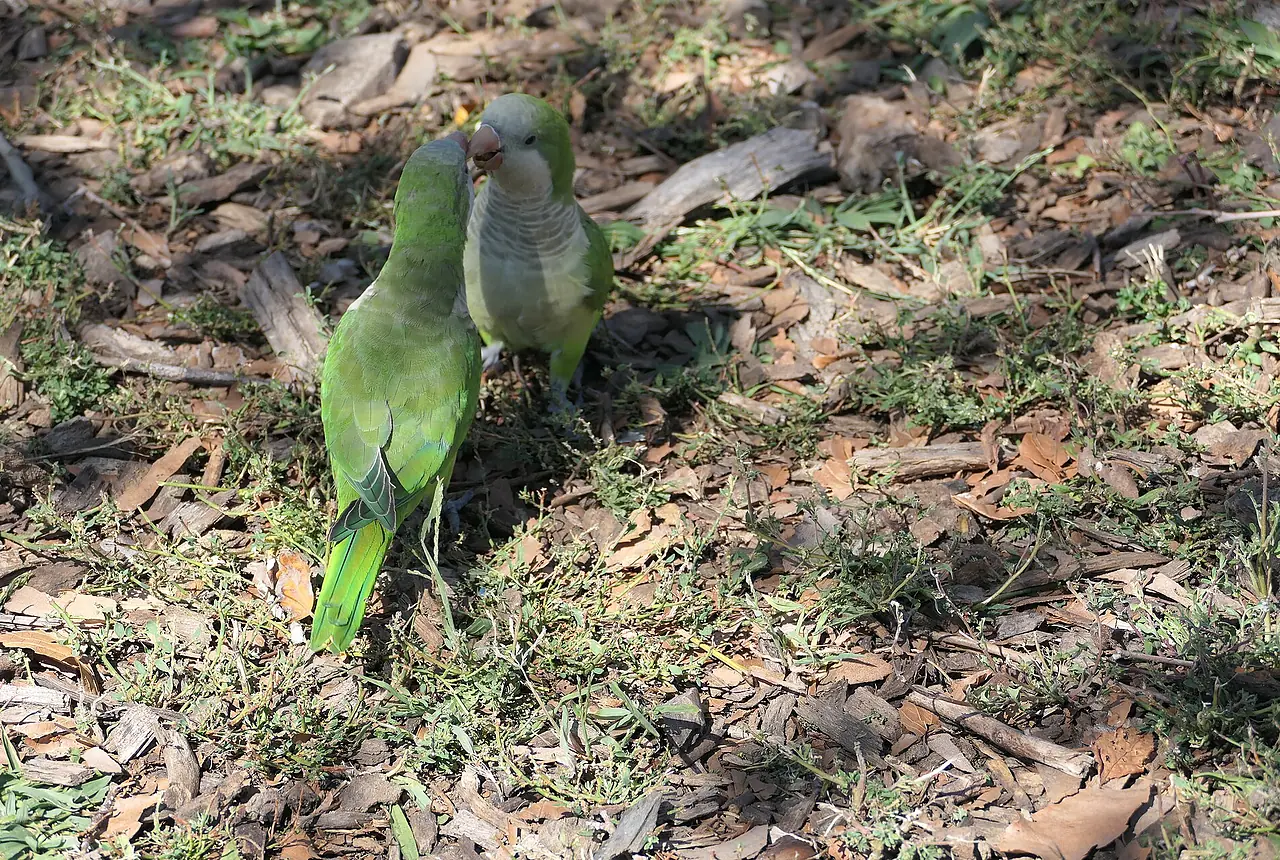
Quaker parrots, also called Monk Parakeets, are intelligent South American parrots that build elaborate communal nests in the wild. Normal life includes strong chewing, loud contact calls, construction behavior, and possible guarding of favored spaces. They suit training-focused homes only where ownership is legal now and during likely future moves.
Check state, provincial, municipal, and housing rules before adoption, then provide safe building materials and handling stations away from the cage.
Lifespan
20-30 years
Noise
Can be loud, talkative, and very protective of favorite spaces
Daily social time
Smart and social, but legality varies by location
Space
Needs secure housing, daily enrichment, and a cage setup that is easy to clean without starting fights
Handling style
Teach simple routines: step up away from the cage, station on a perch, trade objects, and return home calmly
Experience
Better for prepared homes that can support flight space, independent behavior, and species-specific care
The honest fit
Could this bird fit your life?
The match may work if…
A good Quaker home is prepared for a vocal, intelligent bird that may love routines and favorite spaces. The right owner enjoys training and problem-solving, not just talking ability.
You are comfortable with the bird's normal sound, movement, and daily social rhythm.
You have room for the recommended enclosure, safe movement, and a practical cleaning area.
Think twice if…
The room cannot fit a roomy small-bar cage, safe placement, and a cleaning routine you can actually repeat.
The food routine would likely become seed-only, treat-led, or inconsistent instead of pellets, greens, and measured seed.
The household expects instant cuddles instead of patient, choice-based trust.
The daily rhythm
A normal day with Quaker Parrots
Quaker parrots are vocal builders and problem-solvers that may guard cages, shelves, or chosen materials. Daily training, safe construction play, and neutral handling locations help keep their intelligence from turning into territorial conflict.
The surprise with quaker parrots is how protective some Quakers can become around cages, shelves, or favorite people. That is workable, but only if the owner plans calm training instead of forcing access.
Quaker parrots are Myiopsitta monachus, also known as Monk Parakeets or Quaker Parakeets.
Wild Quakers build large stick nests, so carrying, weaving, chewing, and guarding construction materials are species-relevant behaviors.
Home and movement
Use secure housing, clear cage-cleaning routines, foraging, and training stations away from the cage. Check state, city, and housing rules before buying supplies.
Food and daily care
Use a nutritionally balanced parrot diet with suitable vegetables and measured extras, introduced gradually. Keep seeds and other fatty foods limited, track weight, and use tiny training rewards so rich food does not become the daily base.
Quaker parrots carry and shred building material as well as food, so debris can collect beyond the cage. Damp-wipe with unscented products and keep smoke, aerosols, candles, perfume, and overheated nonstick cookware out of the room.
Social life, sound and handling
Quaker parrots are vocal communicators with forceful contact calls as well as strong mimicry in some individuals. Hear an adult indoors and protect a dark sleep period; talking ability does not offset the normal volume.
Teach simple routines: step up away from the cage, station on a perch, trade objects, and return home calmly. Those skills matter more than pushing for cuddles.
Careful, not fearful
Health and safety considerations
Sudden changes in appetite, breathing, posture, droppings, weight or usual voice deserve a call to an avian veterinarian.
Before adoption
Before you bring one home
Ask for the bird's legal paperwork or sourcing details, current diet, bite history, talking habits, and how cage cleaning is handled now.
Confirm what species the bird is and ask for any available health and history records.
Ask what the bird currently eats, how it uses its enclosure, and how it responds to handling.
Measure the enclosure location, doorway route, and safe out-of-cage area before committing.
Confirm an avian veterinarian is accessible before the bird comes home.