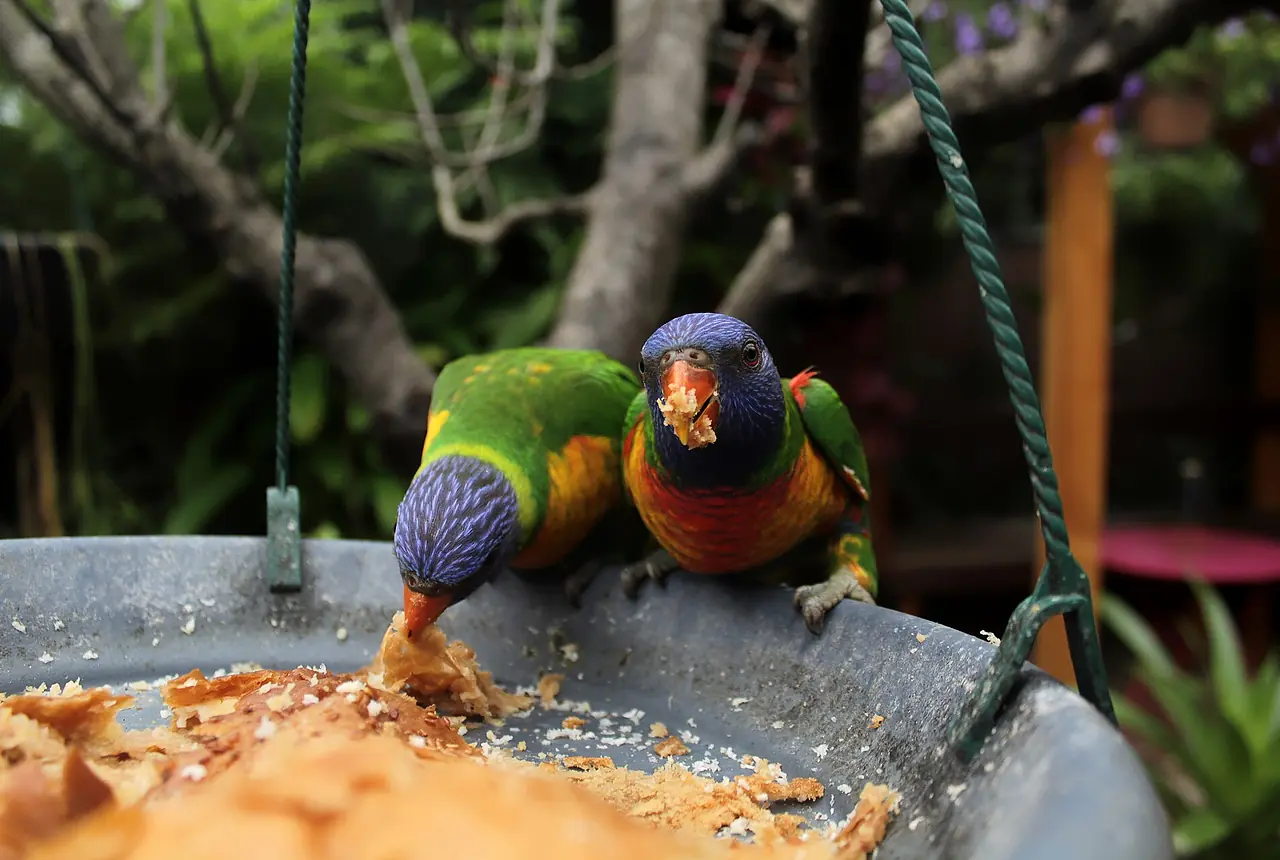
Rainbow Lorikeets are high-energy Australian lories whose brush-tipped tongues are adapted for nectar and pollen. Their specialist wet diet spoils quickly and produces loose droppings, making food hygiene and washable housing central to every day. They suit experienced homes prepared for frequent feeding, cleanup, loud calls, and constant supervised activity.
Choose a Rainbow Lorikeet only after an avian veterinarian helps plan the diet and the household can service wet food repeatedly, including during warm weather.
Lifespan
15-30 years
Noise
Often active, loud, messy, and fast-moving
Daily social time
Interactive and intelligent, with a care routine shaped by nectar-style feeding and mess
Space
Needs washable housing, room to move, frequent cleaning, and enrichment that handles wet food mess
Handling style
Rainbow Lorikeets do best with calm, choice-based handling
Experience
Best for experienced keepers with the right space, legal source, diet hygiene, and avian-vet support
The honest fit
Could this bird fit your life?
The match may work if…
Rainbow lorikeets fit homes that love active birds and can manage nectar diet prep, sticky mess, washable surfaces, and frequent cleaning.
You are comfortable with the bird's normal sound, movement, and daily social rhythm.
You have room for the recommended enclosure, safe movement, and a practical cleaning area.
Think twice if…
The home cannot handle washable housing, sticky mess, wet droppings, safe placement, and repeatable cleaning.
Busy days would make nectar hygiene, sticky surfaces, wet droppings, and frequent dish washing unrealistic.
The household expects instant cuddles instead of patient, choice-based trust.
The daily rhythm
A normal day with Rainbow Lorikeets
Rainbow Lorikeets need fresh nectar-style food on a strict schedule, washable surroundings, bathing, and energetic movement. Food hygiene and wet-dropping cleanup shape the entire day, so their vivid personality comes with unusually demanding housekeeping.
The surprise with rainbow lorikeets is mess. Nectar food and watery droppings can reach walls, floors, perches, and toys faster than a seed-eating parrot's mess.
Rainbow Lorikeets are Trichoglossus moluccanus and are also widely called Rainbow Lories in companion-bird sources.
A brush-tipped tongue supports feeding on nectar and pollen, so an ordinary seed-based parrot diet is inappropriate.
Home and movement
Use washable housing, splash-friendly placement, easy-to-remove perches, bathing, and a room plan that keeps nectar spray away from fabric and electronics.
Food and daily care
Use an avian-veterinary plan for a complete lory diet; ordinary parrot pellets or seed are not substitutes for species-appropriate nectar-style food. Prepare small fresh servings, replace wet food often—more frequently in warmth—keep fruit fresh, and provide clean water at all times.
Rainbow Lorikeet nectar, fruit, bath water, and loose droppings reach walls, floors, and perches quickly. Use washable surfaces, service wet areas promptly with unscented products, and keep smoke, sprays, candles, perfume, and overheated nonstick cookware away.
Social life, sound and handling
Rainbow Lorikeets use high-pitched repetitive calls and can learn words, with considerable individual variation. Their intense daytime activity needs a predictable dark night, but neither sleep routine nor training makes the species quiet.
Interactive and intelligent, with a care routine shaped by nectar-style feeding and mess. Short, calm training sessions work better than chasing, grabbing, or forcing contact. Let the bird choose to step closer, then reward the behavior you want to see again.
Careful, not fearful
Health and safety considerations
Compare Rainbow Lorikeets as a lory or lorikeet, with the final choice based on noise, space, diet, social routine, legal sourcing, and avian-vet access.
Sudden changes in appetite, breathing, posture, droppings, weight or usual voice deserve a call to an avian veterinarian.
Before adoption
Before you bring one home
Ask exactly what nectar, produce, and cleaning schedule the bird is used to, and watch how much mess happens during a normal day.
Confirm what species the bird is and ask for any available health and history records.
Ask what the bird currently eats, how it uses its enclosure, and how it responds to handling.
Measure the enclosure location, doorway route, and safe out-of-cage area before committing.
Confirm an avian veterinarian is accessible before the bird comes home.