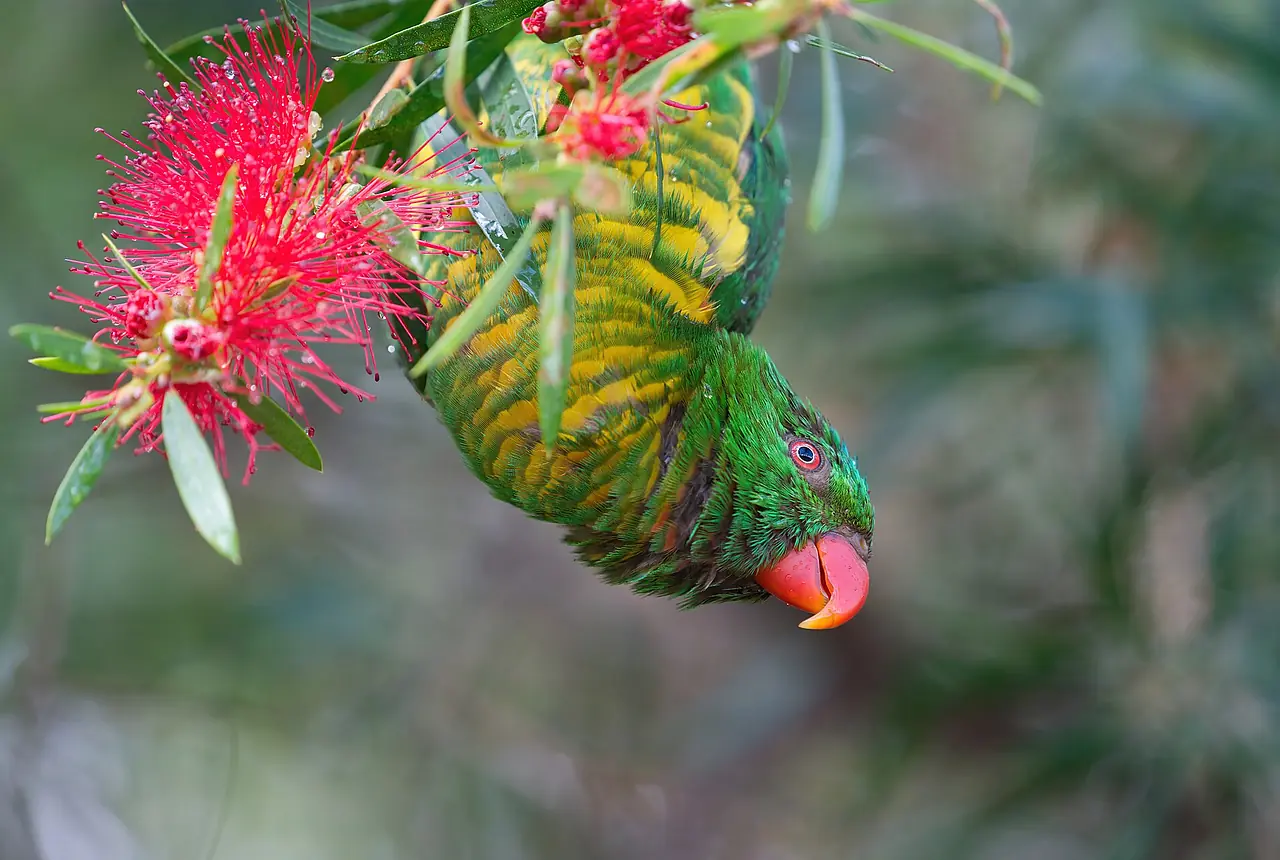
Scaly-breasted Lorikeets are eastern Australian lorikeets with an all-green head, red bill, and yellow scalloping through green plumage. Like other lorikeets, they need specialist lory food, clean water, and strict wet-food hygiene. They suit experienced homes ready for active birds, sharp calls, and daily splash-zone cleaning.
Use exact species identification for the guide, then plan husbandry around lorikeet feeding rather than an ordinary seed-parrot routine.
Lifespan
15-30 years
Noise
Often active, loud, messy, and fast-moving
Daily social time
Interactive and intelligent, with a care routine shaped by nectar-style feeding and mess
Space
Needs washable housing, room to move, frequent cleaning, and enrichment that handles wet food mess
Handling style
Scaly-breasted Lorikeets investigate quickly with feet, tongue, and bill
Experience
Best for experienced keepers with the right space, legal source, diet hygiene, and avian-vet support
The honest fit
Could this bird fit your life?
The match may work if…
Scaly-breasteds fit keepers who want lorikeet energy and can handle wet food, sticky surfaces, liquid droppings, and daily cage cleanup.
You are comfortable with the bird's normal sound, movement, and daily social rhythm.
You have room for the recommended enclosure, safe movement, and a practical cleaning area.
Think twice if…
The home cannot handle washable housing, sticky mess, wet droppings, safe placement, and repeatable cleaning.
Busy days would make nectar hygiene, sticky surfaces, wet droppings, and frequent dish washing unrealistic.
The household expects instant cuddles instead of patient, choice-based trust.
The daily rhythm
A normal day with Scaly-breasted Lorikeets
Scaly-breasted Lorikeets are active nectar-feeding parrots whose food and loose droppings make hygiene a repeated daily task. Their routine combines fresh lory food, clean water, bathing, movement, and easy-to-wash play areas.
The surprise with scaly-breasted lorikeets is that a green lorikeet is not lower maintenance. The diet and mess are still the main daily commitment.
Scaly-breasted Lorikeets are Trichoglossus chlorolepidotus, lorikeets native to eastern Australia.
Adults have an all-green head, red bill, and yellow scalloping through green plumage; the pattern gives the species its common name.
Home and movement
Give Scaly-breasted Lorikeets washable walls or splash guards, easy tray access, bathing, and simple toy rotation. Avoid absorbent materials around the cage.
Food and daily care
Feed a complete commercial lorikeet food chosen with an avian veterinarian, not seed or a homemade sugar drink. Mix only what can stay fresh, wash dishes between batches, shorten service time in warm rooms, and keep clean drinking water available.
Scaly-breasted Lorikeet food and loose droppings make washable walls, trays, dishes, and play areas essential. Clean wet areas promptly without fragrance and exclude smoke, sprays, candles, perfume, and overheated nonstick cookware.
Social life, sound and handling
Scaly-breasted Lorikeets use high-pitched calls during fast social activity and may remain vocal around household movement. Listen to adults indoors and protect uninterrupted sleep without expecting their contact calls to disappear.
Scaly-breasted Lorikeets investigate quickly with feet, tongue, and bill. Reward stationing and calm returns before excited play turns into grabbing or hard mouthing.
Careful, not fearful
Health and safety considerations
Compare Scaly-breasted Lorikeets as a lory or lorikeet, with the final choice based on noise, space, diet, social routine, legal sourcing, and avian-vet access.
Sudden changes in appetite, breathing, posture, droppings, weight or usual voice deserve a call to an avian veterinarian.
Before adoption
Before you bring one home
For Scaly-breasted Lorikeets, ask about the current lory food, produce routine, droppings, bathing, and whether each bird is hand-comfortable or aviary-raised.
Confirm what species the bird is and ask for any available health and history records.
Ask what the bird currently eats, how it uses its enclosure, and how it responds to handling.
Measure the enclosure location, doorway route, and safe out-of-cage area before committing.
Confirm an avian veterinarian is accessible before the bird comes home.