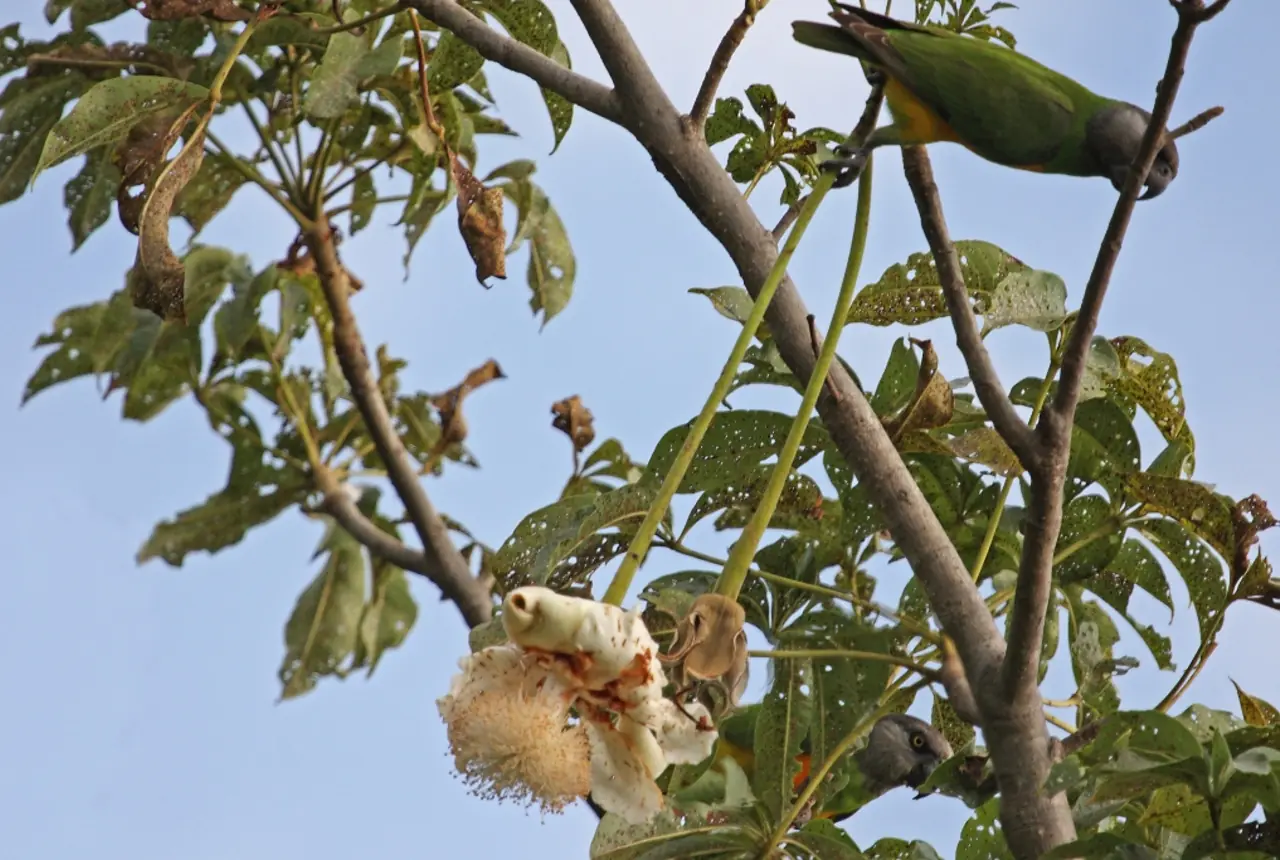
Senegal parrots are compact West African Poicephalus parrots with watchful expressions, focused play, and a quieter voice than many similar-sized parrots. Quieter does not mean silent, gentle with everyone, or simple to socialize. They suit patient homes that can build trust across several people while respecting a bird that may form strong preferences.
Use calm step-ups, foraging, and durable chew toys to widen the bird's routine beyond one favorite person or place.
Lifespan
25-40 years
Noise
Moderate for a parrot, but still apartment-sensitive
Daily social time
Smart, watchful, and sometimes one-person leaning
Space
Needs chew work, safe doors, and daily interaction
Handling style
Reward calm step-ups, target training, and quiet time near different people
Experience
Possible for first-time owners who prepare the cage, diet, and daily attention first
The honest fit
Could this bird fit your life?
The match may work if…
A good Senegal home likes a bird that thinks before it trusts. Plan for daily interaction, chew work, simple training, and slow introductions so the bird does not become limited to one person.
You are comfortable with the bird's normal sound, movement, and daily social rhythm.
You have room for the recommended enclosure, safe movement, and a practical cleaning area.
Think twice if…
The room cannot fit a roomy small-bar cage, safe placement, and a cleaning routine you can actually repeat.
The food routine would likely become seed-only, treat-led, or inconsistent instead of pellets, greens, and measured seed.
The household expects instant cuddles instead of patient, choice-based trust.
The daily rhythm
A normal day with Senegal Parrots
Senegal parrots often alternate watchful quiet with focused play, chewing, and strong attachment to preferred people. Rotate enrichment, practice calm step-ups, and reward relaxed behavior around other household members before favoritism becomes guarding.
The surprise with senegal parrots is selectiveness. A Senegal may be charming with one person and suspicious of another unless the household builds trust on purpose.
Senegal parrots are Poicephalus senegalus, compact parrots native to West Africa.
Adults show a grey head, green wings and back, and a yellow-to-orange chest patch over the abdomen.
Home and movement
Use a medium-parrot cage with secure doors, perches that support confident movement, chew toys, and a training perch away from the cage.
Food and daily care
Build meals around a nutritionally balanced parrot diet and suitable vegetables, with fruit, seeds, nuts, and rich table foods measured. Track weight and reserve tiny favorite pieces for training so fatty extras do not displace the daily diet.
Senegal parrots produce wood chips, food fragments, and bath splash around focused play areas. Use washable surfaces and unscented cleaning, with no smoke, sprays, candles, perfume, or overheated nonstick cookware in their air.
Social life, sound and handling
Senegal parrots tend toward whistles, clucks, and speech rather than continuous screaming, but quiet is only comparative. Listen to the exact adult and keep nights predictable; a subdued individual still needs health attention when its normal voice changes.
Reward calm step-ups, target training, and quiet time near different people. Do not pass the bird around before it is ready.
Careful, not fearful
Health and safety considerations
Sudden changes in appetite, breathing, posture, droppings, weight or usual voice deserve a call to an avian veterinarian.
Before adoption
Before you bring one home
Ask who handles the bird now, how it reacts to strangers, and whether it has a history of biting when moved away from a favorite person.
Confirm what species the bird is and ask for any available health and history records.
Ask what the bird currently eats, how it uses its enclosure, and how it responds to handling.
Measure the enclosure location, doorway route, and safe out-of-cage area before committing.
Confirm an avian veterinarian is accessible before the bird comes home.