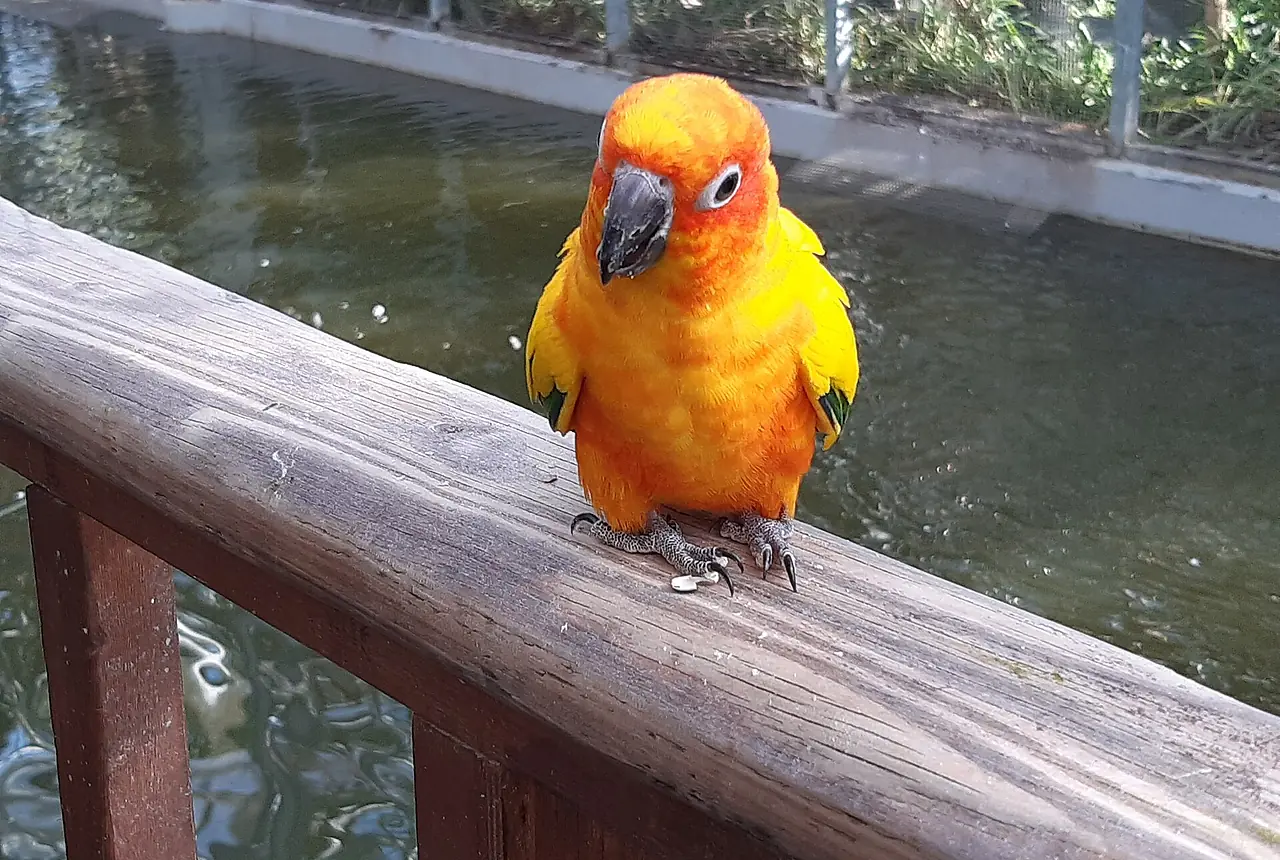
Sun Conures are vivid, highly social parrots with piercing contact calls and relentless interest in the household. Their normal volume—not an occasional bad day—is what surprises otherwise prepared owners. They suit noise-tolerant homes with time for training and chewing; apartments and quiet households are often a poor match.
Hear adult Sun Conures indoors before deciding, then plan activity and genuine quiet periods into every day.
Lifespan
20-35 years
Noise
Often louder than the size suggests, especially during contact calls
Daily social time
Playful, physical, social, and usually happiest with predictable daily interaction
Space
Needs a larger cage, chew toys, foraging, and daily supervised time
Handling style
Sun Conures do best with calm, choice-based handling
Experience
Better for prepared homes that can support flight space, independent behavior, and species-specific care
The honest fit
Could this bird fit your life?
The match may work if…
Sun conures fit owners who want a loud, affectionate, high-energy companion and have the housing, schedule, and patience for daily interaction. They are not a good pick for people hoping a bright bird will also be quiet.
You are comfortable with the bird's normal sound, movement, and daily social rhythm.
You have room for the recommended enclosure, safe movement, and a practical cleaning area.
Think twice if…
The room cannot fit a larger parrot cage, safe placement, and a cleaning routine you can actually repeat.
The food routine would likely become seed-only, treat-led, or inconsistent instead of pellets and fresh foods.
The household expects instant cuddles instead of patient, choice-based trust.
The daily rhythm
A normal day with Sun Conures
Sun Conures bring piercing contact calls, intense social energy, climbing, and heavy chewing into ordinary mornings and evenings. Their routine needs active training and play balanced with real quiet periods, adequate sleep, and neighbors who can tolerate the volume.
The surprise with sun conures is volume. A sun conure's normal call can feel shocking indoors, especially in apartments, townhomes, or noise-sensitive families.
Home and movement
Give a sturdy cage, safe chewing, foraging, and a predictable sleep location away from household chaos. Out time needs a safe room because these birds are confident and quick.
Food and daily care
Use a balanced parrot diet with vegetables and measured treats. Do not let sunflower seeds, fruit, or attention treats become the whole relationship.
Sun Conures combine juicy food scatter with heavy chewing debris around favorite activity spots. Use easy-to-wipe surfaces and unscented products, and keep smoke, aerosols, candles, perfume, and overheated nonstick cookware out of their air.
Social life, sound and handling
Plan for morning and evening calling, and protect sleep with a dark, quiet routine. Noise cannot be trained out of a sun conure.
Playful, physical, social, and usually happiest with predictable daily interaction. Short, calm training sessions work better than chasing, grabbing, or forcing contact. Let the bird choose to step closer, then reward the behavior you want to see again.
Careful, not fearful
Health and safety considerations
Compare Sun Conures as a conure, with the final choice based on noise, space, diet, social routine, legal sourcing, and avian-vet access.
Sudden changes in appetite, breathing, posture, droppings, weight or usual voice deserve a call to an avian veterinarian.
Before adoption
Before you bring one home
Spend time near adult sun conures before choosing one. If the normal call makes you tense in five minutes, it will not become easier at home.
Confirm what species the bird is and ask for any available health and history records.
Ask what the bird currently eats, how it uses its enclosure, and how it responds to handling.
Measure the enclosure location, doorway route, and safe out-of-cage area before committing.
Confirm an avian veterinarian is accessible before the bird comes home.