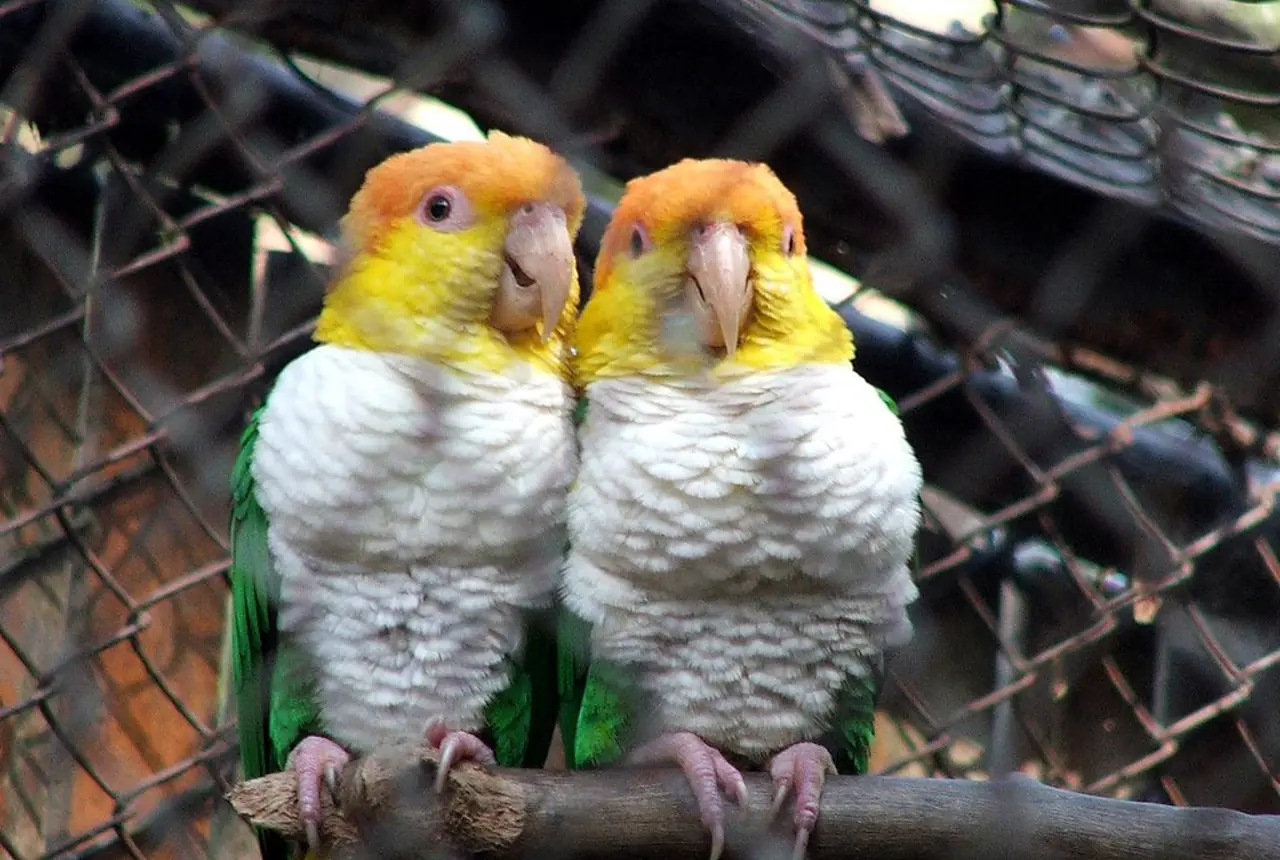
White-bellied Caiques are compact South American parrots with an apricot-orange head, green back, and creamy white breast and abdomen. They are social, athletic birds whose whistles, shrieks, and alarm calls accompany intensely physical play. They suit active, experienced homes that can supervise closely without keeping the bird overstimulated.
Build the routine around large usable housing, climbing, foraging, chew work, short lessons, and predictable rest rather than nonstop wrestling games.
Lifespan
25-40 years
Noise
Playful and energetic with real noise potential
Daily social time
Busy, physical parrots need guided play and clear rules before play gets rough
Space
Needs a strong cage, chew toys, foraging, and supervised activity
Handling style
Teach stationing, step-up, and calm breaks
Experience
Better for prepared homes that can support flight space, independent behavior, and species-specific care
The honest fit
Could this bird fit your life?
The match may work if…
White-bellied caiques fit homes that want an active clownish parrot and can provide daily play, training, enrichment, and realistic expectations about nipping.
You are comfortable with the bird's normal sound, movement, and daily social rhythm.
You have room for the recommended enclosure, safe movement, and a practical cleaning area.
Think twice if…
The room cannot fit a strong activity setup, safe placement, and a cleaning routine you can actually repeat.
The food routine would likely become seed-only, treat-led, or inconsistent instead of measured treats.
The household expects instant cuddles instead of patient, choice-based trust.
The daily rhythm
A normal day with White-bellied Caiques
White-bellied Caiques are fast, physical parrots that need supervised movement, varied foraging, safe chewing, and deliberate quiet periods. Keep play structured enough that hopping and rolling do not become an all-day state of overexcitement.
Rolling, hopping, grabbing, and beaking may be playful, but the session needs to end calmly before physical excitement becomes rough.
White-bellied Caiques are Pionites leucogaster, also called White-bellied Parrots.
Adults combine an apricot-orange head, green upperparts, pale bill, creamy white chest and abdomen, and yellow or green leg and tail markings that vary by subspecies.
Home and movement
Use strong housing, climbing routes, foraging, chew work, and a washable play zone. Keep unsafe gaps, fabrics, and cords out of reach.
Food and daily care
Use a nutritionally balanced parrot diet with suitable vegetables and measured fruit, seed, nuts, and extras. Keep portions consistent enough to follow weight and appetite, and ask an avian veterinarian before adding supplements.
White-bellied Caiques carry fresh food and chewing debris through active climbing areas. Make those stations easy to damp-wipe without fragrance, with no smoke, aerosols, candles, perfume, or overheated nonstick cookware nearby.
Social life, sound and handling
White-bellied Caiques whistle, chirrup, shriek, and produce a loud alarm call. Their athletic day needs a calm, dark night, but adequate sleep does not make this active species quiet.
Teach stationing, step-up, and calm breaks. Do not reward frantic play by letting it continue until someone gets bitten.
Careful, not fearful
Health and safety considerations
Compare White-bellied Caiques as a caique, with the final choice based on noise, space, diet, social routine, legal sourcing, and avian-vet access.
Sudden changes in appetite, breathing, posture, droppings, weight or usual voice deserve a call to an avian veterinarian.
Before adoption
Before you bring one home
Ask about adult behavior, bite history, sleep, diet, and how the bird handles being returned to the cage after play.
Confirm what species the bird is and ask for any available health and history records.
Ask what the bird currently eats, how it uses its enclosure, and how it responds to handling.
Measure the enclosure location, doorway route, and safe out-of-cage area before committing.
Confirm an avian veterinarian is accessible before the bird comes home.