Updated
Rabbit food check
Can Rabbits Eat Blackberry Leaves? Yes—Trim the Cane
Yes—trimmed and clean
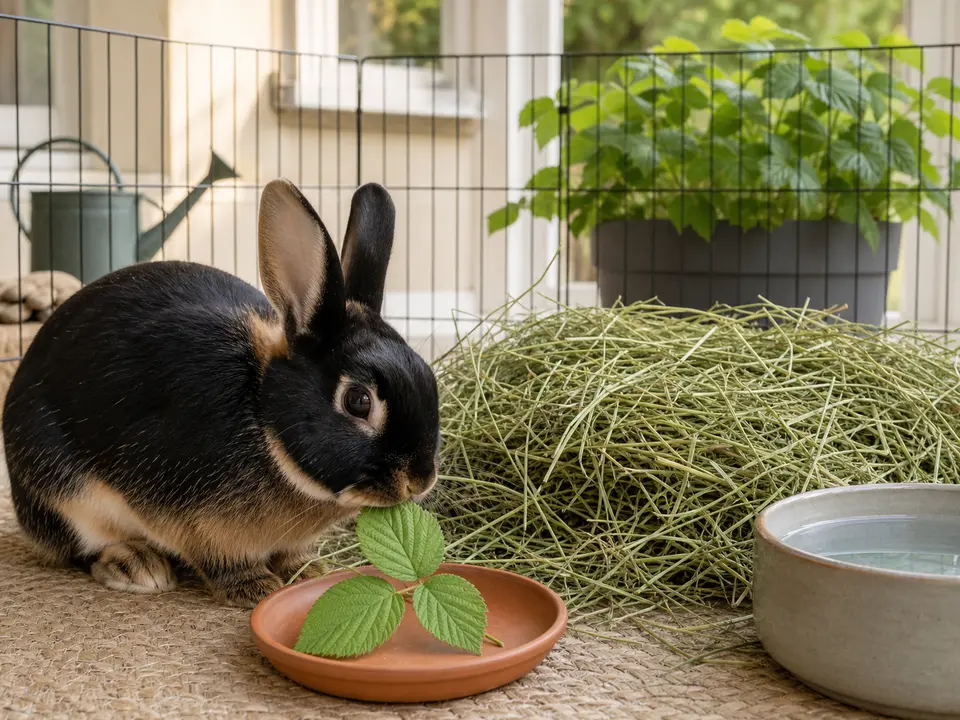
Yes. A rabbit may eat leaves from a confidently recognized untreated blackberry bramble. For the first try, prepare one compound leaf, discard the thorny cane, and move any berry into a separate fruit decision.
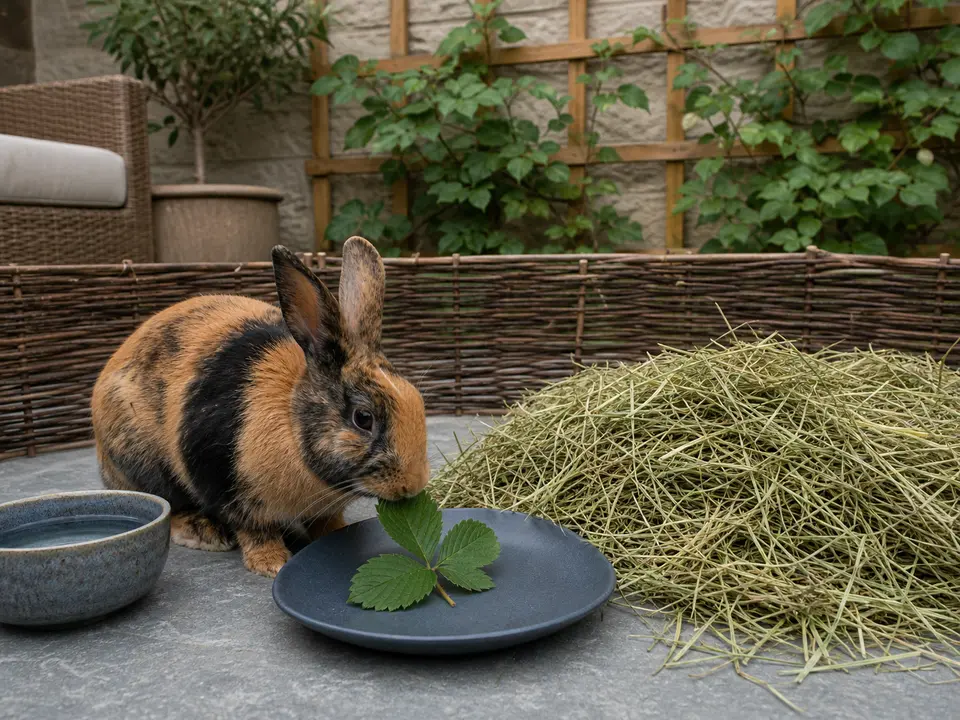 Blackberry Leaves
A hedge is not automatically a pantry
Blackberry brambles thrive along roads, paths, sprayed field edges, and places visited by dogs or wildlife. The leaf may be edible while the picking site is a poor choice. Favor a known garden plant with a treatment history you can actually check, not the closest patch to the pavement.
Leaf shape supports, but does not prove, the ID
A young blackberry shoot may carry three toothed leaflets while vigorous growth carries five, and the upper surface often looks darker than the underside. Confirm the whole plant by its habit and known fruiting history. Treat a phone-photo match to one leaf as a clue, never the final reason it enters the rabbit pen.
Keep the thorny architecture outdoors
Bramble prickles are useful to the plant and pointless on a food plate. At the kitchen sink, set the clipping on a board, hold the leaf cluster by its tip, and cut above the tough petiole. Flexible leaflets enter the rabbit pen; the hooked cane goes straight into garden waste.
Berries do not hide inside the greens count
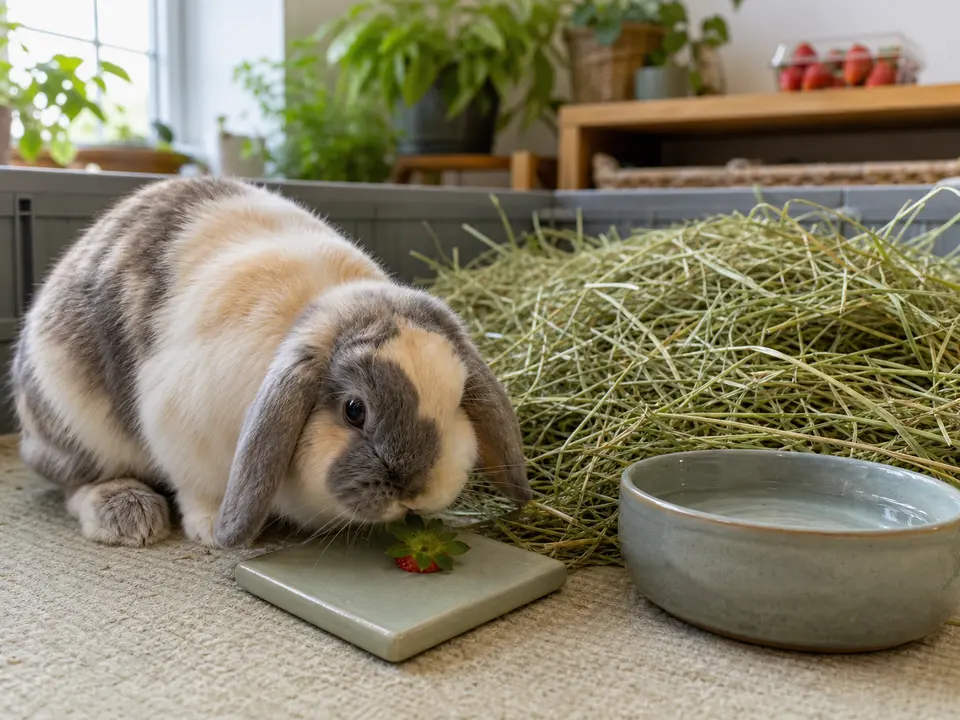
A late-season clipping may arrive with one dark berry under the leaves. Remove it before washing. Blackberry fruit remains a sweet occasional treat, so serving it requires a separate decision instead of quietly adding sugar to a leafy portion.
Start one step back from the hedge
Before clipping, look at the ground and neighboring property. Skip growth beside idling cars, dog paths, chemically treated fence lines, or runoff channels. None of that foliage belongs by the rabbit pen or hay pile. A bramble farther inside your own untreated garden gives a cleaner starting point.
Keep blackberry cuttings by themselves
In the kitchen, drop one chosen leaf into a dedicated prep bowl, not a mixed forage basket. Keep it alone. An unknown hedge leaf or loose thorn cannot travel underneath it, and every green piece reaching the rabbit pen still has a known source.
Read the pale side under bright light
At the kitchen counter, spread the leaf on a dark plate and turn each leaflet over. Follow the veins to the edges, where webbing and insect eggs can hide. Reject the whole leaf for mildew, rust, sticky residue, or widespread damage; the rabbit bowl does not need a salvaged corner.
Trim before the rabbit comes outside
Cut away the prickly stalk and cane, rinse the flexible leaflets, and dry them in the kitchen. Offer the first leaf beside familiar greens once the pen is ready. Store only inspected dry foliage, and send every thorny offcut to a closed garden-waste container.
Serve
- Use a blackberry plant you recognized in fruit or had confirmed by an experienced grower; leaflet count and serration alone cannot prove identity.
- Choose growth inside a known garden, away from traffic mist, public footpaths, dog fouling, field spray drift, slug bait, and recently treated fences.
- Lay the compound leaf flat and check the dark upper surface, pale underside, veins, and folded edges for mildew, rust, eggs, webbing, and insects.
- Cut the tender leaflets free of woody cane, hooked prickles, and the tough stalk base, then rinse and drain before serving.
Avoid
- A random roadside or public-hedge bramble just because blackberries grew somewhere nearby during summer.
- Cane segments, hooked thorns, stiff old petioles, or a tangled clipping that can snag fur, eyes, fabric, or pen furnishings.
- Leaves with orange rust, white mildew, tarry spots, heavy insect damage, chemical residue, exhaust grime, or a stale fermented smell.
- Blackberries hidden among the leaflets; move ripe fruit aside and count any rabbit berry as its own small occasional treat.
Watch
- The leaflets being eaten without interrupting the rabbit's trips to the hay pile
- At cleaning time, the familiar quantity of firm pellets in the litter box
- Comfortable stretching, grooming, drinking, and movement around the enclosure
- If stool loosens, the rabbit hunches or withdraws, or food and pellet output fall, remove blackberry leaf from the menu and seek prompt rabbit-savvy veterinary advice
Portion
Begin with a single modest leaf cluster. Depending on the shoot, that can mean three leaflets or five. A hedge-pruning basket is not dinner. When hay eating and toilet habits stay steady, blackberry leaf can rotate among other known greens.
A thorn-free route from bramble to plate
Blackberry leaves are simple once the plant and site are settled. A separate bowl, bright inspection surface, careful trim, thorough rinse, and ventilated storage keep hooked cane and mixed hedge debris out of the rabbit area.
Affiliate links: Furball Cove may earn from qualifying purchases at no extra cost to you.
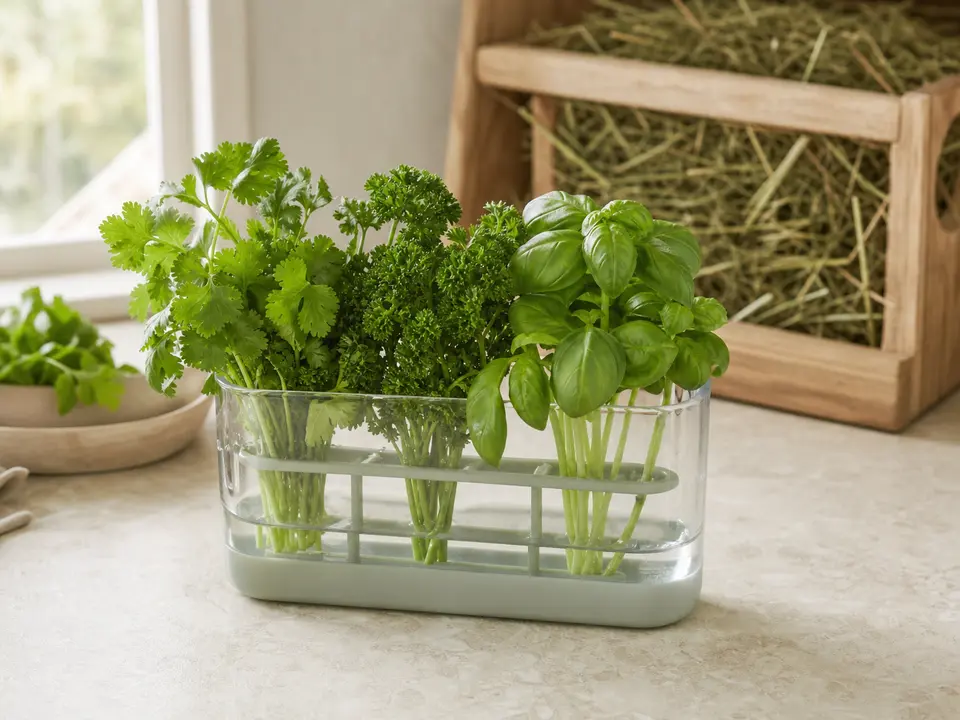
Herb keeper
Store clean dry leaflets upright with airflow so they remain visible instead of matting into a damp bundle.
Shop herb keeper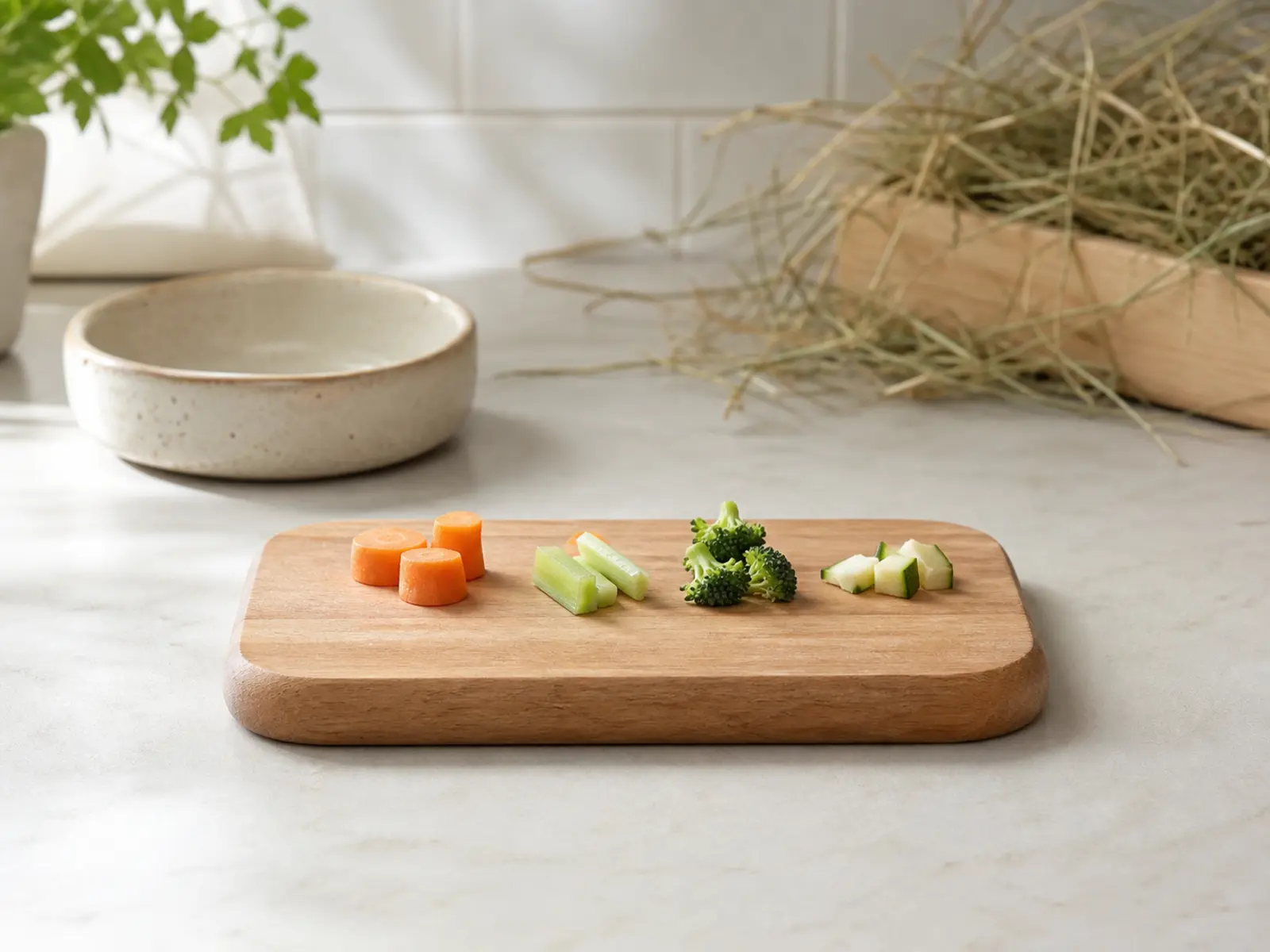
Mini cutting board
Use a dark stable surface to expose pale leaf undersides and remove the tough petiole, woody cane, and every hooked prickle.
Shop mini cutting board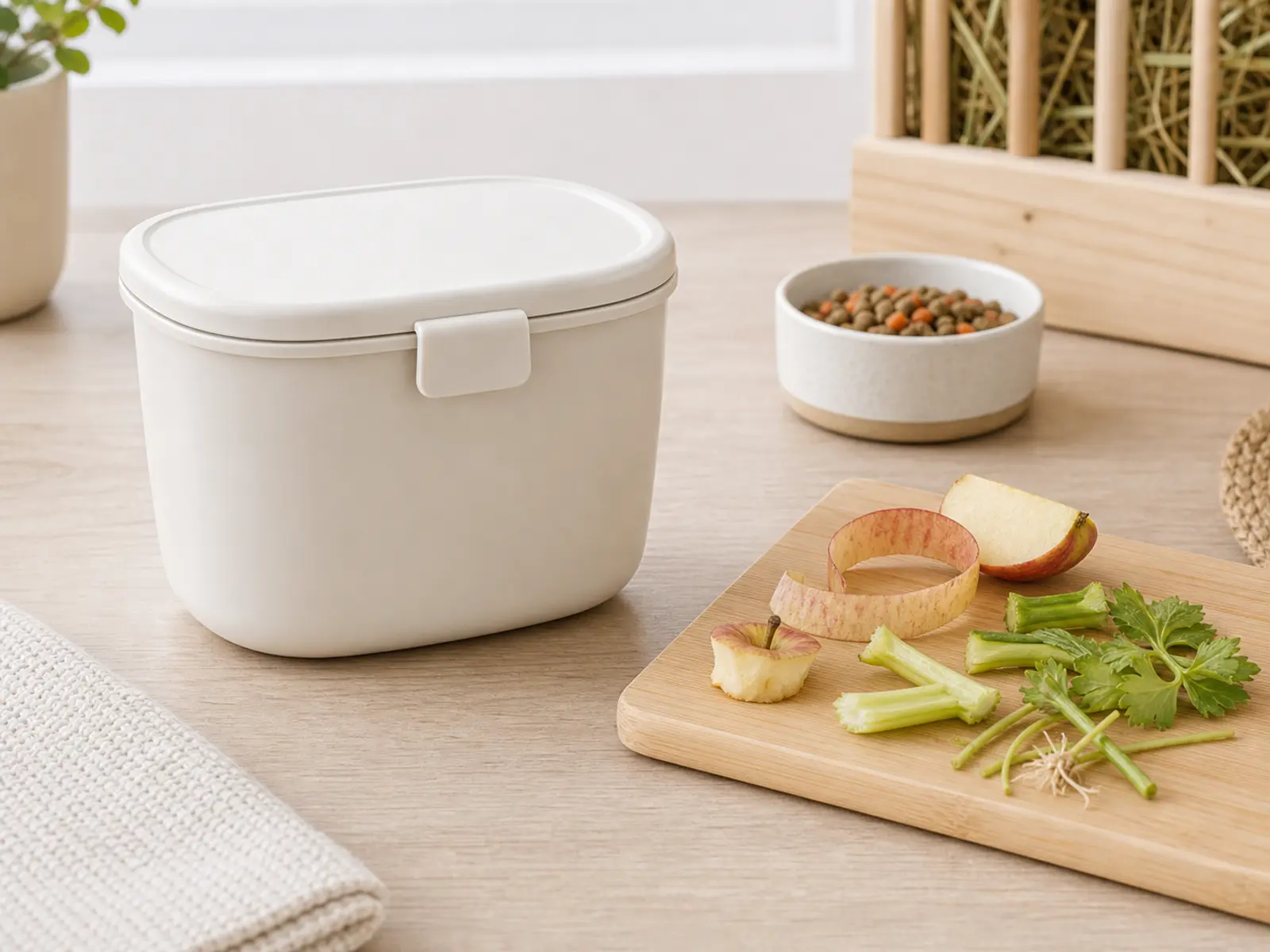
Lidded scrap bin
Contain thorny cane, suspect leaves, dropped berries, and insect-damaged pieces as soon as trimming ends.
Shop lidded scrap bin