Updated
Rabbit food check
Can Rabbits Eat Raspberry Leaves? Yes—Check the Plant
Yes—when identified
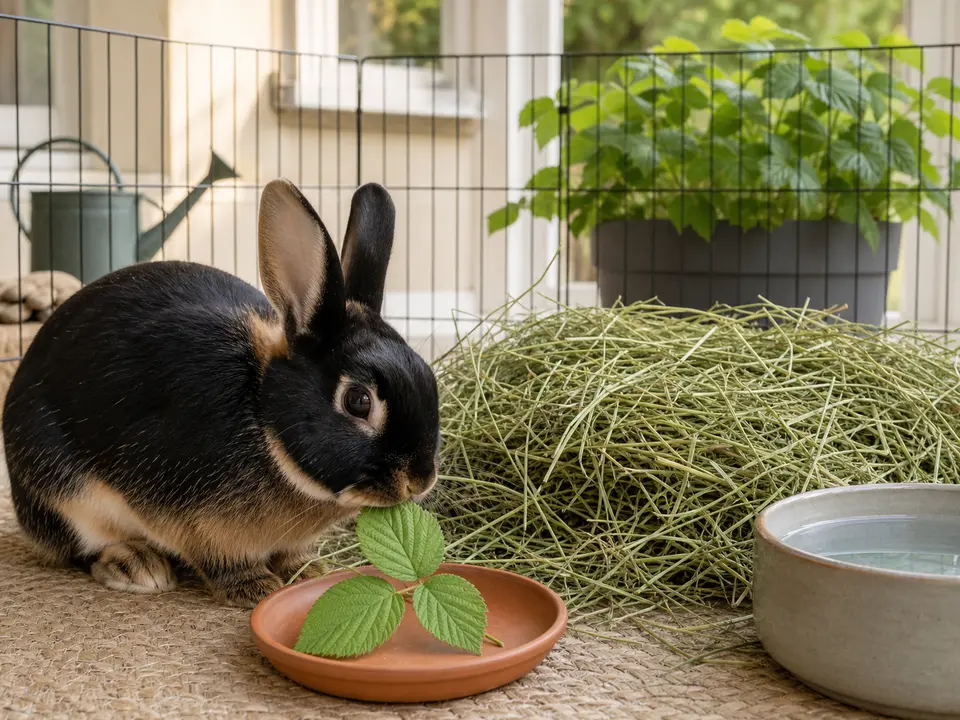
Yes. Correctly identified raspberry leaves are rabbit-safe. Start with one clean compound leaf from a known untreated plant, trim away prickly or woody cane, and keep berries in the fruit-treat category.
 Raspberry Leaves
Know the cane before clipping
Keep the leaf on the kitchen counter, outside the rabbit pen, while you confirm its source. Use a plant you grow, a cane identified by a knowledgeable gardener, or a patch you recognized when it fruited. Raspberry leaves are commonly compound, with three to five serrated leaflets, but that feature alone is not proof.
The underside tells the useful story
Lay the leaf pale-side up on a tray near a bright window. Check along the center veins for aphids, eggs, fine webbing, orange rust, or powdery patches. A quick front-side glance misses exactly where small garden hitchhikers and early leaf damage tend to hide.
Serve leaflets, not a thorny cutting
Skip the long cane; tender foliage is the serving. Hold the sprig over the sink, clip away the woody section and every sharp prickle, then rinse the green leaflets. This turns a vague armful into one visible first portion for the rabbit plate.
Keep leaf and berry on separate ledgers
The foliage belongs in a varied safe-green rotation; the berry is fruit. If a ripe raspberry comes in with the clipping, move it to human food or count it as the day's tiny fruit treat. Do not let garden harvest make the sweet portion invisible.
Choose one known plant
Walk past mixed hedge growth and use the raspberry planter whose history you know. Check when nearby lawns or beds were last treated. If another person tends the garden, ask before clipping instead of assuming rain washed everything away.
Bring the leaf to a bright tray
Set one compound leaf pale-side up in a stainless prep bowl by the window. Fan apart overlapping leaflets and inspect every vein. Insects can return outdoors; spotted, sticky, or mildewed foliage goes to garden waste rather than the rabbit bowl.
Trim and rinse at the sink
Use kitchen scissors to remove the thick stalk base, woody cane, and any prickle. Rinse the leaflets, shake away grit, then blot them dry. The finished portion should look like clean soft leaves, not a miniature branch dragged through the pen.
Add one leaf to a familiar plate
Place the raspberry leaflets beside greens the rabbit already eats, with the hay rack full and water fresh. Return unused safe leaves to a ventilated herb keeper. The next litter-box check tells you whether this plant joins the rotation.
Serve
- Pick only from a plant you know is raspberry; a berry seen months ago is better evidence than a guess made from one green leaf.
- Choose firm green leaflets above soil splash, away from roads, dog routes, slug products, weed killer, and recently treated neighboring plants.
- Turn the leaf over and remove insects, webbing, eggs, mildew, rust spots, and damaged tissue before washing it under cool water.
- Snip off woody cane, sharp prickles, and the thick base of the leaf stalk; serve the tender leaflets fresh or dry them fully for later.
Avoid
- An unidentified bramble or mixed hedge cutting; blackberry and raspberry leaves may both be safe, but mystery plants are not a useful feeding experiment.
- Roadside leaves, park edges, community spraying zones, or low growth marked by animal waste or dirty standing water.
- Yellow, blackened, mildewed, heavily insect-damaged, sticky, or wilted leaves, and any clipping that smells chemical or fermented.
- Ripe raspberries folded into the leaf portion; berries are sweet fruit treats and need their own small occasional serving decision.
Watch
- The new leaflets disappearing while familiar greens and coarse hay are still eaten
- Firm dry droppings arriving in the litter box on this rabbit's ordinary schedule
- A relaxed posture, normal water visits, and usual movement between hideout and hay rack
- Soft stool, belly pressing, hiding, or reduced appetite or droppings; stop the new forage and contact a rabbit-savvy vet promptly if eating or output slows
Portion
For a rabbit new to raspberry leaves, begin with one compound leaf—usually three to five leaflets—not a basket of cane trimmings. If the litter box and appetite remain normal, the leaves can later rotate through a varied mix of safe greens.
A clean little workflow from cane to rabbit plate
Raspberry leaves need identification and inspection more than fancy portioning. These tools give one clipped leaf a bright place to check, rinse, dry, trim, and store without dragging an armful of garden cane into the rabbit pen.
Affiliate links: Furball Cove may earn from qualifying purchases at no extra cost to you.
Ceramic food dish
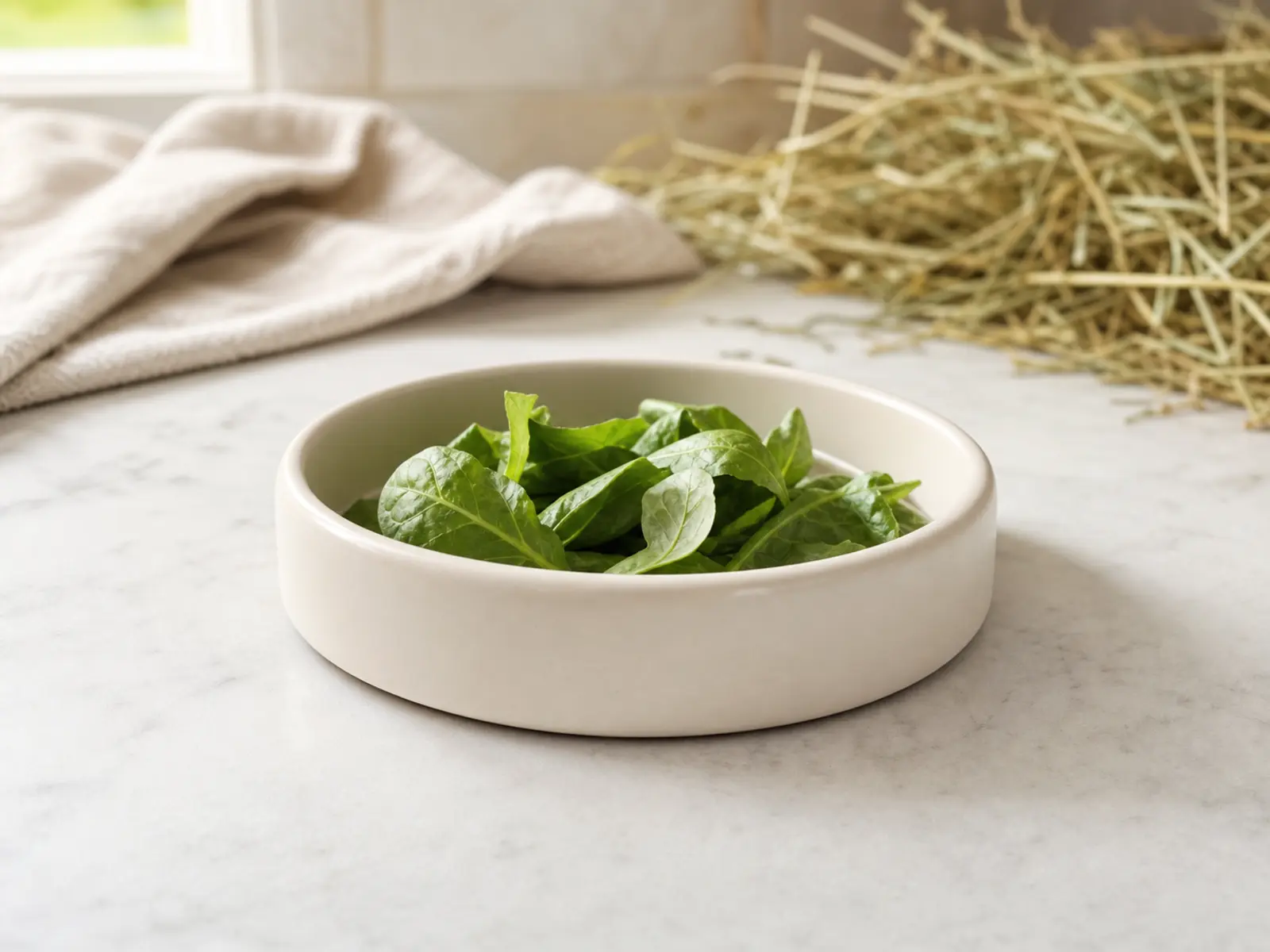
Spread the tender leaflets on a shallow plate beside familiar greens so the new forage does not disappear inside a deep bowl.
Shop ceramic food dish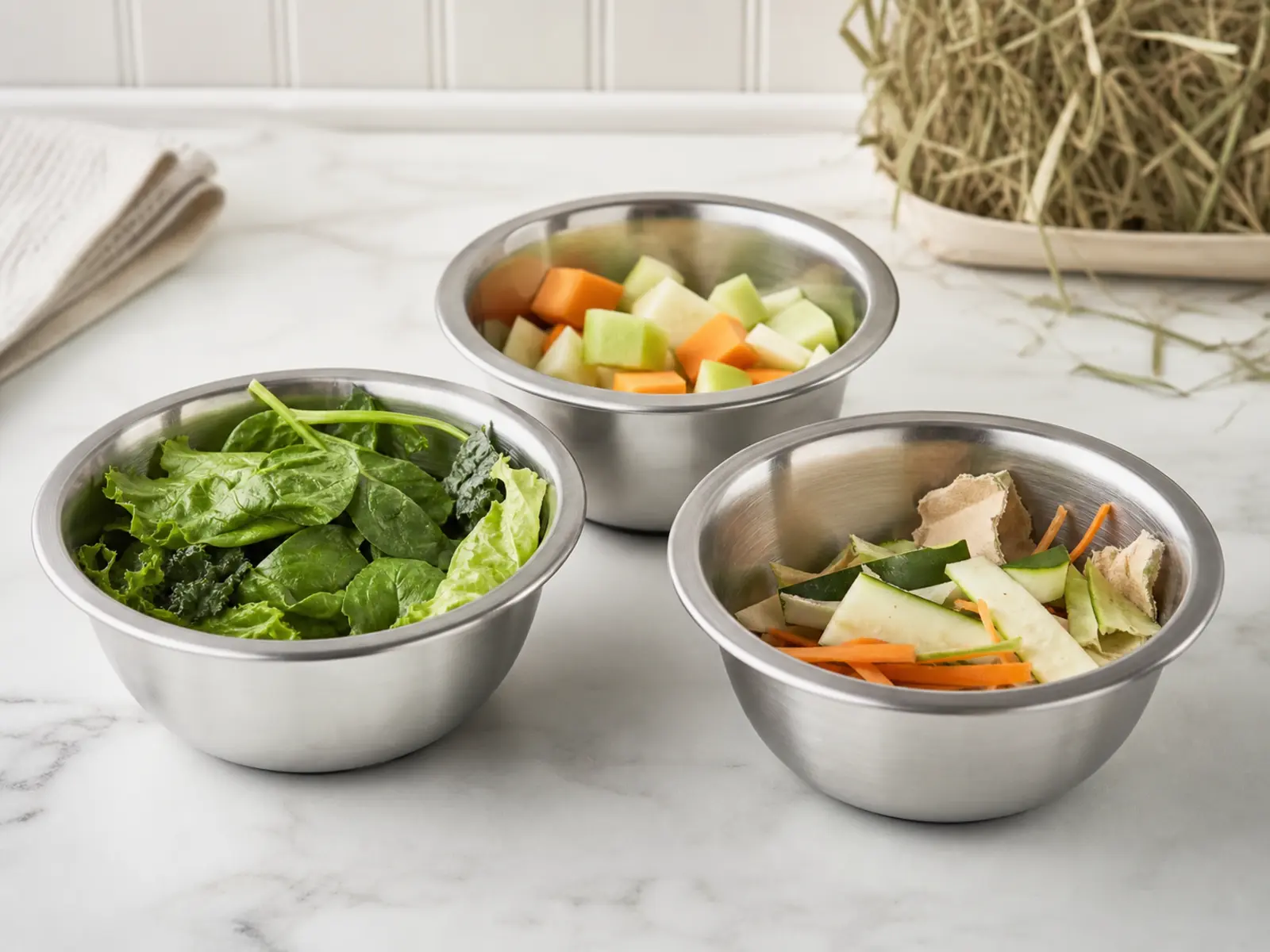
Stainless prep bowls
Turn one compound leaf pale-side up in a bright reflective bowl so veins, eggs, webbing, and damaged patches are easier to see.
Shop stainless prep bowls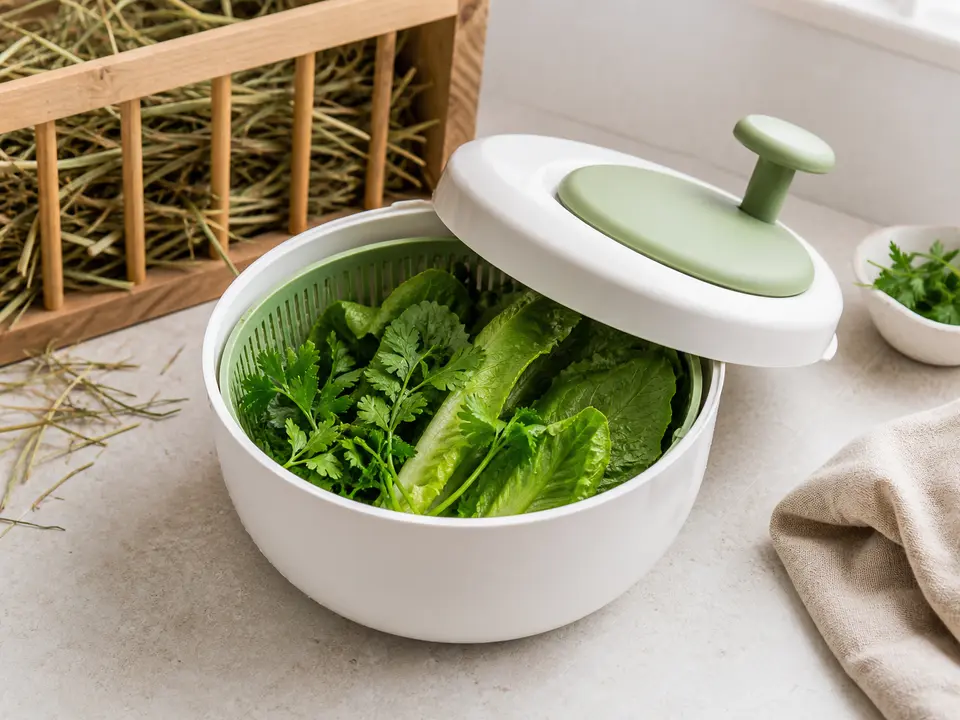
Salad spinner
Dry a larger batch of inspected leaves gently before storage; damp foliage pressed into a container spoils faster.
Shop salad spinner