Updated
Rabbit food check
Can Rabbits Eat Canned Vegetables? Why Fresh Wins
No—use fresh greens instead
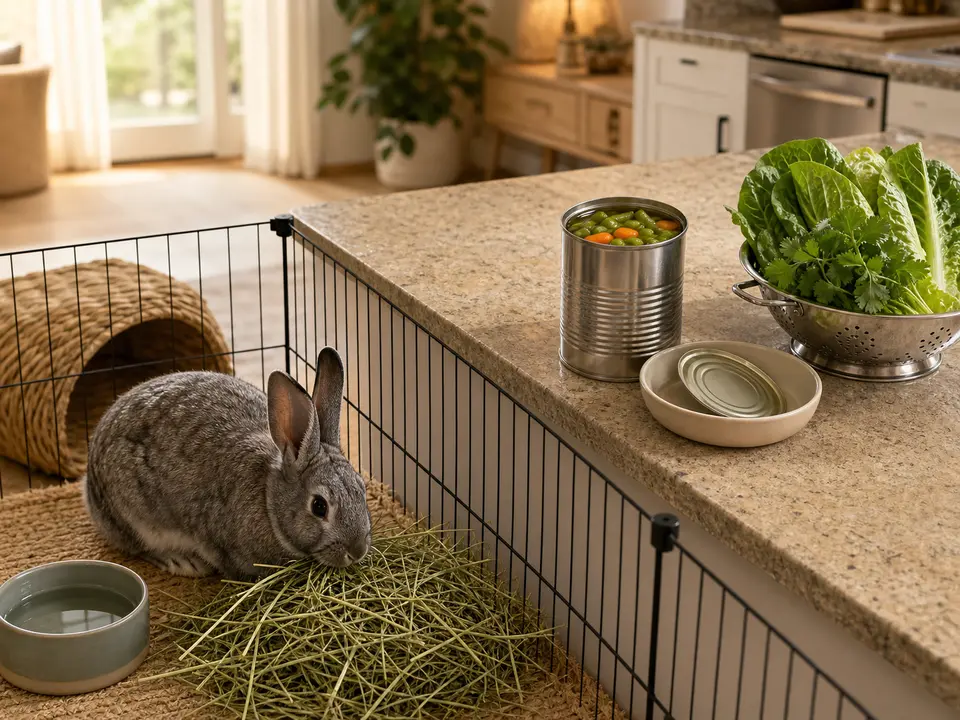
Keep canned vegetables on the people side of the kitchen. The food is cooked until soft, and the liquid may add salt, sugar, sauce, or seasoning. Give your rabbit hay and the fresh leaves they already know. If a mouthful vanishes, turn the can around and read the ingredients.
 Canned Vegetables
When to call your vet
Ring a rabbit-savvy veterinarian for onion, garlic, an unknown recipe, or more than a small stolen bite. Call as well if hay eating slows, droppings become scarce, or your rabbit sits hunched or unusually still. Read the ingredients from the can when the clinic answers.
Why canned vegetables are a poor choice
Canned beans, carrots, peas, and spinach bend or mash because they have been cooked until soft. Hay should still fill most of the rabbit's day. Add familiar fresh leaves on the side; seeing a known vegetable on the can does not make the cooked version worth serving.
Check what it was packed in
Turn the can around and read the fine print. Vegetables may sit in water, salty brine, stock, sauce, oil, or syrup, and mixed recipes sometimes add onion or garlic. If either was eaten, call a rabbit-savvy veterinarian promptly.
Rinsing does not make it fresh again
A canned bean still folds after a rinse, and a pea still mashes between your fingers. The tap cannot bring back a fresh crunch. Set the can aside for the family meal, refill the hay, and rinse tonight's usual rabbit greens.
When some goes missing
First find out what disappeared. A green bean packed in water is a simpler exposure than a spoonful of vegetables in seasoned stock. Keep the can, estimate how much was eaten, and watch hay eating, droppings, posture, and activity. Those details will help your veterinarian decide what to do next.
Deal with the sharp lid first
When the lid comes free, lower it flat into a sturdy bowl. Slide both the bowl and open can well beyond the counter edge so a rabbit cannot nose the sharp metal.
Clean up the liquid
Drain the can at the sink while the pen is closed. Wipe the counter and floor, then check for a pea or carrot cube that rolled away. Put the empty can, lid, and pull tab in a covered bin.
Make fresh greens the easy option
Washed romaine or coriander in the refrigerator makes the evening plate easy. Serve the familiar amount, add a fresh handful to the hay rack, and leave the pantry can out of the decision.
Keep the can if you may need the vet
Keep the can nearby until the next morning and snap a clear picture of the fine print. Check the pen for pulled hay, fresh round droppings, and relaxed movement. If any of those disappear, ring the clinic and give them the brand and ingredients.
How to handle it
- Set the lid in a bowl as soon as it comes off, and keep the open can well beyond the pen.
- Read the vegetable name, packing liquid, and full ingredient list. Even a no-salt-added can is not a substitute for fresh greens.
- Wipe up drips and clean the can opener before floor time. A rabbit should never be able to reach the liquid or a sharp rim.
- If food is missing, leave the can on the back counter. Note the clock time and whether a single bean or a larger spoonful is gone.
Avoid
- Vegetables packed in brine, stock, sauce, cream, oil, glaze, syrup, or any seasoned liquid.
- A label that names onion or garlic. Ring your veterinarian promptly after a theft, and ask for advice about wording you cannot decipher.
- Rinsing a seasoned vegetable and treating it as fresh. The food is still cooked and still part of the canned recipe.
- Open cans, lids, pull tabs, and foil seals anywhere a rabbit can reach them.
Watch
- Normal hay eating through the rest of the day
- Coming to the bowl normally when the next regular meal arrives
- The usual number of dry, round droppings in the litter box
- Reduced eating or droppings, diarrhea, a swollen or painful-looking belly, hunching, tooth grinding, weakness, or unusual quietness; call a rabbit-savvy veterinarian promptly
Portion
Do not plan a serving of canned vegetables. When a small piece disappears, remove the rest and check the label. Call your veterinarian for onion, garlic, heavy seasoning, an unknown amount, or any change in appetite, droppings, posture, or energy.
Handle the can safely and keep fresh food ready
These kitchen basics keep sharp lids and scraps contained while making fresh greens and hay easy to reach.
Affiliate links: Furball Cove may earn from qualifying purchases at no extra cost to you.
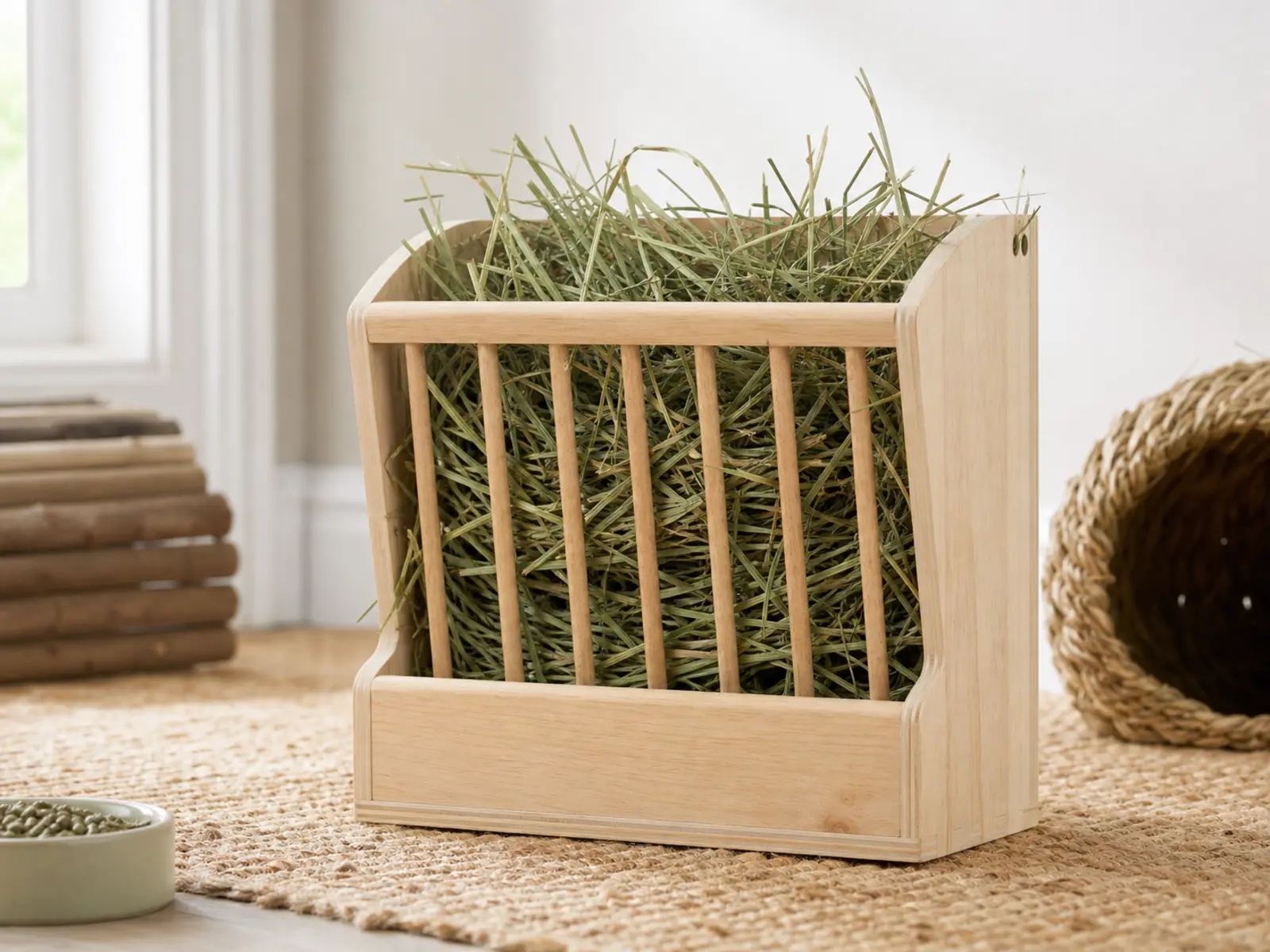
Rabbit hay feeder
Fill the hay feeder before the family meal and give your rabbit something appropriate to graze while cans are open.
Shop rabbit hay feeder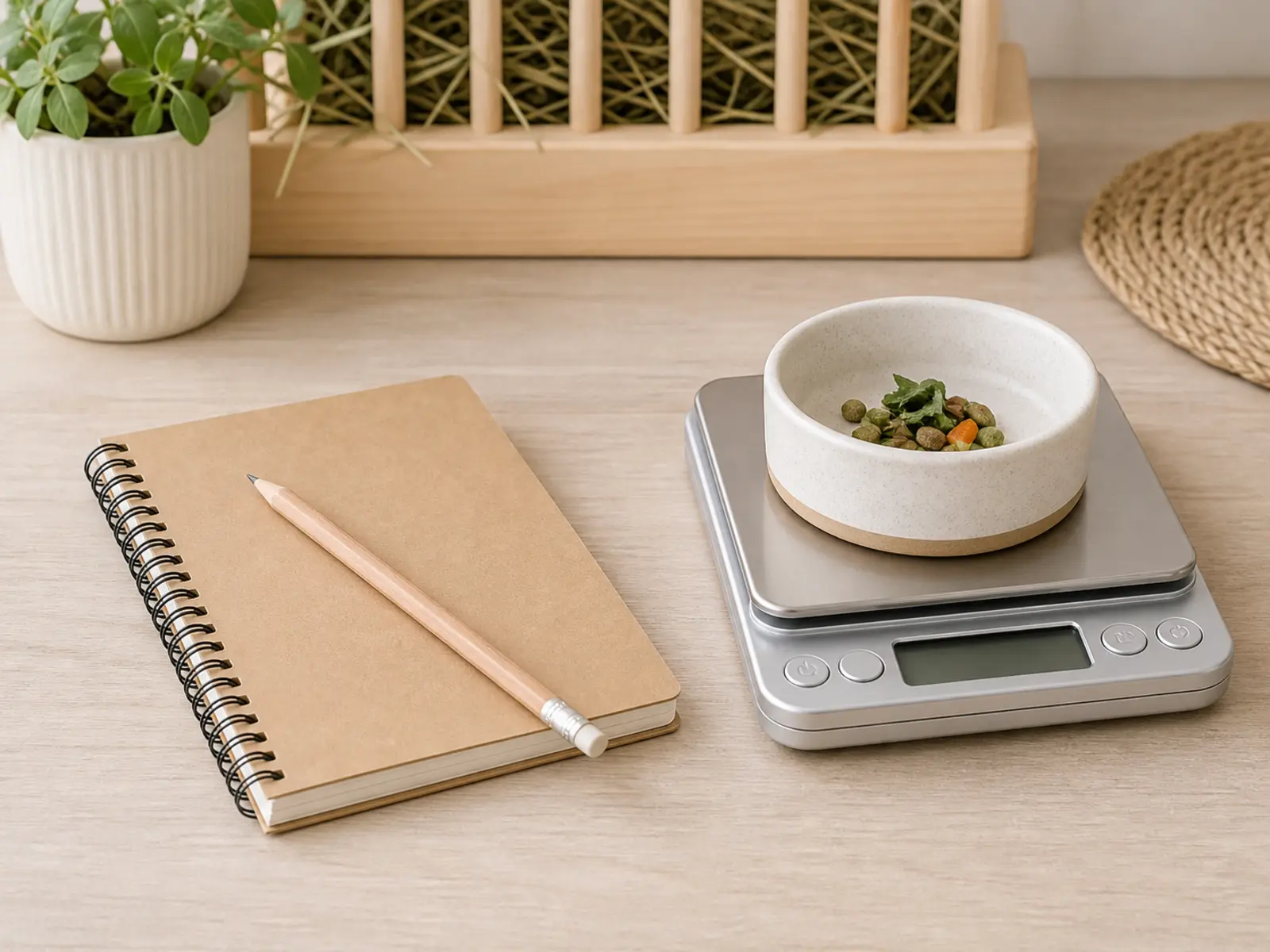
Rabbit care notebook
Write down the can, ingredients, amount eaten, and time if food disappears, then add any advice from the clinic.
Shop rabbit care notebook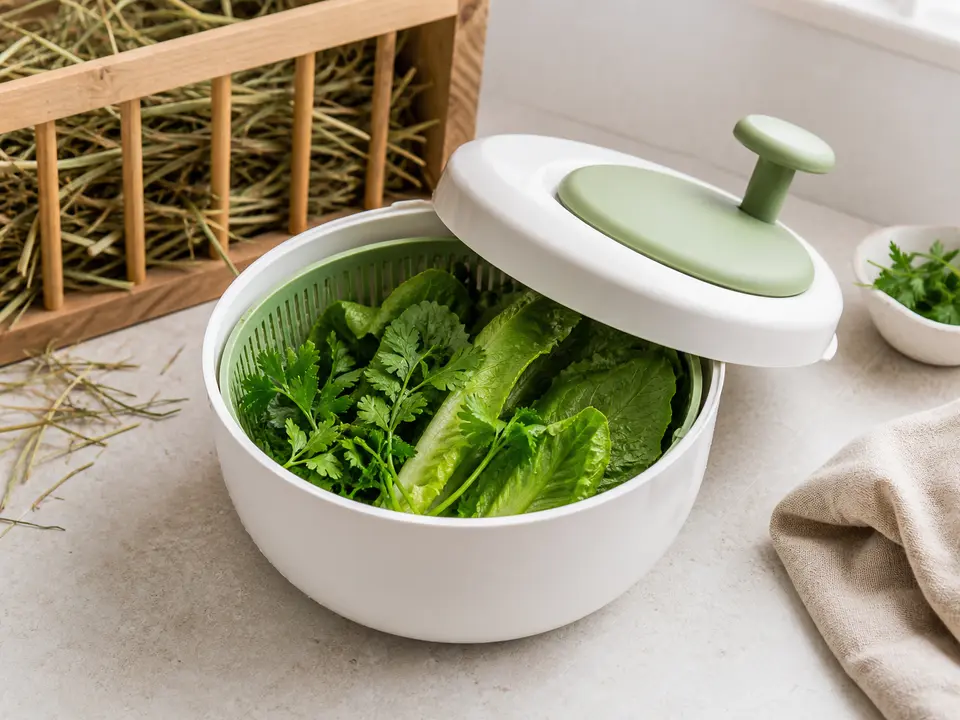
Salad spinner
Dry washed greens before storing them so a fresh option is ready when you need it.
Shop salad spinner