Updated
Rabbit food check
Can Rabbits Eat Carrots? Yes—Keep the Root Tiny
Yes—but keep the root tiny
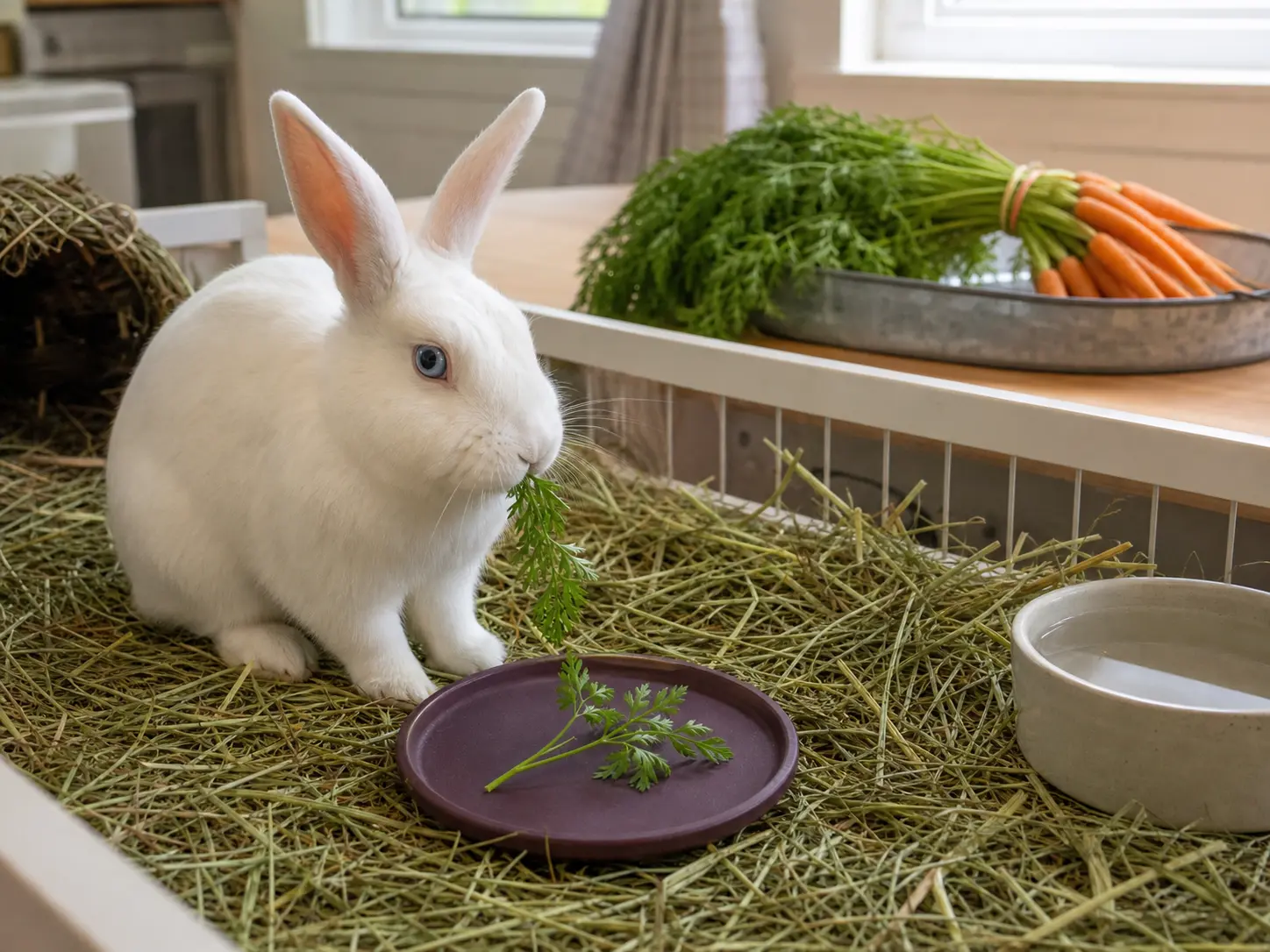
Yes—but treat the orange root as a tiny sweet extra, not a daily vegetable. Wash one fresh carrot, cut a plain piece about one cubic centimetre, and put the rest away. The leafy tops are rabbit-safe too, but they belong in the greens rotation rather than enlarging the root treat.
 Carrots
Yes—the orange root is a tiny treat
Carrot root is rabbit-safe, but House Rabbit Society groups it with sweet treats and VCA says it should not be offered daily. One small raw piece can be enjoyable. The orange root does not earn a large place in the bowl just because rabbits recognize it quickly.
One cubic centimetre is smaller than it sounds
RWAF gives a useful kitchen scale for sweet vegetables: roughly one cubic centimetre at a time. On an ordinary carrot, that can be one thin coin rather than a whole baby carrot. Cut the piece before opening the pen so eager begging cannot resize it.
The root and leafy top have different jobs
The feathery carrot top can join an adult rabbit's leafy-green rotation after washing. The orange root stays in the sweet-treat lane. Keeping the bunch intact until the kitchen sink makes that distinction visible and prevents a large root piece from hiding under a pile of leaves.
A carrot cannot stand in for hay
The tiny coin is over in seconds; grass hay supports long chewing visits throughout the day. If the rabbit starts waiting beside the refrigerator while leaving hay untouched, make carrot less frequent and check the hay itself. A sudden appetite change deserves a rabbit-savvy veterinary call.
Leave the leafy bunch together at first
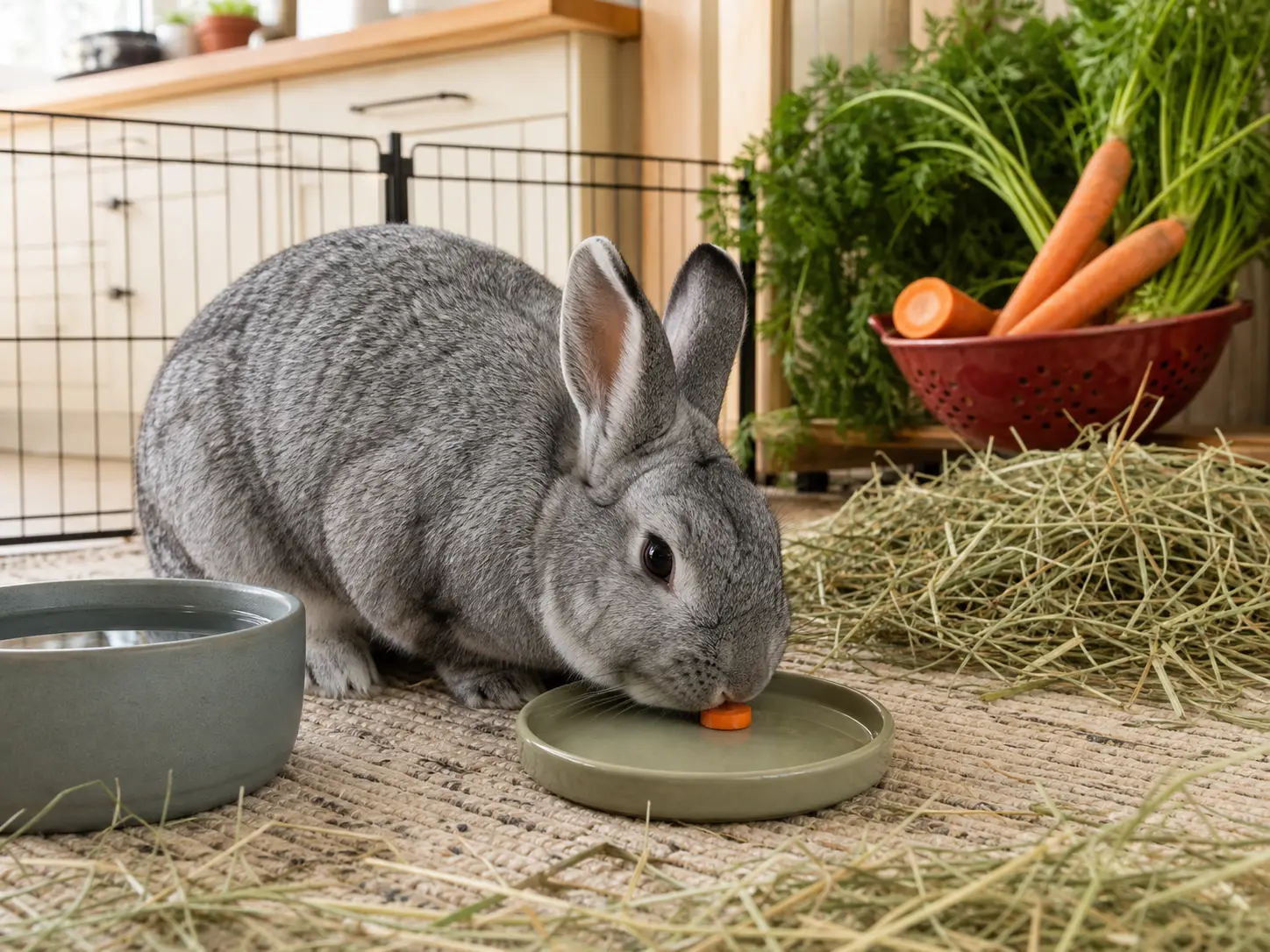
Two tapered orange roots and their feathery tops wait in the burgundy colander beyond the exercise pen. The silver-gray Standard Chinchilla sits beside a generous timothy pile while one firm carrot moves to the sink.
Scrub the root and inspect the crown
Run cool water over the carrot and rub soil from the fine surface ridges. Trim the crowded crown and check the cut face. Slime, fuzzy growth, a sour smell, or a wet blackened patch sends the root to the closed scrap bin.
Cut one tiny coin for the sage saucer
Slice a small orange coin with its pale circular core visible and place it on the low sage-green saucer. One piece is enough. Cover and chill the remaining carrot before a human recipe or an insistent rabbit turns it into several servings.
Check the hay after the sweet coin
Finishing the carrot only proves that the sweet bite was popular. Later, check the timothy pile and litter box for pulled hay stems and familiar round droppings. Slower eating or output, diarrhea, hunching, or a painful posture needs prompt rabbit-savvy veterinary advice.
Serve
- Confirm an ordinary fresh carrot root. Keep the orange taper and feathery top attached until prep so the sweet root does not get confused with the leafy green serving.
- Check the root from crown to tip. Discard a carrot with slime, fuzzy growth, sour odor, a wet blackened patch, deeply sunken sections, or a cut end that has turned soft and sticky.
- Scrub the orange surface under cool running water. A sound washed skin can stay; trim away soil-packed damage and the tough crown where the leafy stems meet the root.
- Cut one thin plain coin that totals roughly one cubic centimetre. Put the remaining carrot in the refrigerator before roasting, glazing, juicing, dipping, salting, or seasoning begins.
Avoid
- A whole carrot, whole baby carrot, bowl of coins, or repeated refills. The familiar cartoon image is not a sensible rabbit portion.
- Counting the leafy tops and the orange root as one unlimited food. The tops can join the greens rotation, while the sugarier root remains a tiny treat.
- Carrot juice, purée, baby food, cake, muffins, chips, soup, cooked sides, glazed carrots, or pieces carrying dip, butter, oil, honey, salt, sauce, spice, or seasoning.
- Using carrot to tempt a rabbit through every meal when hay intake is falling. A rabbit that suddenly eats less hay or refuses familiar food needs prompt rabbit-savvy veterinary advice.
- A slimy, moldy, sour-smelling, badly bruised, deeply shriveled, chemically treated, or unidentified piece.
Watch
- The tiny carrot coin disappearing while the rabbit continues ordinary visits to the hay pile
- Normal posture, movement, water use, and interest in familiar food
- The rabbit's usual separate round droppings after a first carrot-root tasting
- Reduced eating or droppings, soft stool, diarrhea, belly pressing, hunching, tooth grinding, weakness, or unusual quietness; stop carrot and contact a rabbit-savvy veterinarian promptly
Portion
RWAF suggests about one cubic centimetre of sweet vegetable at a time, while House Rabbit Society places carrot root among very small treats rather than everyday vegetables. Both point to the same practical serving: one tiny coin, not a whole baby carrot and not a handful. Hay remains the meal.
Make the tiny carrot portion obvious before the rabbit asks twice
These produce-prep tools help wash the root, cut one measured coin, separate the leafy top, and put the remaining carrot away before one sweet bite becomes a handful.
Affiliate links: Furball Cove may earn from qualifying purchases at no extra cost to you.
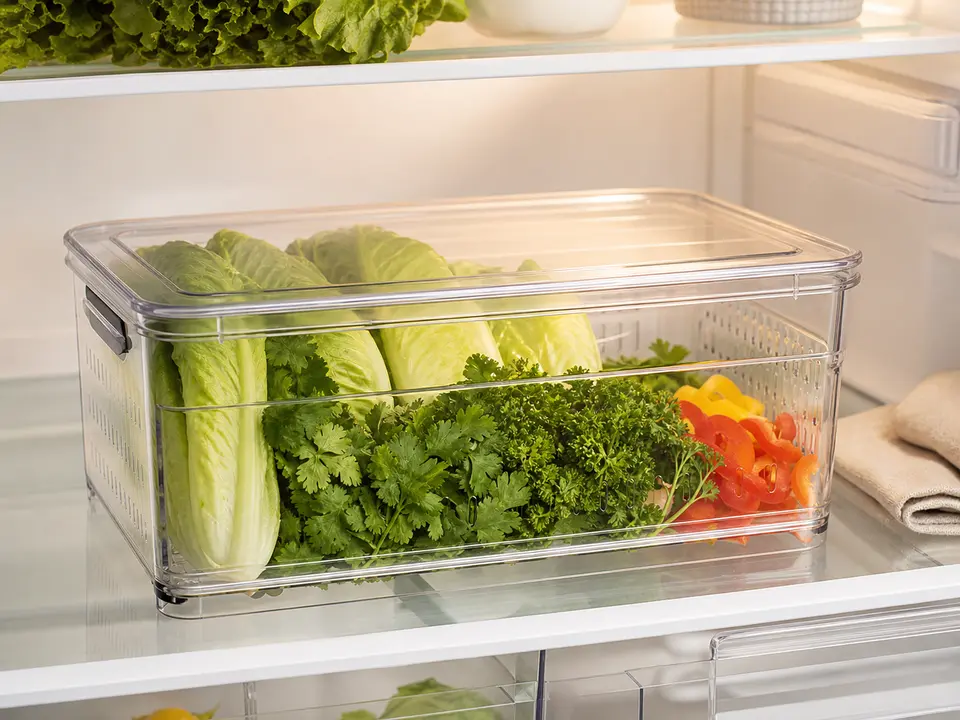
Rabbit greens bin
Keep whole and cut carrots visible in the refrigerator so a soft end, wet patch, mold, or the opened date remains easy to inspect.
Shop rabbit greens bin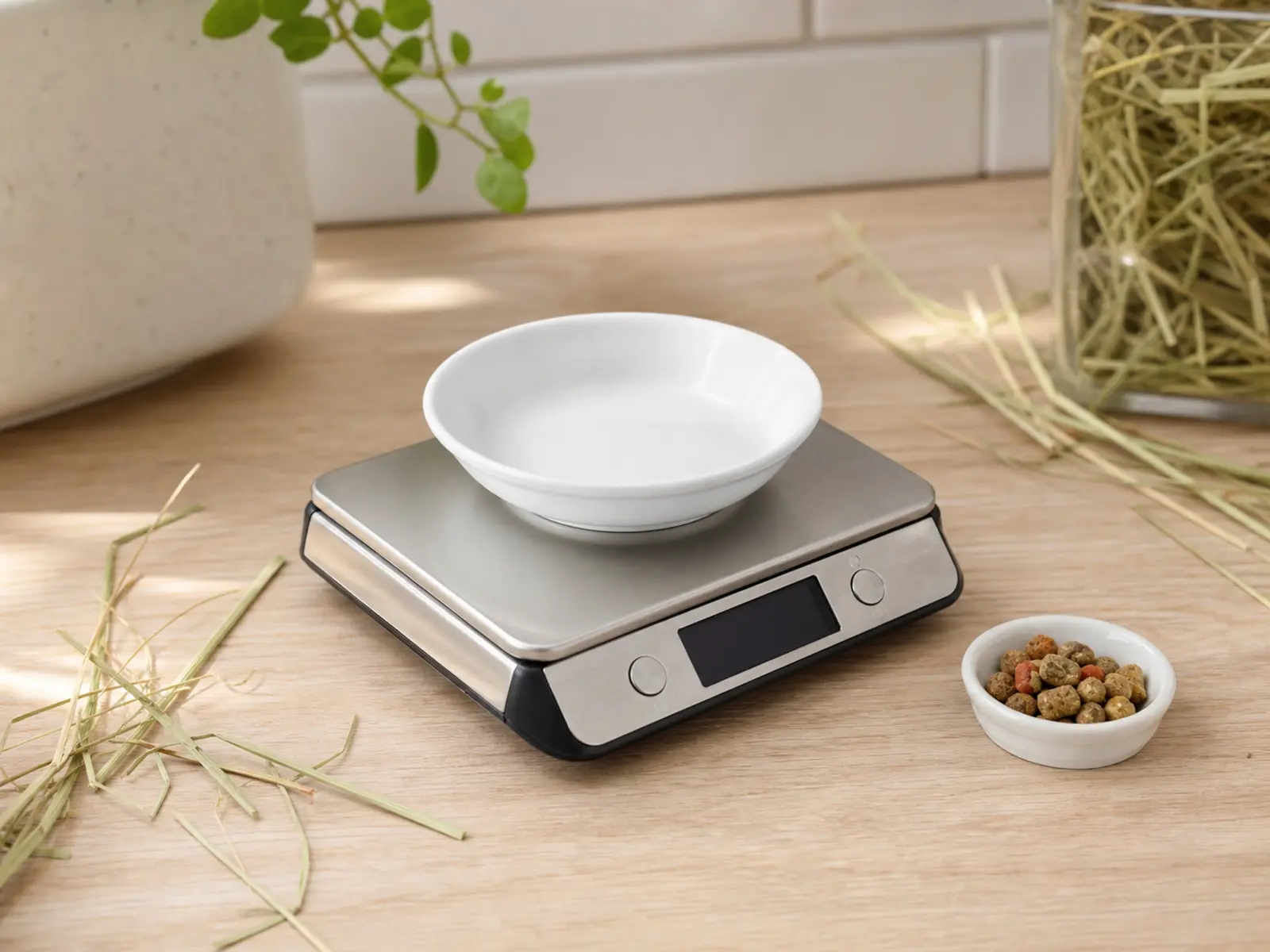
Digital gram scale
Use a tareable scale when a veterinary weight plan calls for measured sweet vegetables rather than enlarging the piece by eye.
Shop digital gram scale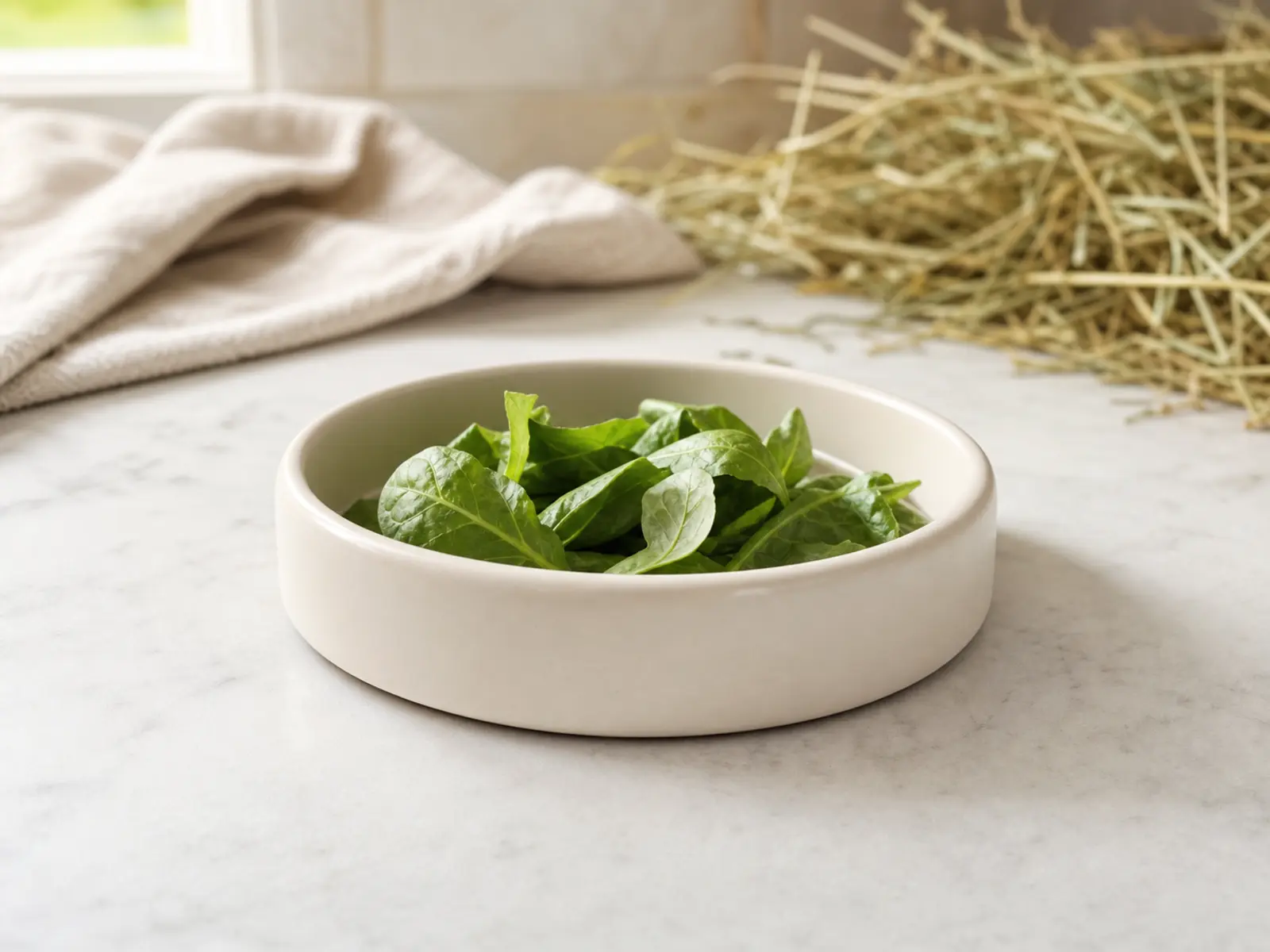
Ceramic food dish
Place the single orange coin on a low washable saucer with no pellets, dip, butter, honey, salt, sauce, or cooked food underneath.
Shop ceramic food dish