Updated
Rabbit food check
Can Rabbits Eat Dried Herb Mix? Check Every Ingredient
Sometimes—check every plant
Sometimes—but only when every ingredient is named, recognizable, and rabbit-safe. Choose plain dried leaves and petals with no seeds, grain, fruit, sugar, salt, flavoring, oils, powder, or filler. Start with one small pinch beside abundant hay. If you cannot identify every piece, do not feed the mix.
 Dried Herb Mix
A mix is only as safe as its least familiar plant
Calendula, dandelion, mint, and rose do not cancel out one unknown leaf. House Rabbit Society recommends dehydrated edible forage as a simpler treat, but edible is the important word. A complete ingredient panel lets you check each species; a rustic name and a window in the bag do not.
Dried describes the format, not the species
Drying removes water. It does not identify a plant, remove roadside contamination, undo pesticide use, or make a toxic lookalike safe. Rabbit Welfare Association & Fund shows that known garden flowers can be dried for forage and separately warns that plant identification matters. Start with the plant, then evaluate how it was grown and dried.
Whole pieces beat powder and health claims
A flat dandelion fragment or calendula petal can be compared with the label. Green-brown dust cannot. Powder also hides mold, fillers, and the relative amount of each ingredient. Claims about digestion, calm, immunity, or dental care do not rescue a blend whose contents you cannot see and name.
Introduce plants before you introduce blends
If mint, rose, and plantain are all unfamiliar, a mixed test hides the culprit. Put one verified leaf on the rabbit's usual evening plate and leave the hay and pellets unchanged. The blend can wait until each plant has passed a solo trial.
Turn the jar into an inventory
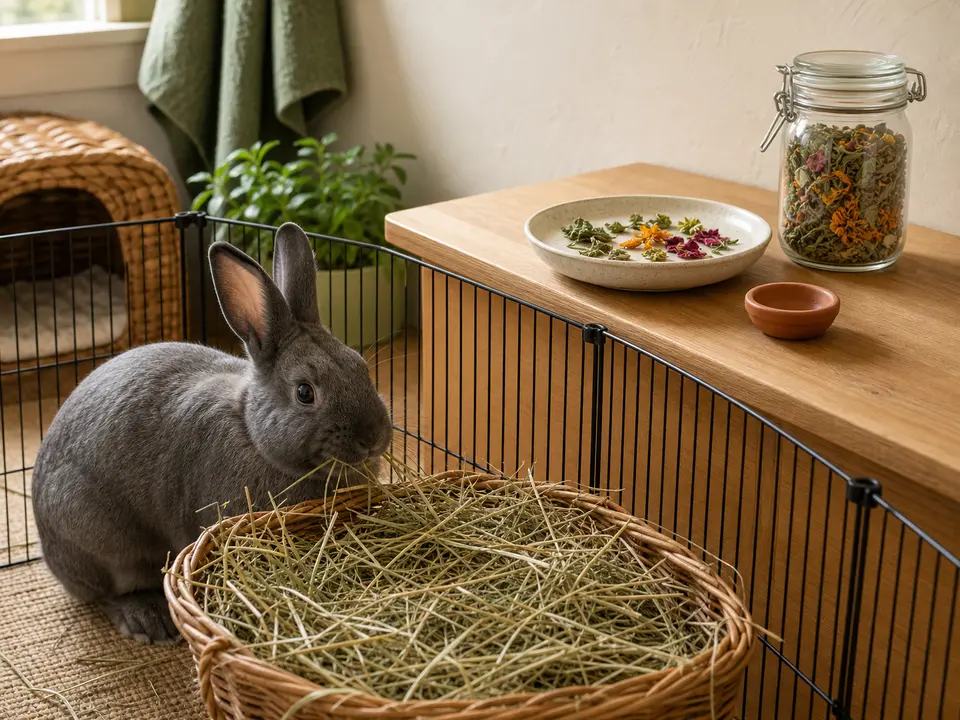
At the oak counter beside the rabbit pen, copy every ingredient onto the care note without shortening botanical names to mixed herbs. Check the orange calendula, dusty rose petal, green plantain, and mint one by one. If the list and the visible pieces do not agree, close the swing-top jar before the rabbit comes out.
Sort one pinch on the cream tray
Use the terracotta pinch bowl to lift a deliberately small amount, then spread it across the pale plate beside the hay basket. Turn leaves over and break apart dense clumps. A musty smell, silky web, damp center, fuzzy edge, seed, or bright manufactured piece sends the batch away from the rabbit room.
Let the forage disappear inside the hay
Fluff the smoke-gray rabbit's orchard hay until loose stems rise above the wicker rim. Sprinkle the approved leaves across a hand-sized patch instead of filling a separate snack bowl. Searching among long strands makes the dried plants a brief foraging detail while the rabbit keeps doing the chewing that matters.
Close the jar and watch the ordinary routine
Return the sealed mix to a cool dry cupboard and leave tomorrow's portion undecided. At the evening check, compare the basket level with its morning photo, count what landed on the litter liner, and offer the familiar dinner. A pretty blend that displaces hay or changes stool has not earned a repeat serving.
How to offer it
- Confirm every plant by its exact ingredient name. Check each one against a reliable rabbit-safe plant source rather than relying on words such as meadow, garden, or natural.
- Pour a pinch onto a pale sorting tray and look for recognizable leaves, stems, and petals that match the ingredient list.
- Remove hard foreign material and reject the whole batch for damp clumps, webbing, insects, fuzzy growth, stale or musty odor, oily coating, or a heavy layer of dust.
- Scatter the approved pinch through fresh loose hay. Close the jar before opening the pen so the rabbit cannot raid an unmeasured blend.
Avoid
- Tea, potpourri, culinary seasoning, essential-oil blends, powdered supplements, or products intended to scent a room rather than feed a rabbit.
- Onion, garlic, chive, added salt, sugar, honey, molasses, flavoring, coloring, oil, caffeine, or any ingredient described only as herbs, flowers, or botanicals. Call a rabbit-savvy veterinarian promptly if onion or garlic was eaten.
- Seeds, nuts, grain, cereal pieces, dried fruit, yogurt drops, or pellets mixed among the leaves and petals.
- Wild or home-dried plants collected from roadsides, sprayed ground, dog-walking areas, or a species identification that was never certain.
Watch
- The rabbit spending the rest of the feeding period pulling full-length strands from the hay basket
- Dry droppings continuing at the rabbit's familiar size and frequency through the next routine checks
- Nothing tacky on the litter liner or clinging around the rabbit's hindquarters
- Reduced eating or droppings, diarrhea, belly pressing, hunching, tooth grinding, weakness, or unusual quietness; remove the mix and call a rabbit-savvy veterinarian promptly
Portion
Begin with one small pinch, not a dishful or a colorful layer over the whole hay pile. Dried material packs more plant into less volume than fresh leaves. If a listed herb is new to your rabbit, introduce that plant by itself first so a reaction is not hidden inside a blend.
Make every leaf visible before it reaches the hay
A good dried-forage setup does four simple things: names the plants, spreads one pinch where you can inspect it, keeps the jar dry and closed, and brings the rabbit back to loose hay.
Affiliate links: Furball Cove may earn from qualifying purchases at no extra cost to you.
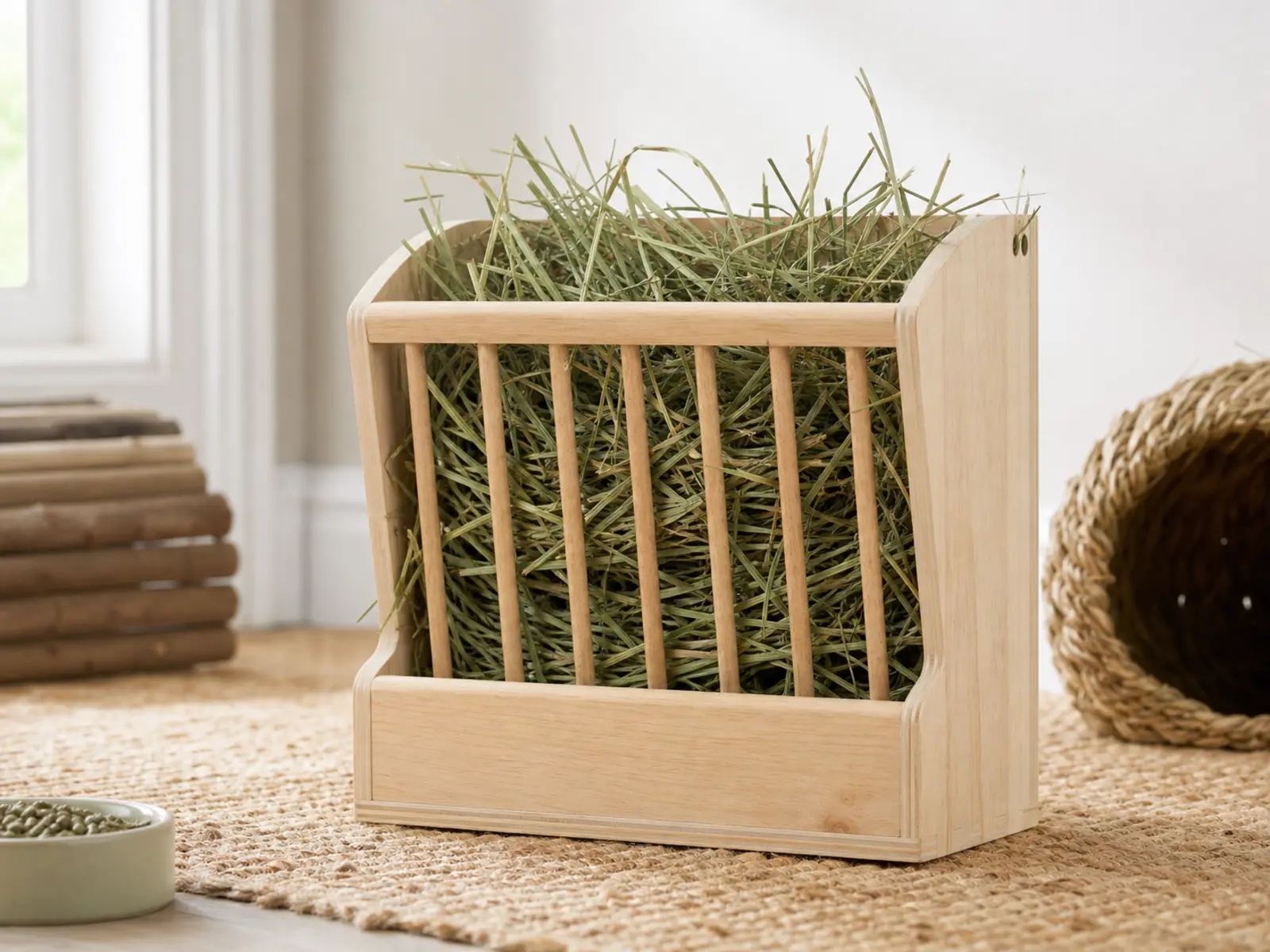
Rabbit hay feeder
Scatter the inspected leaves among abundant long strands so the forage accent cannot replace the main chewing job.
Shop rabbit hay feeder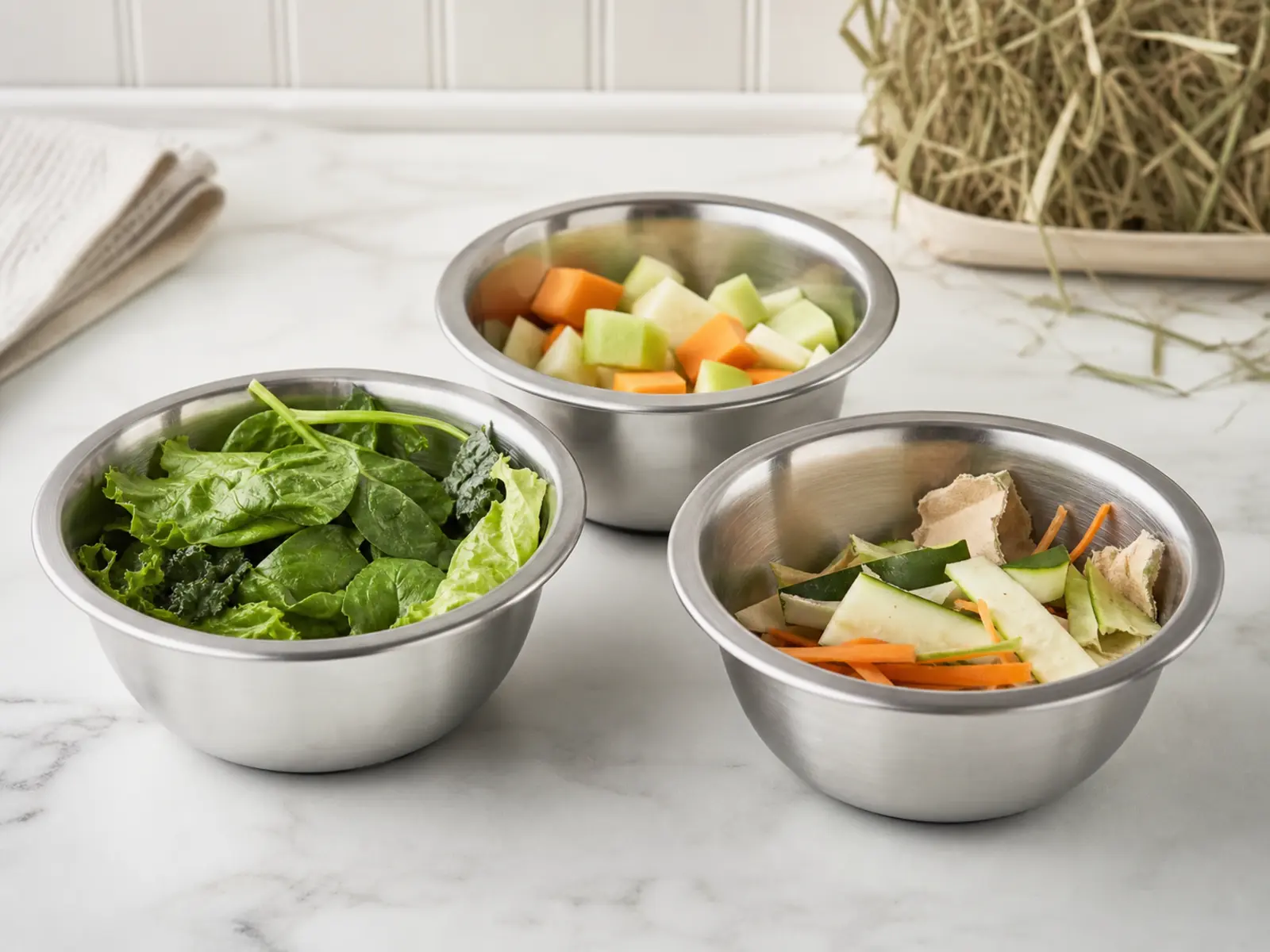
Stainless prep bowls
Decant a small amount without spilling the entire jar or mixing rejected fragments back into the clean supply.
Shop stainless prep bowls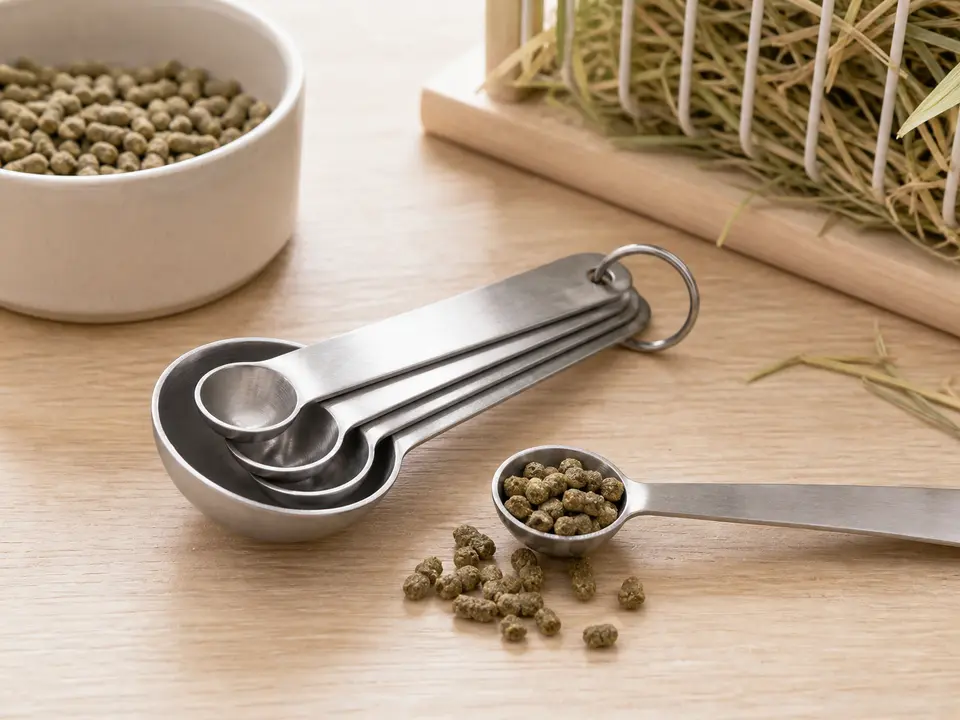
Measuring spoon set
Use the smallest spoon as a repeatable pinch guide instead of tipping a colorful mound over the hay rack.
Shop measuring spoon set