Updated
Rabbit food check
Can Rabbits Eat Marigold? Yes—If It Is Calendula
Yes—pot marigold
Yes—if you mean pot marigold, Calendula officinalis. Offer one washed orange petal or a small leaf piece from a correctly identified untreated plant, and do not guess from the common name alone.
 Marigold
The useful name is Calendula officinalis
Pot marigold and calendula refer to the orange or gold daisy-like flower listed by House Rabbit Society and PDSA. The everyday word marigold is much looser. On the porch shelf, tuck the Calendula officinalis seed packet beneath its terracotta pot; whoever clips rabbit greens can match the printed name before touching a bloom.
Do not turn a common name into a plant test
Tagetes bedding flowers and marsh marigold are different plants, even though garden signs may reuse the same cheerful name. This guide does not ask a rabbit to settle that taxonomy. If the growing plant cannot be confirmed as Calendula officinalis, choose a known romaine leaf tonight and leave the mystery flower in place.
A garden-center pot needs a waiting period
A new calendula on a garden-center trolley may contain systemic insecticide or fertilizer inside its leaves, where sink water cannot reach it. Park that decorative pot outside the rabbit room instead of clipping a petal on the drive home. For the food planter, sow known seed in untreated mix or buy stock documented as edible.
One petal keeps the introduction readable
Calendula is forage variety, not a reason to tip a flower basket into dinner. A single orange ray petal is visible, easy to wash, and easy to count. It also leaves room for the familiar leafy greens and the large hay portion that should occupy the rabbit much longer.
Match the label to the living calendula
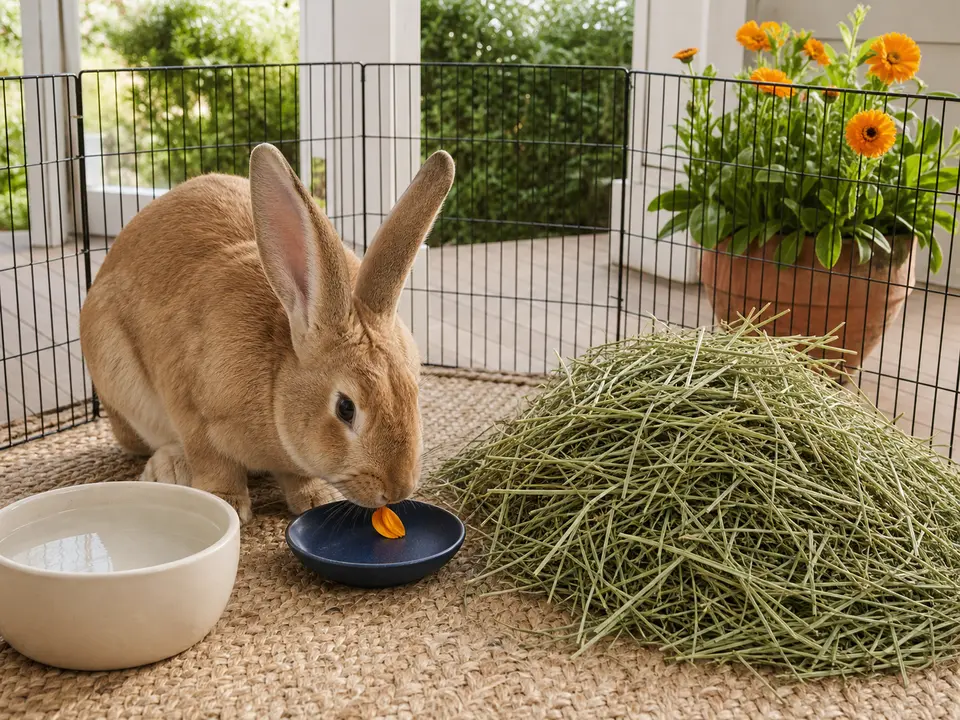
On the covered porch, compare the Calendula officinalis tag with the open orange flower, its layered narrow ray petals, and the oblong green leaves below. Check that neighboring stems have not leaned into the pot. Only the plant that matches the record enters the prep bowl.
Take a petal that never touched the compost
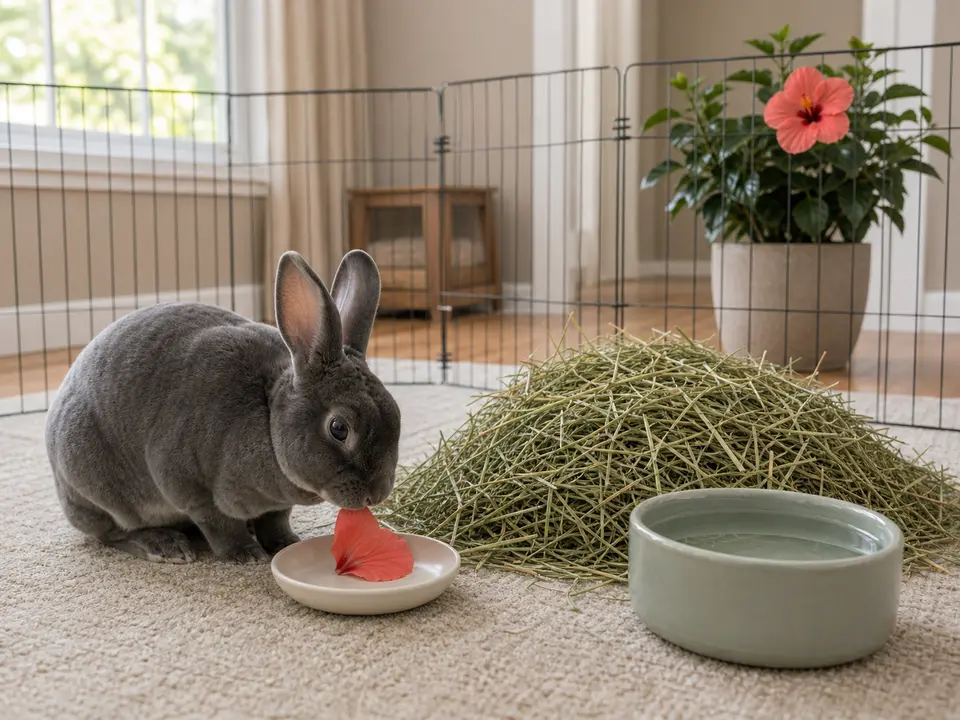
Choose an upright bloom with a dry center and clean edges. Lift one outer petal at its base, leaving the flower head, stem, unopened buds, and fallen scraps outside. The navy saucer should hold one orange piece—nothing swept from the porch floor.
Open every fold before rinsing
Lay the petal across a pale towel under the kitchen light. Look along both edges and the narrow base for aphids, eggs, dark residue, mildew, or torn wet tissue. Once it passes, rinse with cool water and blot without rolling it into an unrecognizable wad.
Keep the orange moment beside a full hay mound
Set the navy saucer near fresh timothy hay and clean water, then let the rabbit find the petal. Do not refill the empty dish with another flower. At the evening pen clean, ordinary posture, steady hay use, and firm pellets give the useful answer about that first calendula taste.
Serve
- Confirm Calendula officinalis from a plant label, seed packet, or reliable garden record; the word marigold by itself is not enough.
- Harvest only from the pot or bed whose chemical record you know. Reject plants near slug bait, weed killer, pesticide, fertilizer splash, roadside exhaust, or animal fouling.
- Select one dry upright orange petal or an unblemished leaf; skip fallen, slimy, mildewed, insect-covered, faded, or heavily damaged pieces.
- Carry it separately and open the folds under bright light. Run cool tap water over both sides, press dry on a clean towel, and keep flower food and neighboring plants out of the dish.
Avoid
- Marsh marigold, an unrelated wetland plant, or any yellow-orange flower identified only by a phone photo or common nickname.
- French, African, signet, or other marigolds substituted for the specifically sourced Calendula officinalis answer on this page.
- Florist bunches, municipal beds, garden-center displays, and newly purchased pots when nobody can document the systemic pesticides or fertilizers used on them.
- Calendula salves, creams, tinctures, teas, oils, soap, potpourri, or mixed dried products; these are not the same as one fresh plain petal.
Watch
- The orange petal being eaten while long hay strands continue to disappear
- Usual curiosity, grooming, water use, and relaxed movement around the pen
- Familiar dry round droppings and a normal appetite through the following routine
- Loose stool, belly pressing, hiding, or reduced eating or output; remove calendula and call a rabbit-savvy vet promptly when appetite or droppings decline
Portion
Start with one broad ray petal, not a complete flower head or a handful from the border. A small leaf piece can be tested on a different day. If hay chewing, appetite, and firm droppings remain ordinary, calendula may return as one component of a varied forage plate.
Keep one calendula petal identifiable from pot to pen
The safest workflow preserves the plant name and the portion: one known bloom, one isolated petal, a bright inspection surface, plain rinse water, and plenty of hay. These tools make each handoff visible.
Affiliate links: Furball Cove may earn from qualifying purchases at no extra cost to you.
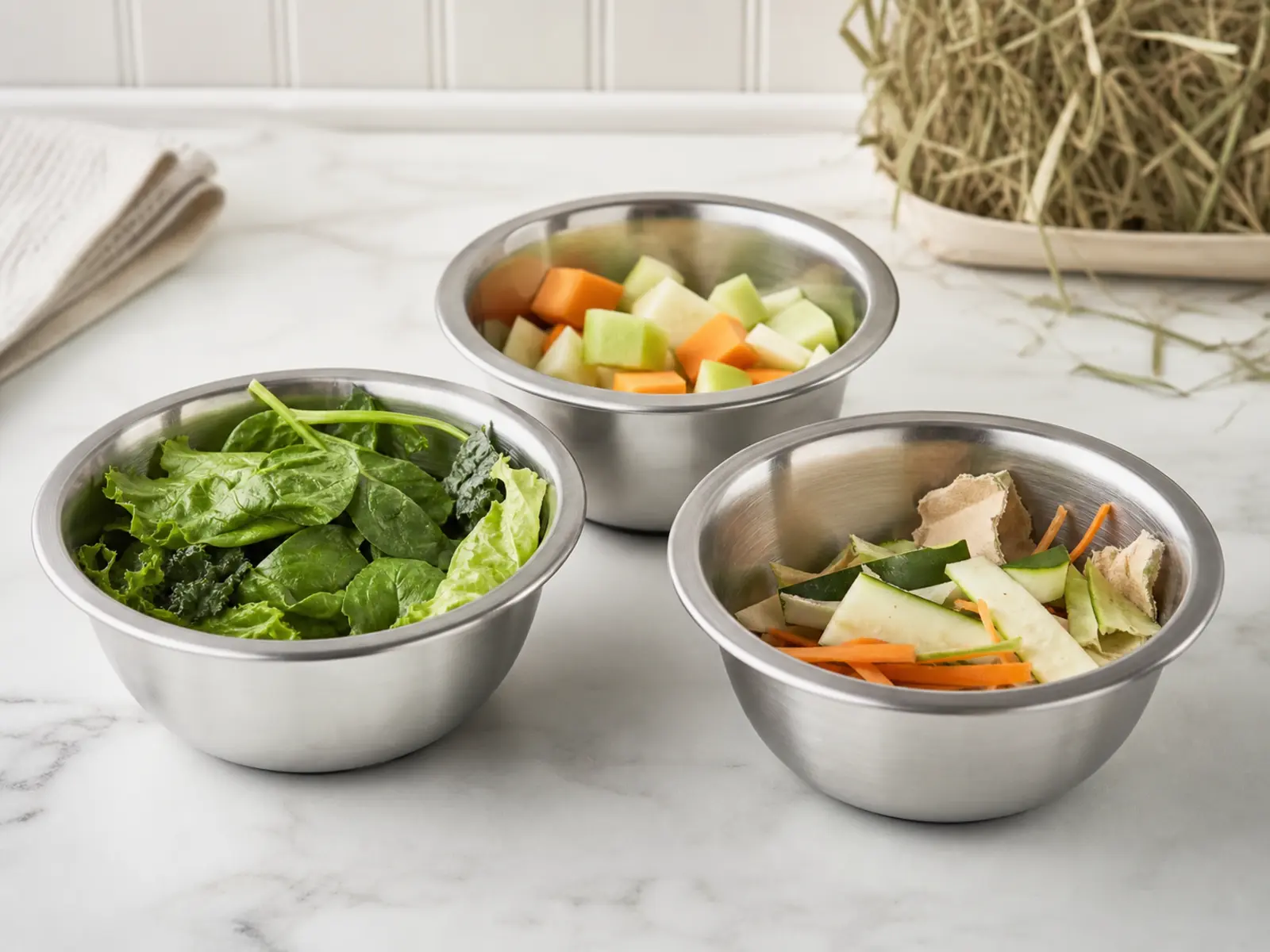
Stainless prep bowls
Carry the single calendula petal apart from neighboring flowers, loose soil, and porch debris while its source remains certain.
Shop stainless prep bowls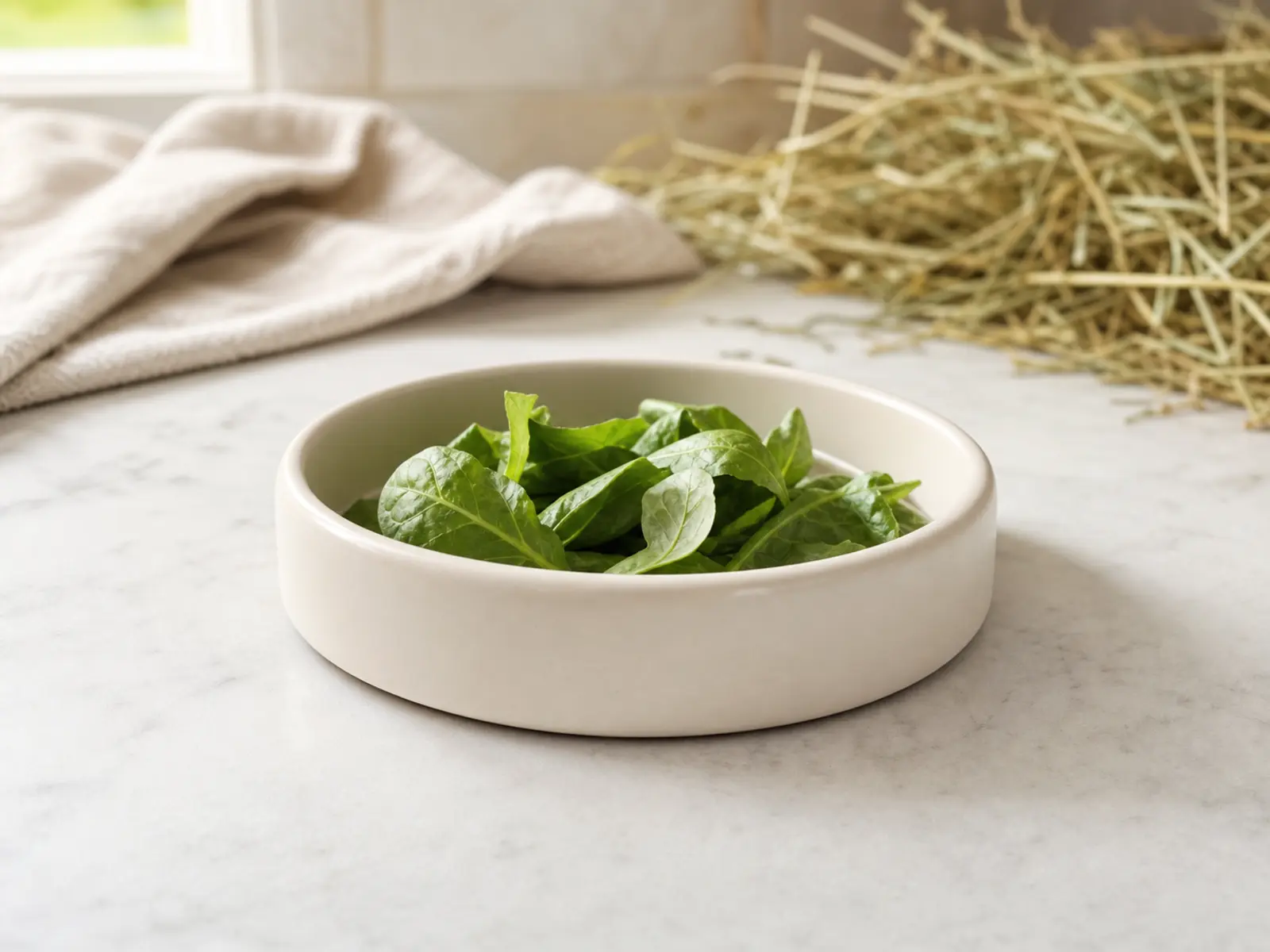
Ceramic food dish
A navy shallow saucer frames one bright petal clearly, helping everyone in the house respect the first-serving limit.
Shop ceramic food dish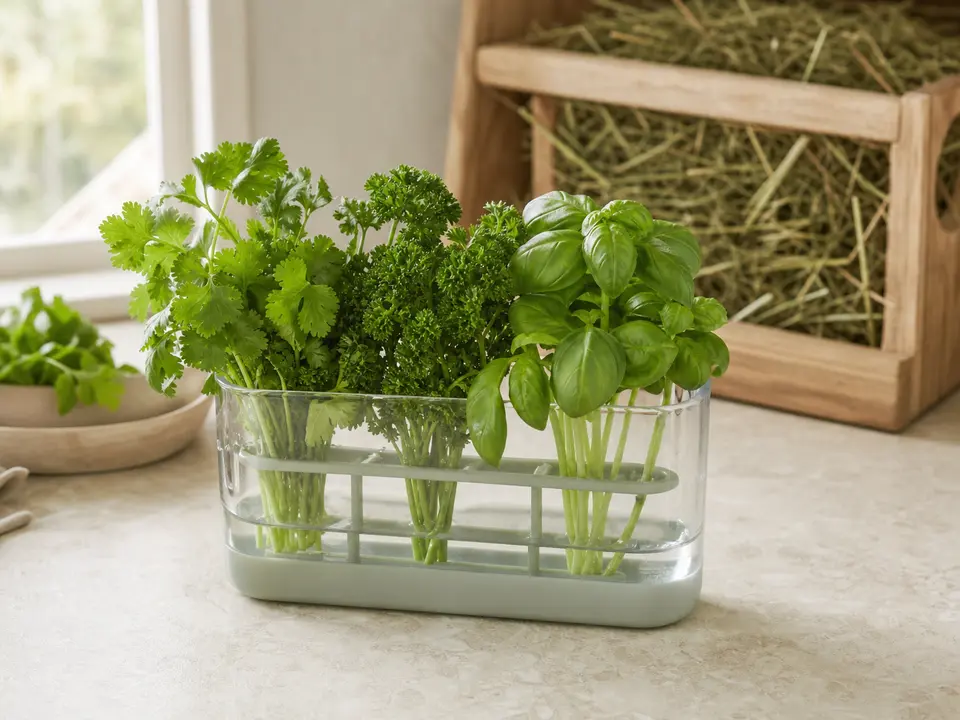
Herb keeper
Hold clean dry leaves loosely in the refrigerator so airflow reaches them and a browning edge is found before rabbit dinner.
Shop herb keeper