Updated
Rabbit food check
Can Rabbits Eat Plantain Herb? Yes—Not Banana
Yes—the lawn herb
Yes—broadleaf and ribwort plantain can go in a rabbit's greens bowl. This means the Plantago lawn herbs, not banana. Make the initial serving one washed leaf from an untreated rosette, and never feed mower clippings.
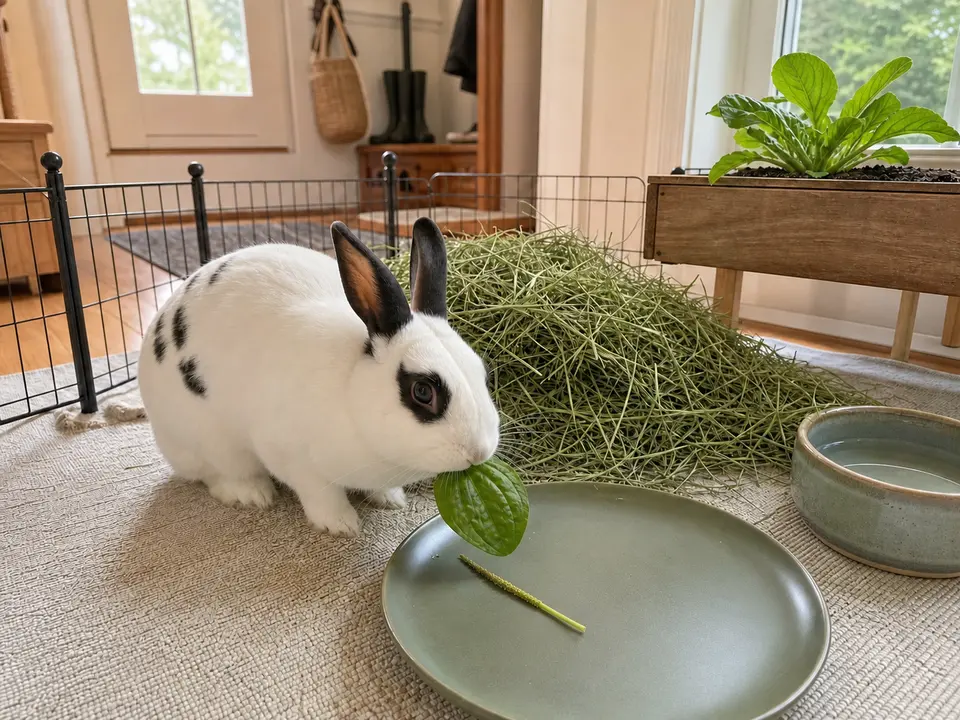 Plantain Herb
Plantain here means Plantago, not banana
The shared common name causes needless confusion. Broadleaf plantain and ribwort are low garden herbs in the Plantago genus. Cooking plantain is banana-family fruit. For the rabbit bowl, look for a ground-level leaf rosette and narrow upright seed spikes; banana fruit stays on the kitchen side.
Follow the ribs back to the rosette
A broadleaf plantain leaf has several strong veins running lengthwise from its base, but one ribbed leaf on a kitchen counter is not enough. In the patch, trace it to the compact center where multiple leaves rise from ground level. Keep the whole growing pattern in view before a clipping travels to the rabbit pen.
Choose the leaf before the dusty seed head
Plantago seed spikes become dry and seedy with age. They are useful for recognizing the plant, but a mature stalk adds no clarity to the first feeding test. Clip one healthy leaf, remove the tough stalk, and leave ripe seed heads standing in the planter.
Protect the source instead of clearing it
Cut one outer leaf and leave the rosette center intact. A small basket or barrier can keep a free-roaming rabbit from uprooting the plant, swallowing dirt, or moving into neighboring weeds. The next serving should come from a plant that is still easy to identify.
Find the complete rosette
Crouch low enough to see where each leaf begins. Broadleaf plantain spreads wide oval blades around one center; ribwort holds narrower blades in the same ground-level pattern. If stems wander in from several plants, separate them into a prep bowl before one leaf is chosen for the rabbit pen.
Lift one leaf clear of the soil
Look for a firm green outer leaf that is clear of mud, dog urine, mower oil, and chemical granules. Lift it by the stem and snip without disturbing the rosette's young center. The roots and every neighboring weed stay outdoors, well away from dinner.
Read the ribs at the mudroom sink
Set the leaf against a moss-green plate beside the sink, then run a finger along its lengthwise veins. Under bright light, flip it and inspect every fold and the thick midrib for eggs, tunnels, or mildew. Only then should water touch it; let the clean leaf drip dry before serving.
Let one leaf answer the tolerance question
Set the clean leaf beside familiar greens while the orchard-hay mound and water bowl are full. Return the rabbit to its normal pen routine. Later, the hay ends, posture, appetite, and firm litter-box pellets tell you whether Plantago belongs in the forage rotation.
Serve
- Confirm the whole Plantago plant: broadleaf plantain forms a low rosette of wide ribbed leaves, while ribwort forms a rosette of narrow lance-shaped ribbed leaves.
- Use a patch with a known treatment history, away from roads, busy footpaths, dog fouling, fertilizer granules, herbicide, pesticide, and contaminated runoff.
- Trace the chosen leaf to the rosette, clip above the dirt, and check the underside and ribs for insects, eggs, mildew, leaf-miner trails, and decay.
- Wash the leaf front and back, shake off the droplets, and remove any stiff mature seed stalk. That keeps the first serving simple enough to judge.
Avoid
- Banana fruit or peel substituted because both share the name plantain; those are separate fruit questions with different portions.
- Any lawn leaf selected from a photo match without confirming the complete rosette, veins, flower stalk, and known Plantago source.
- Roadside, dog-fouled, chemically treated, flooded, moldy, rusted, slimy, heavily mined, or exhaust-coated foliage.
- Lawn-mower clippings or a warm bag of mixed cut weeds and grass; use intact hand-picked leaves that can still be identified and inspected.
Watch
- The broad ribbed leaf being eaten while coarse hay continues to disappear
- The familiar firm pellets and clean rhythm at the next toilet-area check
- Normal interest in water, hideout, grooming, and the rabbit's usual greens
- Loose stool, belly discomfort, hiding, or less food or fewer droppings; remove plantain herb and contact a rabbit-savvy vet promptly if appetite or output slows
Portion
One medium leaf is a clear first portion. A tiny young leaf may be paired with one more from the same rosette, but do not arrive with a packed lawn basket. Check that appetite, droppings, and hay intake remain normal before putting Plantago into the weekly greens mix.
A clear path from Plantago rosette to one clean leaf
The job is to preserve the clues: keep one intact leaf separate, inspect its ribs and underside, rinse away soil, dry it, and serve it visibly. These tools help the lawn herb stay identifiable from patch to rabbit pen.
Affiliate links: Furball Cove may earn from qualifying purchases at no extra cost to you.
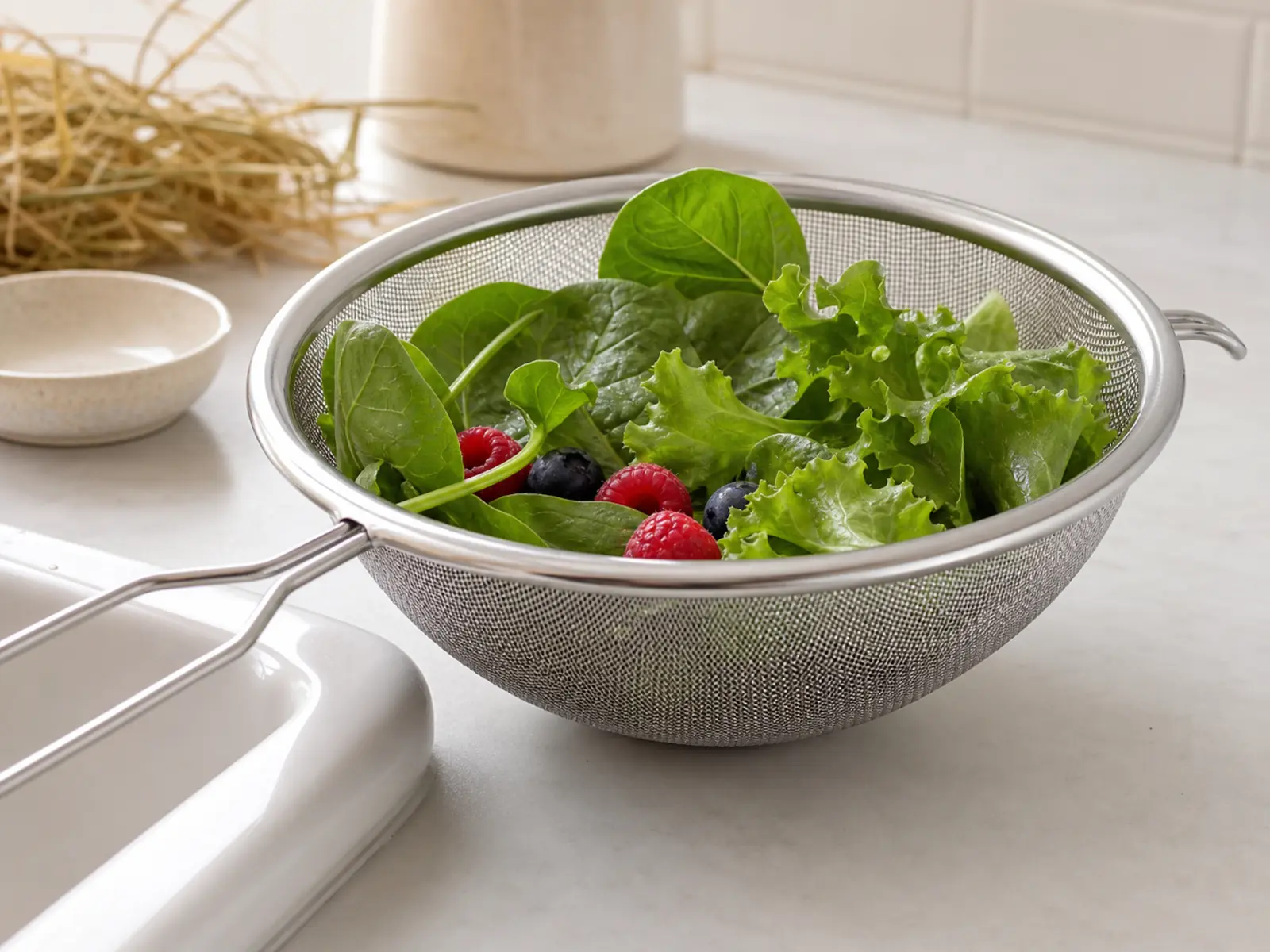
Produce strainer
A brisk wash dislodges soil and tiny insects from the deep ribs, while the basket keeps the leaf from sitting in dirty water.
Shop produce strainer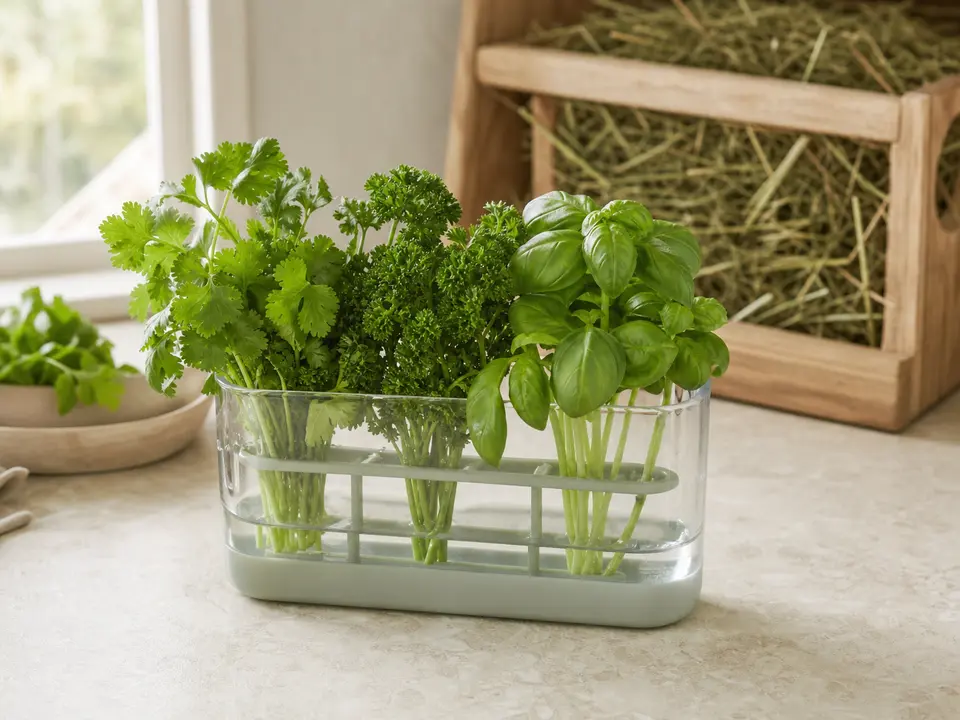
Herb keeper
Hold clean dry Plantago leaves upright with airflow so the ribbed blades remain visible rather than collapsing into a wet bundle.
Shop herb keeper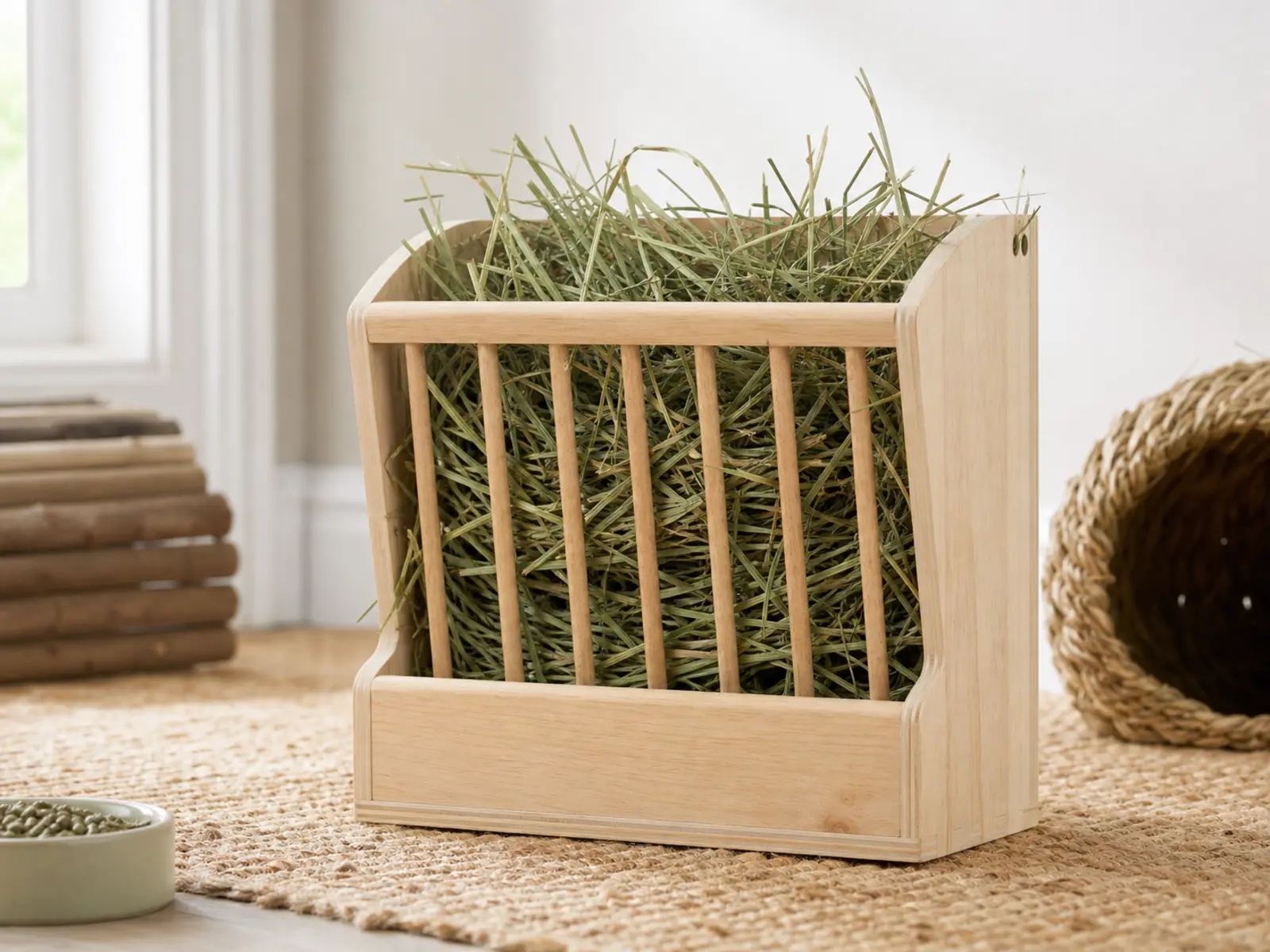
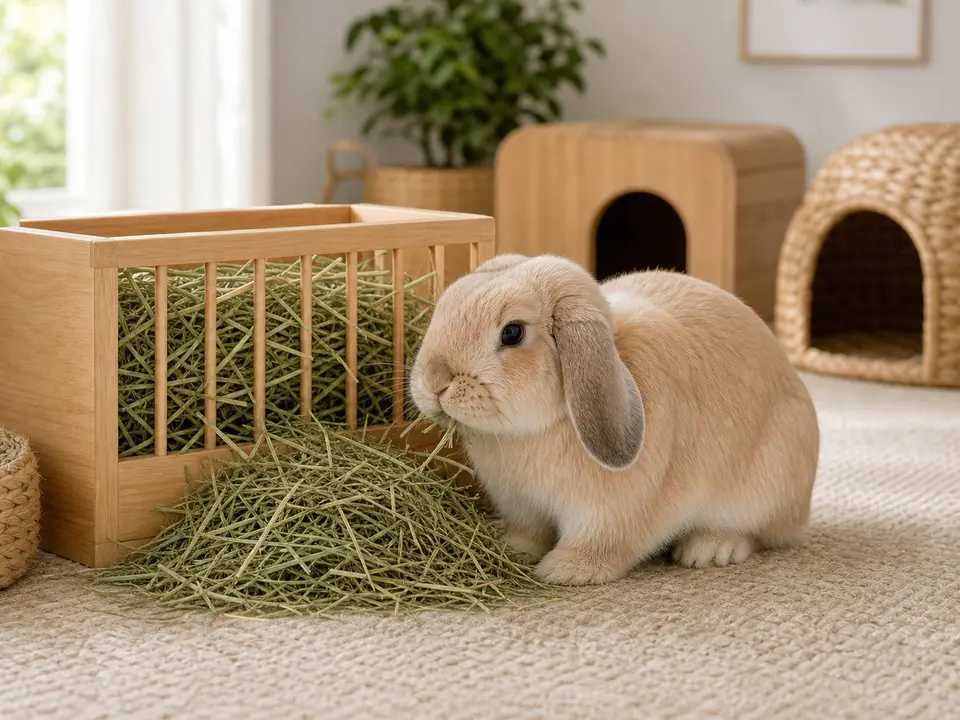
Rabbit hay feeder
Load the orchard or timothy hay station first, keeping one lawn-herb leaf as forage variety rather than the meal itself.
Shop rabbit hay feeder