Updated
Rabbit food check
Can Rabbits Eat Hibiscus? Yes—Use an Unsprayed Plant
Yes—flowers and leaves
Yes. An identified unsprayed hibiscus can provide an edible flower petal or leaf for a rabbit. Start with one washed petal, keep the living plant and potting soil outside the pen, and do not substitute bouquets or tea blends.
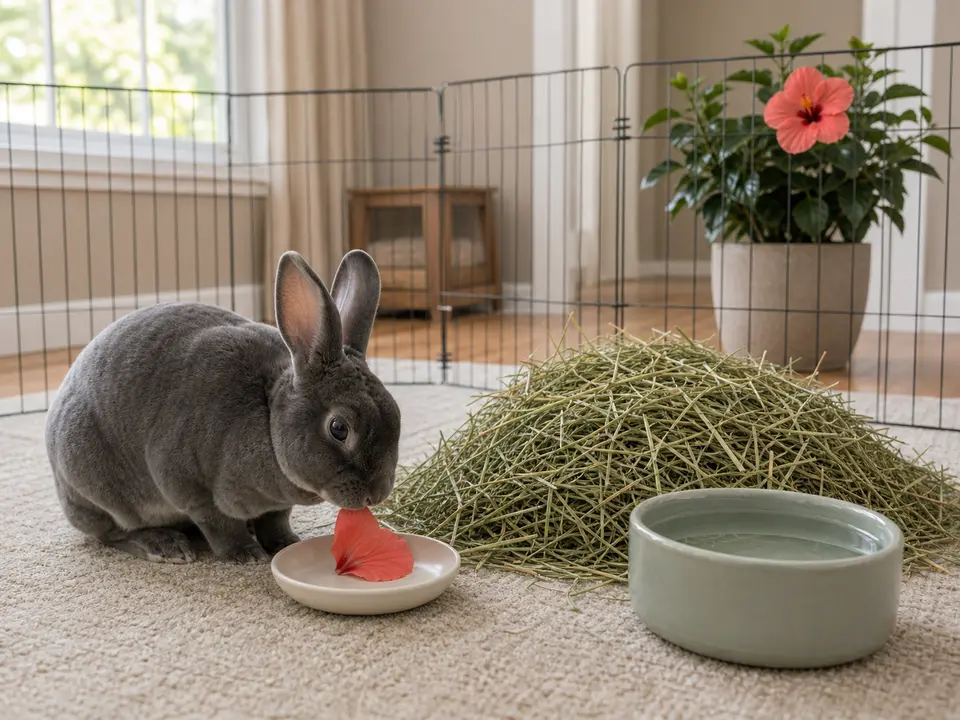 Hibiscus
Safe hibiscus still needs a known plant
Hibiscus appears on the House Rabbit Society list of edible flowers and plants. Still, a random red bloom in a planter is not dinner. Confirm the whole living plant as Hibiscus and know how it was grown; when the name or treatment history is missing, enjoy the flower with your eyes and refill the rabbit's hay instead.
A florist flower is the wrong shortcut
A supermarket bouquet and a garden-center hibiscus can look flawless under shop lights while carrying spray residue, systemic pesticide, leaf shine, preservative, or hidden florist wire. Do not pull one bright bloom from the vase or a newly bought pot for the rabbit dish. Use only the plant whose care history you can name.
Fresh petal and hibiscus tea are separate questions
A tea box can contain dried hibiscus plus rosehip, citrus peel, flavoring, sweetener, or other herbs. Concentrated syrups and extracts move even farther from a fresh leaf. The simple rabbit serving is one identifiable piece picked directly from a safe plant, not a prepared human drink.
Protect the pot as carefully as the flower
A rabbit reaching the plant may eat far more than one petal, bite woody stems, or dig through fertilizer and potting mix. Keep the container beyond the exercise pen. Bring the checked food to the rabbit rather than letting the rabbit harvest from the pot.
Read the flower while it is still attached
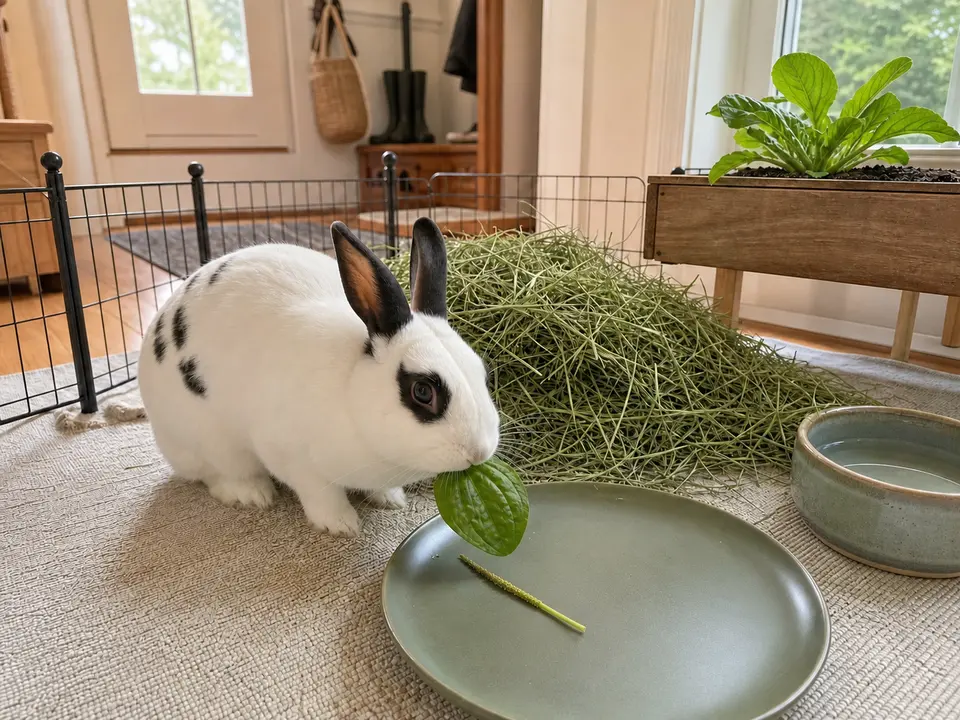
Look at the open five-petaled bloom, its projecting central column, the surrounding glossy toothed leaves, and the way they join the shrub. Those clues are much stronger together than a fallen petal on the patio. Take a photo of the intact plant if another household member will be preparing rabbit greens later.
Choose one clean piece above the soil line
On the screened porch, lift a fresh petal that has not browned or stuck to a neighboring leaf. Snip at its base without brushing the potting mix. The central flower column, woody stem, unopened buds, and dropped blooms stay with the plant; carry just that coral petal indoors in a clean prep dish.
Use the pale plate as an inspection bench
Spread the petal flat so small insects, dark specks, translucent damage, and sticky residue cannot hide in the folds. Rinse both sides with plain cool water and blot gently. The petal should reach the pen intact, not crumpled into wet scraps that are hard to count.
Let hay frame the first taste
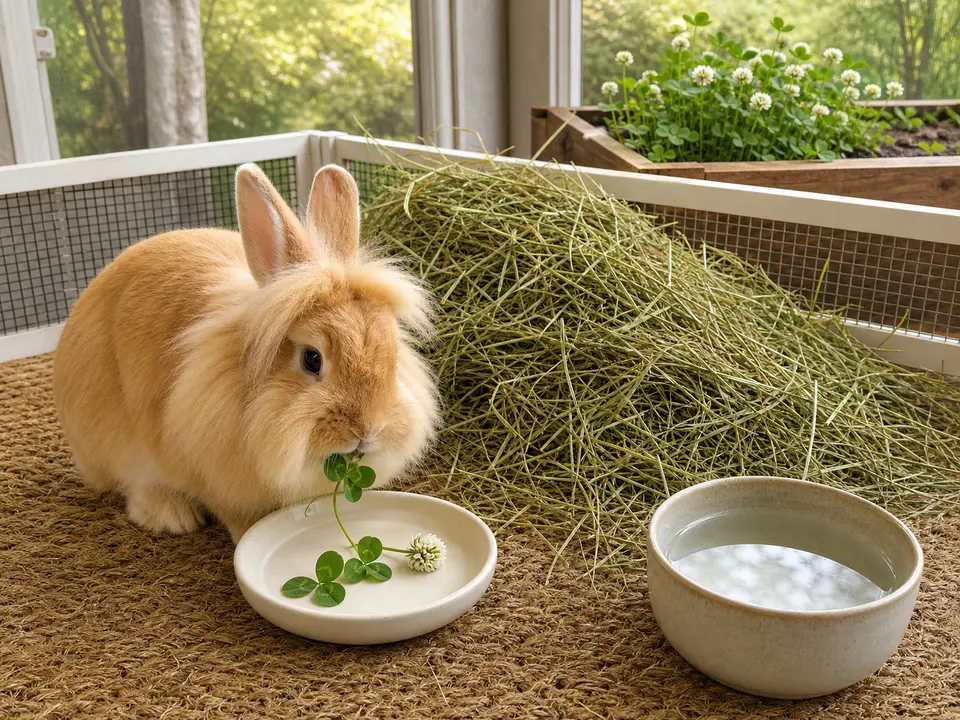
Place the petal on its own shallow saucer near a generous timothy-hay mound and clean water. The bright piece will vanish quickly; let ordinary hay chewing take over. When you check the pen later, familiar behavior and firm droppings matter far more than the enthusiasm of that first bite.
Serve
- Identify a living Hibiscus plant by its flowers, leaves, and growth rather than relying on one loose petal or a shop label alone.
- Use only a plant with a known chemical history; florist flowers and newly purchased ornamentals may carry pesticides, preservatives, leaf shine, or systemic treatments.
- Choose a fresh petal or sound green leaf away from soil, fallen blooms, mildew, sticky sap, insect damage, and decaying edges.
- Inspect both surfaces under good light, rinse with plain water, shake gently, and serve without stem, pollen clumps, dressing, or other ingredients.
Avoid
- A flower picked from a bouquet, roadside bed, hotel planter, public garden, garden center, or any plant whose spray and fertilizer history is unknown.
- Hibiscus tea, syrup, jam, candy, dried drink blends, or extracts; their ingredients and concentration are different from one fresh garden petal.
- Potting mix, fertilizer pellets, treated leaves, florist foam, plant tags, wire, wilted fallen flowers, mold, or standing water from the saucer.
- A full branch or bowl of blossoms for an introduction. Keep the live plant beyond the barrier so the rabbit cannot strip it or dig in the pot.
Watch
- The single petal disappearing while the rabbit continues working through coarse grass hay
- The usual drinking, posture, grooming, and eagerness when regular greens arrive
- Firm dry droppings in the rabbit's usual quantity at the next pen check
- Soft stool, belly pressing, hiding, or reduced food or droppings; remove hibiscus and contact a rabbit-savvy vet promptly if appetite or output slows
Portion
One medium petal makes an easy first serving. If you are using leaf instead, tear off a piece about the same area rather than adding the whole branch. Keep the rest of that meal familiar, then check appetite, hay intake, and droppings before offering hibiscus again.
From one known bloom to one clean petal
Hibiscus prep is mostly about keeping the evidence visible: identify the living plant, isolate one fresh piece, inspect every fold, wash it, and keep the hay station full. These tools support that small, traceable routine.
Affiliate links: Furball Cove may earn from qualifying purchases at no extra cost to you.
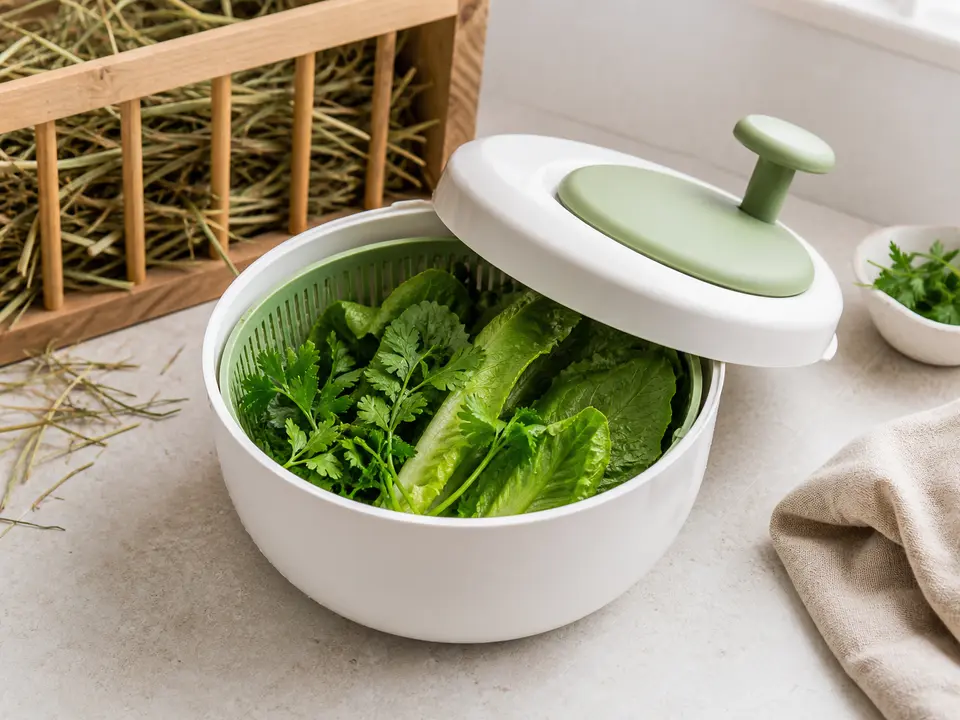
Salad spinner
When several identified leaves are headed for storage, spin them gently only after each piece has passed a hand inspection.
Shop salad spinner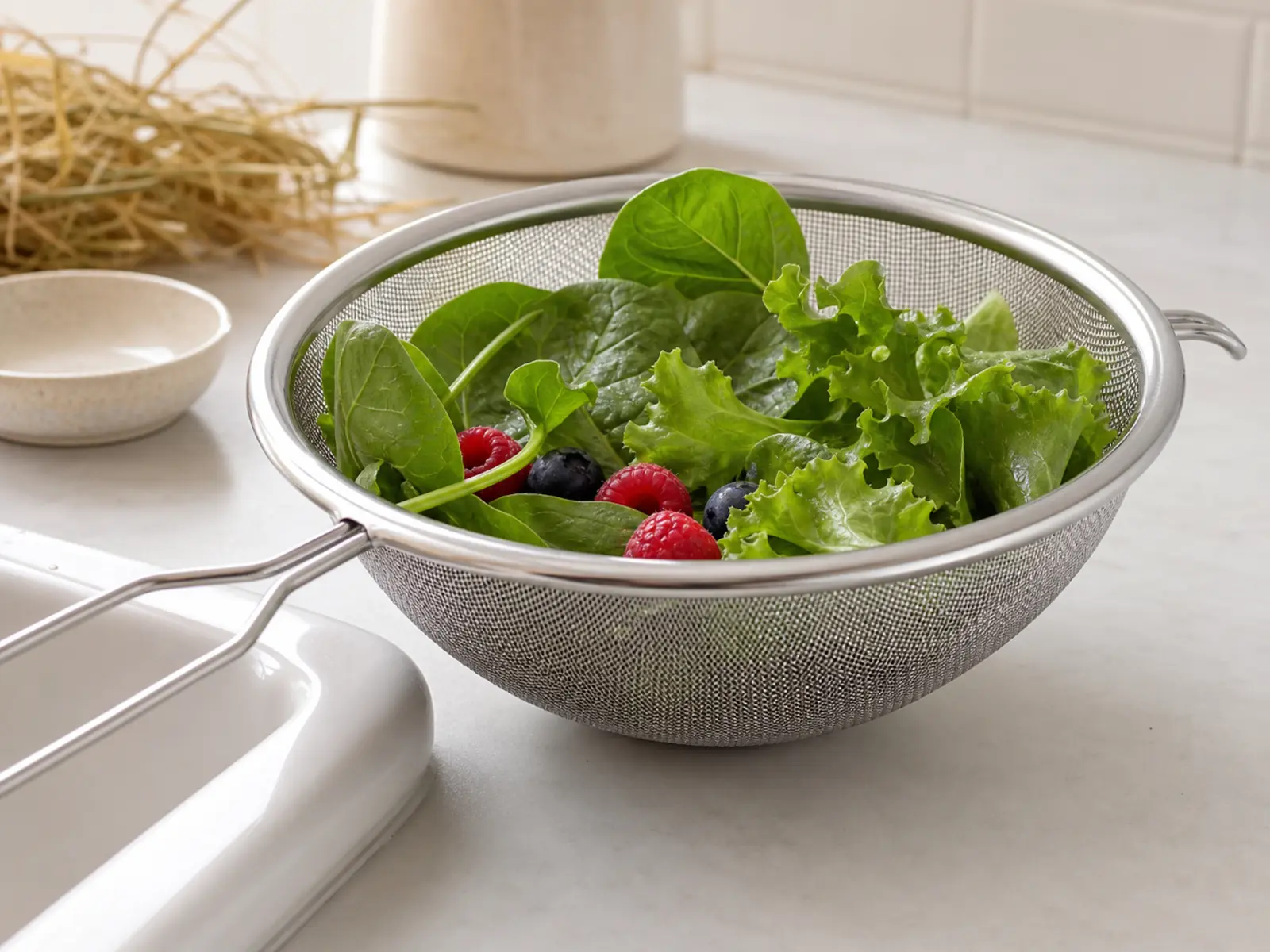
Produce strainer
Support the delicate petal while plain rinse water carries away dust and tiny insects without leaving it in the sink basin.
Shop produce strainer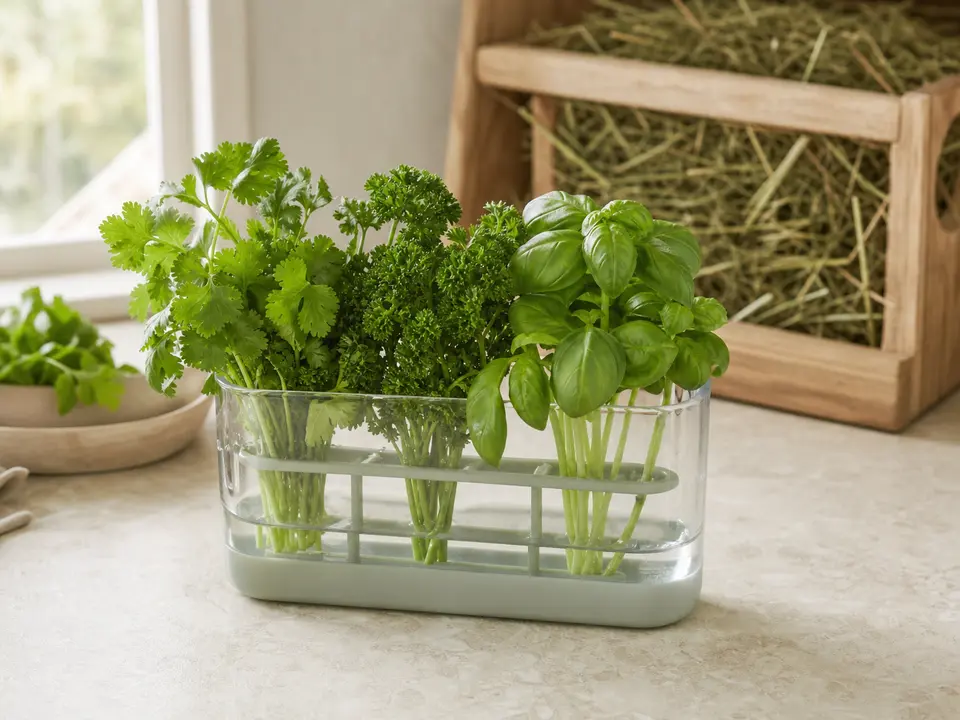
Herb keeper
Hold clean dry hibiscus leaves loosely with airflow so bruised edges and trapped moisture remain easy to spot before serving.
Shop herb keeper