Updated
Rabbit food check
Can Rabbits Eat Clover? Yes—Fresh and Identified
Yes—fresh and identified
Yes. Correctly identified fresh white or red clover can be a small forage extra. Clip one clean sprig from an untreated patch, never use mower clippings, and keep ordinary grass hay as the daily base.
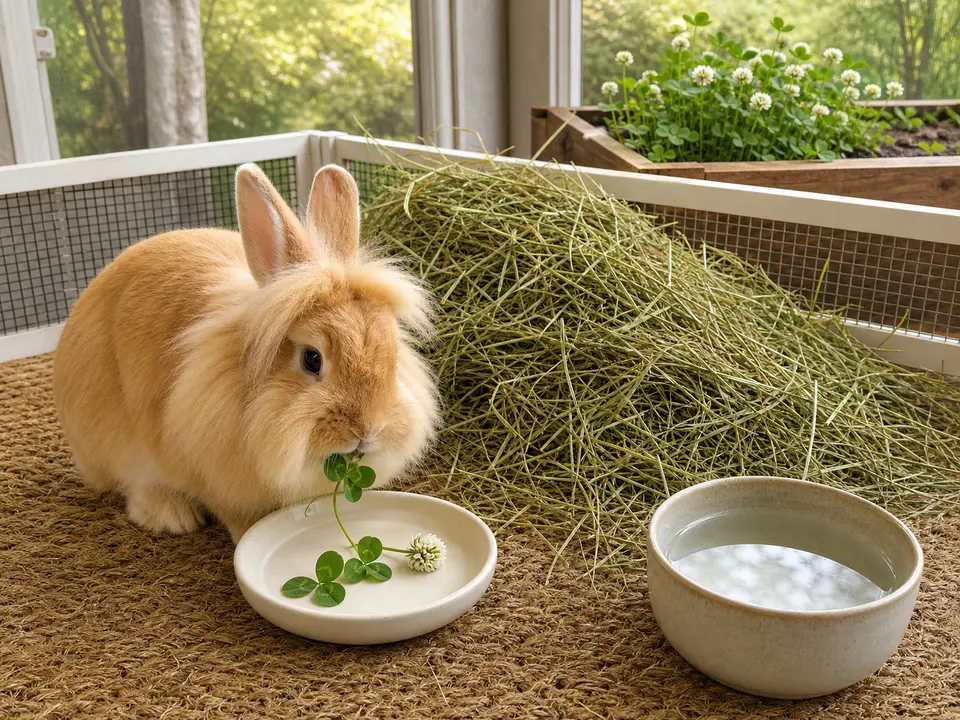 Clover
Three leaflets start the ID; they do not finish it
White and red clover usually show one leaf divided into three rounded leaflets, often with pale crescent marks. Many unrelated plants are also sold or described as shamrock. Confirm the Trifolium plant by its stems, flower, growth habit, and known patch before a clipped sprig enters the rabbit pen.
Hand clipping preserves the useful clues
Choose a standing sprig and snip it above the soil. You can still see the clover leaves, flower, insects, and any neighboring weed. A mower turns all of those clues into a warm crushed heap and starts spoilage before the basket reaches the shed.
Fresh clover and clover hay are different jobs
A few fresh leaves add forage variety. Clover hay is a dried legume forage with more protein and calcium and less fiber than common grass hays in House Rabbit Society's comparison table. For a typical adult, keep timothy or orchard grass hay as the everyday loose-hay foundation.
Do not let a rabbit mow the whole planter
Free access makes the first serving impossible to read and may expose soil, fertilizer, or neighboring plants. Keep the planter beyond the barrier, bring in one checked sprig, and refill the hay mound rather than carrying over another handful of clover.
Read the patch before kneeling down
Look for the planter or lawn section whose treatment history you know. Check the soil for pellet fertilizer, slug bait, droppings, mushrooms, and runoff. If the clean area cannot be separated from a sprayed or fouled edge, leave the scissors closed.
Clip the sprig while it is standing
Choose a firm green stem with clear three-part leaves and, when present, one characteristic flower. Snip above the dirt and place it alone in a prep bowl. Do not sweep up torn pieces or rake through short grass for fragments.
Sort every leaf at the porch table
Turn the sprig slowly under bright light. Remove beetles, eggs, damaged leaflets, and blades of grass caught around the stem. Rinse the remaining clover in the kitchen, then blot it dry so grit and standing rinse water stay out of the rabbit dish.
Offer one sprig beside the hay mountain
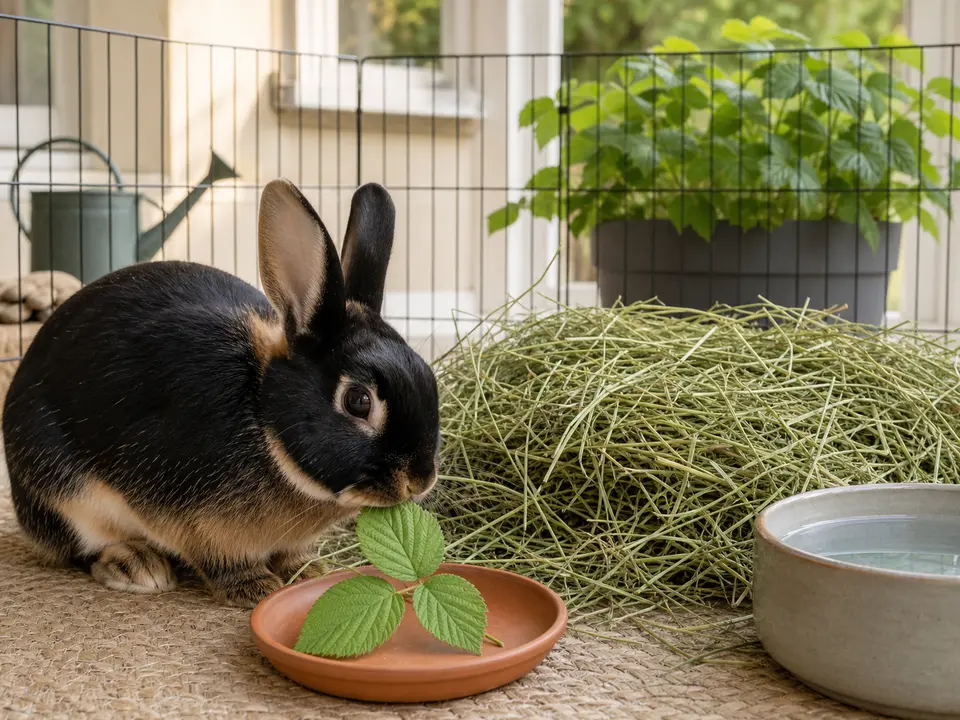
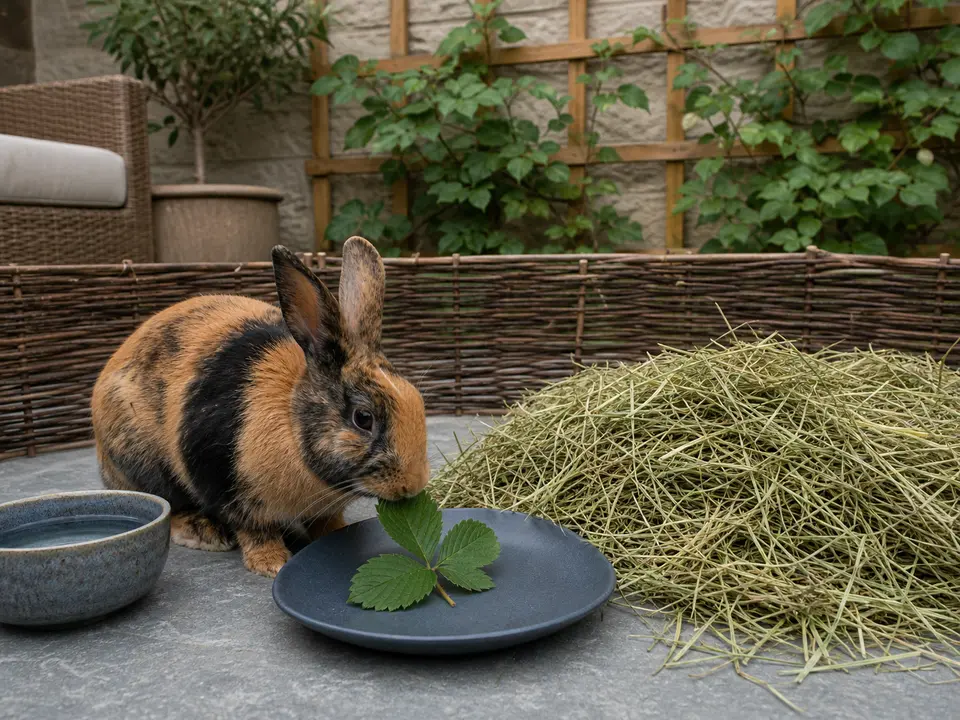
Lay the single clover sprig across the moss-green saucer beside the brimming rack. Keeping the rabbit out of the planter preserves the portion. During tomorrow's litter change, firm familiar pellets are the sign that this clipping may join a later mixed plate.
How to offer it
- Confirm red or white clover from the whole growing plant; three leaflets are a clue, not enough evidence by themselves.
- Use an untreated patch away from road spray, dog routes, wildlife latrines, standing water, recently treated lawns, and neighboring chemical drift.
- Hand-clip an upright sprig above soil level, then reject slimy leaves, rust, mildew, insect clusters, and any grass or mystery weed tangled through it.
- Rinse the sprig under cool water, drain it, and present the first small portion separately from other unfamiliar greens.
Avoid
- Lawn-mower clippings; RSPCA warns against them because cut grass heats, damages, and spoils quickly.
- A shamrock-shaped leaf picked by guesswork, ornamental oxalis from a houseplant pot, or any plant without a confident identification.
- Clover from fertilized, herbicide-treated, pesticide-treated, roadside, dog-fouled, moldy, flooded, or chemically unknown ground.
- Replacing the daily timothy, orchard, meadow, or other appropriate grass hay with clover hay unless a rabbit-savvy vet has set a specific diet.
Watch
- A quick nibble of clover followed by a long visit to the hay rack
- Firm separate pellets appearing through the next ordinary litter-box cycle
- Normal drinking, grooming, stretching, and interest in the familiar greens plate
- Soft stool, belly pressing, hiding, or any decline in food or droppings; remove clover and contact a rabbit-savvy vet promptly when appetite or output slows
Portion
Begin with one short sprig, not a fistful pulled from the lawn. For white clover, that might be two or three leaf stems and one flower. When the usual hay appetite, relaxed posture, and firm toilet pellets continue, bring clover back another day alongside different known plants.
A small clean route from clover patch to pen
Clover needs an intact sprig and a known patch, not complicated equipment. Carry it alone in a steel bowl, turn every leaflet under window light, rinse away soil, dry the stems, and show the final portion plainly in the rabbit dish.
Affiliate links: Furball Cove may earn from qualifying purchases at no extra cost to you.
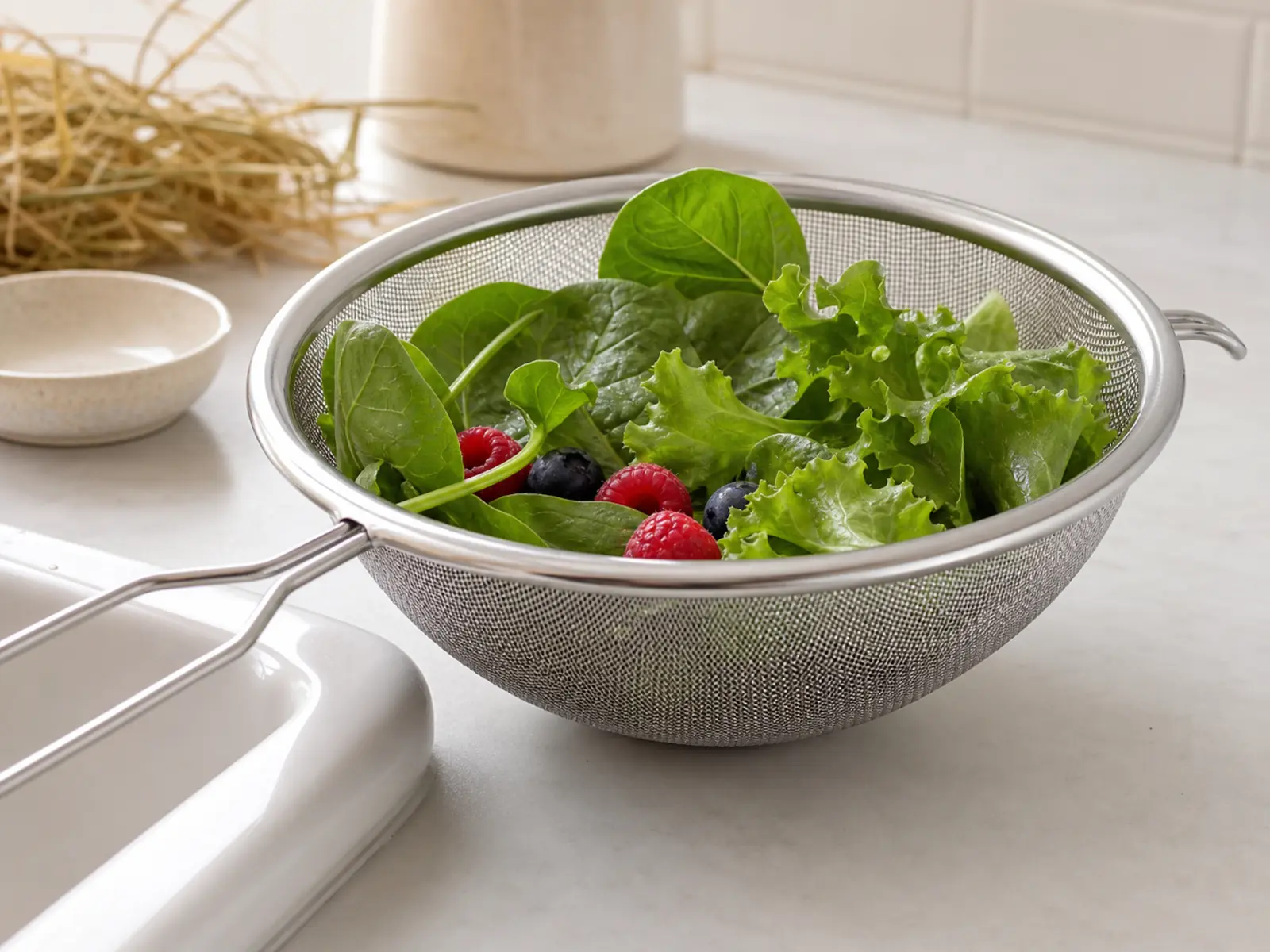
Produce strainer
Rinse the intact sprig while loosened soil and tiny insects drain away instead of collecting around the stems.
Shop produce strainer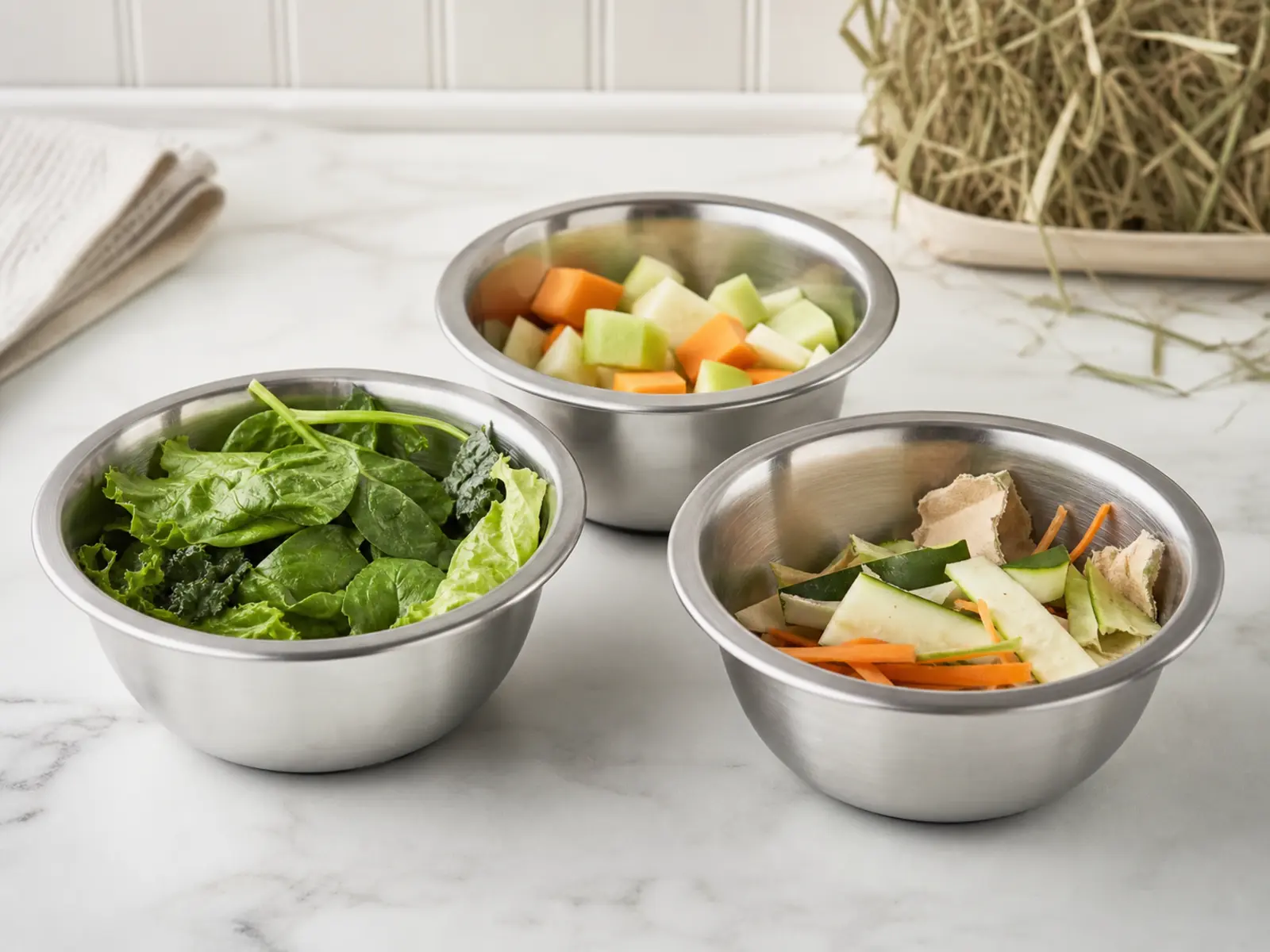
Stainless prep bowls
Keep one hand-clipped clover sprig separate from grass and mystery weeds while its three-part leaves and flower remain easy to inspect.
Shop stainless prep bowls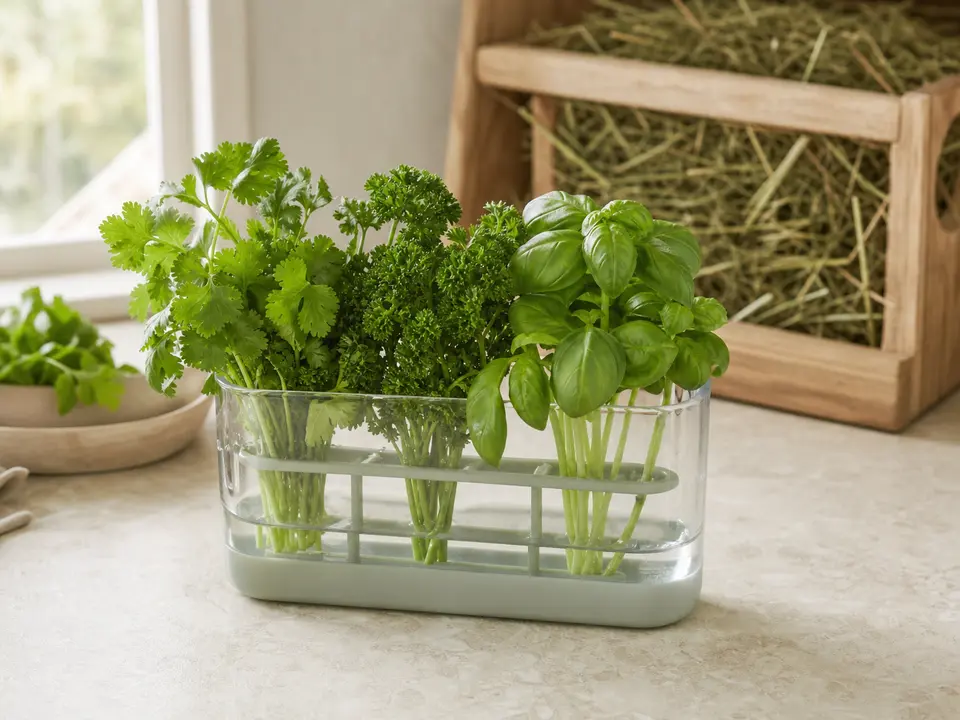
Herb keeper
Hold clean dry clover upright with airflow in the refrigerator rather than compressing it into a damp sealed bundle.
Shop herb keeper