Updated
Rabbit food check
Can Rabbits Eat Lettuce? Yes—Choose the Right Kind
Yes—choose leaf lettuce
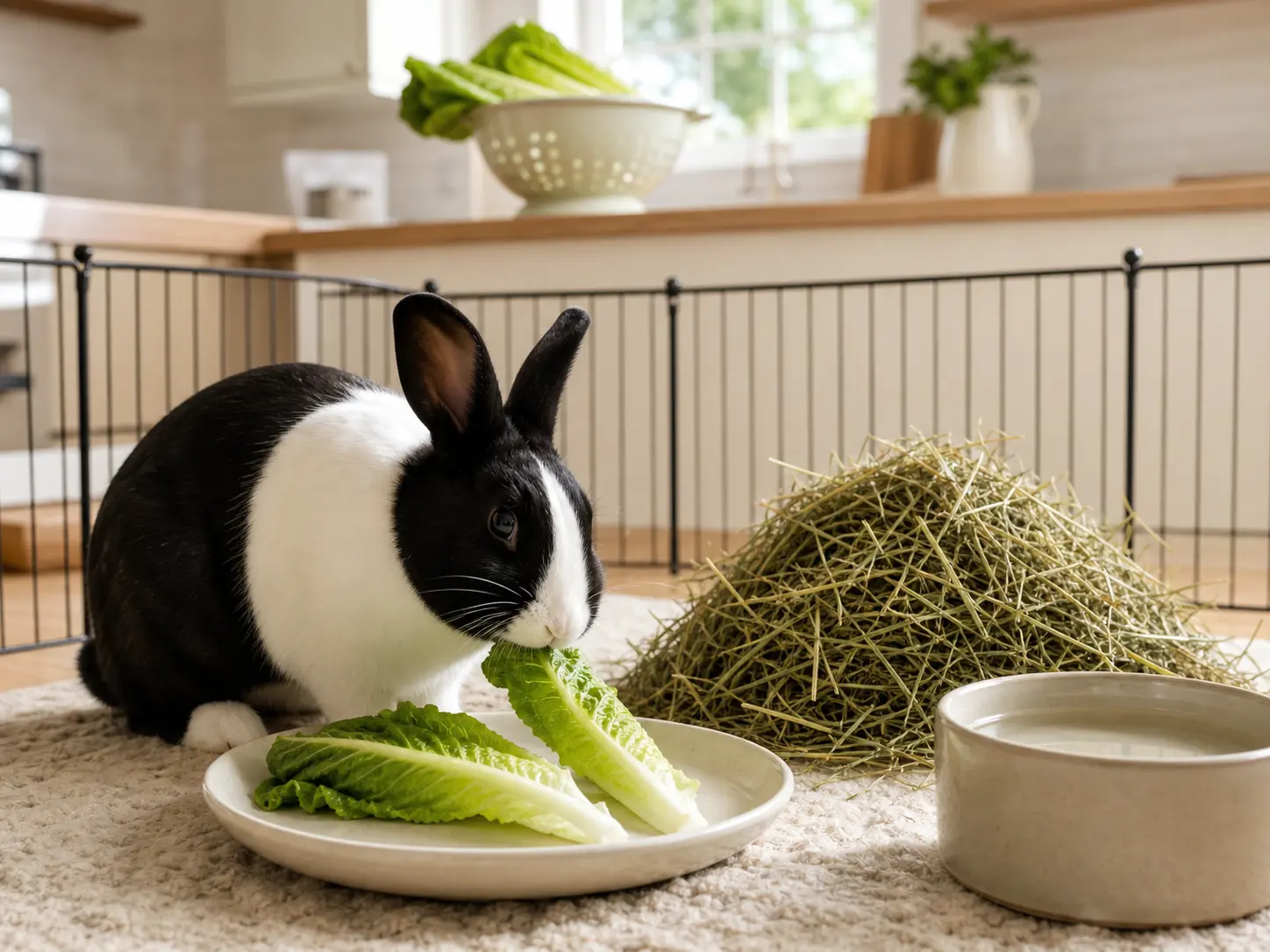
Yes—but the variety matters. Romaine, green leaf, red leaf, butterhead, and other leaf lettuces can join an adult rabbit's varied greens plate. Iceberg is not poisonous, but it is a poor regular choice because it offers little nutrition and a large amount can loosen stools. Serve leaves plain and keep hay unlimited.
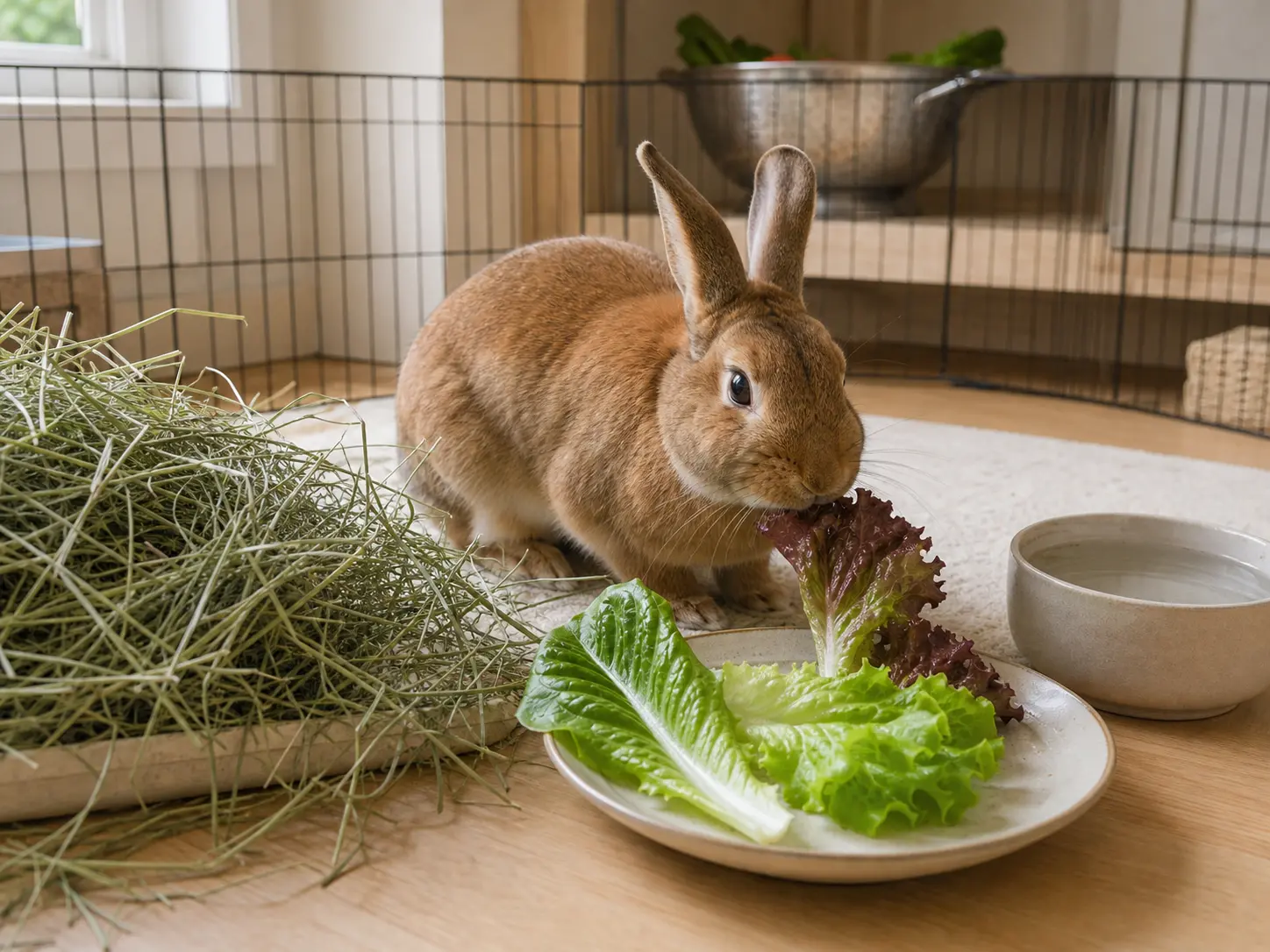 Lettuce
Start with the name on the produce sign
Lettuce is a family of different leaves, not one food with one texture. House Rabbit Society lists romaine, green leaf, red leaf, butterhead, cos, frisée, and other leaf lettuces among rabbit-safe greens. Identify what you bought before the leaf reaches the rabbit plate.
Iceberg is a poor swap, not a poison
Iceberg lettuce is not on the same danger list as a toxic plant. It is pale, watery, and less nutritious than darker leaf lettuces, and a large serving can loosen stools. When iceberg is the only leaf in a sandwich or salad bowl, skip it and offer a familiar green from the rabbit's own produce supply instead.
The salad bowl changes the answer
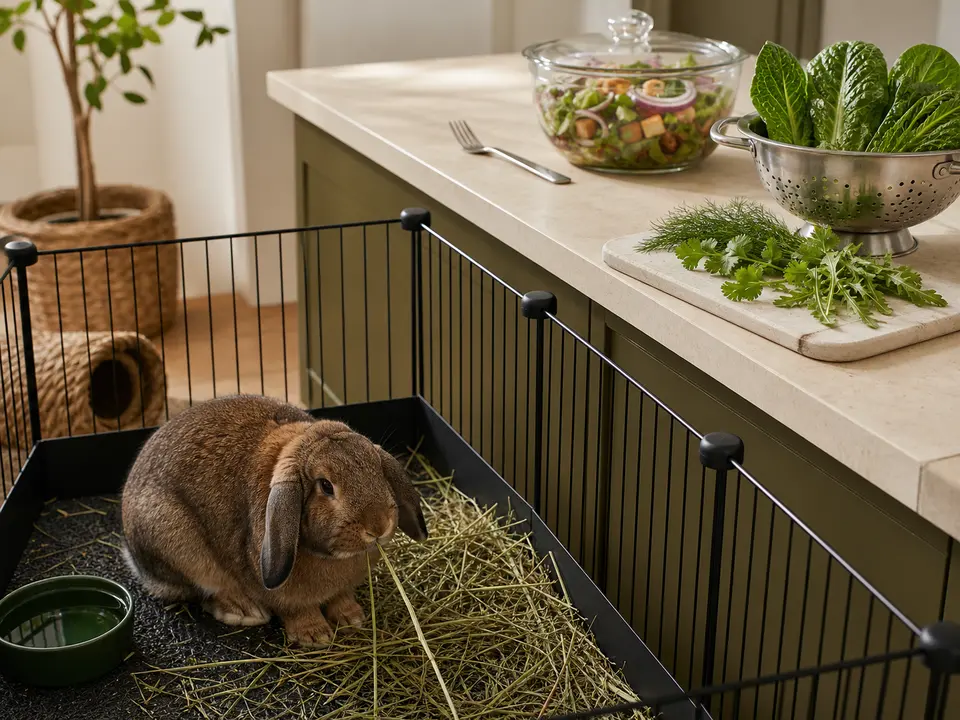
Plain washed lettuce can fit the rabbit greens plate. A Caesar salad, bagged kit, dressed side salad, or lettuce leaf pulled from a burger comes with other ingredients. Keep the prepared dish for people and take a clean leaf directly from a whole head or rabbit greens container.
Wet leaves still need unlimited hay
Fresh lettuce adds water and a different texture, which can make it more exciting than the hay rack for a few minutes. That does not change the proportions of the meal. Put a modest greens plate beside a generous hay pile and refill the hay before the rabbit starts waiting only for leaves.
Name the leaf before washing
Set the produce on the counter and read the band or store label. Romaine has a long central rib; green and red leaf form loose frilled heads; butterhead forms softer cupped leaves; iceberg is a tight pale ball. If the variety is still unclear, do not guess from one torn piece.
Trim the base and bad edges
Peel away wilted or damaged outer leaves and cut off the dirty base. Crisp clean leaves can move to the colander. Slime, mold, dark wet patches, and a sour smell mean the affected leaf goes into the compost or bin, not onto the rabbit plate.
Rinse, spin, and tear
Separate the leaves under cool running water and rub soil from the ribs and folds with your fingers. Shake off the drips or use a salad spinner, then tear the serving by hand. A few clean water droplets are fine; salad dressing and produce soap are not part of the wash.
Store the rest away from salad kits
Put the clean dry batch in a ventilated produce bag or bin with an absorbent liner. Keep it separate from dressed salad kits and sandwich fixings. When another person feeds the rabbit, they can reach for the plain greens container without having to decode dinner leftovers.
Serve
- Read the produce sign, bag, or band and identify romaine, green leaf, red leaf, butterhead, iceberg, or another named variety before deciding.
- Remove the base and any leaf that is slimy, moldy, badly bruised, wilted beyond use, or sour-smelling.
- Separate the leaves and rinse both sides under clean running water, rubbing visible soil from ribs and folds without soap or produce wash.
- Shake or spin off excess water, tear a modest serving into manageable pieces, and serve it plain with no dressing, seasoning, cheese, or croutons.
Avoid
- Treating every product labeled lettuce as interchangeable. Iceberg is a poor regular green, while a dressed salad kit is a different food altogether.
- Calling iceberg toxic. It is mostly a weak nutritional choice; a large amount can also loosen stools, especially when the rabbit is not used to it.
- Sharing a leaf pulled from a burger, sandwich, taco, buffet salad, or restaurant plate where sauce, seasoning, grease, or toppings have touched it.
- Serving spoiled leaves or adding several unfamiliar greens on the same day, which makes any appetite or litter-box change harder to trace.
Watch
- The rabbit finishing the small leaf and returning to the hay pile
- The usual appetite, movement, and interest in familiar food later in the day
- Separate round droppings in the rabbit's usual number and size
- Eating less, fewer droppings, watery diarrhea, a hunched pose, tooth grinding, weakness, or unusual quietness; call a rabbit-savvy veterinarian promptly
Portion
For an adult already eating leafy greens, use lettuce as part of the usual mixed-greens serving rather than filling a bowl with one variety. If lettuce is new, start with one small torn piece. A whole head or bag is never one rabbit portion, no matter how light the leaves feel.
Keep the rabbit lettuce plain and separate
These produce-prep tools help keep washed rabbit leaves away from dressed salad kits, plate a modest serving, and store the rest without trapping spoilage-causing water.
Affiliate links: Furball Cove may earn from qualifying purchases at no extra cost to you.
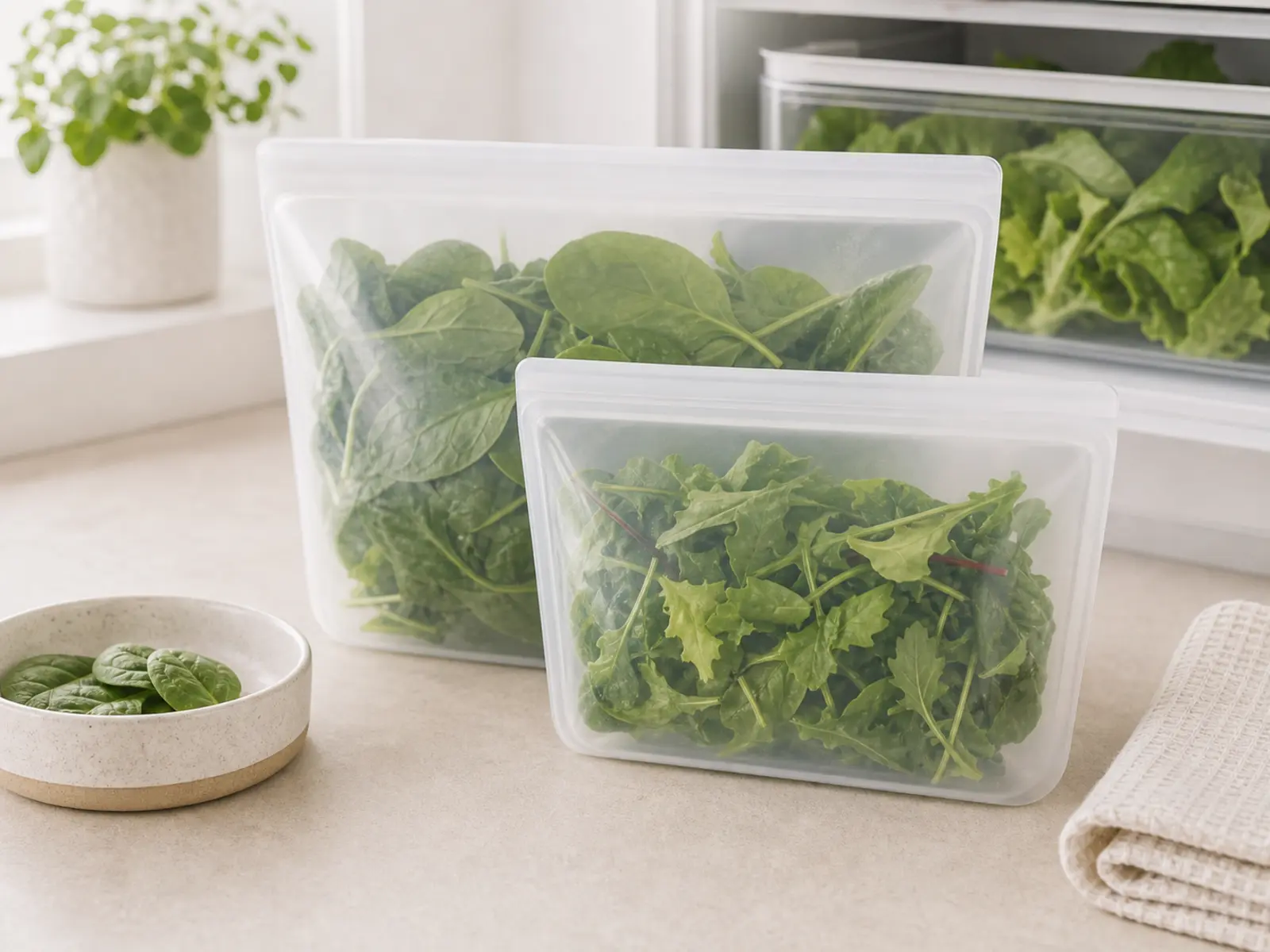
Produce storage bags
Keep washed leaf lettuce in a ventilated produce bag with an absorbent liner instead of sealing it in a puddle.
Shop produce storage bags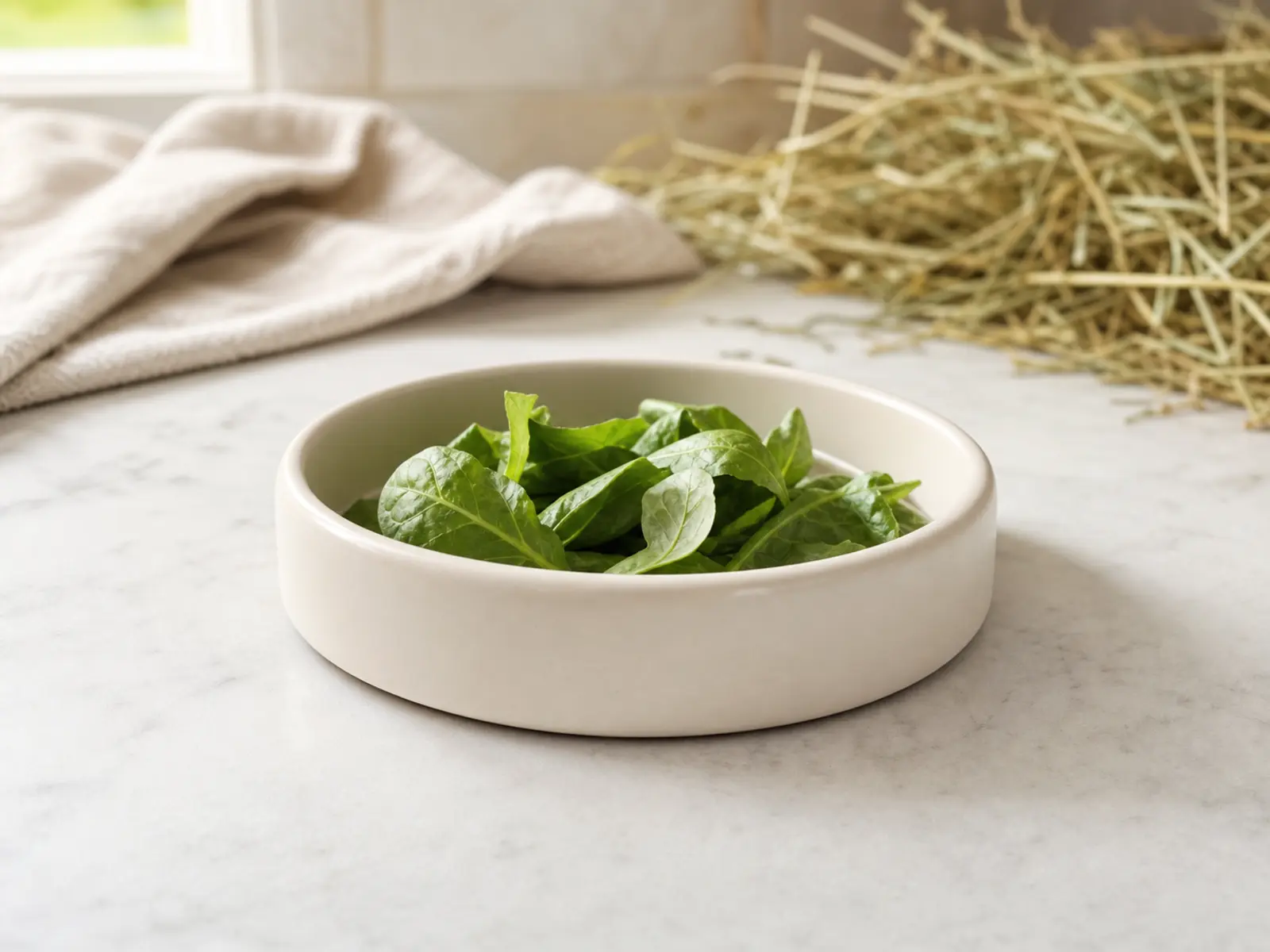
Ceramic food dish
Use one easy-to-clean plate for the modest plain greens serving, separate from pellets and every human salad topping.
Shop ceramic food dish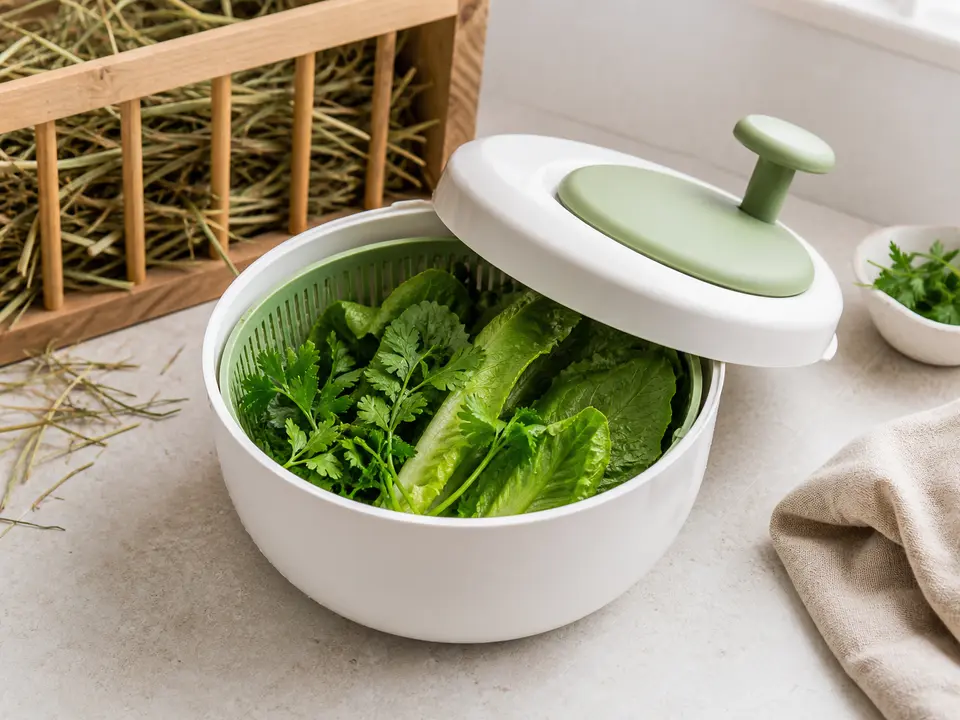
Salad spinner
Rinse a batch and spin off excess water before the leaves move to the rabbit greens container.
Shop salad spinner