Updated
Rabbit food check
Can Rabbits Eat Nasturtium? Yes—Check the Round Leaf
Yes—garden nasturtium
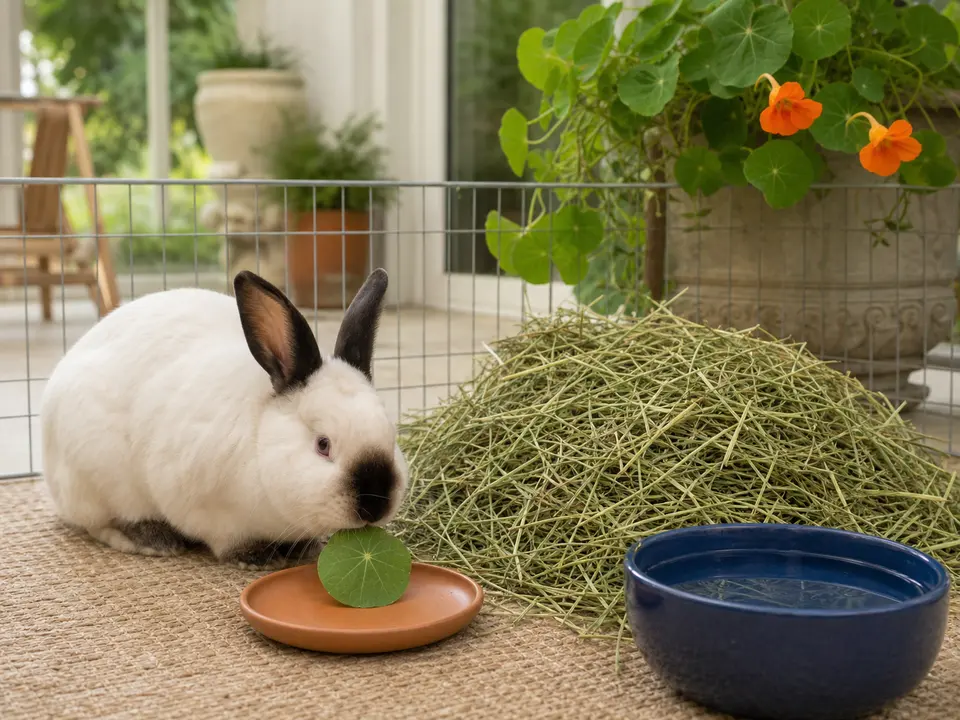
Yes. Garden nasturtium, Tropaeolum majus, has rabbit-safe leaves and flowers. Put one washed round leaf beside the rabbit's orchard hay for the introduction. Seed pods, potting soil, and mystery lookalikes stay outside the exercise pen.
 Nasturtium
Read the shield-shaped leaf from the center out
A nasturtium leaf is nearly round, with its stalk joining underneath at the middle and pale veins spreading like spokes. Flip it on the vine and trace its stem past several matching discs before clipping. Only then put one leaf beside the rabbit's hay.
The flower spur adds a second clue
Tropaeolum flowers are bright funnels with a slender spur behind the petals. Orange is common, although red and yellow cultivars exist too. At the pen barrier, lift an attached bloom and check that little tail against the round leaves; a loose orange flower on the patio never crosses into the kitchen prep bowl.
Peppery flavor is not the same as a sweet treat
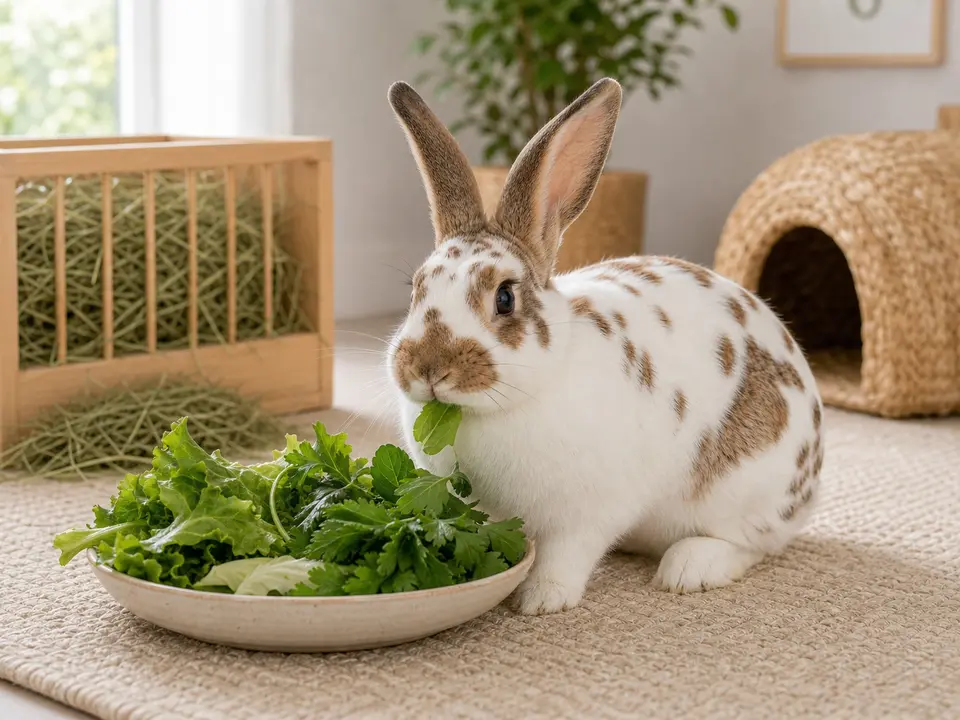
Nasturtium leaves and flowers taste punchy to people, yet they belong with rabbit-safe garden greens rather than fruit. Skip sweetener, pickle brine, pesto, and dressing. One plain leaf beside romaine and hay keeps the introduction recognizable and the meal familiar.
Keep the trailing planter beyond rabbit reach
A vine spilling through the exercise pen invites the rabbit to strip leaves, bite long stems, sample seed pods, and dig into the container. Raise the planter behind the barrier. Hand-carry one checked piece indoors, leaving the root ball and every neighboring plant untouched.
Follow one round leaf back to its vine
At the garden-room planter, lift the chosen blade and trace its slender stem through the trailing growth. Matching leaves should repeat the same central vein pattern, with a spurred orange flower on that vine. Keep the scissors closed whenever several stems knot together; the rabbit's terracotta plate can wait for one traceable leaf.
Snip above the pot without shaking the soil
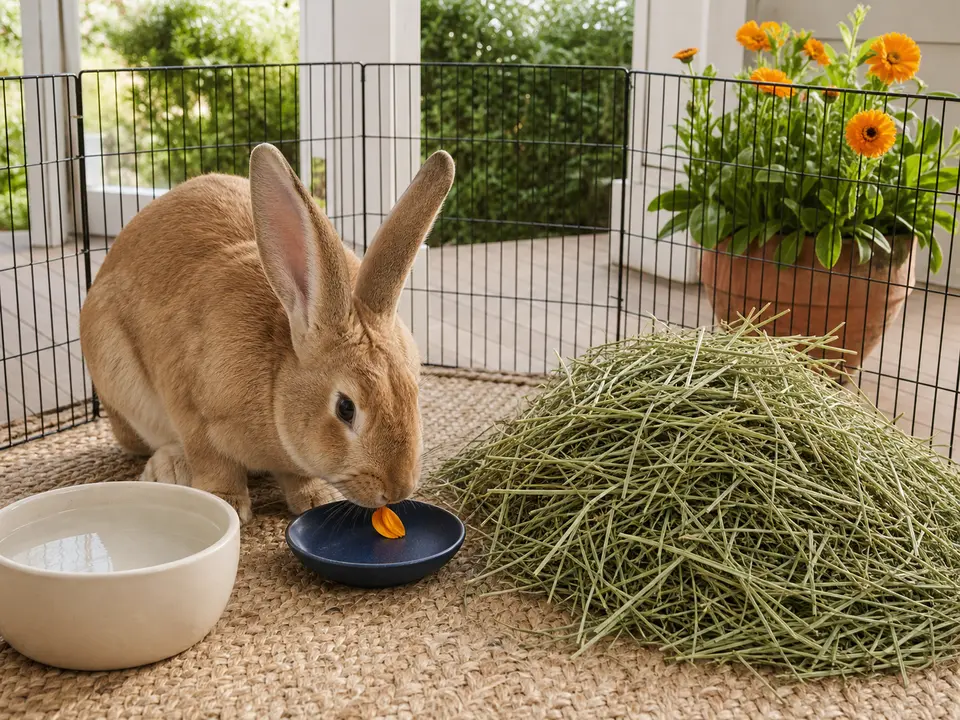
Hold the leaf above the container rim and cut while both surfaces remain in view. Yellow leaves, flower stalks, buds, and seed pods stay on the porch plant. Carry one green circle on the terracotta plate to the rabbit room, where the blue water crock and orchard-hay mound are already waiting.
Inspect the hub where insects hide
Set the leaf upside down beneath the pantry light and study the central stem junction. Aphids and eggs can sit along the radiating veins; mildew shows as a dusty patch rather than the leaf's normal bloom. Rinse after the inspection, shake off droplets, and preserve the blade's round outline.
Serve the green disc beside ordinary hay
Place the intact leaf on a terracotta saucer with the deep-blue water crock and orchard hay already in position. The rabbit may finish it in seconds. Leave the empty saucer alone; later, look for the usual coarse chewing and dry pellets instead of answering a plea for more.
Serve
- Confirm garden nasturtium as Tropaeolum majus from the whole vine, its round centrally stemmed leaves, and its funnel-shaped flowers with a rear spur.
- Pick from a pot or bed you know is free of pesticide, weed killer, slug bait, fertilizer splash, pet fouling, roadside grime, and contaminated runoff.
- Trace one leaf to its own stem, snip above the soil, and reject yellowed, mildewed, slimy, chewed, aphid-covered, or dirt-smeared growth.
- Turn the leaf under bright light, check where the stem meets the center, rinse both faces with cool water, drain, and serve intact.
Avoid
- Aquatic plants or packaged watercress chosen because nasturtium once meant watercress in botanical naming; this page covers the garden vine Tropaeolum majus.
- Round leaves gathered without following them to the complete plant, especially when pennywort, buttercup, or other volunteers share the pot or path.
- Nursery display baskets, public planters, roadside vines, or neighboring gardens when the spray, fertilizer, and animal-contact history cannot be confirmed.
- Unripe or mature seed pods, pickled nasturtium capers, pesto, salad dressing, flavored vinegar, dried blends, or a tangled armful of stems as the introduction.
Watch
- The leaf disappearing, followed by steady chewing through long orchard-hay strands
- Normal posture, water use, grooming, and interest in the rabbit's regular greens
- A familiar scatter of firm dry pellets when the enclosure is cleaned later
- Soft stool, belly discomfort, hiding, or less eating or output; remove nasturtium and contact a rabbit-savvy vet promptly if appetite or droppings slow
Portion
Use one medium leaf for the first introduction. A flower can be tried on a later day, rather than combining leaf, flower, stem, and seed pod in one test. Bring nasturtium back only after the rabbit has kept its ordinary appetite, firm pellets, and steady hay chewing.
A visible route from trailing vine to one round leaf
Nasturtium is easiest to trust when its identifying shape survives every step: trace the central stem, isolate one leaf, inspect the vein hub, rinse it, and serve it whole. These picks keep that path tidy while hay stays prominent.
Affiliate links: Furball Cove may earn from qualifying purchases at no extra cost to you.
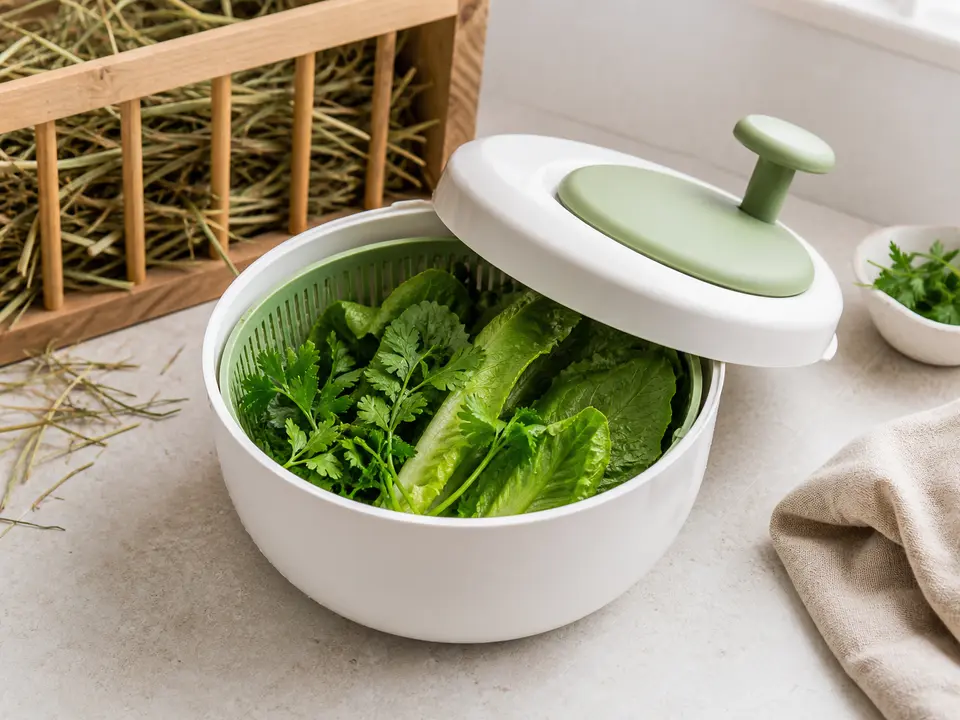
Salad spinner
Dry a hand-sorted group of identified leaves for storage without crushing their round outlines into a wet stack.
Shop salad spinner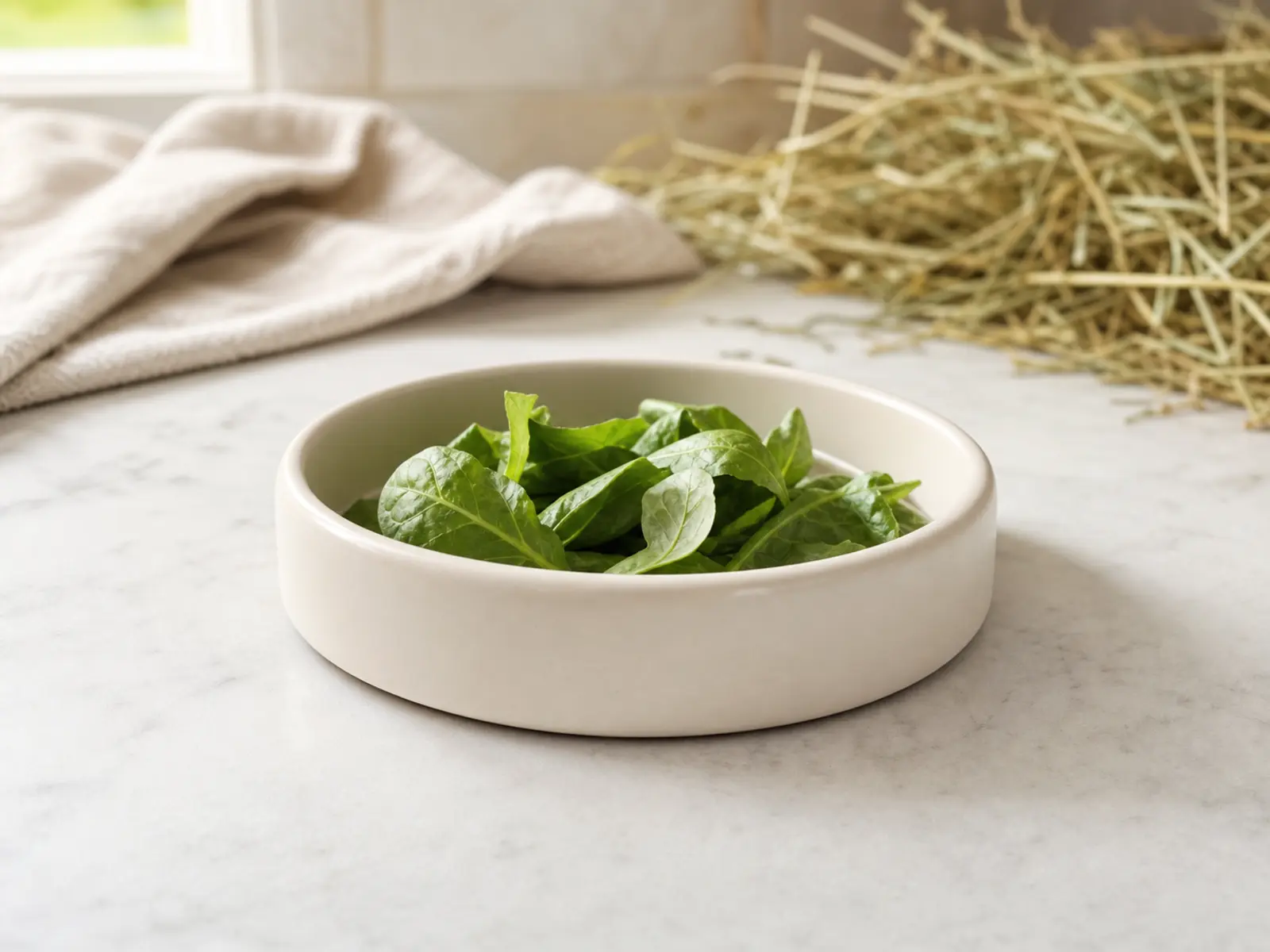
Ceramic food dish
A matte terracotta saucer makes the single green disc easy to see and stops the portion from vanishing under mixed salad.
Shop ceramic food dish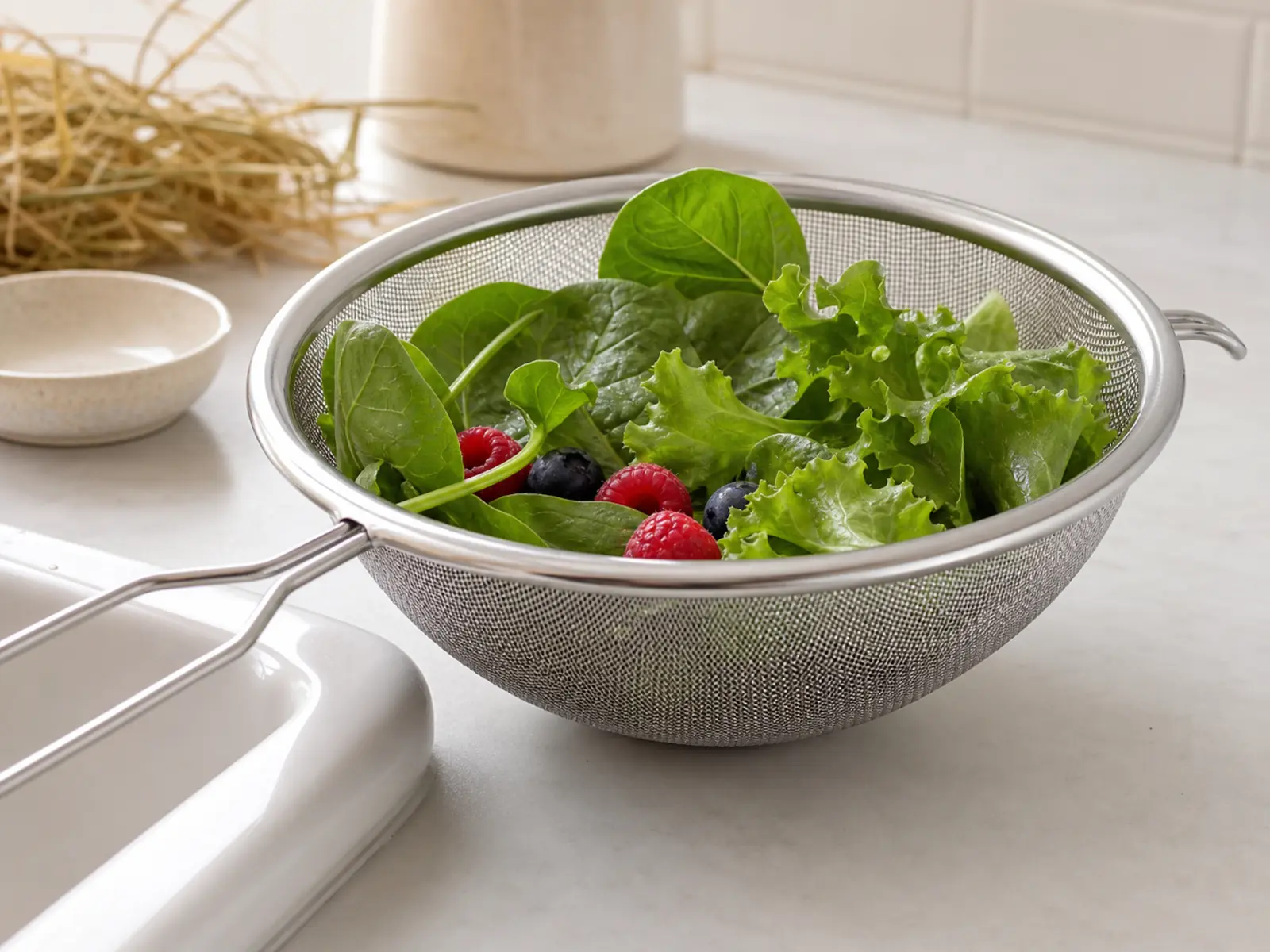
Produce strainer
Support the broad thin blade while rinse water removes dust and small insects from the radiating veins.
Shop produce strainer