Updated
Rabbit food check
Can Rabbits Eat Orchard Grass? Yes—It Is Daily Hay
Yes—an everyday grass hay
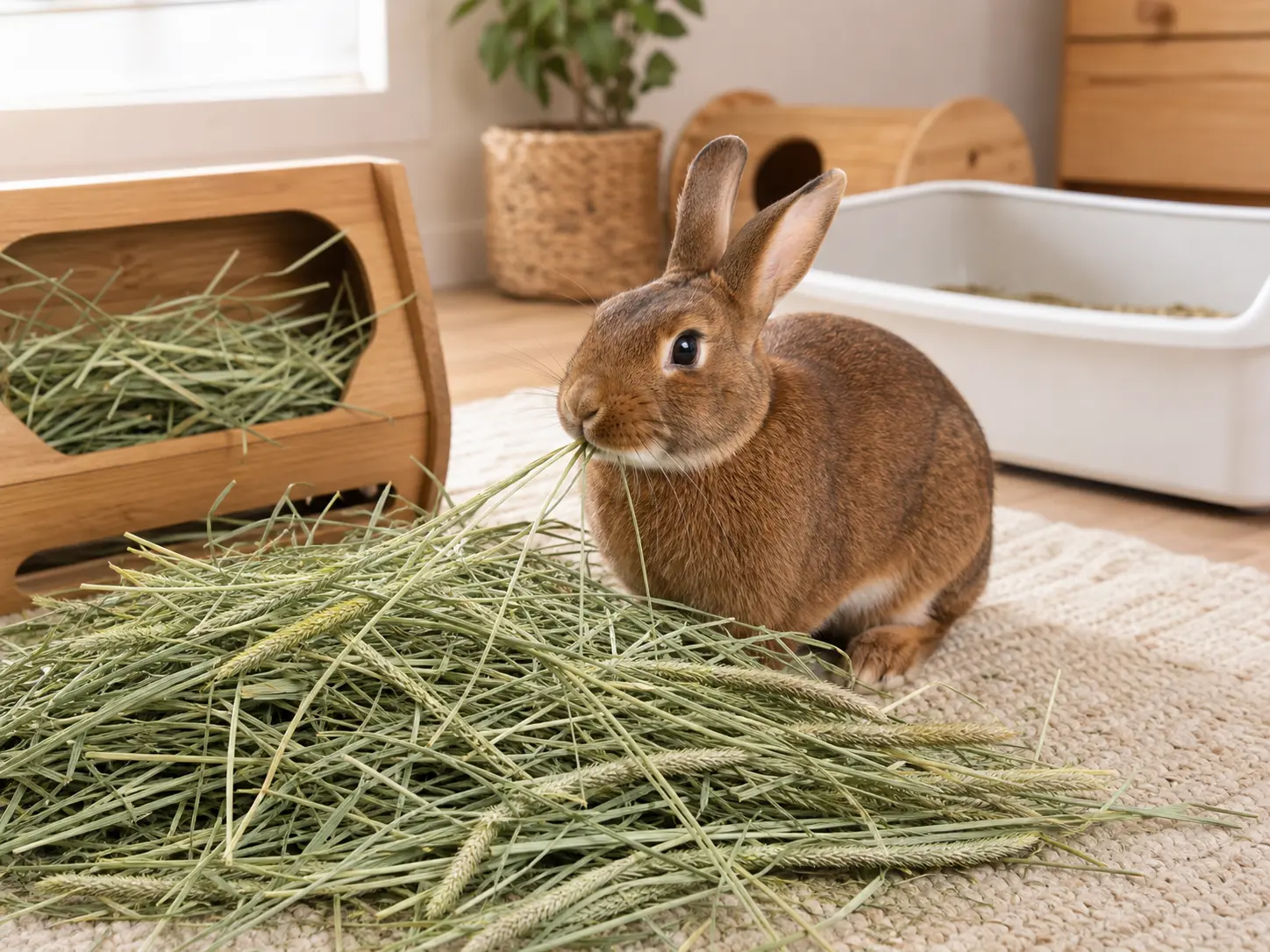
Yes. Orchard grass hay is one of the grass hays most adult rabbits can eat freely. Keep a fresh loose pile available day and night, on its own or mixed with timothy, oat, meadow, or another grass hay your rabbit eats well.
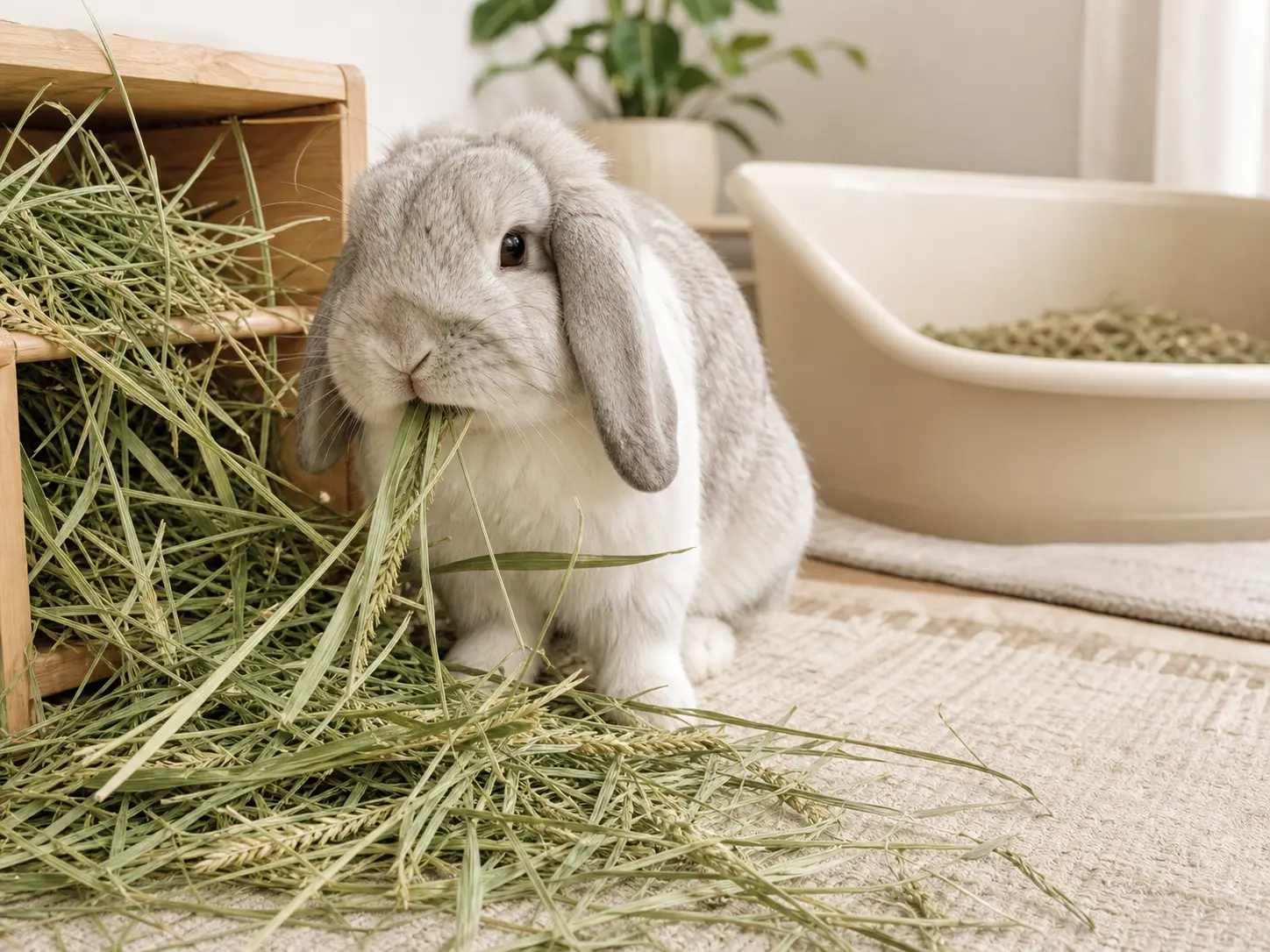 Orchard Grass
Yes—fill the rack
Orchard grass is one of the everyday grass hays named by House Rabbit Society and veterinary feeding guides. Most adult rabbits can have it without a measured limit. Serve it alone or mix it with timothy, oat, meadow, brome, or another grass hay that keeps long strands disappearing from the feeder.
Soft leaves still need a bag check
Orchard hay often feels softer and leafier than a stalky timothy batch, but harvests vary. Reach below the tidy top layer and use more than color as your test. The handful should be dry and clean-smelling, without damp clumps, fuzzy growth, webbing, insects, or a dust cloud.
This is not a sack of lawn clippings
Bagged orchard grass hay has been cut and dried for storage. Fresh untreated grass is a separate feeding question, and wet piles from a mower are not hay. Never empty a mower bag into the rabbit area; the chopped grass can heat and spoil quickly.
One harvest may feel different from the next
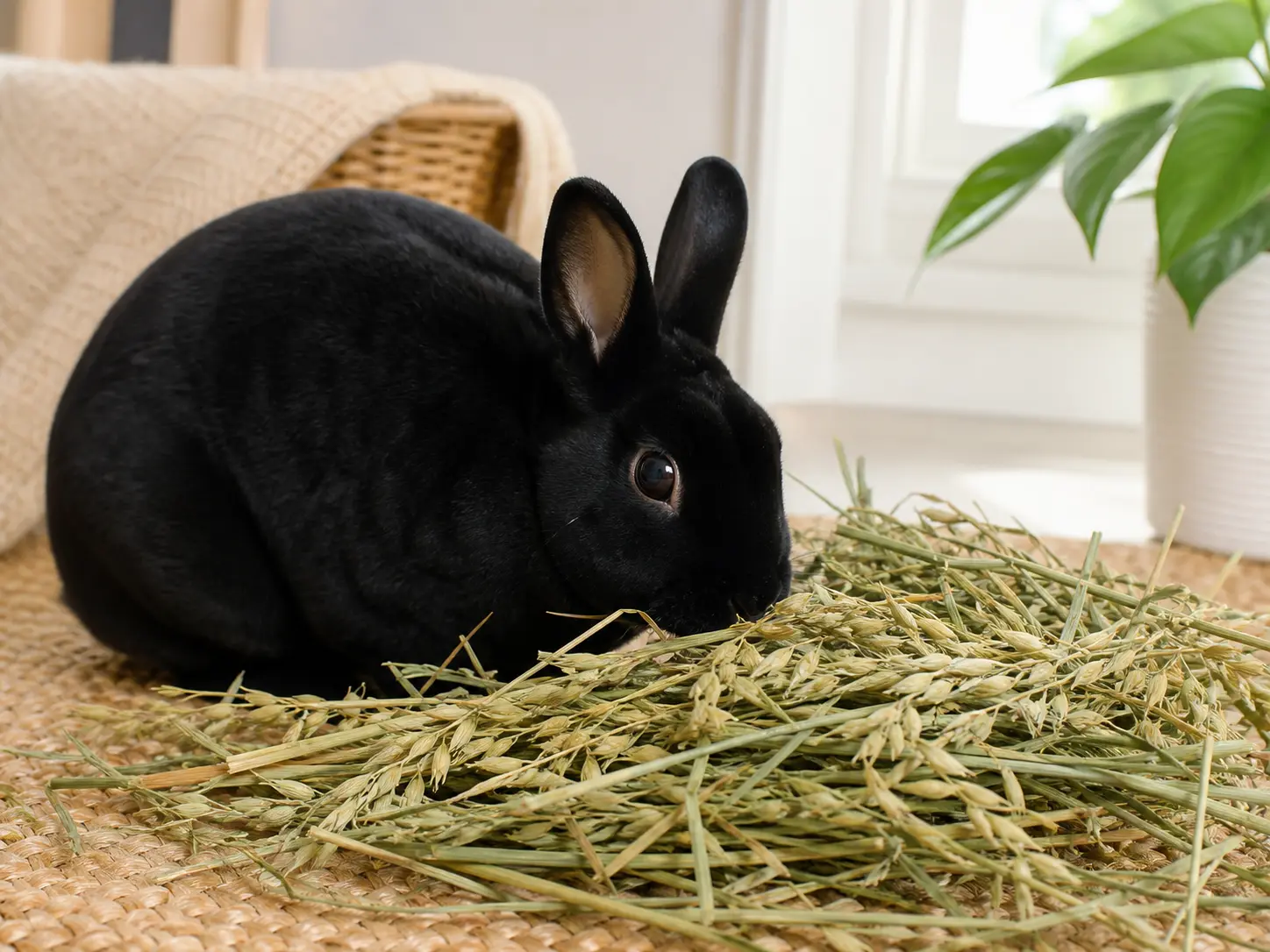
A new bag can be greener, paler, softer, coarser, or simply smell different from the last one. Put the first orchard handful beside some familiar hay instead of hiding the old pile. If the rabbit refuses both, produces fewer droppings, drops food, or looks uncomfortable, call a rabbit-savvy veterinarian rather than opening bag after bag.
Confirm the words on the bag
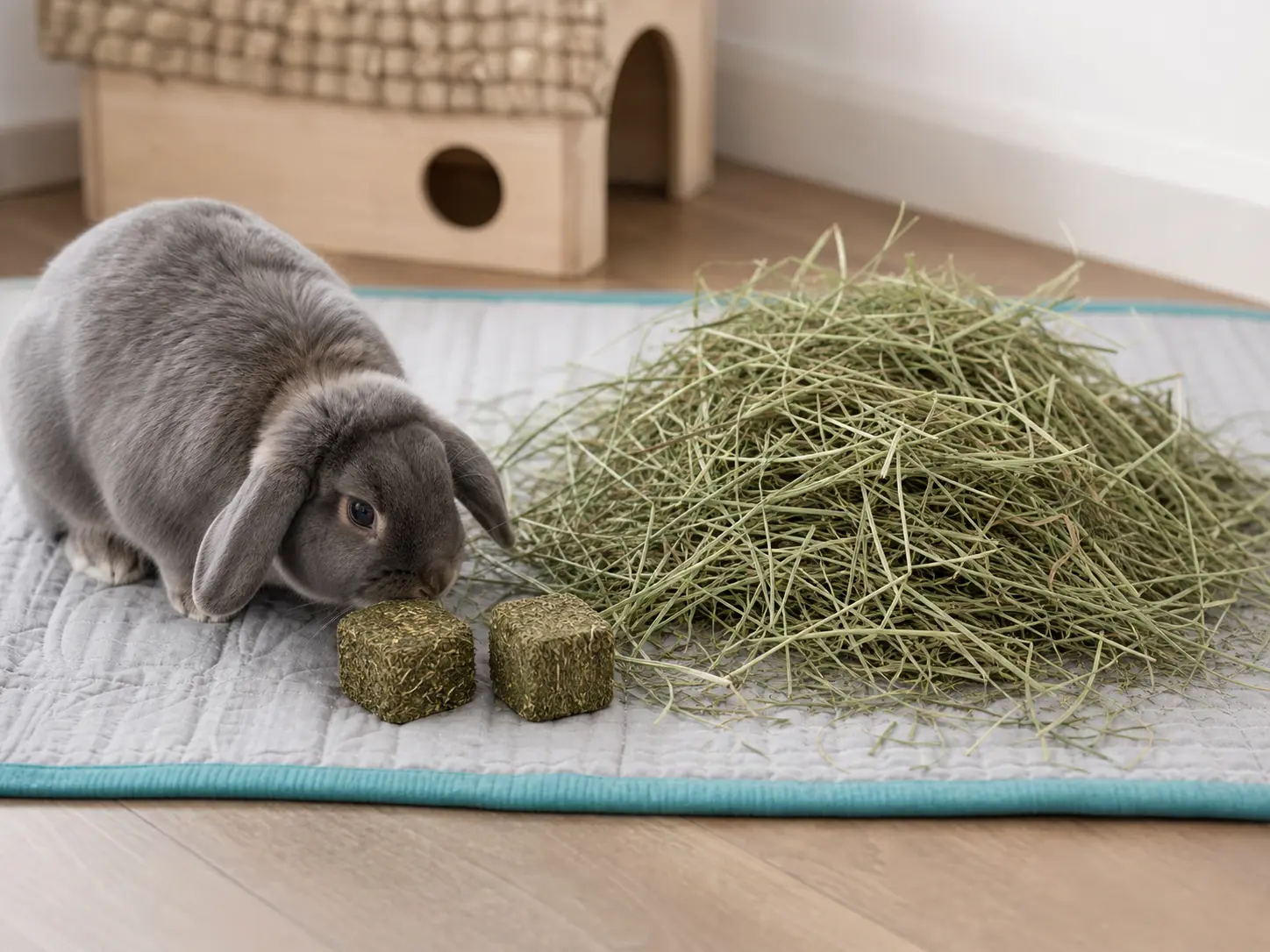
Find orchard grass hay on the label before the package enters the rabbit cupboard. A rabbit photo on the front does not tell you whether the contents are loose hay, compressed cubes, pellets, or a mix with dried fruit and seeds. The product name and ingredient list do.
Check the middle before storage
Lift a handful from beneath the visible top and spread it over a clean tray or floor. Smell it and pull the leaves apart. Dry crumbs are ordinary; a damp knot, sour odor, webbing, insects, fuzzy growth, or fine dust that floats in the light is not.
Give the new hay its own corner
Place the orchard hay beside the grass hay your rabbit already eats, keeping both piles loose enough to pull. The side-by-side setup makes a change in texture less abrupt and lets you see whether the softer leaves, thicker stems, or both are being eaten.
Clear the wet layer at refill time
Remove hay that has fallen into urine or damp litter, loosen the clean pile, and add a fresh handful before the feeder is bare. Sweep the dry scatter around the station, but do not shrink the serving just to keep the room tidy. A rabbit hay area is supposed to contain plenty of hay.
Serve
- Read the product name and ingredient list. Orchard grass hay is dried forage; fresh lawn grass, mower clippings, pellets, cubes, and sweetened hay blends are different products.
- Reach into the middle of the bag and pull apart a handful. Keep hay that is dry and clean; reject damp knots, fuzzy patches, webbing, insects, or dust that hangs in the air.
- Smell the hay before filling the rack. It should smell dry and grassy, never sour, smoky, perfumed, or strongly musty.
- Store the open supply dry, ventilated, and off the floor. Put loose handfuls in a feeder or clean hay area where a rabbit can reach the bottom without trapping its head.
Avoid
- Scooping up lawn-mower clippings because the bagged hay has grass in its name. Cut clippings heat and spoil quickly and should not be fed to rabbits.
- Assuming every soft or pale strand is stale. Orchard hay varies by harvest; use dryness, smell, dust, contamination, and actual eating to judge the bag.
- Packing leafy hay so tightly into a narrow rack that the rabbit can pull only tiny pieces from the surface.
- Treating a sudden refusal of all hay as pickiness. Dental pain and illness can make a rabbit avoid chewing even when the new bag is fresh.
Watch
- The rabbit returning to the orchard hay several times across the day
- Leaves and stems disappearing rather than only the softest pieces being picked out
- The usual number and size of separate round droppings in the litter box
- Eating less, fewer or smaller droppings, a wet chin, food falling from the mouth, a hunched pose, tooth grinding, weakness, or unusual quietness; call a rabbit-savvy veterinarian promptly
Portion
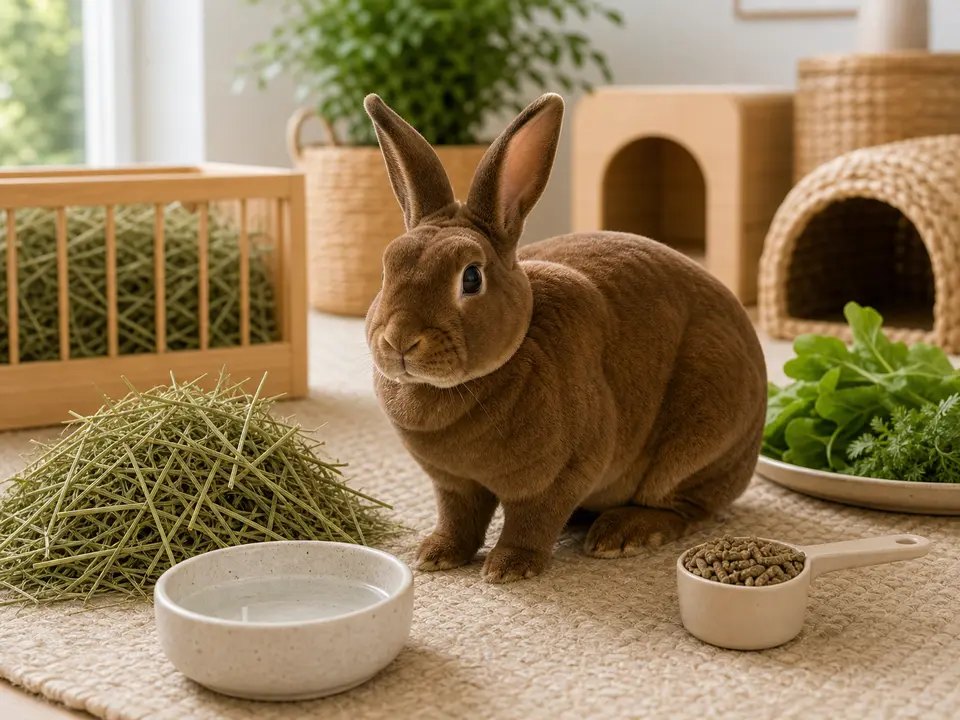
Do not measure orchard grass hay into a daily cup. Most adult rabbits should have unlimited grass hay, so refill the pile before it runs out. Softer strands can flatten in a rack; loosen them with your hands rather than assuming a compressed-looking pile is still full.
Keep soft orchard hay loose and dry
These hay-station basics keep the open supply ventilated, hold loose leafy strands within reach, contain the litter-box setup, and make the daily scatter easy to clear.
Affiliate links: Furball Cove may earn from qualifying purchases at no extra cost to you.
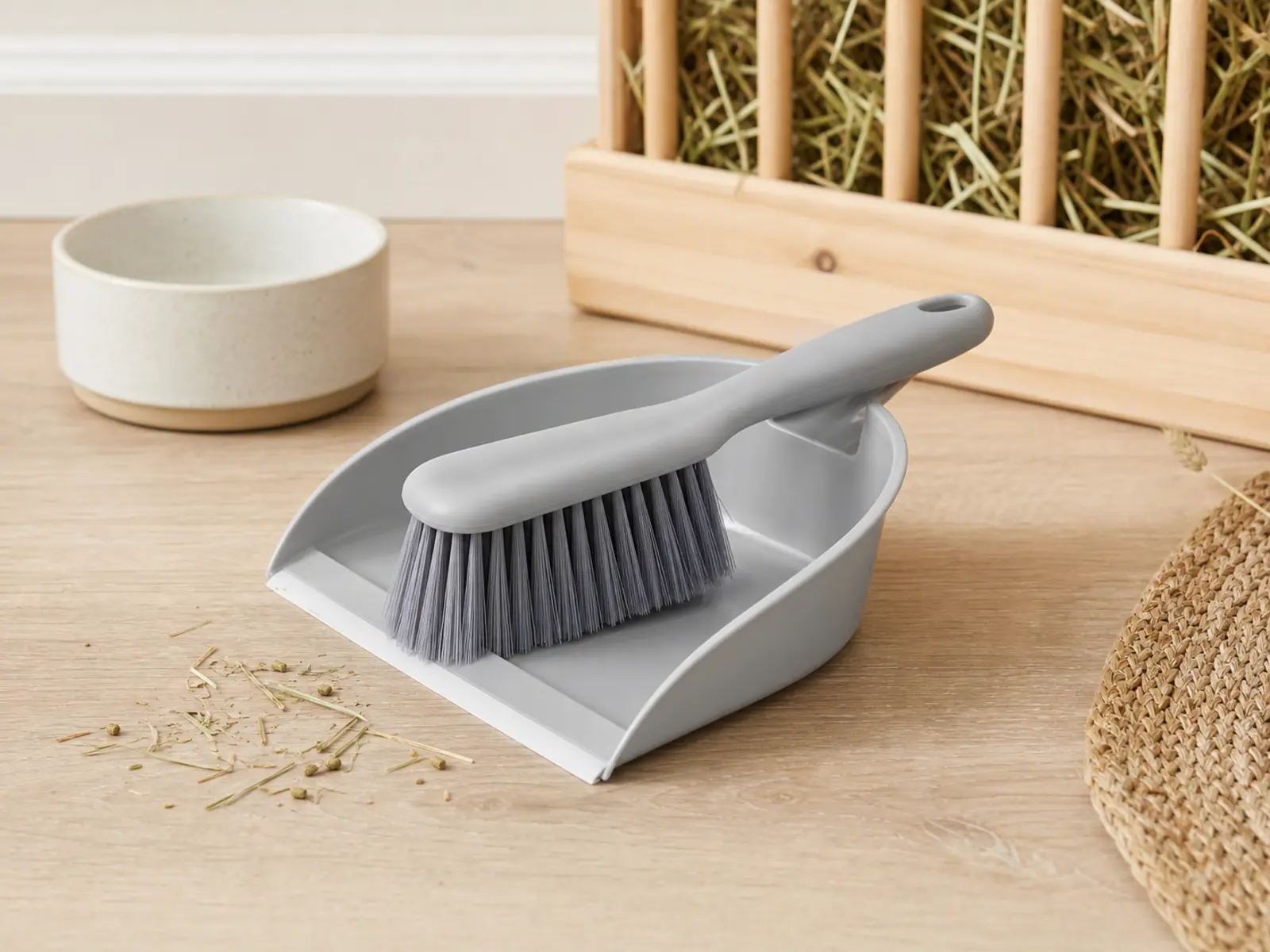
Small dustpan and brush
Sweep up dry leaves and stems around the station without turning normal hay scatter into a reason to offer less.
Shop small dustpan and brush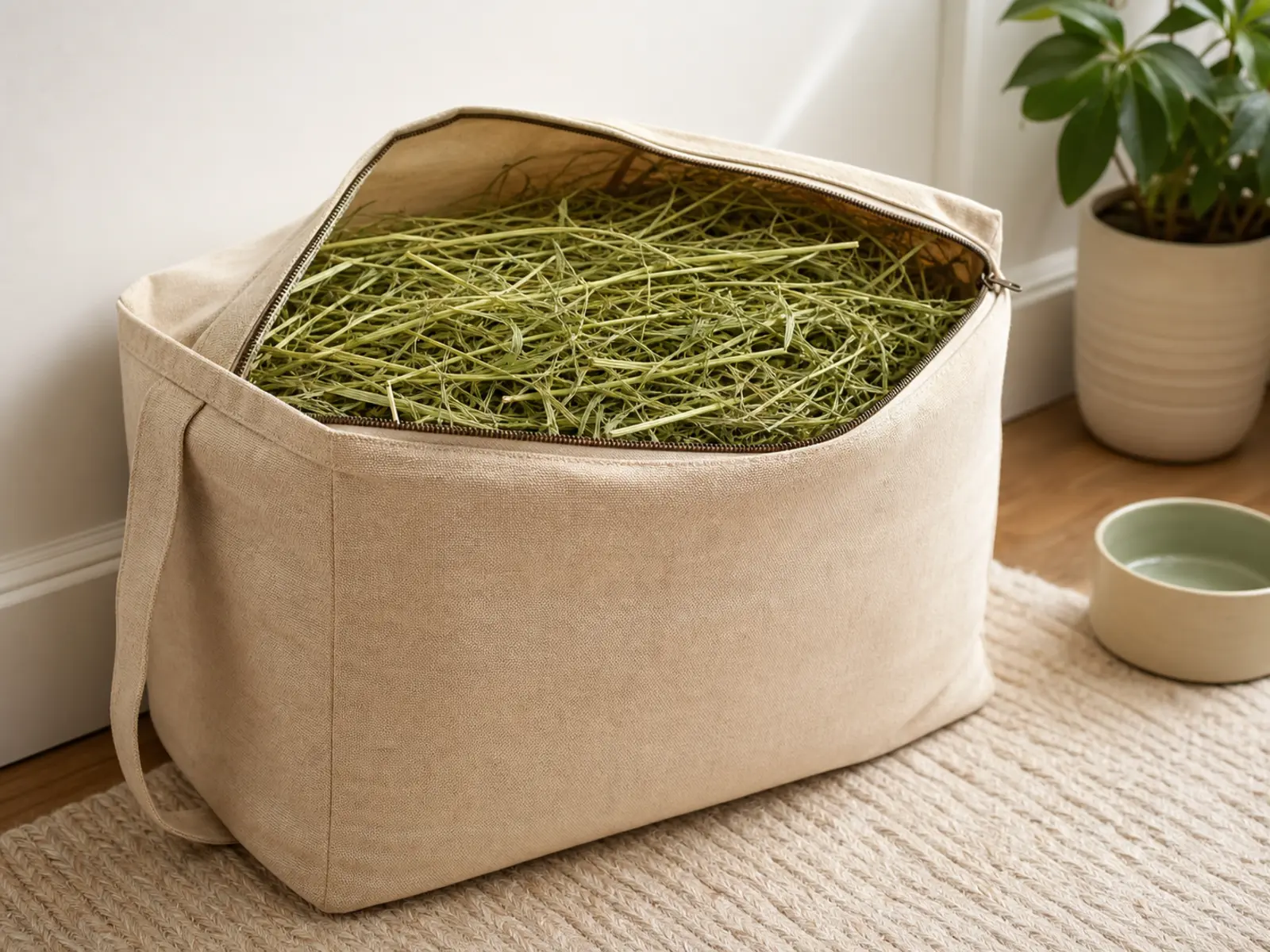
Ventilated hay bag
Keep the orchard hay ventilated, dry, and off the floor while leaving the open batch easy to smell and inspect.
Shop ventilated hay bag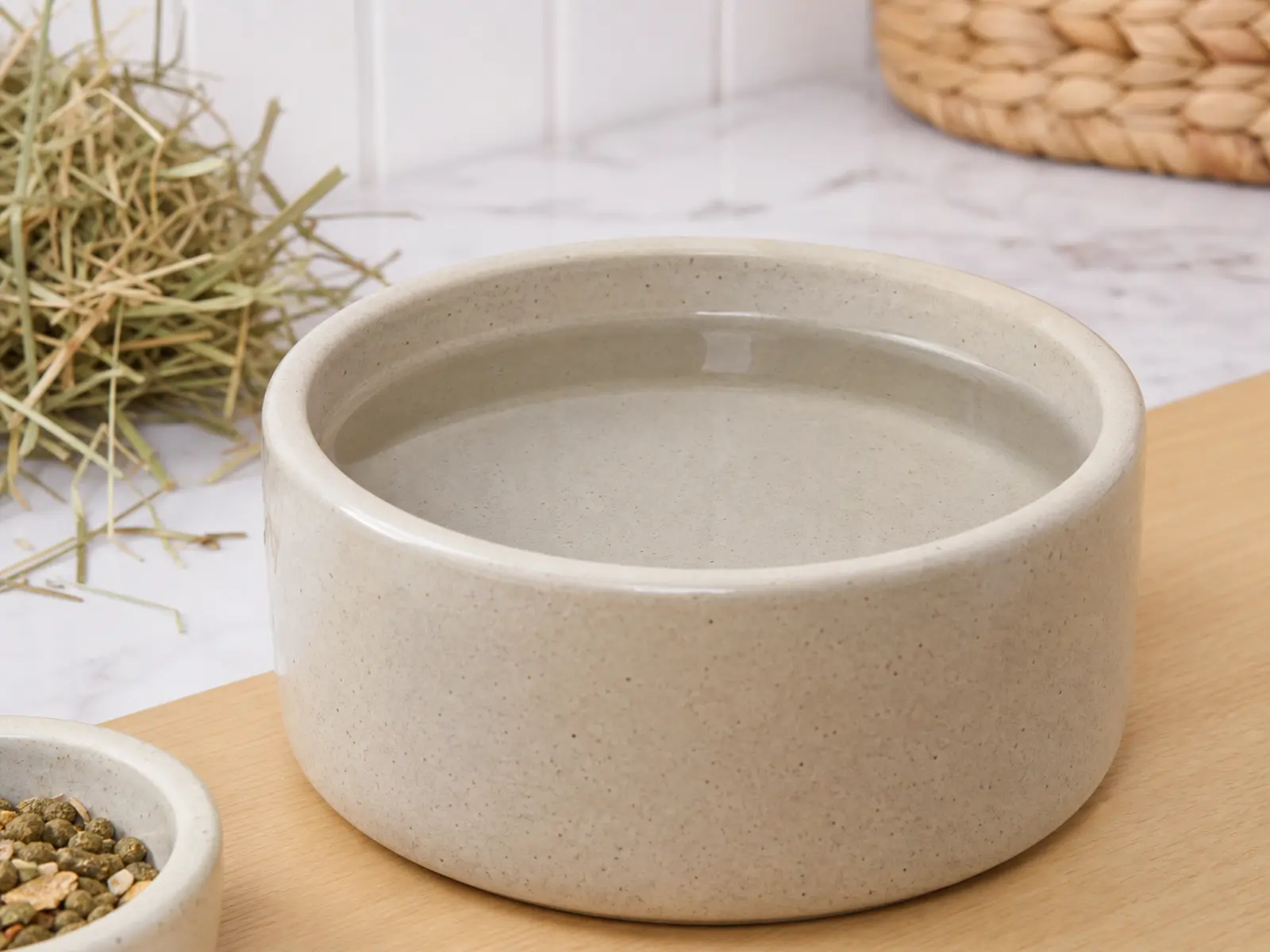
Heavy water crock
Place plain water beside the hay station in a stable bowl that stays easy to inspect and refill.
Shop heavy water crock