Updated
Rabbit food check
Can Rabbits Eat Timothy Hay? Yes—Offer It All Day
Yes—an everyday adult hay
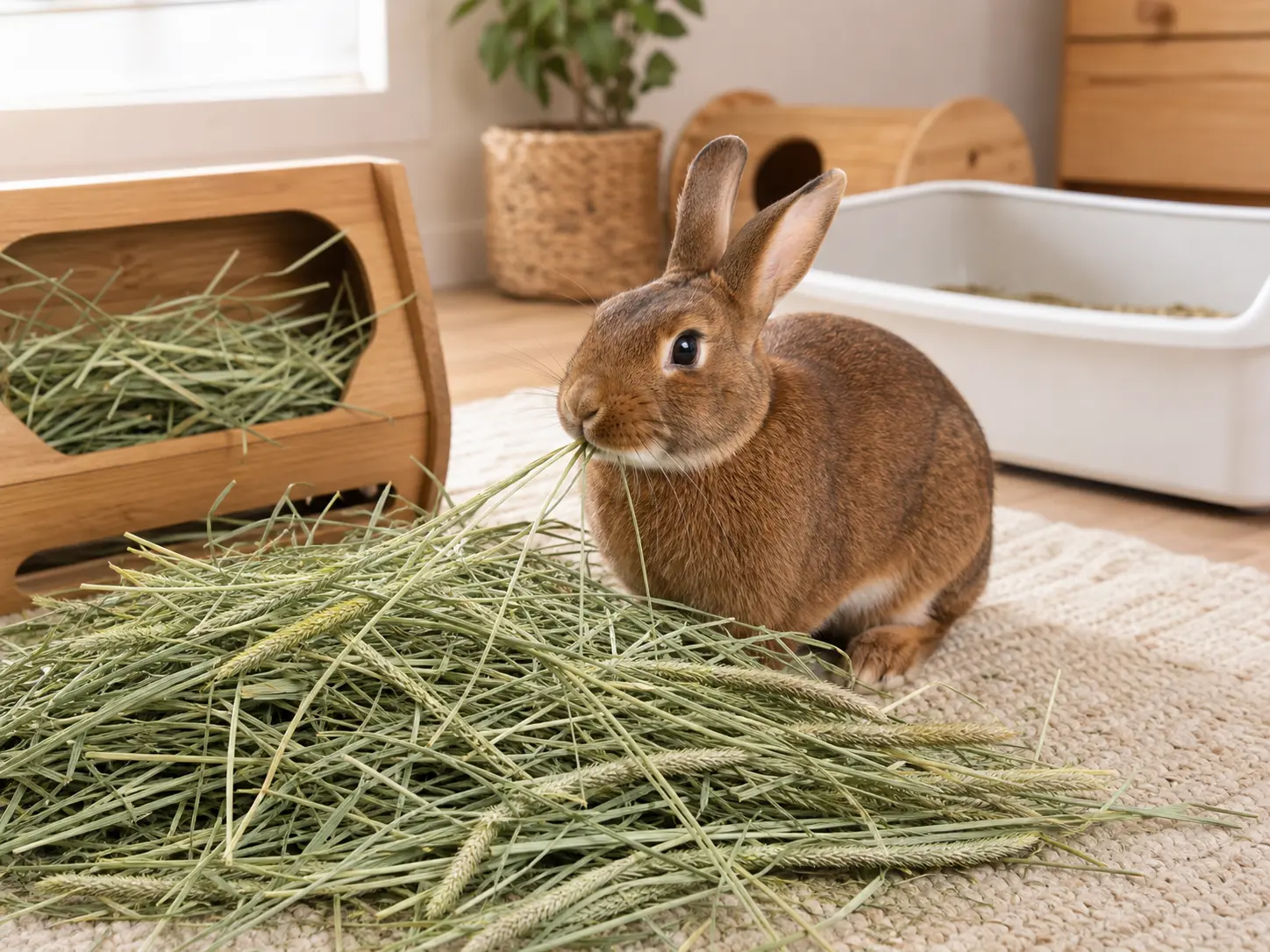
Yes. Timothy hay is a grass hay and an excellent everyday choice for most adult rabbits. Keep a loose, fresh pile available at all times. If one bag gets ignored, check its smell and texture—but take a sudden drop in all hay eating seriously.
 Timothy Hay
Yes—this is the everyday stuff
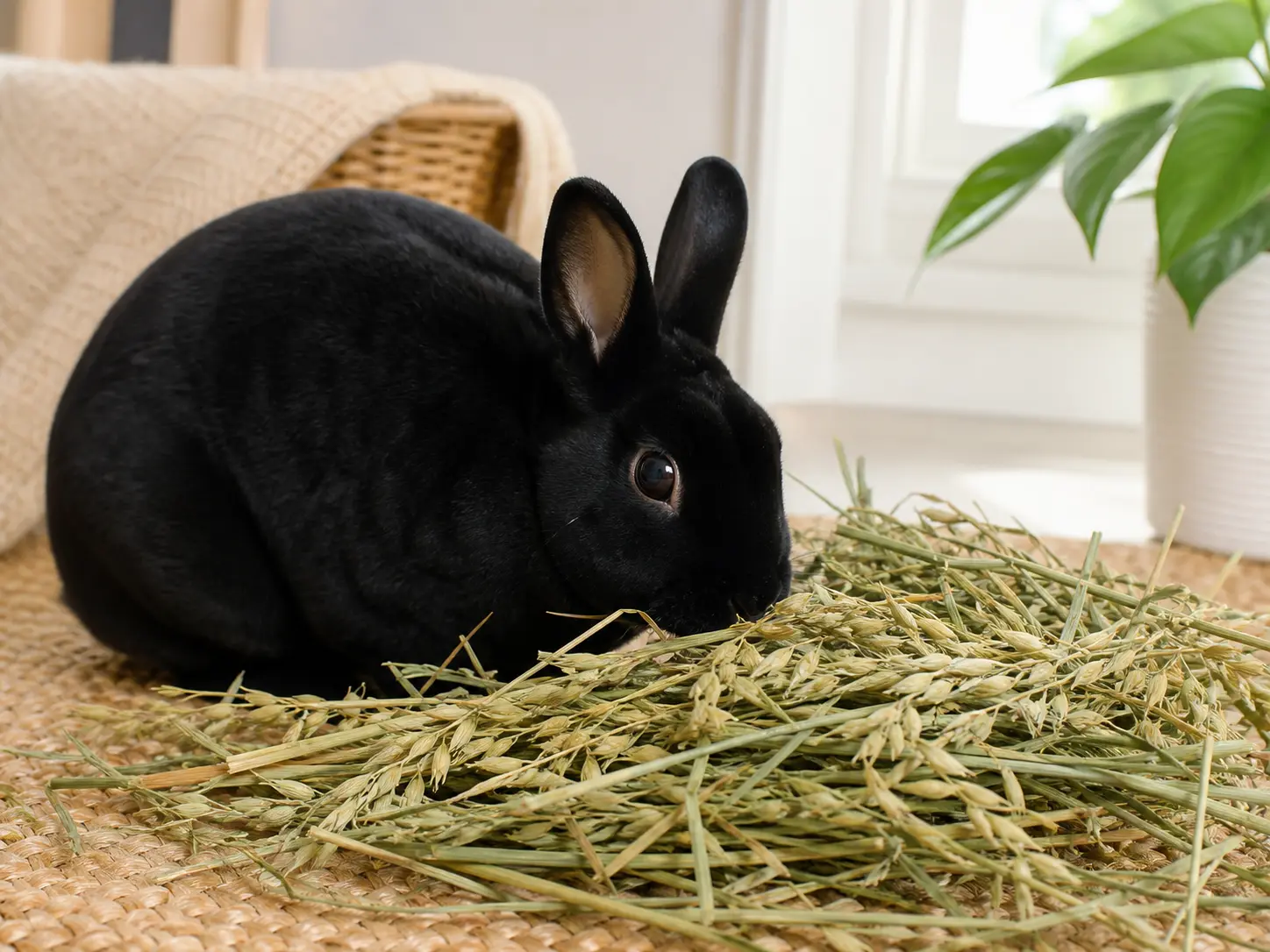
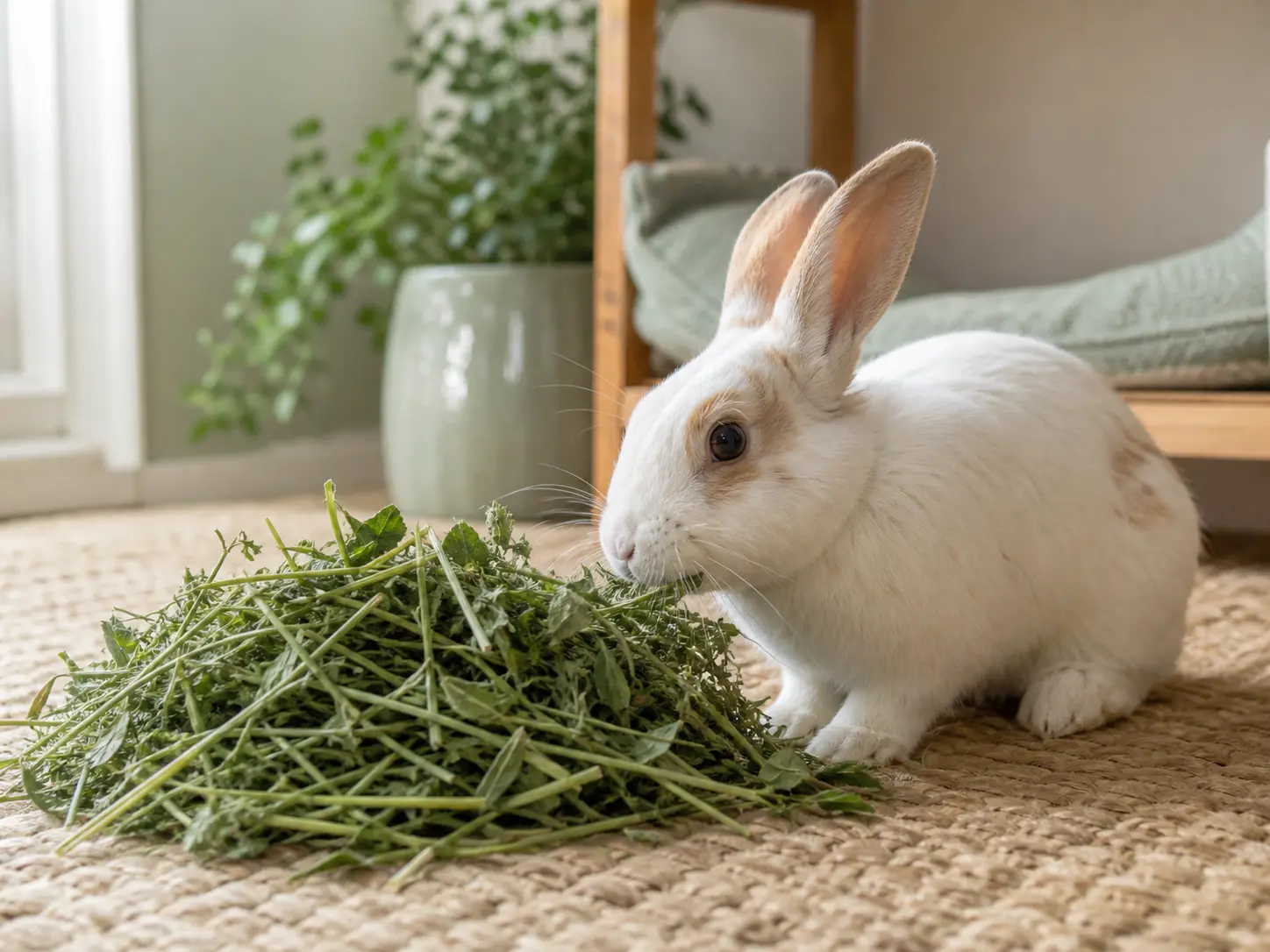
Timothy is a straightforward choice for most adult rabbits: leave it out without measuring a daily portion. Orchard, oat, meadow, brome, and other grass hays can share the rack. Long stems should disappear across the day while pellets stay in their much smaller measured serving.
The bag should smell like hay, not a basement
Timothy can be greener, browner, softer, or stalkier from one harvest to the next. Color alone does not settle the question. Reach into the bag and check the middle: the hay should be dry and clean-smelling, with no damp knots, fuzzy growth, webbing, insects, or dust that billows when the stems move.
Pellets do not do the same job
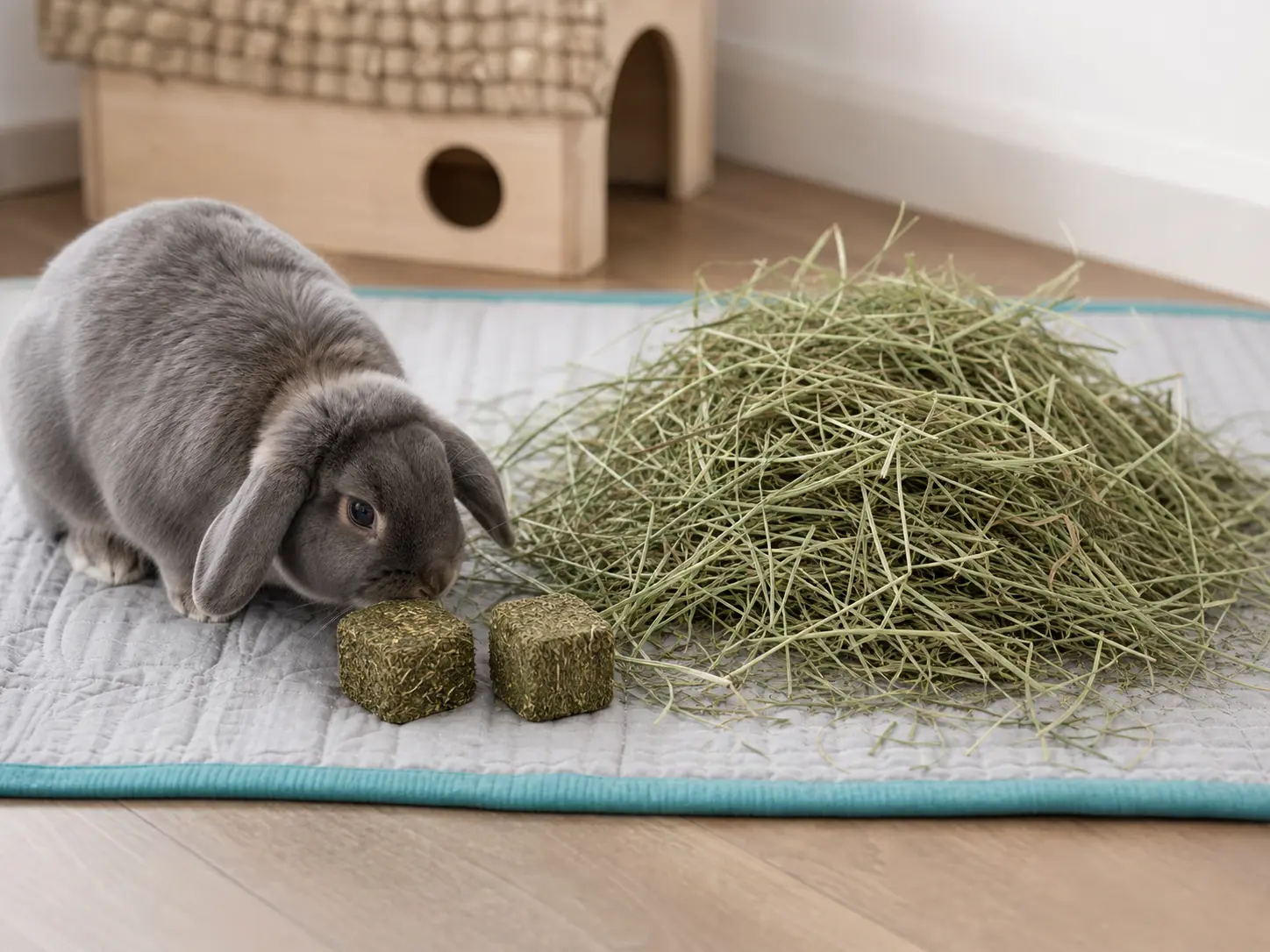
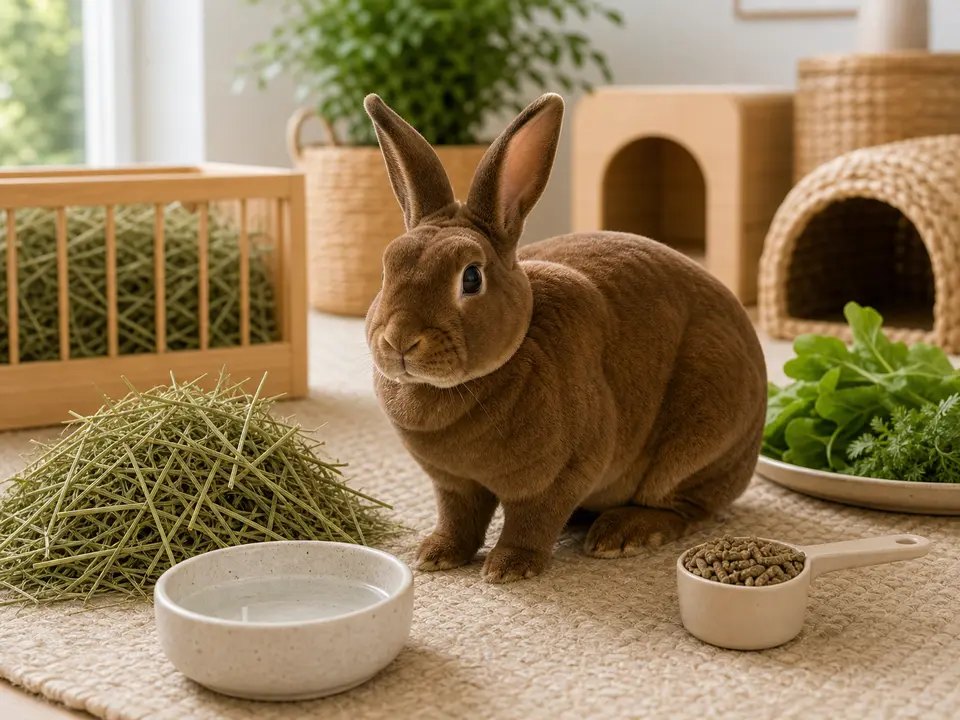
A pellet label may list timothy hay first, but the contents have been ground and pressed into short pieces. Pellets are the measured part of an adult diet; loose hay is the food that stays available. Keep the long strands even when the pellet bowl looks nutritionally complete.
A suddenly untouched rack needs attention
One rabbit may reject a dusty batch or prefer another grass hay, but a sudden refusal to chew can also signal dental pain or illness. Offer the familiar hay in a fresh pile and check the litter box. If eating or droppings have slowed, food falls from the mouth, the chin is wet, or the rabbit looks uncomfortable or unusually quiet, call a rabbit-savvy veterinarian.
Open a new bag in daylight
Before the bag reaches the rabbit room, lift a handful from below the neat top layer. Turn it over, pull it apart, and smell it. A few leaf crumbs are normal. Dampness, mold, webbing, insects, a stale odor, or a cloud of fine dust means the batch needs a closer look rather than a spot in the feeder.
Mix the last handful with the first
When the old bag was eaten well, set some of its final clean hay beside the first handful from the new bag. The harvest may smell and feel different even under the same label. Keeping both available makes the change less abrupt and shows which pile the rabbit is actually choosing.
Put the pile where eating already happens
Many rabbits pause for hay while sitting in or beside the litter box. Place a generous loose pile or safe feeder at that familiar stop, away from wet litter. Make sure a small rabbit can reach the bottom and a large rabbit can pull stems without squeezing its head through a narrow gap.
Look at what is left tomorrow
Remove wet and soiled strands, lift out the stale bottom layer, and notice what remains. Thick stems left behind are not a crisis when plenty of the pile was eaten. An untouched rack, fewer droppings, or a rabbit waiting only for pellets deserves a closer check before breakfast moves on as usual.
Serve
- Read the front and back of the bag. It should say timothy hay, not timothy-based pellets, compressed cubes, a sweetened forage mix, or an unidentified blend.
- Lift hay from the middle of the bag in good light. Look for long stems and leaves, then reject damp clumps, fuzzy patches, webbing, insects, or dust that hangs in the air.
- Smell the handful. Good hay smells dry and grassy; sour, smoky, perfumed, or strongly musty hay does not belong in the feeder.
- Store the open supply dry, ventilated, and off the floor. Give the rabbit loose handfuls that pull free easily rather than a block jammed tightly into the rack.
Avoid
- Counting timothy-based pellets as the hay supply. Ground and compressed feed does not replace a loose pile of long grass-hay strands.
- Burying the stale bottom layer every time the rack is topped up. Remove wet, soiled, dusty, or ignored hay before adding more.
- Using a rack with openings that trap the rabbit's head or make long stems frustrating to pull. A clean floor-level pile in a safe hay area is better than an awkward feeder.
- Assuming a rabbit is merely bored when all hay suddenly goes untouched. Dental pain and illness can change chewing and appetite quickly.
Watch
- The rabbit returning to the hay several times between the morning and evening meals
- Long strands disappearing and comfortable side-to-side chewing
- The usual number and size of separate round droppings in the litter box
- Eating less, fewer or smaller droppings, a wet chin, food falling from the mouth, a hunched pose, tooth grinding, weakness, or unusual quietness; call a rabbit-savvy veterinarian promptly
Portion
Timothy hay is not a measured side dish. Most adult rabbits should have unlimited grass hay, so refill the rack before it is bare. A pile at least as large as the rabbit is a useful starting point, but a keen hay eater may need several refills in a day.
Make room for the hay your rabbit actually eats
A useful timothy setup holds a generous loose pile, keeps the open supply dry, gives the rabbit room to graze beside the litter box, and makes the inevitable hay scatter easy to clear.
Affiliate links: Furball Cove may earn from qualifying purchases at no extra cost to you.
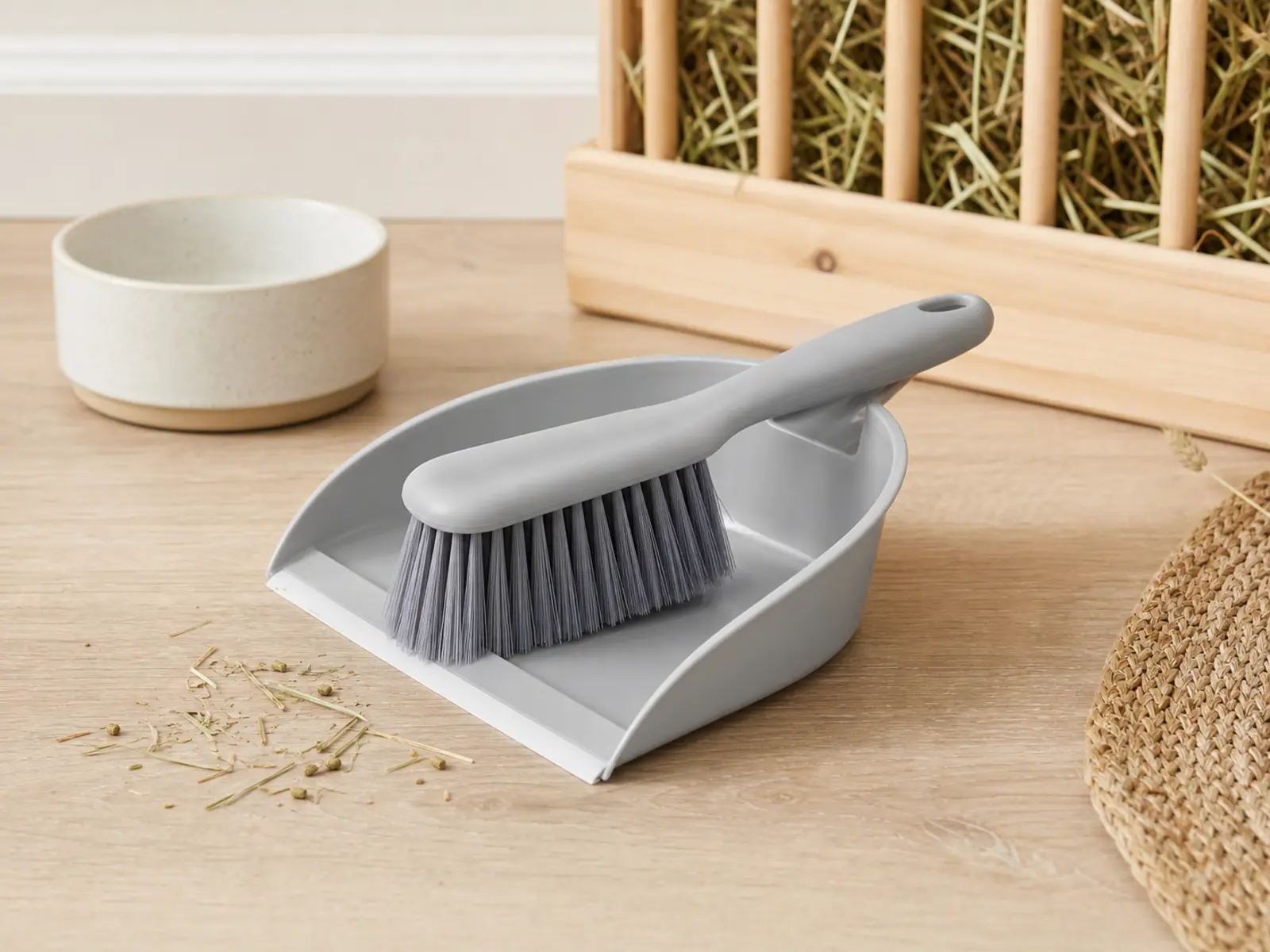
Small dustpan and brush
Sweep up dry stems around the station without making a normal hay mess the reason to ration the pile.
Shop small dustpan and brush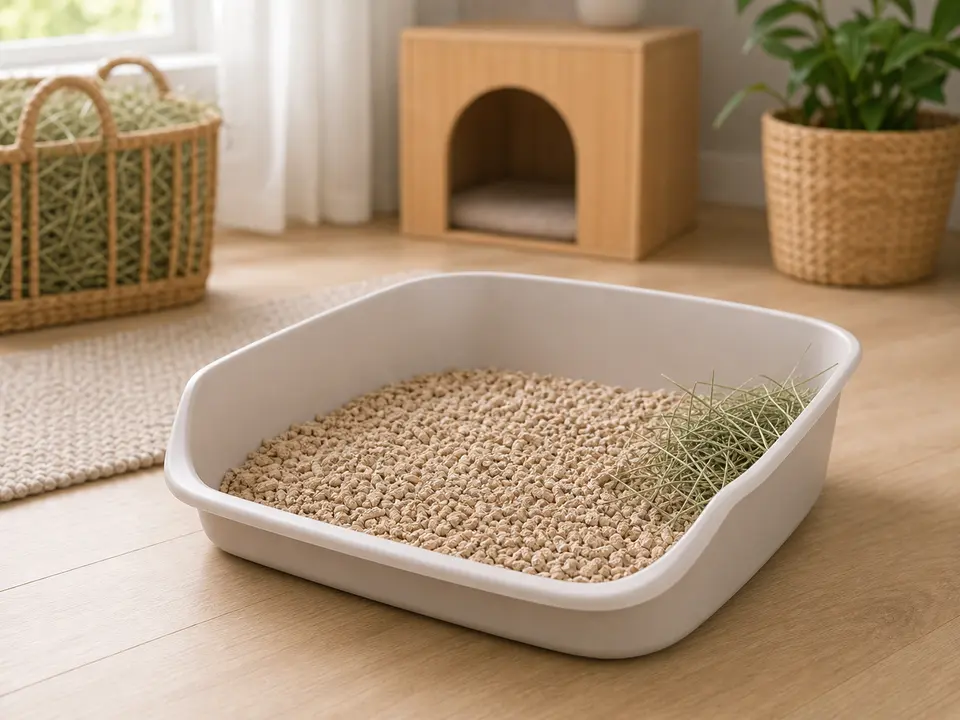
Roomy litter box
Give the rabbit enough room to turn, sit, and graze beside clean hay without pushing every strand into a wet corner.
Shop roomy litter box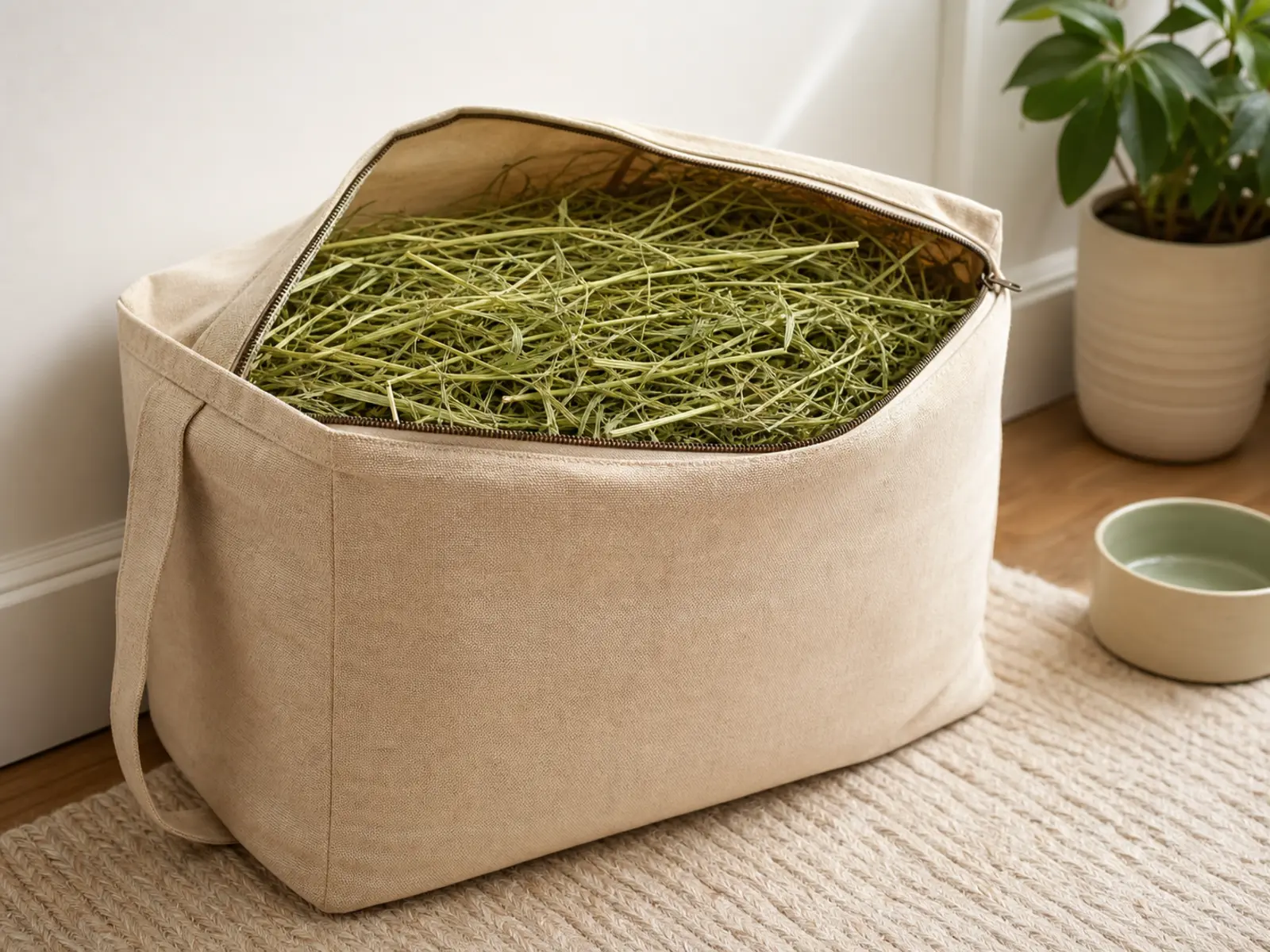
Ventilated hay bag
Keep the open timothy supply ventilated, dry, and off the floor while leaving it easy to inspect before each refill.
Shop ventilated hay bag