Updated
Rabbit food check
Can Rabbits Eat Sunflower Petals? Yes—Skip the Seeds
Yes—petals, not seeds
Yes. The yellow ray petals of common sunflower, Helianthus annuus, are rabbit-safe forage. Take one ray from a plant you grew without sprays and serve it alongside timothy. The disk and stalk stay outdoors; reserve the fatty seeds for the birds.
 Sunflower Petals
A sunflower petal is one yellow ray
What looks like one giant flower is a head made from many small flowers. The long yellow pieces around the edge are ray petals; the brown center is the disk where seeds develop. For the rabbit dish, lift one clean yellow ray and leave that complicated center on the garden plant.
Petals and seeds are different food decisions
Sunflower seeds pack far more fat and energy than a fresh petal, and commercial seed treats often add grains, honey, salt, or other extras. A stolen kernel is not proof of poisoning, but it is no reason to pour seeds into dinner. This guide's yes applies to the identified fresh plant piece.
The rough stalk stays in the raised bed
A sunflower's thick hairy stalk and heavy head can bring soil, ties, insects, and tough plant material into the pen. Do not cut the whole stem for enrichment. Hold the head steady outdoors, remove one ray petal with your fingers, and let the living plant continue feeding pollinators.
Bird activity changes the inspection
A ripening sunflower attracts finches and other seed eaters, so the head and upper leaves may collect droppings or damaged tissue. Choose a clean outer petal before seeds mature and inspect it closely. When contamination reaches the bloom, skip that flower and use a familiar leafy green.
Check the whole sunflower beyond the pen
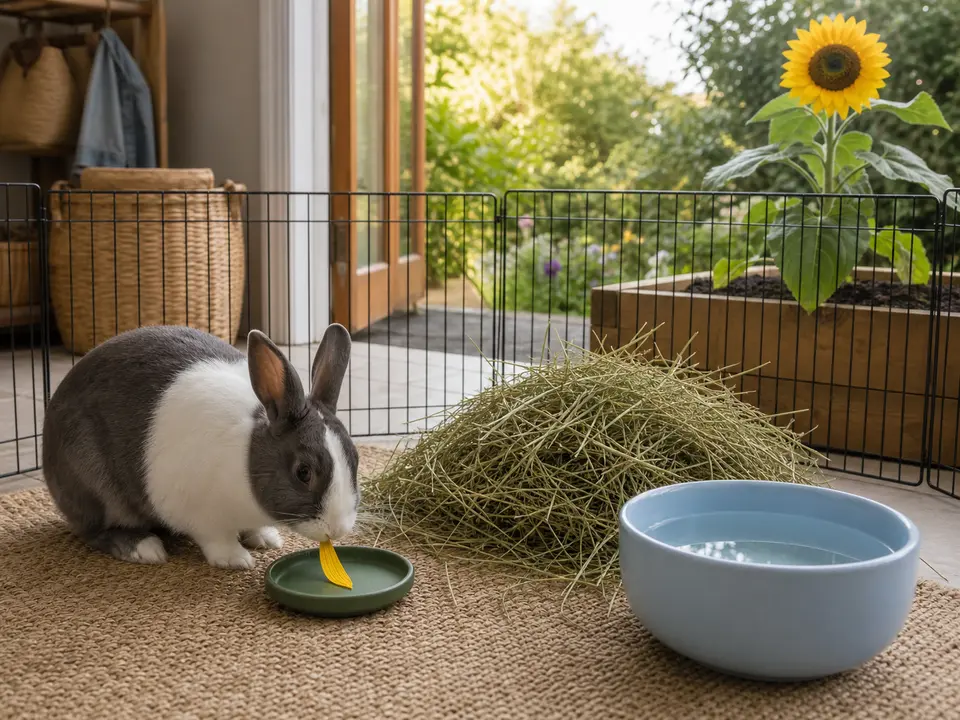
At the mudroom door, look from the broad rough leaves up the single sturdy stalk to the yellow-rimmed head. Match the plant to the Helianthus annuus envelope clipped inside the tool cupboard and the untreated raised bed. The rabbit waits behind the exercise-pen gate with hay while you inspect the bloom.
Lift one ray without touching the disk
Support the flower head with one hand and pinch a firm outer yellow ray at its base. Pull gently outward. Green bracts, dark disk flowers, developing seeds, stalk, and every other petal stay outdoors; carry one golden strip toward the rabbit's bowl and hay.
Use the dark plate to find pale dust
In the kitchen, lay the petal flat on the green plate and slide a fingertip along both edges. Pale mildew, pollen clumps, tiny larvae, and sticky residue show more clearly against the dark glaze. Rinse the petal over the sink, press it once between towels, and keep its long shape visible.
Let the yellow sliver vanish beside hay
Put the green saucer at the front of the pen, with pale-blue water on one side and loose timothy behind it. The Dutch rabbit may swallow the ray in one quick pull. Keep the garden door closed afterward; the next useful observations are steady chewing and an ordinary toilet-area clean.
Serve
- Confirm common sunflower as Helianthus annuus from the tall rooted plant, broad rough leaves, thick stalk, and large flower head with yellow ray petals around a central disk.
- Use the home-raised sunflower whose care notes are yours. Skip any bloom touched by garden chemicals, slug pellets, vehicle dust, runoff, or droppings from pets and wildlife.
- Choose one bright outer ray petal before it browns or drops; leave the disk flowers, developing seed hulls, tough green bracts, and fibrous stalk attached.
- Lay the yellow ray across a navy saucer and follow both edges to the pointed tip, looking for insects, mildew, grit, or sticky residue. Rinse over the sink and press once between towels.
Avoid
- Loose sunflower seeds, striped birdseed, seed bells, wild-bird mix, salted kernels, roasted snacks, sunflower butter, or cooking oil as rabbit food.
- A mature seed head or flower disk presented whole; the dense center hides seeds, insects, mold, and plant debris and defeats the one-petal portion.
- Florist stems, cut bouquets, farm-market decorations, public gardens, field margins, or nursery plants whose sprays and preservatives cannot be documented.
- Brown fallen petals, wet moldy heads, dusty dried arrangements, painted flowers, potting mix, fertilizer, support ties, and leaves contaminated by bird droppings.
Watch
- The single yellow strip disappearing while long timothy strands keep moving
- Normal water use, grooming, posture, and enthusiasm for the rabbit's usual salad
- An ordinary scatter of round dry droppings at the later pen clean
- Soft stool, belly pressing, hiding, or reduced eating or output; remove sunflower and call a rabbit-savvy vet promptly if appetite or droppings slow
Portion
Begin with one long yellow ray petal, not the entire ring around the flower head. Test a sound leaf on a different date. Before sunflower returns, confirm that the rabbit followed its usual meal schedule, emptied hay at the normal pace, and left an ordinary scatter of droppings.
Separate one clean ray petal from the seed head
Sunflower prep is a separation job. Confirm the tall Helianthus in its bed, leave the heavy disk outdoors, inspect one yellow ray, wash it, and plate it alone. The tools below preserve that narrow portion while the feeder remains packed with grass hay.
Affiliate links: Furball Cove may earn from qualifying purchases at no extra cost to you.
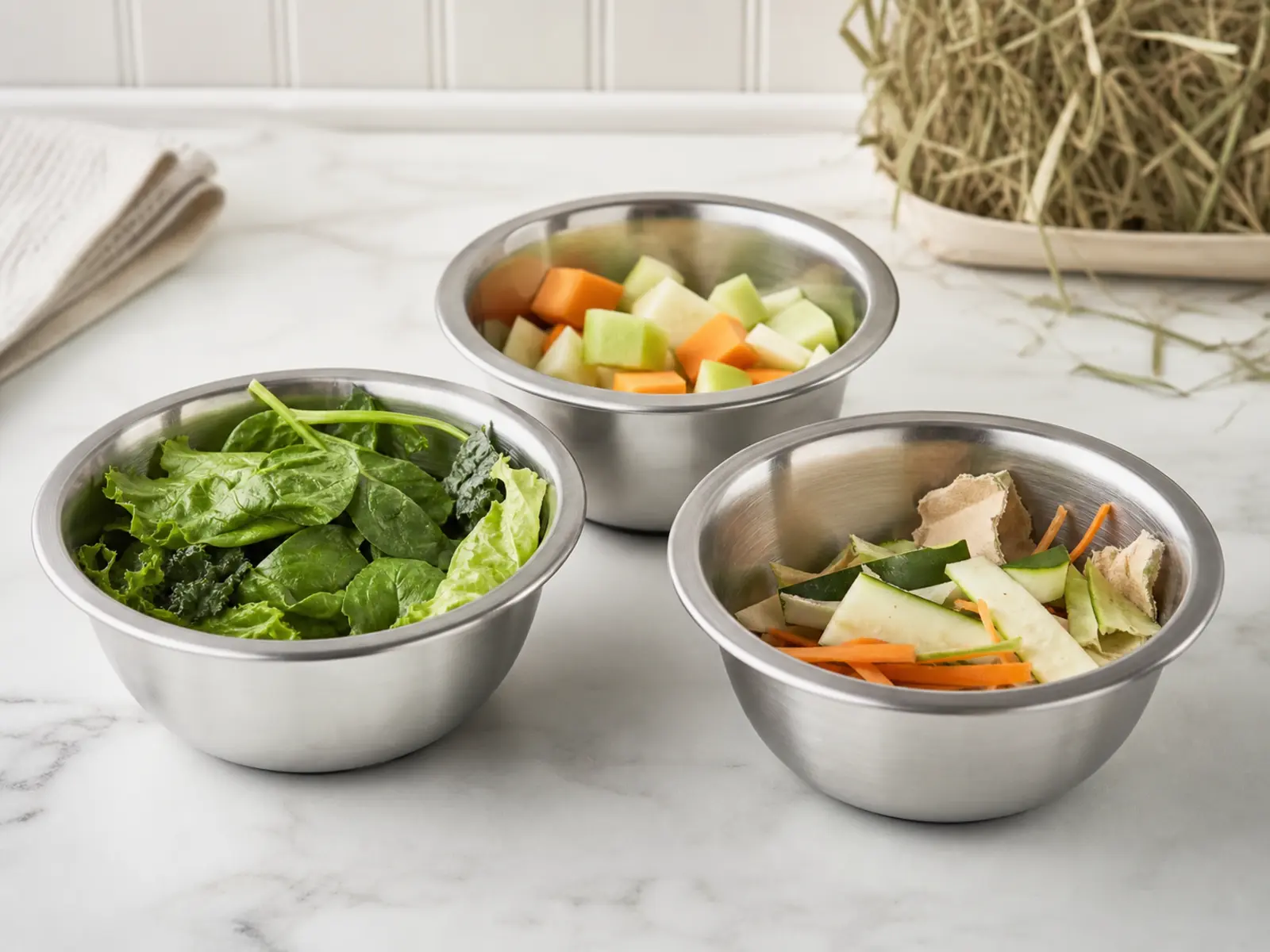
Stainless prep bowls
Carry the single ray petal indoors without seed hulls, green bracts, soil, ties, or other garden clippings joining it.
Shop stainless prep bowls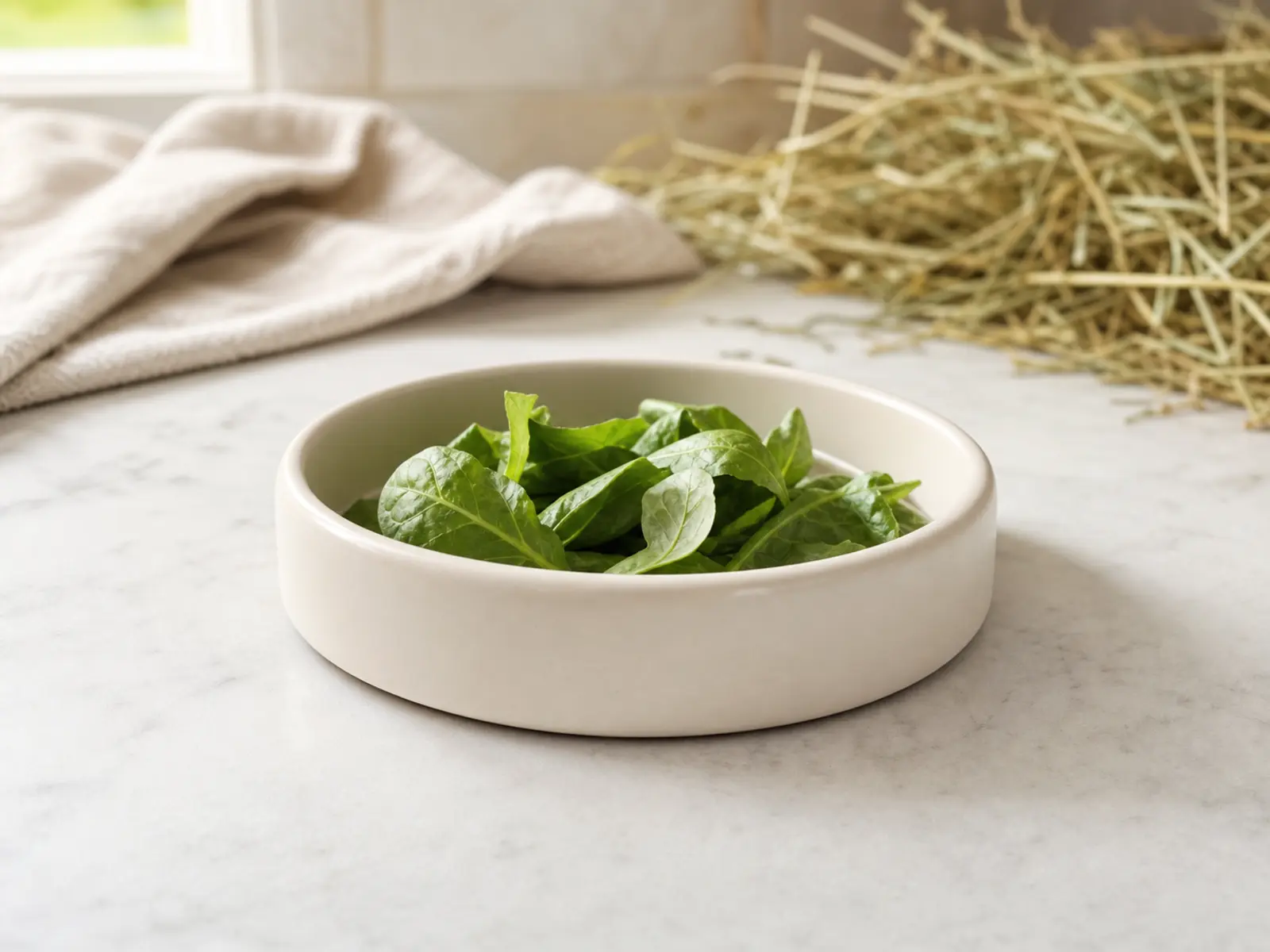
Ceramic food dish
A forest-green shallow saucer outlines one golden ray clearly and keeps the portion separate from a deep mixed salad.
Shop ceramic food dish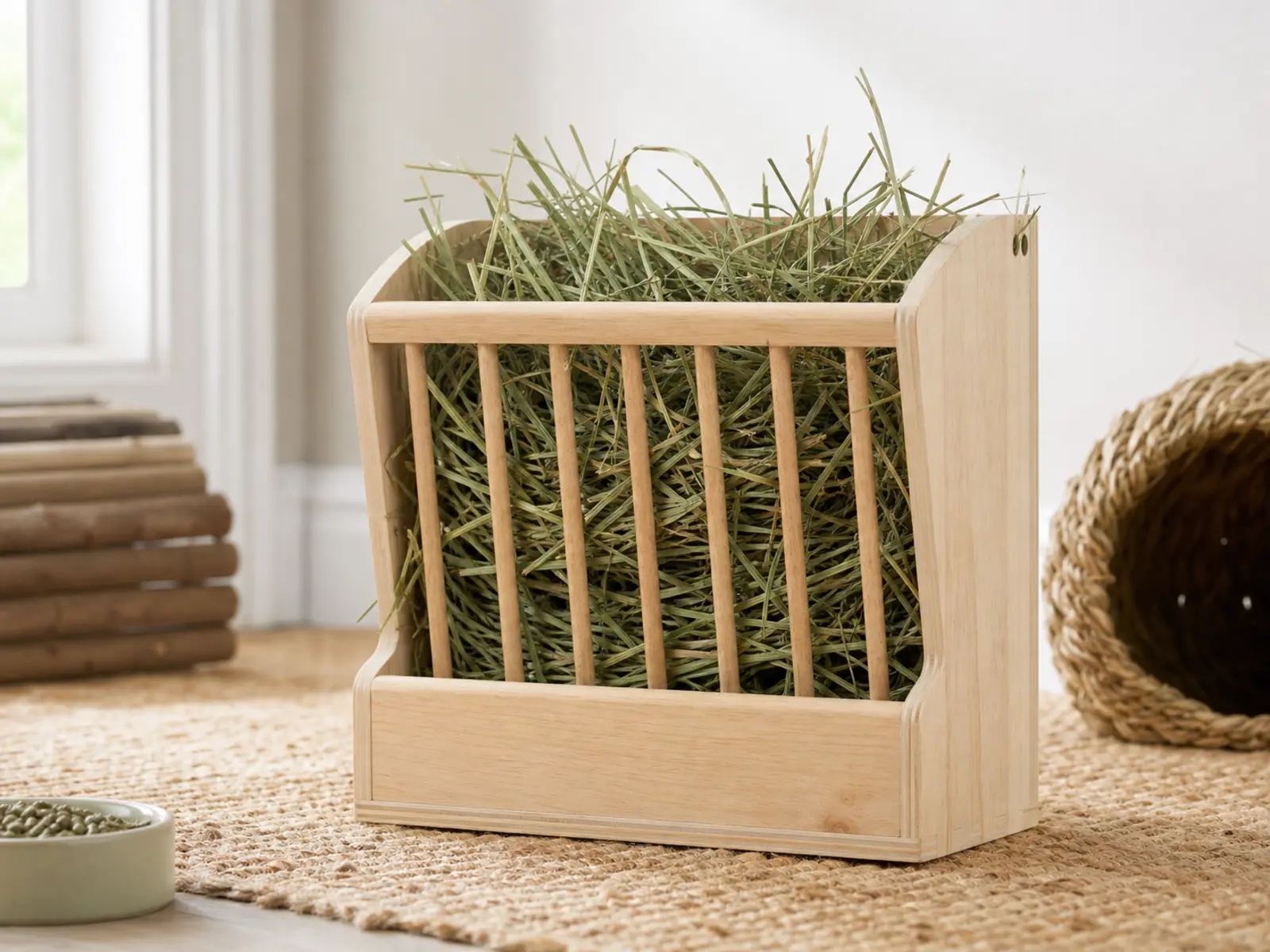
Rabbit hay feeder
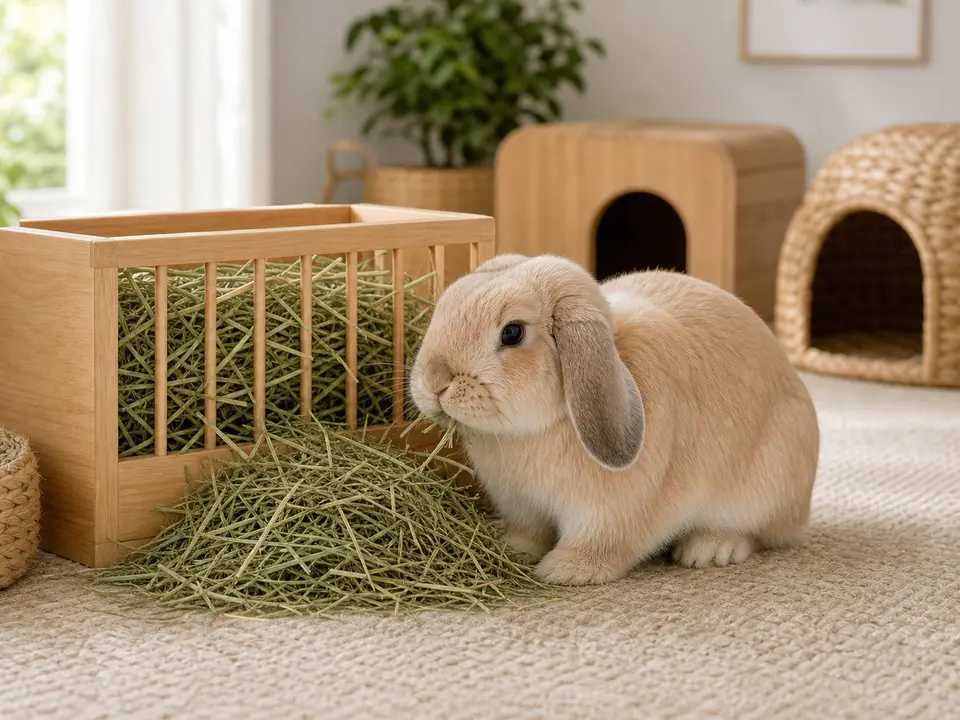
Start with a brimming hay rack, then tuck the petal into a handful of hay so it stays a tiny accent rather than the point of the meal.
Shop rabbit hay feeder