Updated
Rabbit food check
Can Rabbits Eat Turnip Greens? Yes—Rotate the Leaves
Yes—rotate the leafy tops
Yes. Adult rabbits can eat fresh turnip greens. Keep the tops attached to a labeled grocery bunch until prep, wash one modest coarse leaf piece, and serve it plain in a varied rotation beside unlimited grass hay. Turnip greens are calcium-rich, so follow the rabbit-savvy clinic's limits when sludge, stones, or another urinary condition is already being managed.
 Turnip Greens
Yes—fresh turnip greens can join the plate
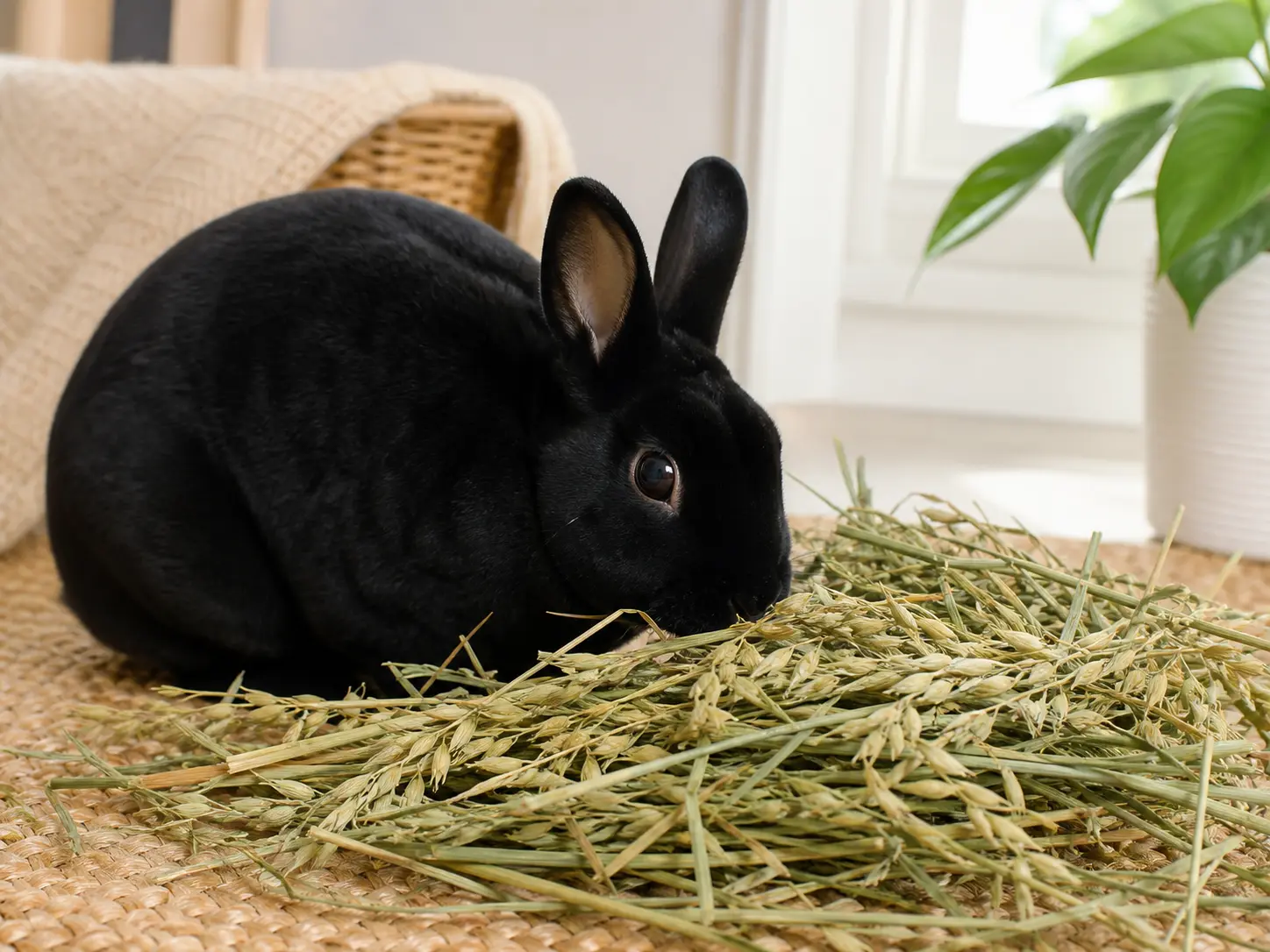
House Rabbit Society lists turnip greens among rabbit-safe leafy vegetables. One washed modest piece can join a varied adult greens plate. Keep unlimited grass hay within reach before, during, and after the leaf disappears.
Purple shoulders settle the identification
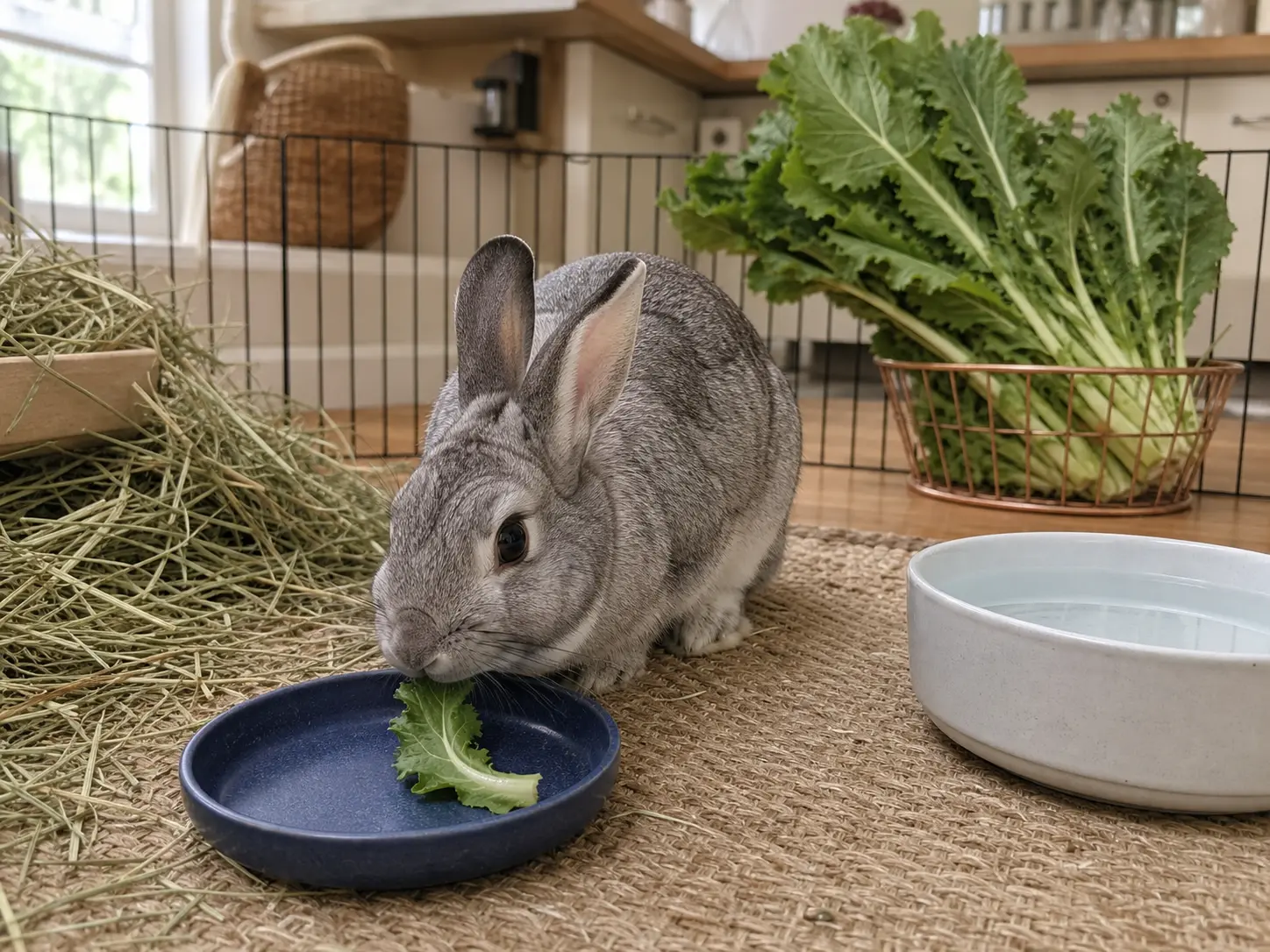
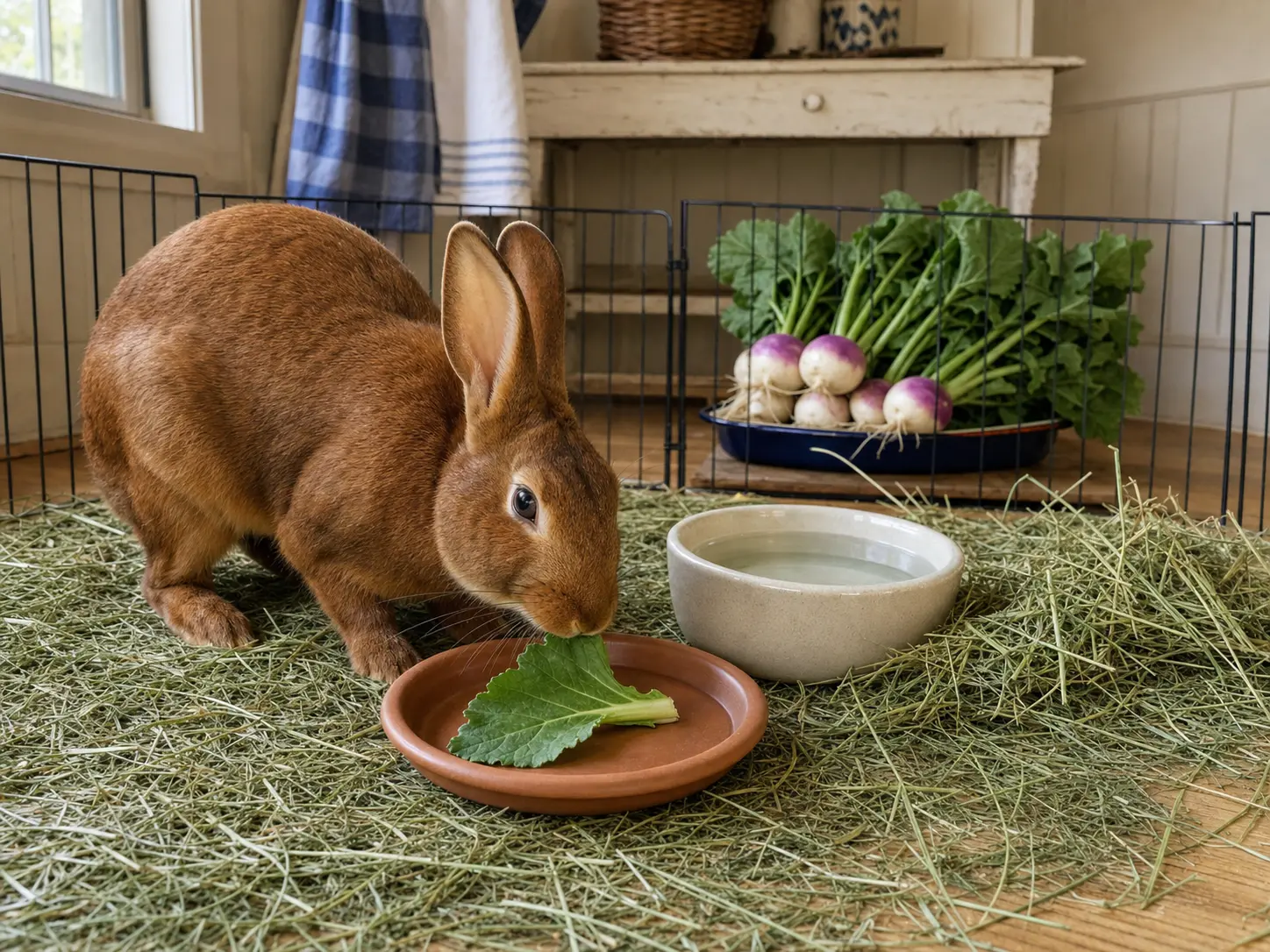
Turnip tops rise from round white bulbs that often carry a purple crown. Each leaf is broad and coarse, with wavy toothed edges and a sturdy pale rib. Keep the bunch intact beside the sink until one washed piece reaches the rabbit plate. A loose brassica leaf should not become dinner on shape alone.
Turnip root is a different bite
House Rabbit Society lists the turnip bulb as a safe non-leafy vegetable, but that does not make the whole rooted bunch one serving. Separate the leaf piece first. If a root bite is also on the menu, portion it on its own rather than handing over every bulb.
Urinary plans change the rotation
House Rabbit Society identifies turnip greens as calcium-rich and advises restricting them when urinary disease calls for a lower-calcium menu. That is individual diet planning, not a reason to call one fresh leaf toxic. Let the clinic review hay, pellets, all greens, water, weight, and medical findings together.
Start with the purple-top bunch
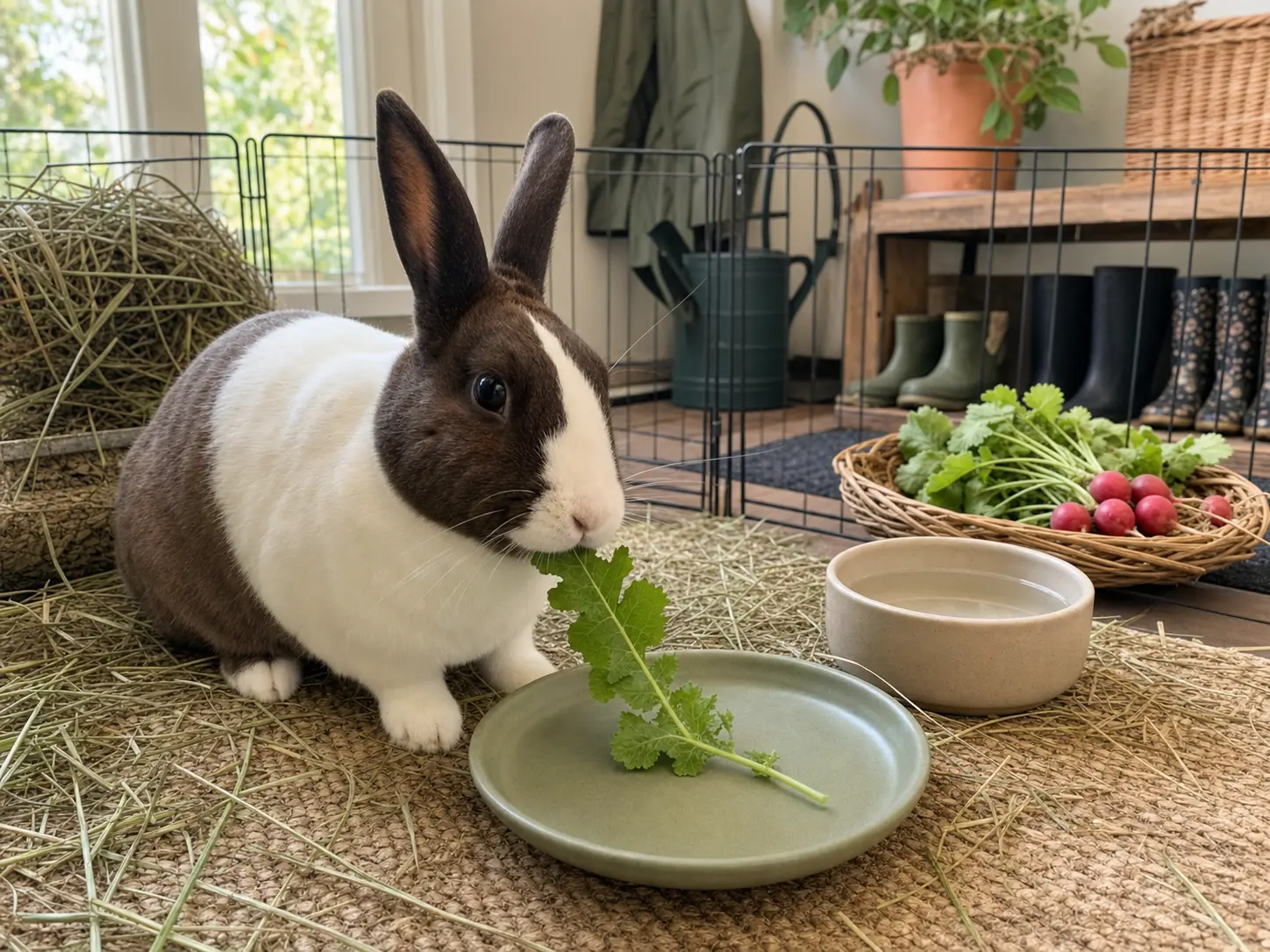
Round white bulbs with purple shoulders sit in the navy enamel tray, their coarse leaves still attached. The copper-red Belgian Hare waits beside meadow hay while one sound green moves from the labeled bunch to the sink.
Open the coarse leaf at the sink
The rabbit keeps grazing beside the pen while the leaf lies across the basin. Run cool water over both sides, trace the pale rib with a fingertip, and spread the stem junction above the bulb. Hidden grit rinses away. Slime, fuzz, sour odor, or a blackened patch sends the leaf to the compost before the saucer comes out.
Tear one piece onto terracotta
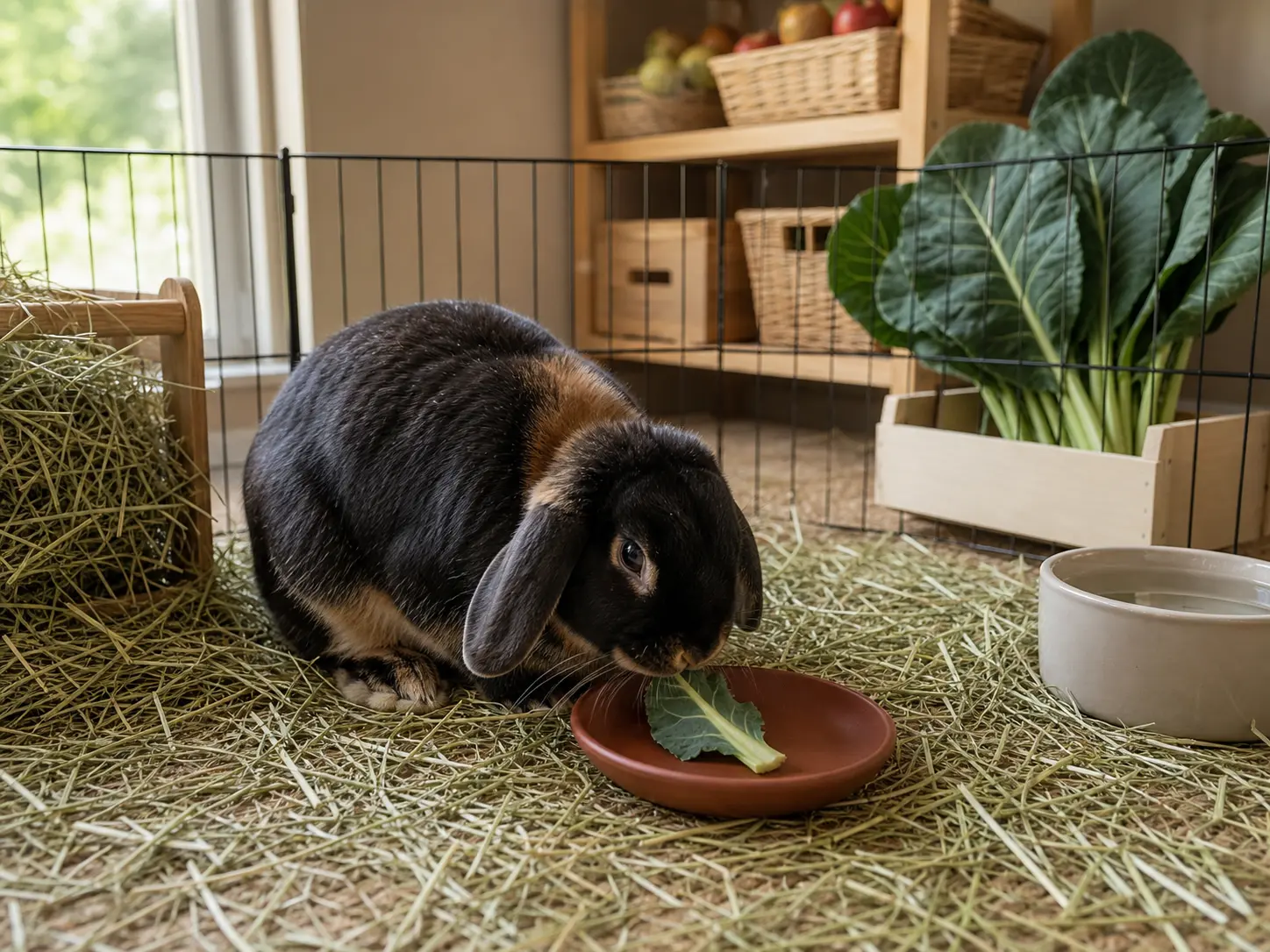
Separate a modest piece with a short tender rib and set it on the low terracotta saucer beside hay and water. The bulb, tough lower stem, and remaining leaves return to the kitchen before butter, stock, oil, salt, or sauce reaches them.
Read the hay pile and litter box later
An empty saucer shows interest in turnip greens, nothing more. Over the next several hours, look for hay pulled from the pile, easy movement, normal urination, and familiar round droppings. Slower eating or output, straining, blood in urine, or a painful posture needs prompt rabbit-savvy veterinary care.
How to offer it
- Confirm turnip greens from the produce label and attached round white or purple-top turnip. A coarse loose brassica leaf is not enough identification on its own.
- Open the bunch and inspect every leaf face, thick rib, stem junction, and root crown. Discard yellow slime, fuzzy growth, sour odor, pest damage, and collapsed dark areas.
- Rinse both coarse leaf faces under cool water. Rub gently along the pale central rib and flush the stem junction until no soil or grit remains.
- Tear one modest leaf piece with a short tender section of rib. Leave the bulb and tough lower stem in the kitchen, then serve the green plain before any cooked recipe begins.
Avoid
- A loose broad leaf guessed to be a turnip top after the root and produce label are gone. Radish, mustard, rutabaga, and other brassica leaves need their own identification.
- Putting the entire rooted bunch into the pen. The turnip bulb is a separate non-leafy serving, not part of an unlimited pile of tops.
- Making turnip greens the daily default when a rabbit already has sludge, calcium-based stones, painful urination, or a clinic-directed lower-calcium menu.
- Mashed turnip, soup, casserole, sautéed greens, restaurant sides, or leaves carrying butter, cream, stock, oil, salt, sauce, spice, or seasoning.
- A gritty, slimy, moldy, sour-smelling, pest-damaged, badly wilted, chemically treated, or unidentified leaf.
Watch
- The turnip-green piece disappearing while the rabbit continues ordinary visits to the hay pile
- Normal posture, movement, water use, urination, and interest in familiar food
- The rabbit's usual separate round droppings after a first turnip-top tasting
- Reduced eating or droppings, soft stool, diarrhea, belly pressing, hunching, tooth grinding, straining to urinate, blood in urine, weakness, or unusual quietness; contact a rabbit-savvy veterinarian promptly
Portion
For an adult already eating leafy vegetables, one modest turnip-green piece can share the usual varied greens allowance. Begin with less if it is new. Do not use the whole bunch as a portion guide, and ask the rabbit-savvy clinic how often this calcium-rich leaf fits when urinary disease is already part of the plan.
Keep coarse turnip leaves easy to identify, wash, and portion
These produce-prep tools help keep the rooted bunch recognizable, expose grit along the pale rib, and reserve one plain leafy piece before the bulbs reach the human meal.
Affiliate links: Furball Cove may earn from qualifying purchases at no extra cost to you.
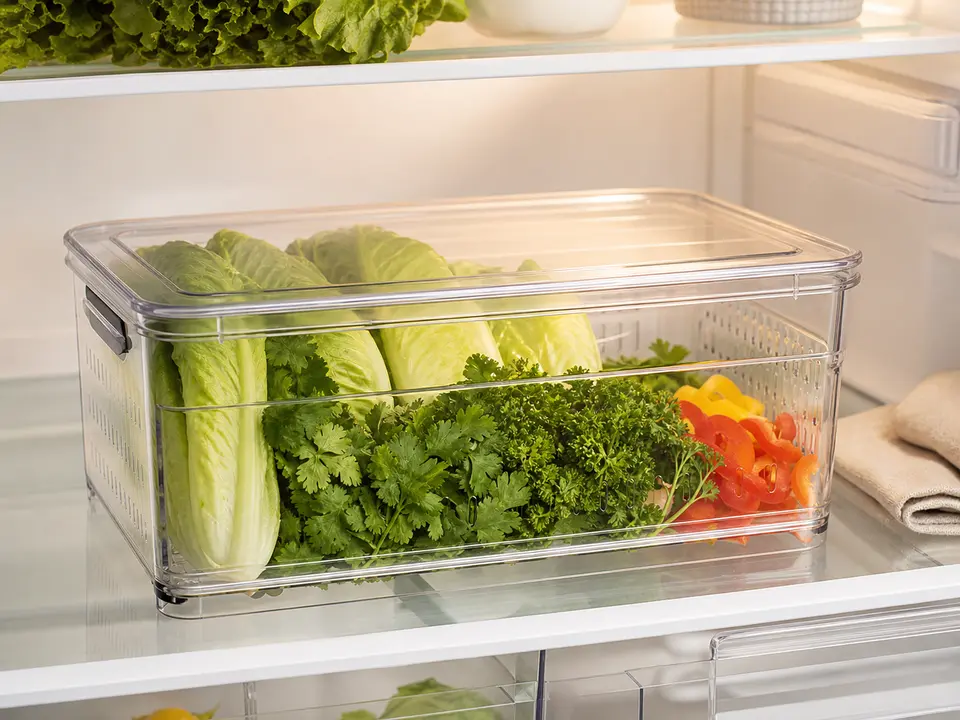
Rabbit greens bin
Give the intact labeled bunch a visible refrigerator space where purple shoulders, damp stems, dark patches, and the opened date stay easy to check.
Shop rabbit greens bin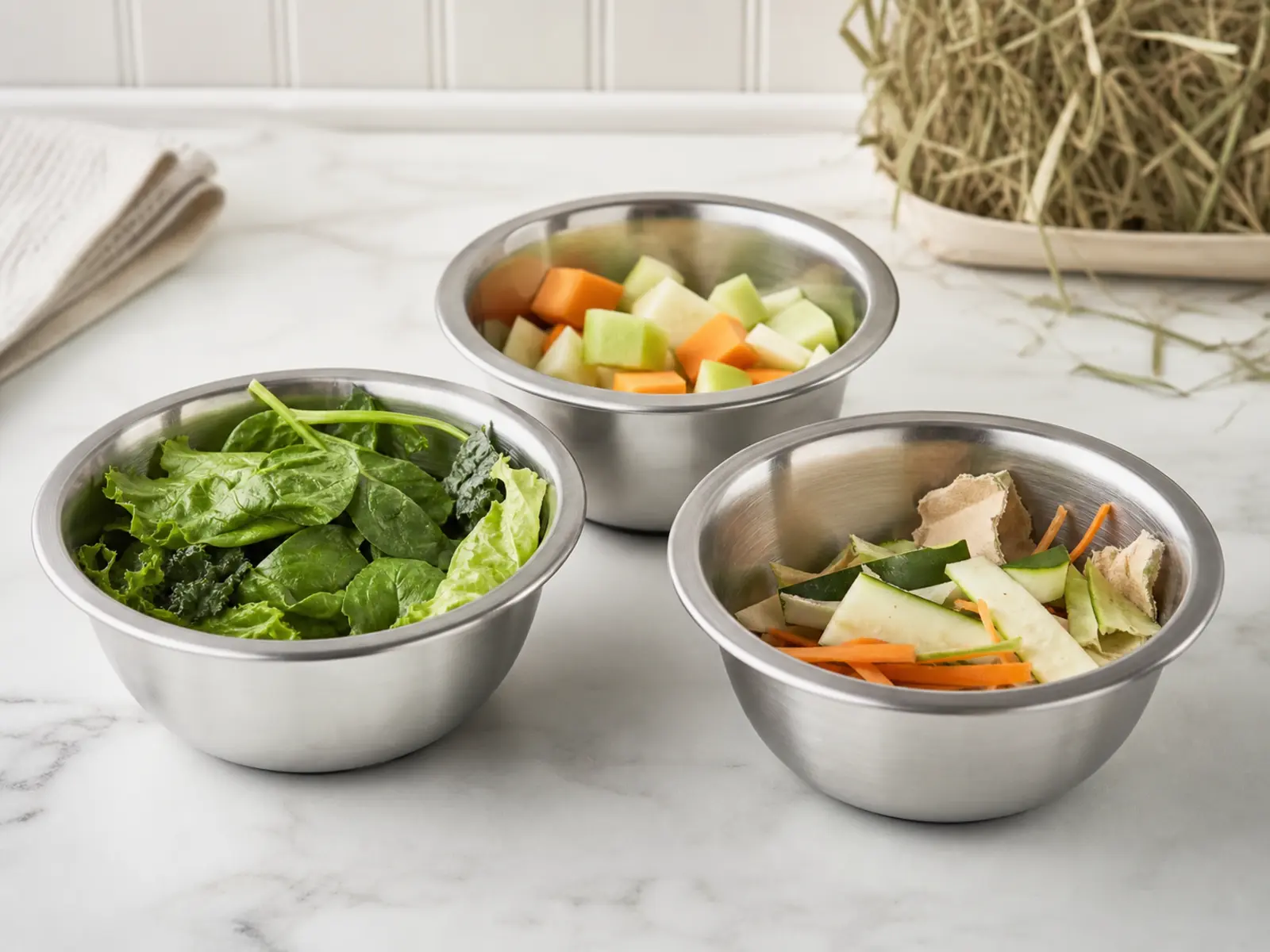
Stainless prep bowls
Reserve the rabbit's washed turnip-green piece before the roots or remaining leaves reach butter, stock, salt, sauce, or the stove.
Shop stainless prep bowls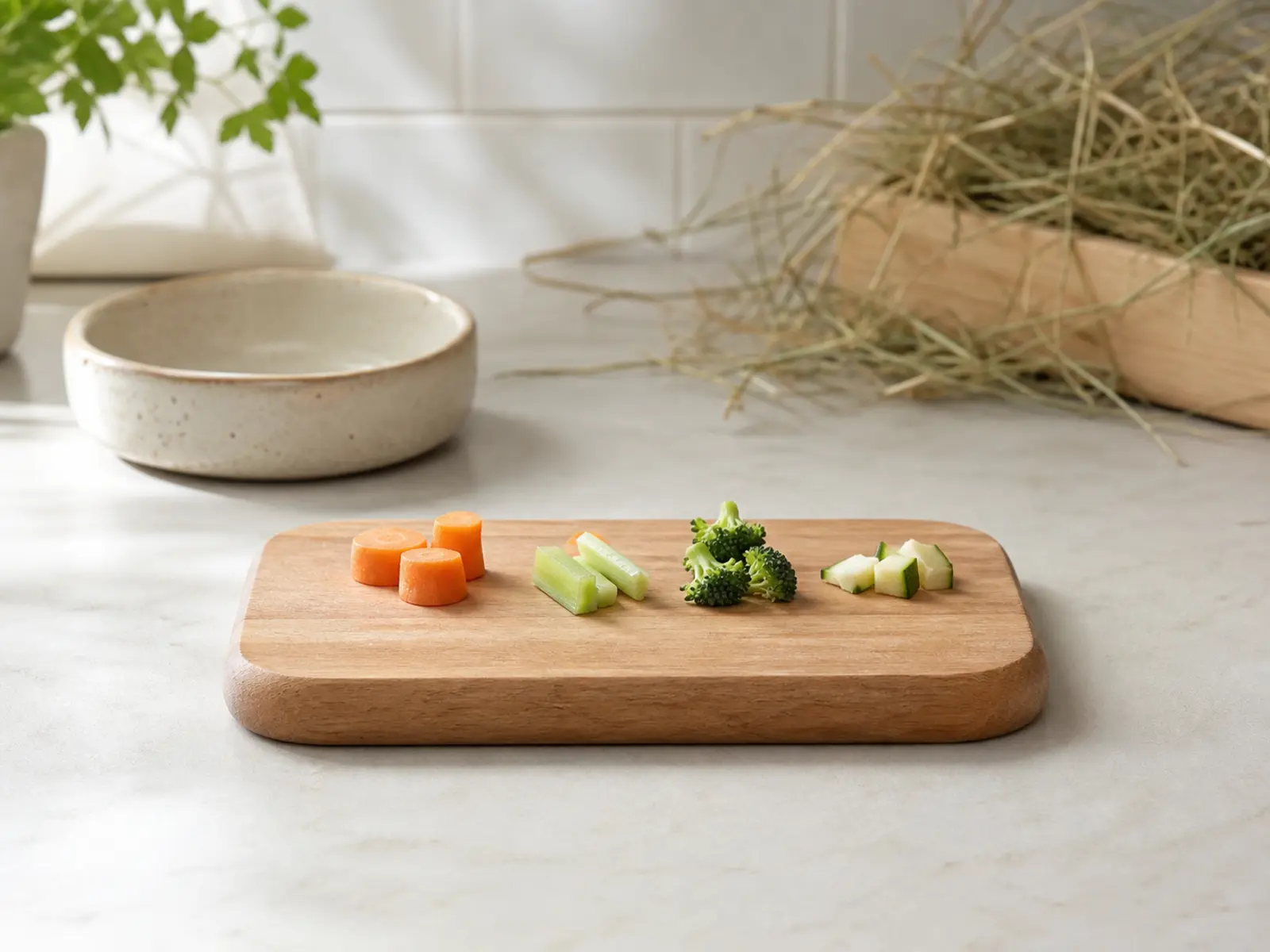
Mini cutting board
Use a compact stable surface to separate the leafy top from the bulb and trim away the tough lower stem or a bruised edge.
Shop mini cutting board