Updated
Rabbit food check
Can Rabbits Eat Wheatgrass? Yes—Clip Clean Blades
Yes—fresh clipped blades
Yes. Adult rabbits can eat fresh wheatgrass. Clip a small loose tuft of clean blades above the soil and seed mat, rinse it, and serve it plain among familiar greens. Keep unlimited dry grass hay available; a wheatgrass tray, juice, or powder does not replace the hay rack.
 Wheatgrass
Yes—fresh wheatgrass is an acceptable green
House Rabbit Society includes wheatgrass on its rabbit-safe leafy-greens list, and VCA names wheat grass among acceptable vegetables. Clip a clean fresh tuft for the greens plate. The rabbit still needs unlimited timothy, orchard, oat, or another dry grass hay.
The tray is a garden, not a serving bowl
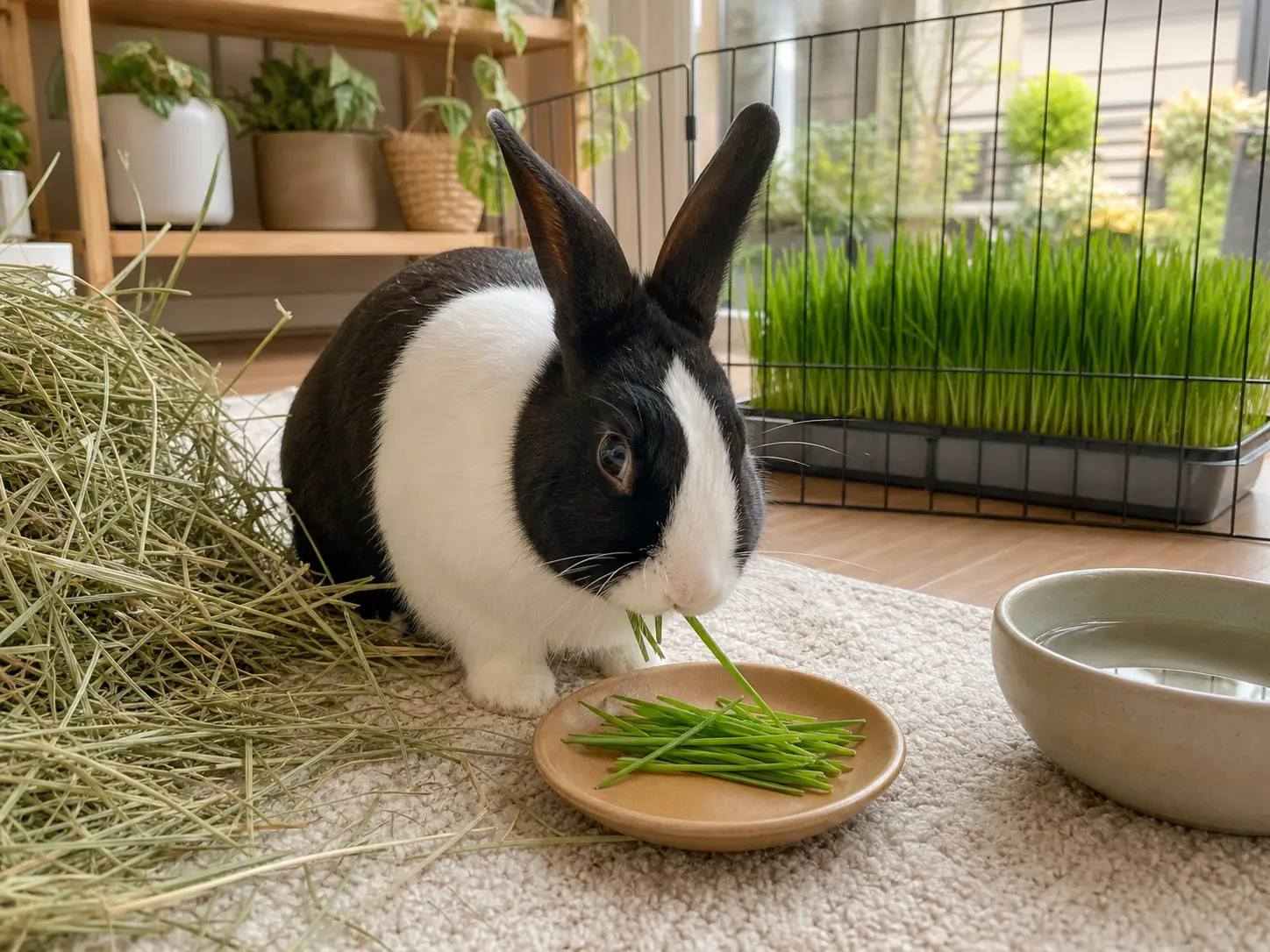
A growing tray contains edible blades plus roots, seeds, a damp mat, and often plastic. Keep that whole setup beyond the pen. Clip the rabbit's portion above the base so only clean loose grass reaches the saucer.
Look underneath before you clip
Dense green tops can hide a wet failing tray. Spread the blades and smell the base. White or colored fuzz, sour odor, gnats, slime, standing water, or a collapsing mat means there is nothing to salvage for rabbit dinner.
Fresh grass does not replace dry hay
Wheatgrass adds moisture and variety, but a few short blades do not provide the same all-day routine as a generous pile of long dry hay. Refill the hay station first. Treat the clipped tuft as one fresh green beside it.
Read the grass label at the shelf
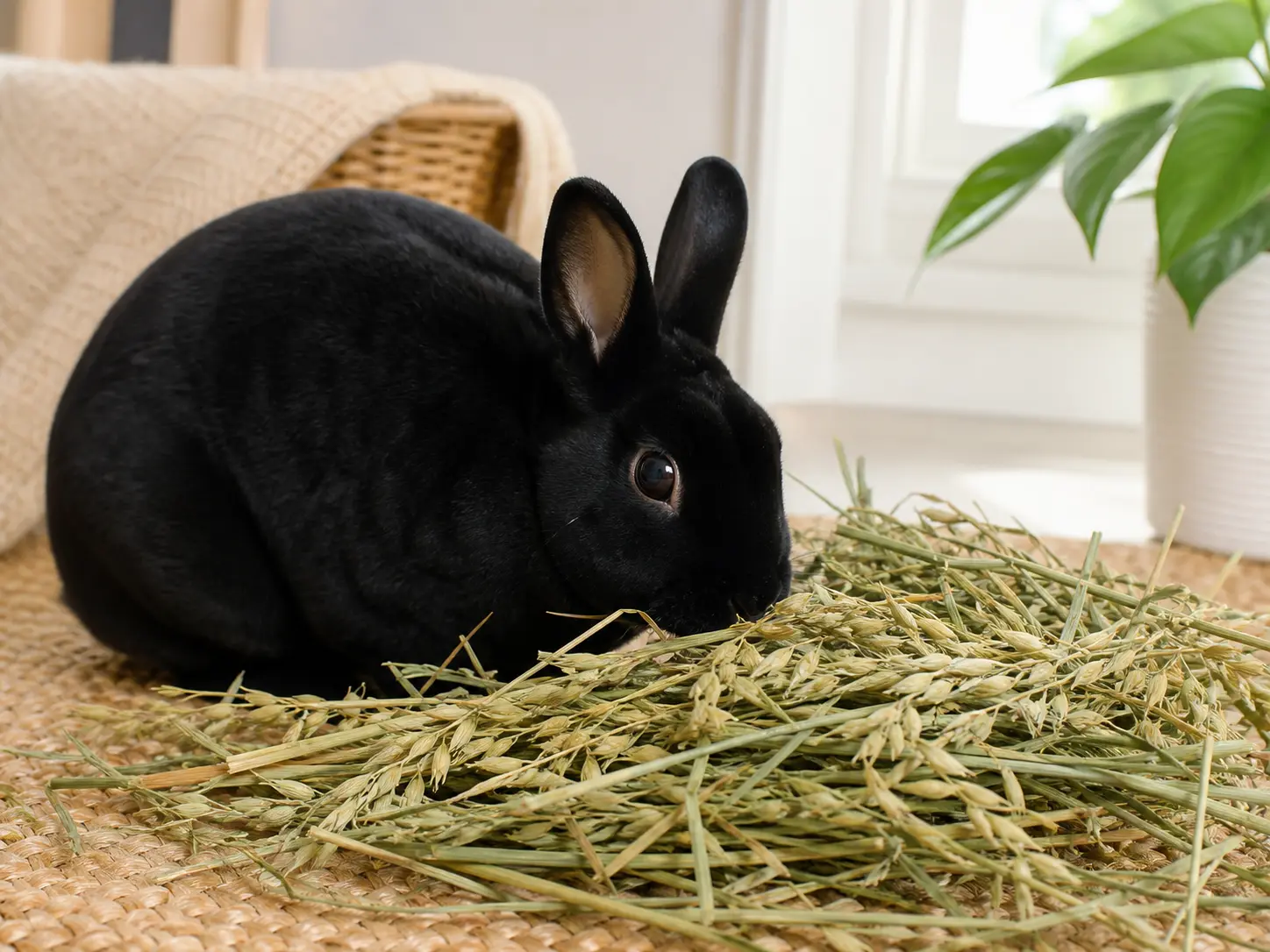
The package says wheatgrass rather than a mystery cat-grass blend. At home, the black-and-white Dutch rabbit waits beside timothy hay while the growing tray stays behind the pen on the sunroom shelf.
Part the blades at the damp base
Lift the grass and check the seed mat before clipping. It smells fresh, with no fuzz, slime, gnats, or pooled water. A small tuft is cut above the base so roots and loose seeds stay in the tray.
Rinse a loose tuft for the saucer
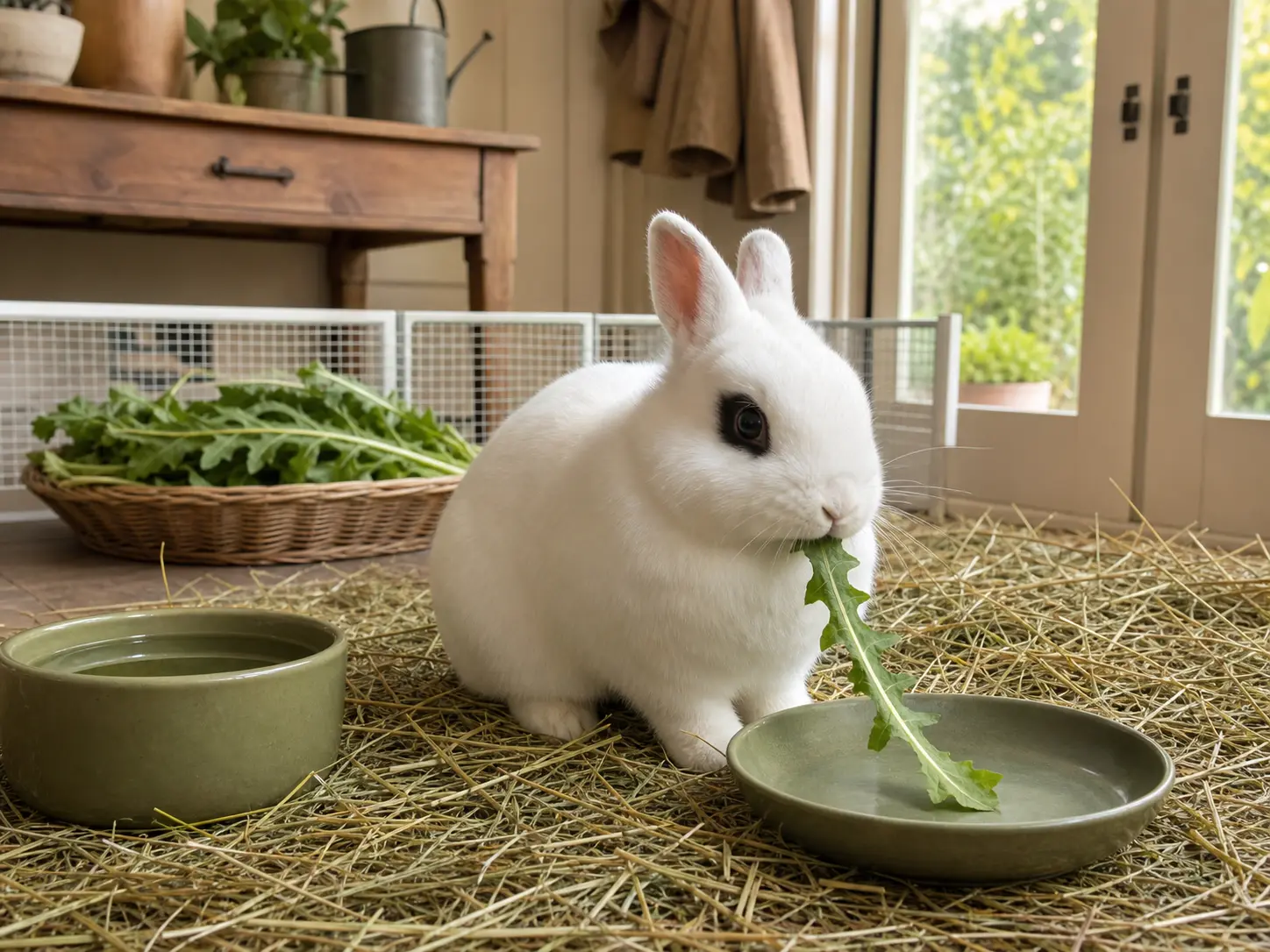
Shake open the clipped blades under cool water, then place them on the ochre saucer. The rabbit gets that plain tuft beside hay and water, not the tray and not sweet green juice from the refrigerator.
Watch the hay rack after the grass
An empty saucer proves only that fresh grass was popular. Later, look for long hay stems being pulled, relaxed movement, and the usual round droppings. Slower eating or output needs prompt advice from a rabbit-savvy clinic.
Serve
- Read the label. Some products sold as cat grass are wheat, while others contain oat, barley, rye, or a mix; know what is actually growing before clipping it.
- Part the blades and inspect the base in bright light. Discard a tray with white or colored fuzz, a sour or musty smell, slimy stems, standing water, flies, or a collapsing seed mat.
- Clip one small tuft above the soil or seed mat. Shake it open and rinse the blades under cool water without pulling roots, loose seeds, or growing medium into the serving.
- Serve the clean blades plain beside hay and water. Keep the tray beyond the barrier so the rabbit cannot excavate the mat, chew plastic, or turn the whole crop into one meal.
Avoid
- An unlabeled decorative grass, houseplant, yard clipping, or roadside handful. A green blade is not enough identification for a rabbit serving.
- Fresh lawn-mower clippings. Heat, contamination, mixed plants, and rapid spoilage make the mower bag different from hand-clipped known edible grass.
- The roots, seed mat, potting soil, hydroponic pad, plastic tray, fertilizer granules, or standing tray water.
- Wheatgrass juice, smoothie, powder, tablet, extract, supplement, frozen cube, or a human product blended with fruit, sweetener, or flavoring.
- A fuzzy, musty, sour, slimy, yellowing, pest-covered, chemically treated, or unidentified tray.
Watch
- The clipped wheatgrass disappearing while the rabbit keeps pulling long dry stems from the hay rack
- Normal posture, movement, water use, and interest in familiar food
- The rabbit's usual separate round droppings after a first wheatgrass tasting
- Reduced eating or droppings, soft stool, diarrhea, belly pressing, hunching, tooth grinding, weakness, or unusual quietness; contact a rabbit-savvy veterinarian promptly
Portion
For an adult already eating fresh greens, begin with a small loose tuft of clipped blades. It can share the ordinary greens allowance, but it is not an unlimited food just because it is grass. The long, dry strands in the hay rack remain the all-day foundation.
Clip clean wheatgrass while keeping the growing tray out of the pen
These prep tools help expose a damp seed mat, rinse loose blades, reserve a modest portion, and keep the unlimited dry-hay routine visually separate from the fresh grass tray.
Affiliate links: Furball Cove may earn from qualifying purchases at no extra cost to you.
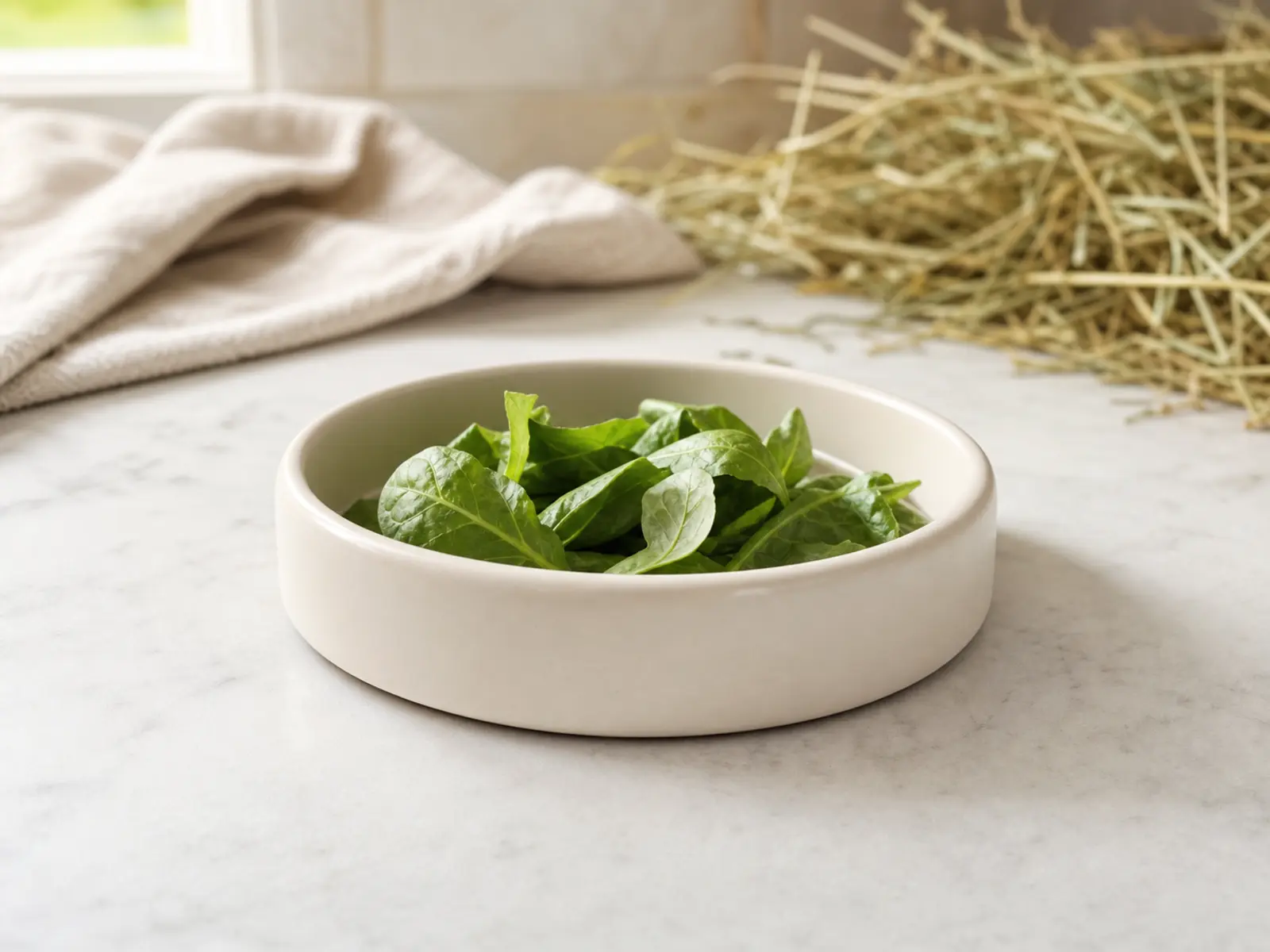
Ceramic food dish
Place one loose tuft on a washable saucer instead of letting the rabbit graze through roots, seed mat, soil, and plastic.
Shop ceramic food dish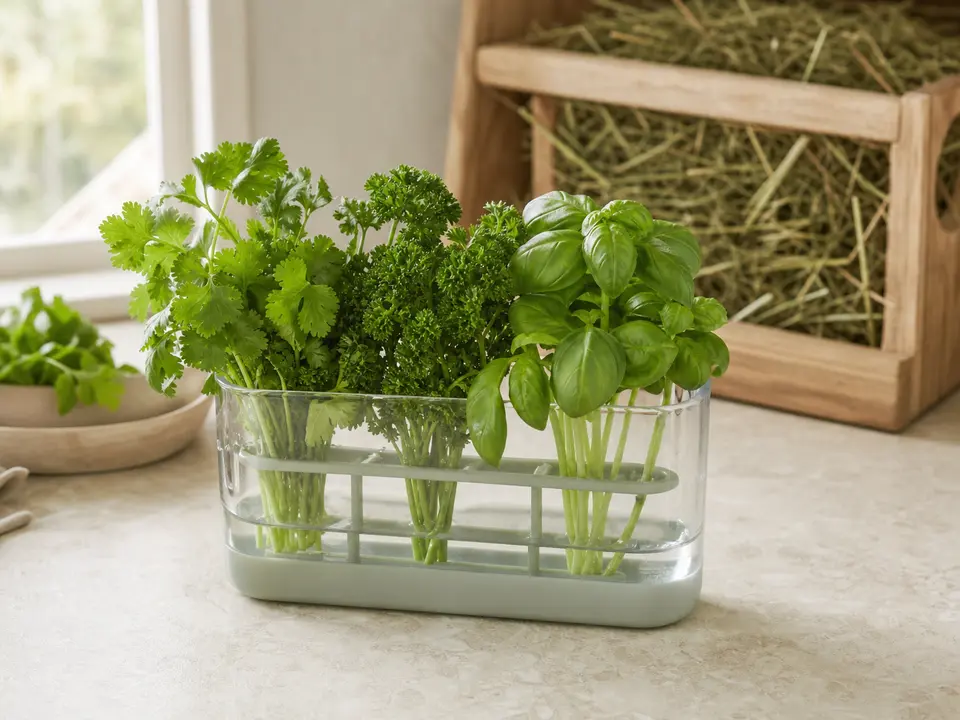
Herb keeper
Hold a small amount of clean dry clipped grass loosely with airflow instead of sealing wet blades into a compact bundle.
Shop herb keeper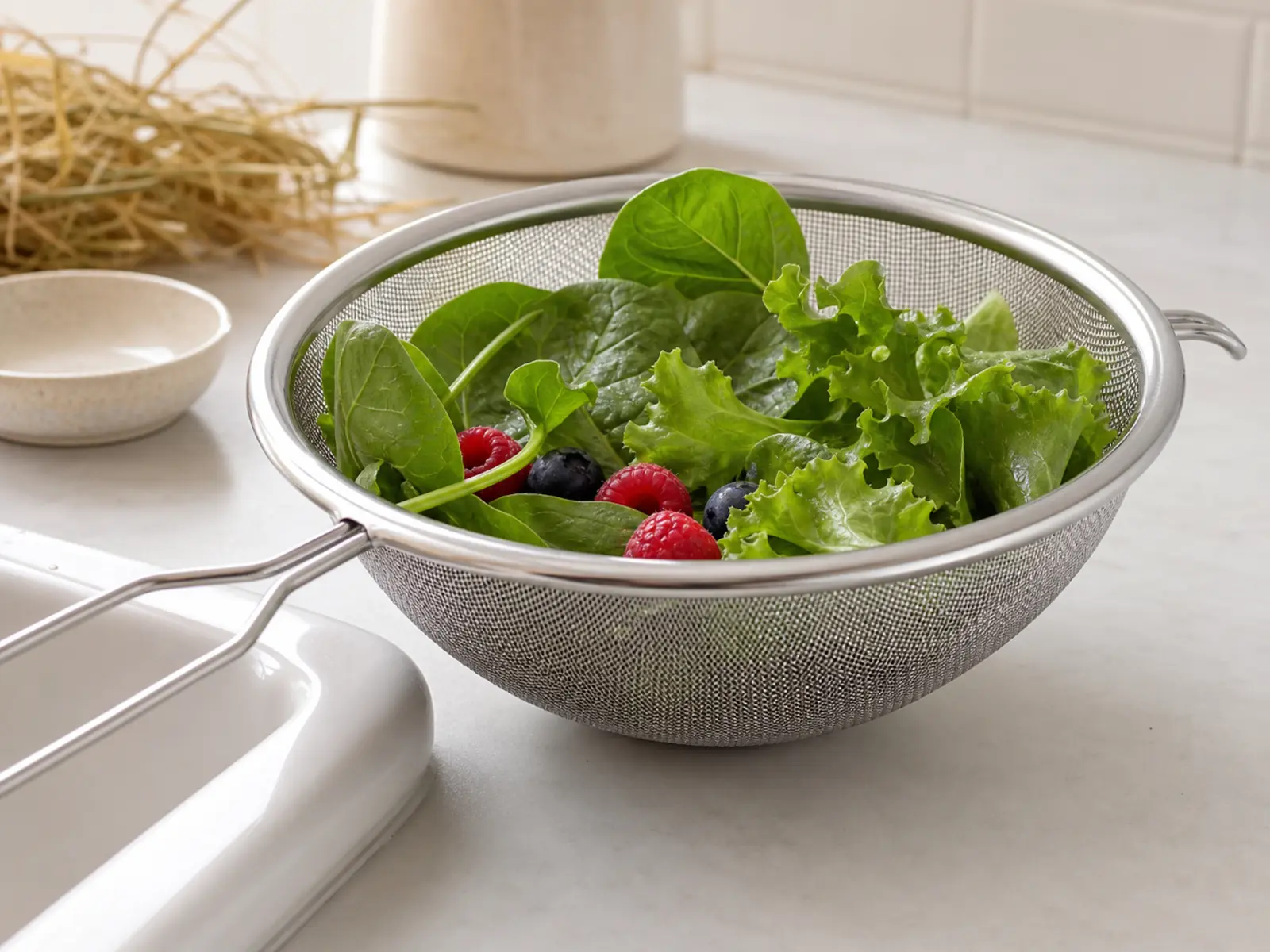
Produce strainer
Rinse the clipped wheatgrass over a small colander so loose seed hulls and growing-medium crumbs stay out of the saucer.
Shop produce strainer