Updated
Rabbit food check
Can Rabbits Eat Zucchini? Yes—Reject Bitter Squash
Yes—one small mild slice
Yes. Adult rabbits can eat fresh zucchini, also called courgette. Wash the speckled skin and offer one small plain half-moon beside unlimited grass hay. If a homegrown zucchini smells or tastes sharply bitter during normal kitchen prep, discard the whole fruit and never use the rabbit as the tester.
 Zucchini
Yes—zucchini is a rabbit-safe summer squash
House Rabbit Society lists courgette and zucchini among safe non-leafy vegetables, while VCA includes squash among acceptable choices. One small washed half-moon can add mild crunch to an adult rabbit's varied vegetables. Keep grass hay unlimited.
Skin and soft center can stay
A normal fresh zucchini slice can keep its washed speckled skin and pale soft center. The cut face should look dense and moist, not hollow, slimy, or collapsed. One skin-on half-moon is simpler and easier to identify than a pile of peeled cubes.
An unusually bitter courgette is different
RWAF warns that courgettes and marrows can develop bitter cucurbitacins, particularly in some homegrown crops. If a zucchini smells or tastes sharply bitter during ordinary human prep, discard the whole fruit. Do not hand a slice to the rabbit to find out.
Cucumber and zucchini are not interchangeable
At the kitchen counter, both vegetables look long and green. Zucchini has fine speckles and denser pale flesh; cucumber has a wetter center. Keep the label or intact squash beside the cutting board until the correct half-moon reaches the rabbit bowl.
Bring the speckled squash to a bright counter
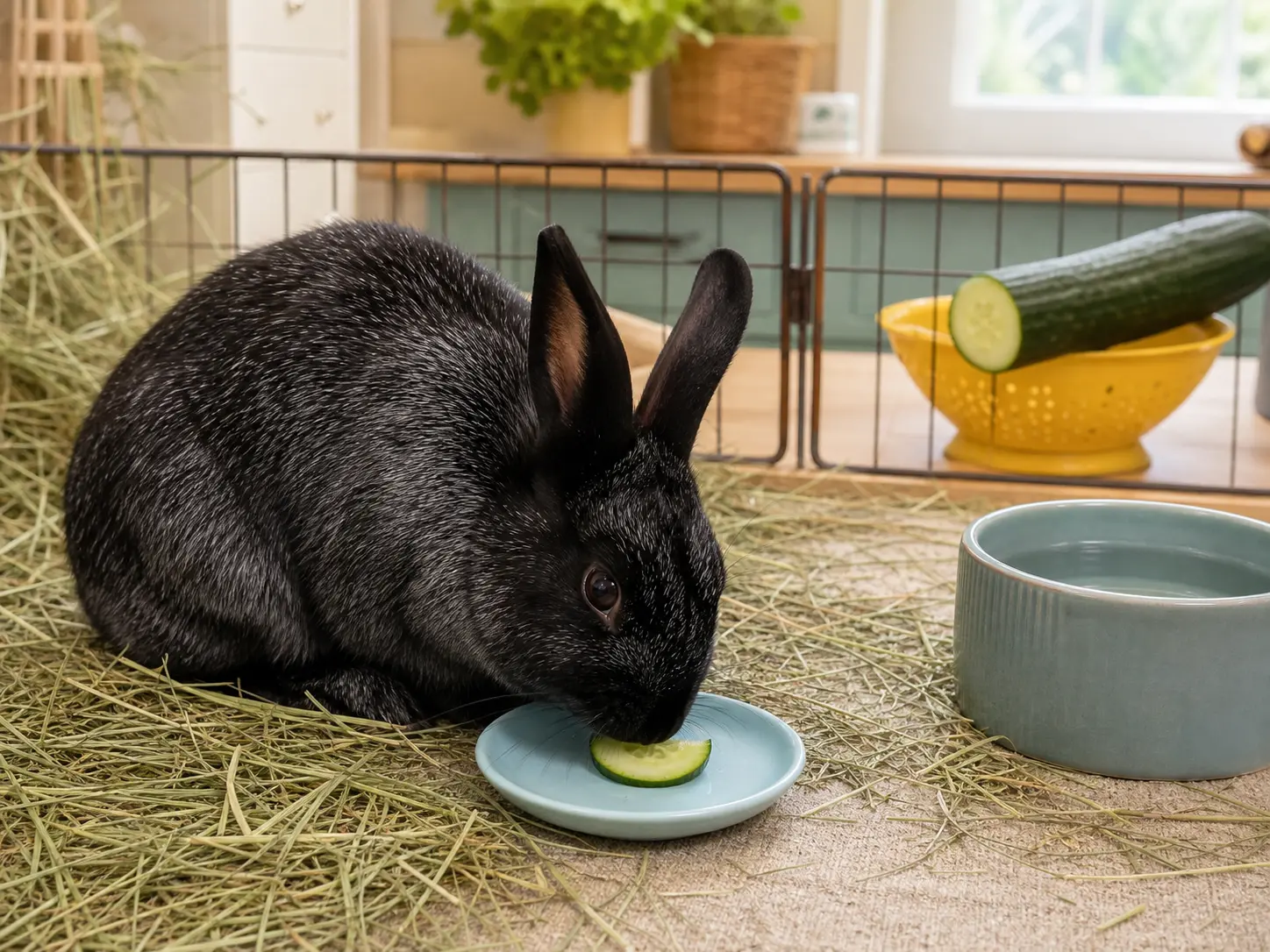
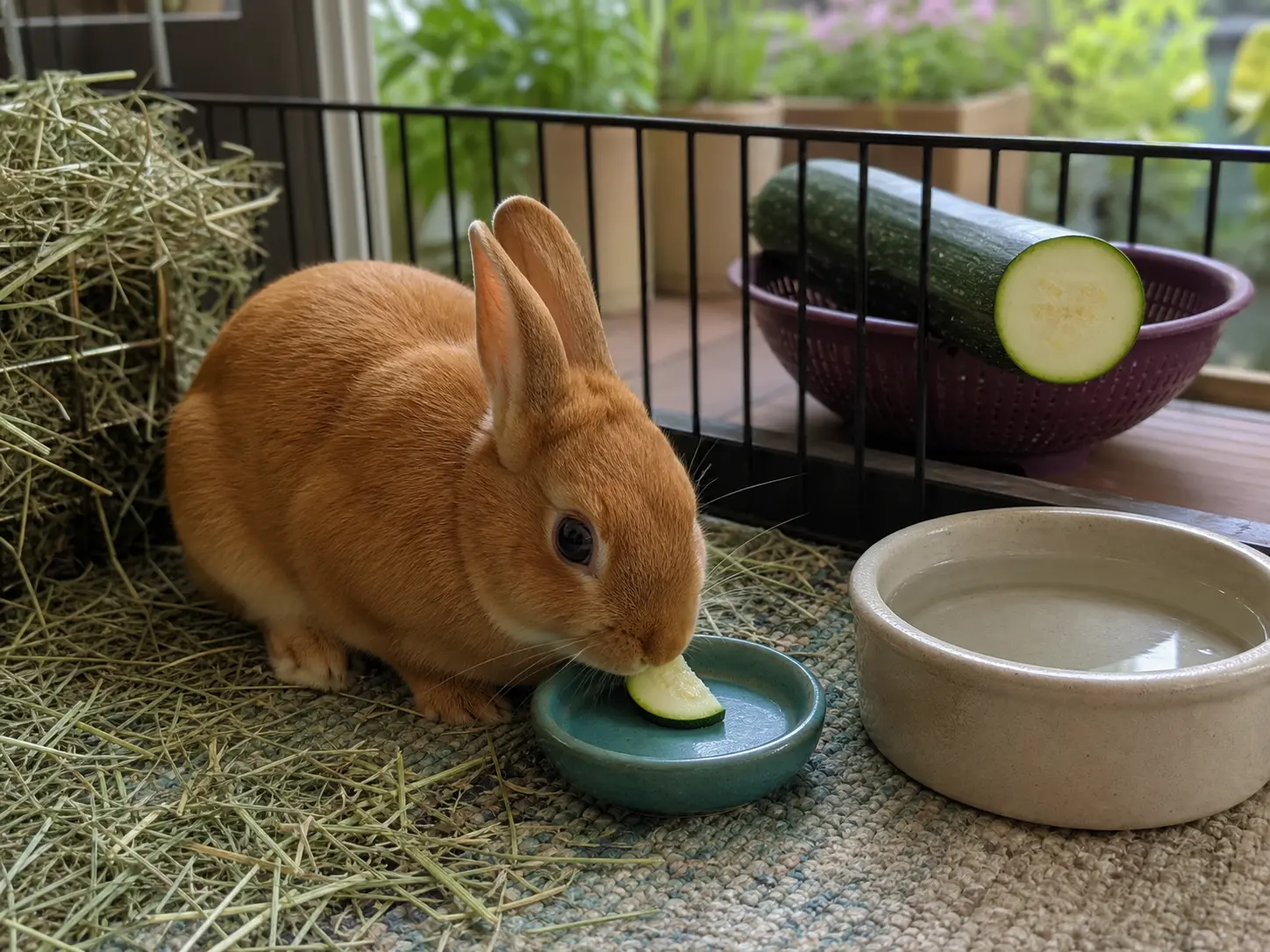
The medium dark-green zucchini rests in the plum colander, with fine pale flecks visible along its skin. The golden-orange Thrianta waits beside brome hay while you check the whole fruit for a firm wall, fresh smell, and sound stem end.
Wash and inspect the solid cut face
Rub the skin under cool water, dry it, and cut across the zucchini. The inside should be pale, dense, and mild-smelling. Slime, fuzzy growth, a wet dark center, sour odor, or sharp bitterness sends the entire fruit to the scrap bin.
Put one half-moon on the teal saucer
Cut one thin slice with its green edge and pale center intact, then place it beside hay and water. Cover and chill the remaining zucchini before bread batter, frying oil, cheese, salt, or seasoned pasta sauce reaches the board.
Check the hay pile after the mild bite
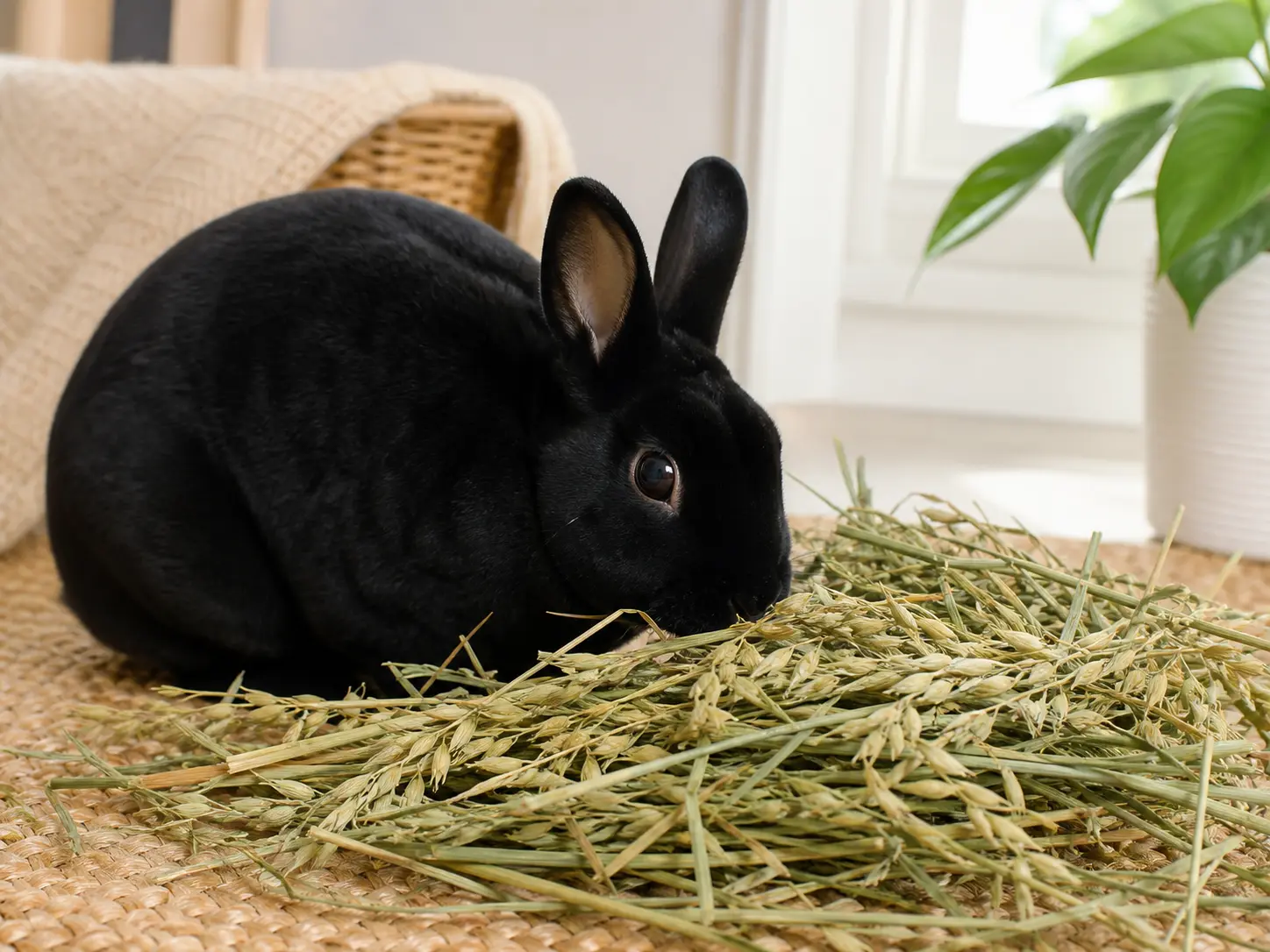
An empty teal saucer only says the zucchini was interesting. Later, check the rabbit's hay pile and litter box for pulled brome strands and familiar round droppings. Slower eating or output, diarrhea, hunching, or a painful posture needs prompt rabbit-savvy veterinary advice.
Serve
- Confirm zucchini or courgette from the label. Look for a medium summer squash with fine pale speckles, a slightly tapered end, and dense pale flesh rather than a cucumber's watery seed channel.
- Inspect the whole fruit and cut face. Discard zucchini with slime, fuzzy growth, sour odor, collapsing flesh, a wet dark cavity, or an unusually sharp bitter smell.
- Rinse the speckled skin under cool water and rub away soil or residue. The washed skin and ordinary soft center can remain on a small fresh slice.
- Cut one thin half-moon on a clean board and serve it plain. Refrigerate the rest before grilling, frying, baking, spiralizing with sauce, oiling, salting, or seasoning.
Avoid
- Any zucchini or marrow that smells or tastes sharply bitter during normal human kitchen prep. RWAF warns that bitter courgettes can contain cucurbitacin; discard the whole fruit.
- Letting the rabbit sample homegrown squash to decide whether it is bitter. Keep the garden crop behind a barrier and make the safety decision before any piece enters the pen.
- A bowl of zucchini coins or repeated refills because the vegetable seems mild. Summer squash belongs in the modest non-leafy part of the menu.
- Zucchini bread, fritters, noodles with sauce, grilled or roasted squash, restaurant sides, or slices carrying flour, egg, oil, cheese, salt, sauce, spice, or seasoning.
- A slimy, moldy, sour-smelling, badly bruised, collapsing, chemically treated, unusually bitter, or unidentified piece.
Watch
- The small zucchini half-moon disappearing while the rabbit continues ordinary visits to the hay pile
- Normal posture, movement, water use, and interest in familiar food
- The rabbit's usual separate round droppings after a first zucchini tasting
- Reduced eating or droppings, soft stool, diarrhea, belly pressing, hunching, tooth grinding, weakness, or unusual quietness; remove zucchini and contact a rabbit-savvy veterinarian promptly
Portion
For an adult already eating fresh vegetables, one small zucchini half-moon is enough for a first serving. House Rabbit Society places summer squash in the sugarier non-leafy group, so keep it as a modest part of a varied vegetable allowance rather than a plateful. Unlimited grass hay still does the long work.
Keep one zucchini slice mild, plain, and easy to inspect
These produce-prep tools help expose the cut face, keep the remaining squash visible, and reserve one small plain half-moon before bread, frying oil, cheese, or sauce enters the kitchen.
Affiliate links: Furball Cove may earn from qualifying purchases at no extra cost to you.
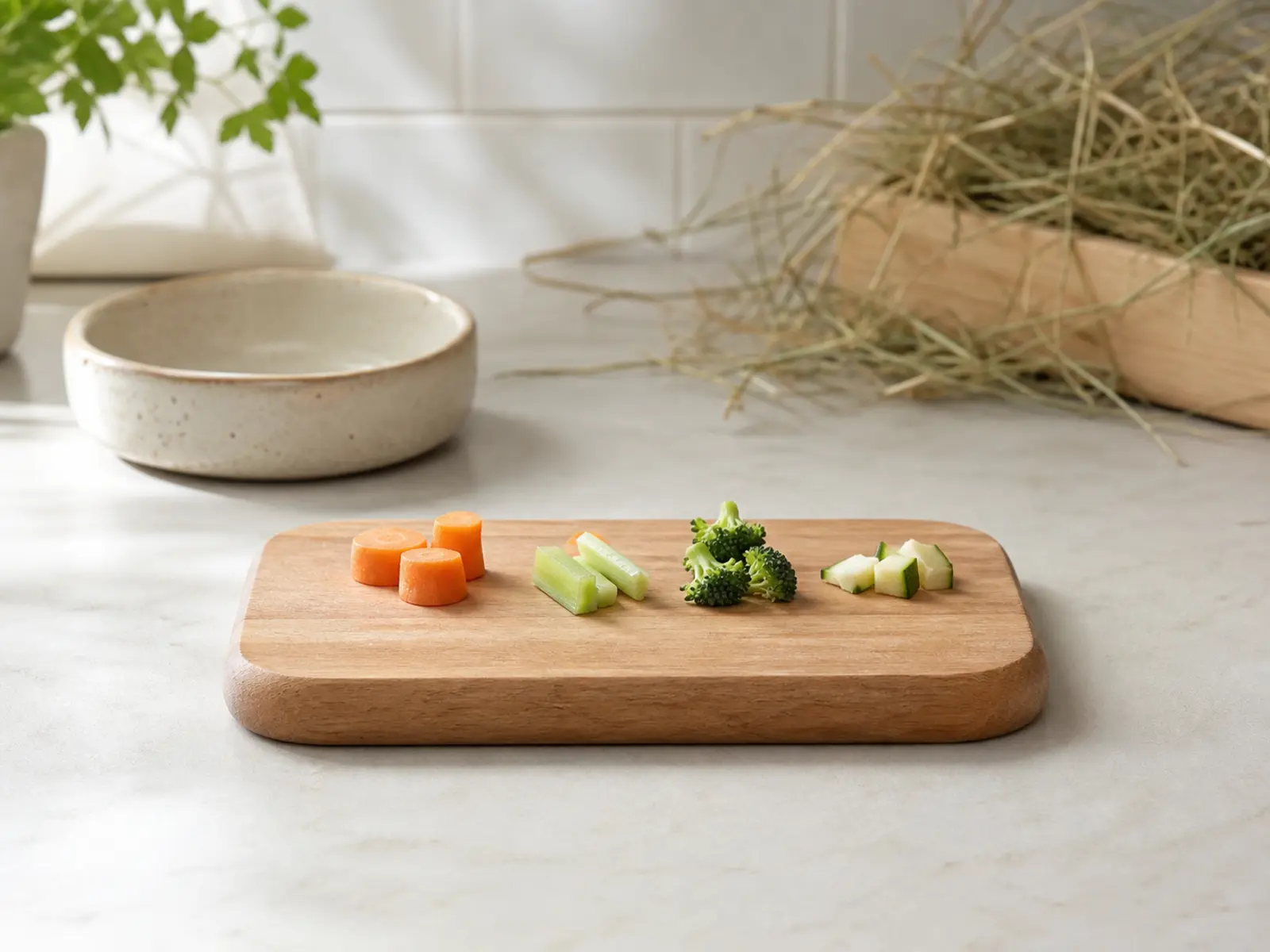
Mini cutting board
Use a compact stable surface to expose the zucchini center and cut one thin half-moon without turning the rabbit serving into a pile.
Shop mini cutting board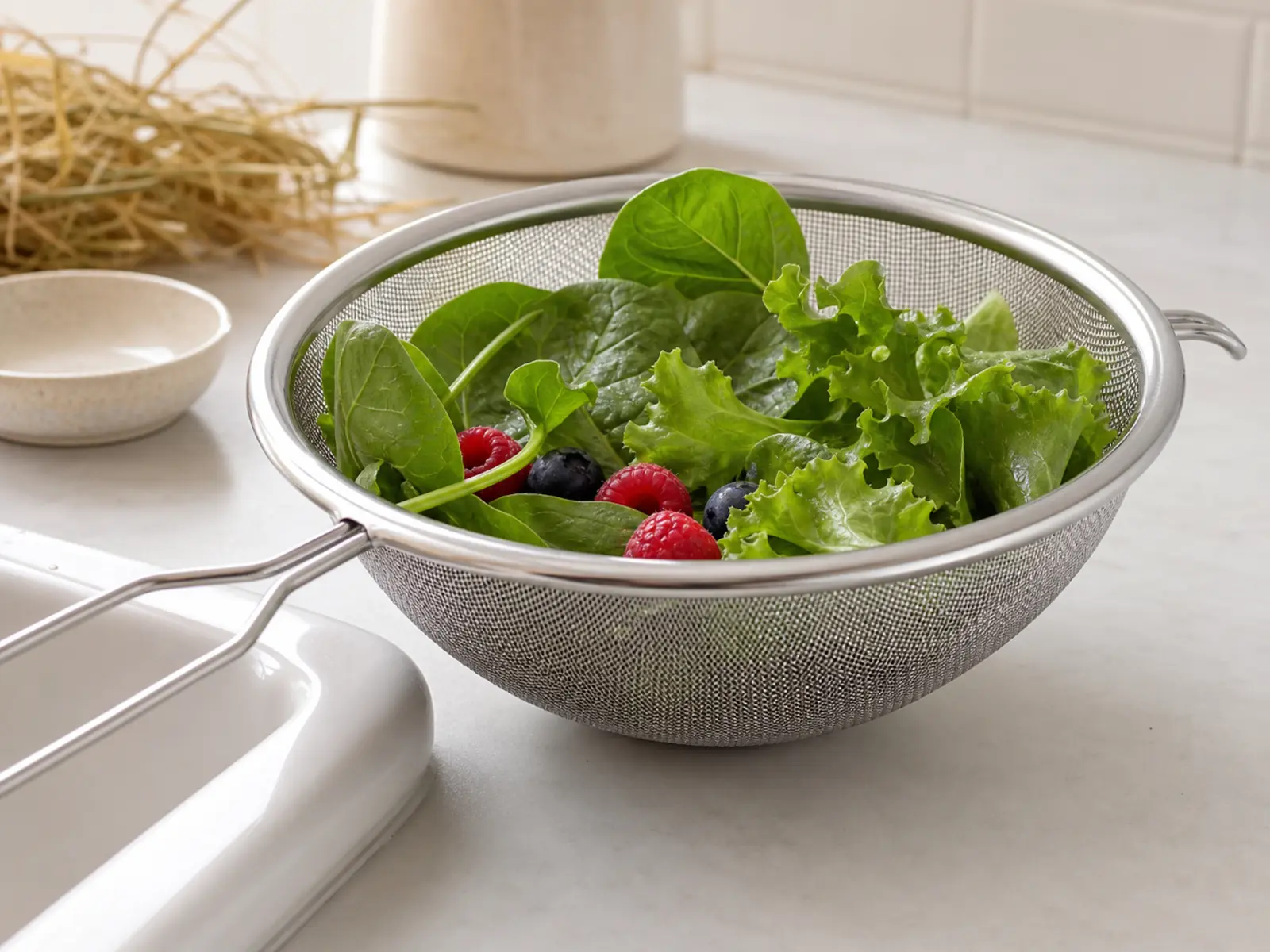
Produce strainer
Rinse the speckled fruit over a compact colander so loosened soil and residue drain away before the zucchini reaches the board.
Shop produce strainer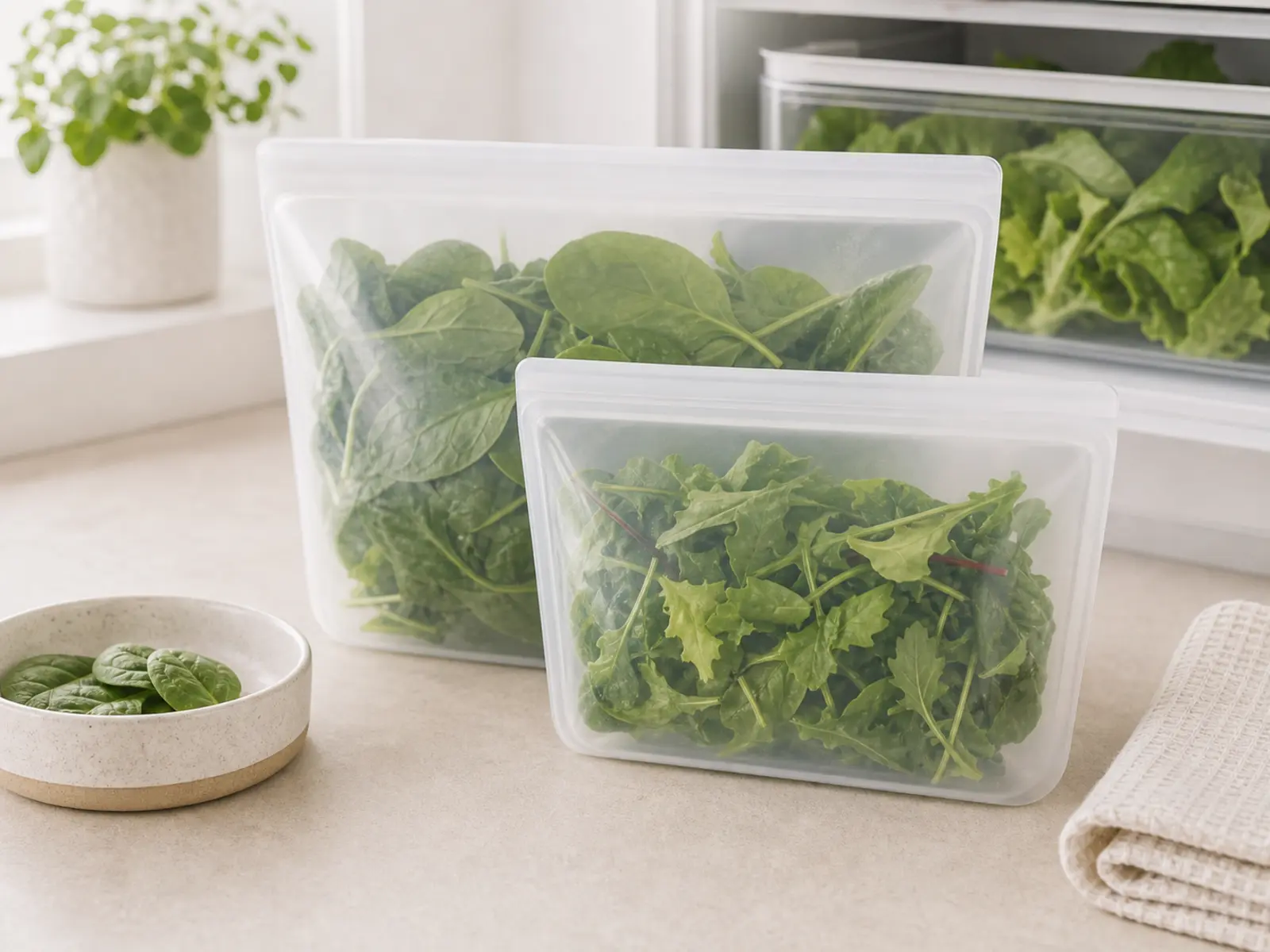
Produce storage bags
Cover the cut zucchini for the refrigerator without hiding a wet center, soft edge, unusual odor, or the date it was opened.
Shop produce storage bags