Updated
Puppy crate training
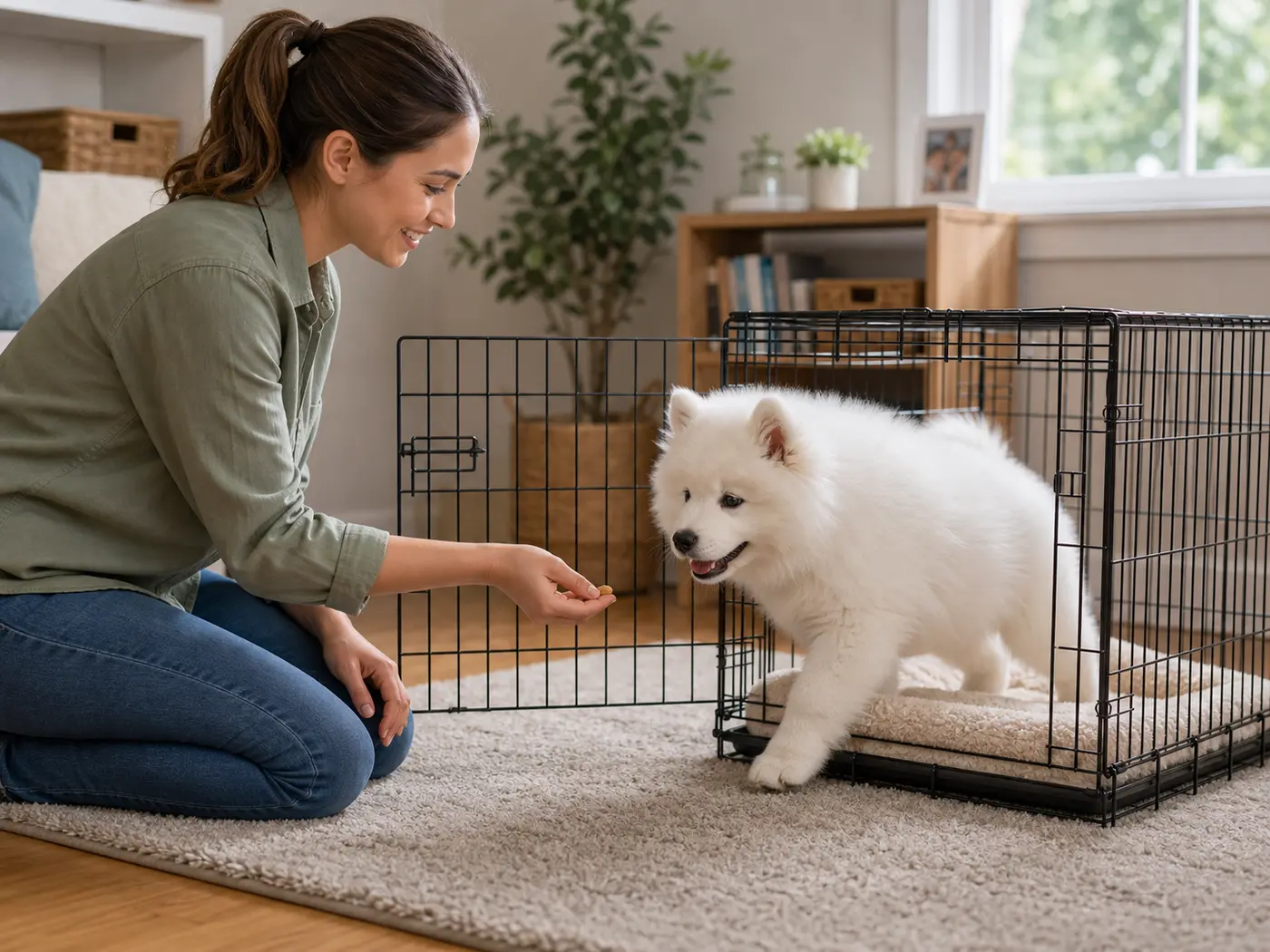
Move the Crate Closer
Moving the crate closer can help a new puppy feel safe enough to sleep and learn the routine.
A puppy who just left their litter may not be ready to sleep across the house. Closeness can be a training step, not a permanent failure.
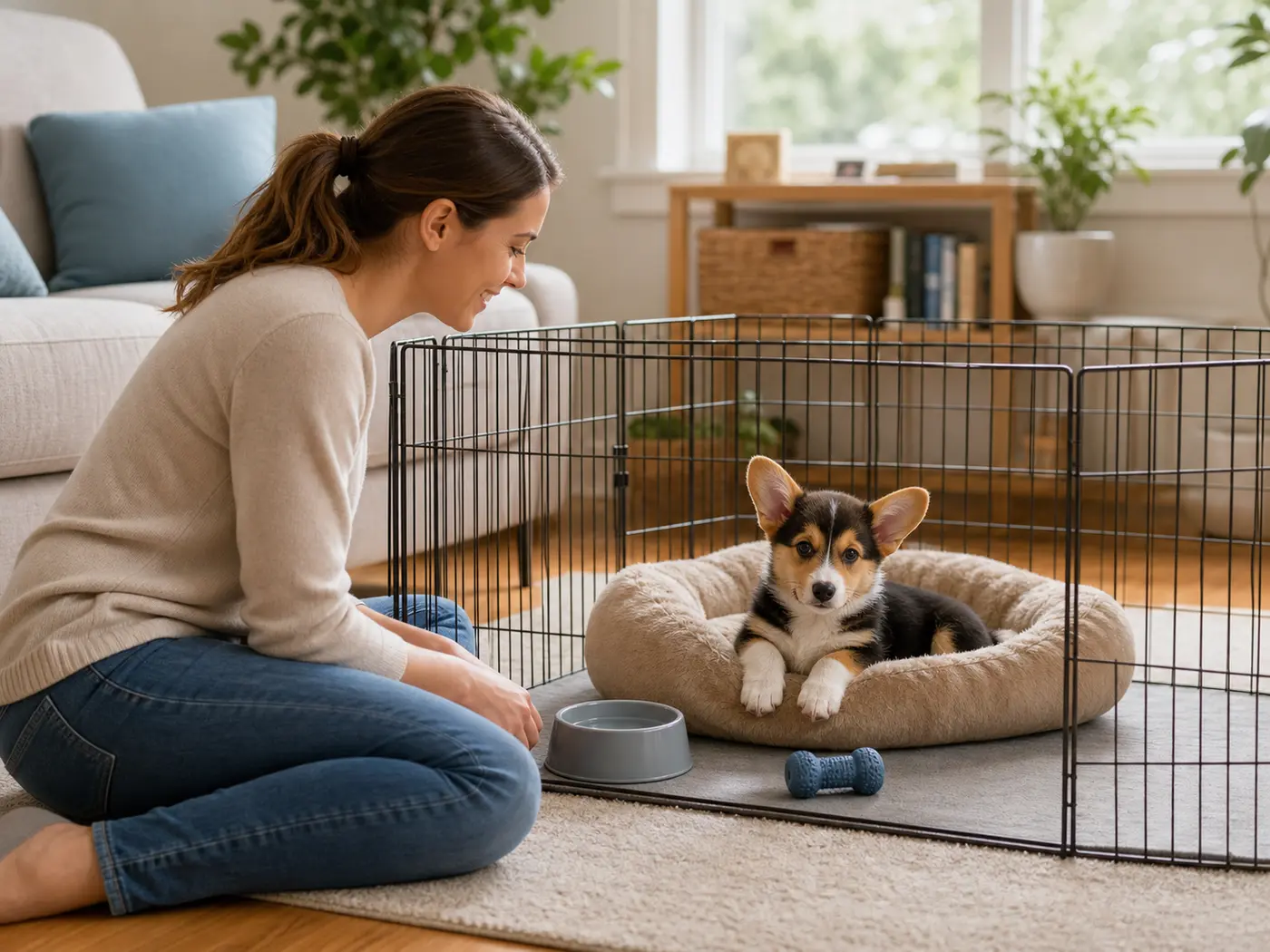
Some puppies settle faster when they can smell, hear, or see you. That comfort can make potty timing clearer and reduce panic during the first nights.
The plan can still move toward independence. Start close enough for safety, then shift the crate gradually as trust and routine improve.
Great for
- New puppies during the first nights home.
- Puppies who cry because they feel isolated, not because they want to play.
- Families who can move the crate gradually after sleep improves.
Wait a bit if
- Your puppy is crying because they need potty, are sick, or are uncomfortable.
- You are moving the crate closer but still leaving the puppy to panic.
- The bedroom setup is unsafe, too warm, or too busy.
Shape the quiet routine
Start beside the bed if needed
Place the crate where you can hear your puppy and offer a calm hand or voice without turning on the whole room.
Keep the routine boring
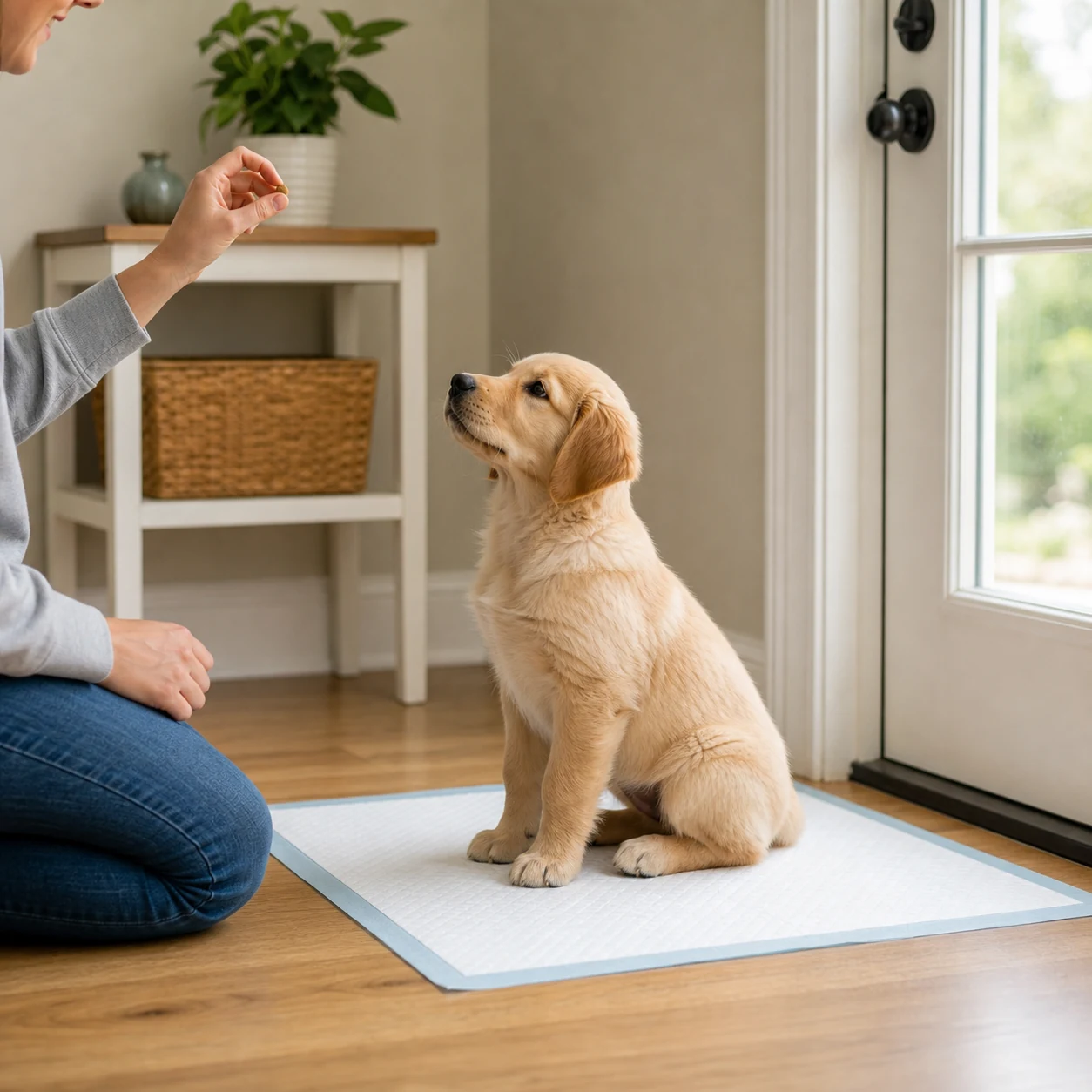
Potty, crate, sleep. Do not add play, long cuddles, or bright lights every time your puppy wakes.
Use closeness to prevent panic
If your puppy settles when close, let that be information. Calm sleep is a better starting point than fear.
Shift by small distances
After several better nights, move the crate a few feet at a time, not suddenly to the other end of the house.
Pair distance with daylight practice
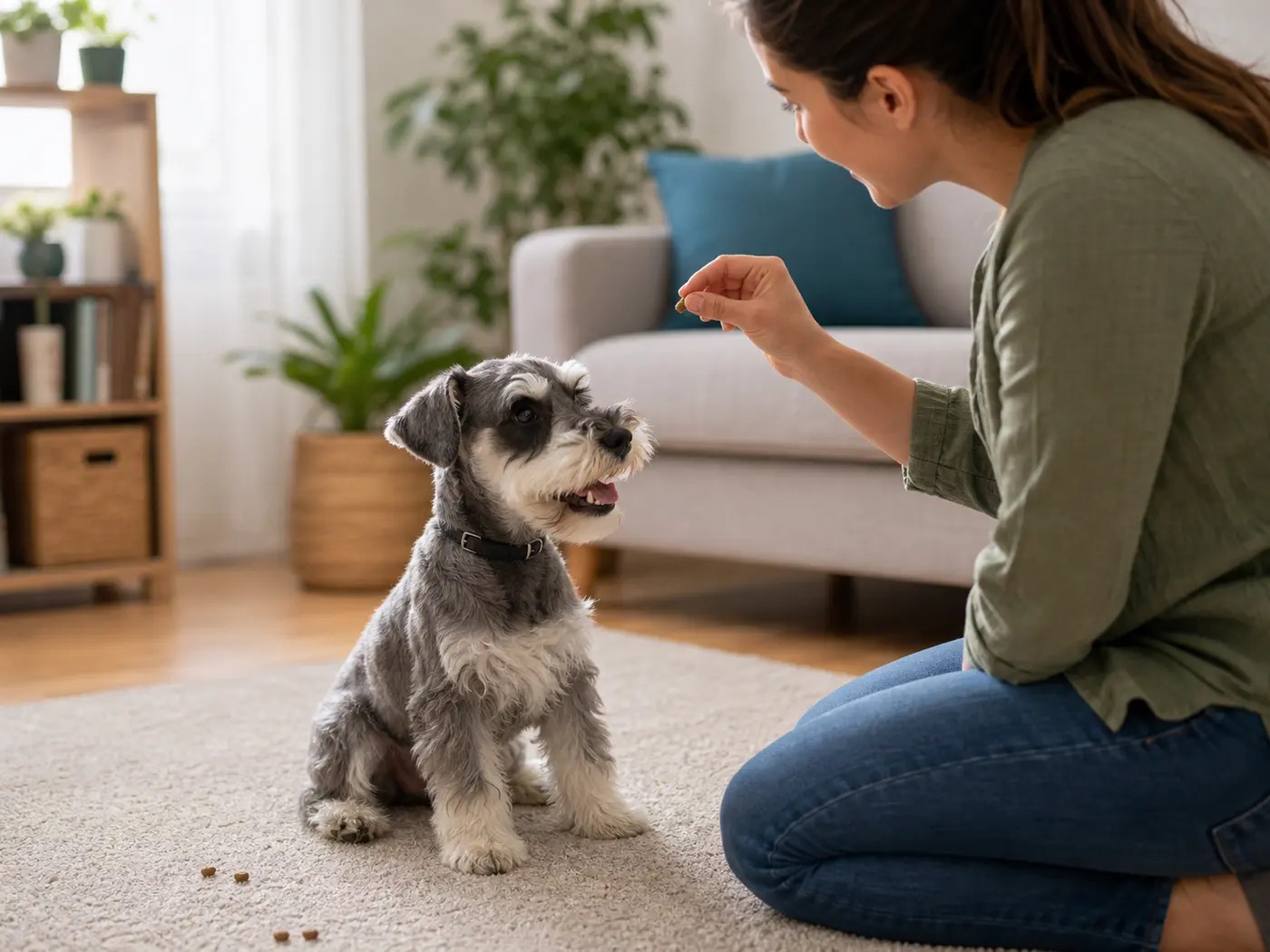
Build open-door games and short crate naps during the day so nighttime distance is not the only lesson.
Pause if crying returns hard
Move back to the last easy distance and hold there before trying again.
Little things that help
Separate comfort from entertainment
A quiet hand near the crate is different from starting a midnight party.
Use a familiar scent safely
A safe blanket may help some puppies, but skip fabric if your puppy chews or swallows bedding.
Give independence time
Confidence grows through repetition. It does not need to happen in one night.
Helpful little extras
Affiliate links: Furball Cove may earn from qualifying purchases at no extra cost to you.
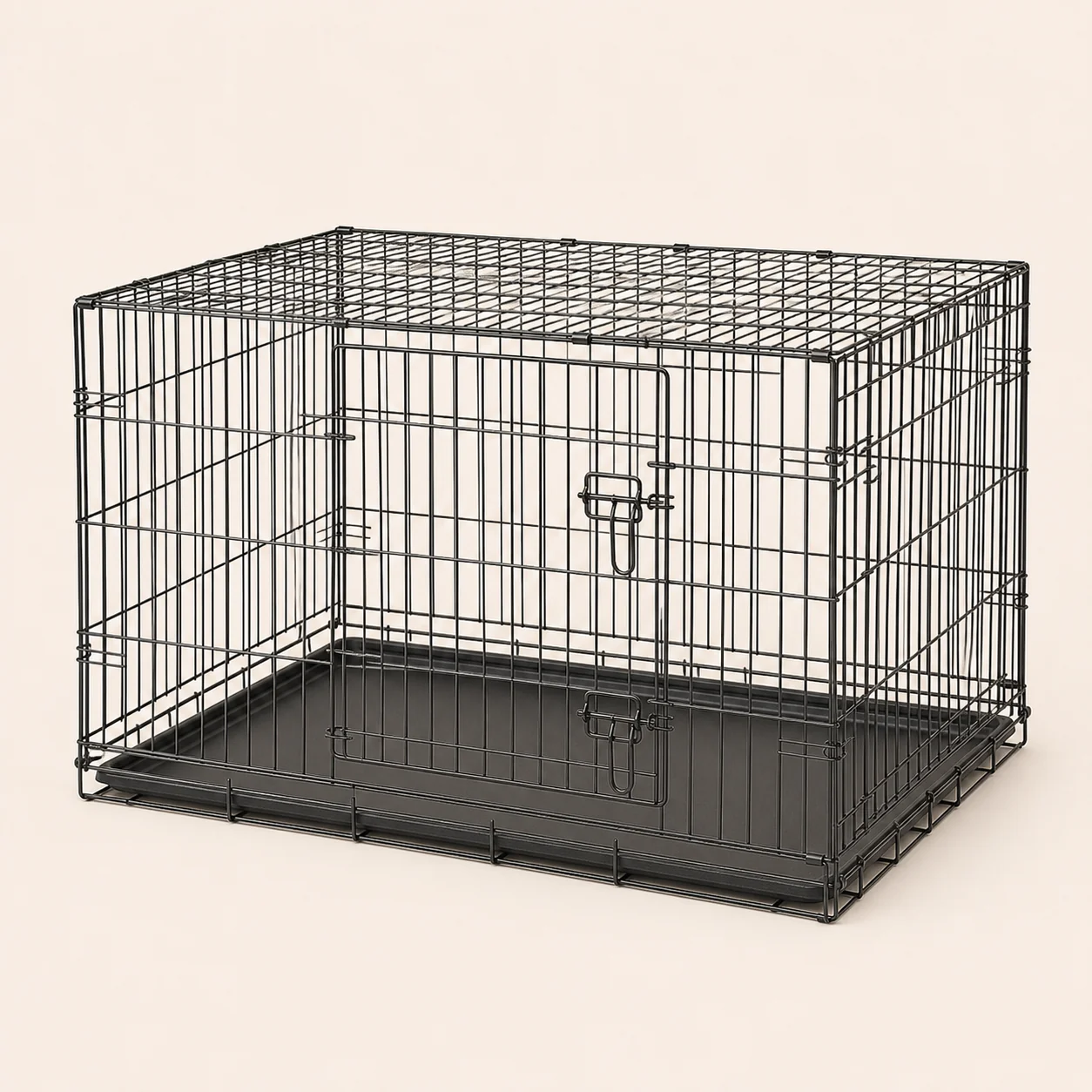
Puppy crate with divider
A divider lets the crate fit your puppy now without leaving a giant space that feels more like a playroom than a sleep spot.
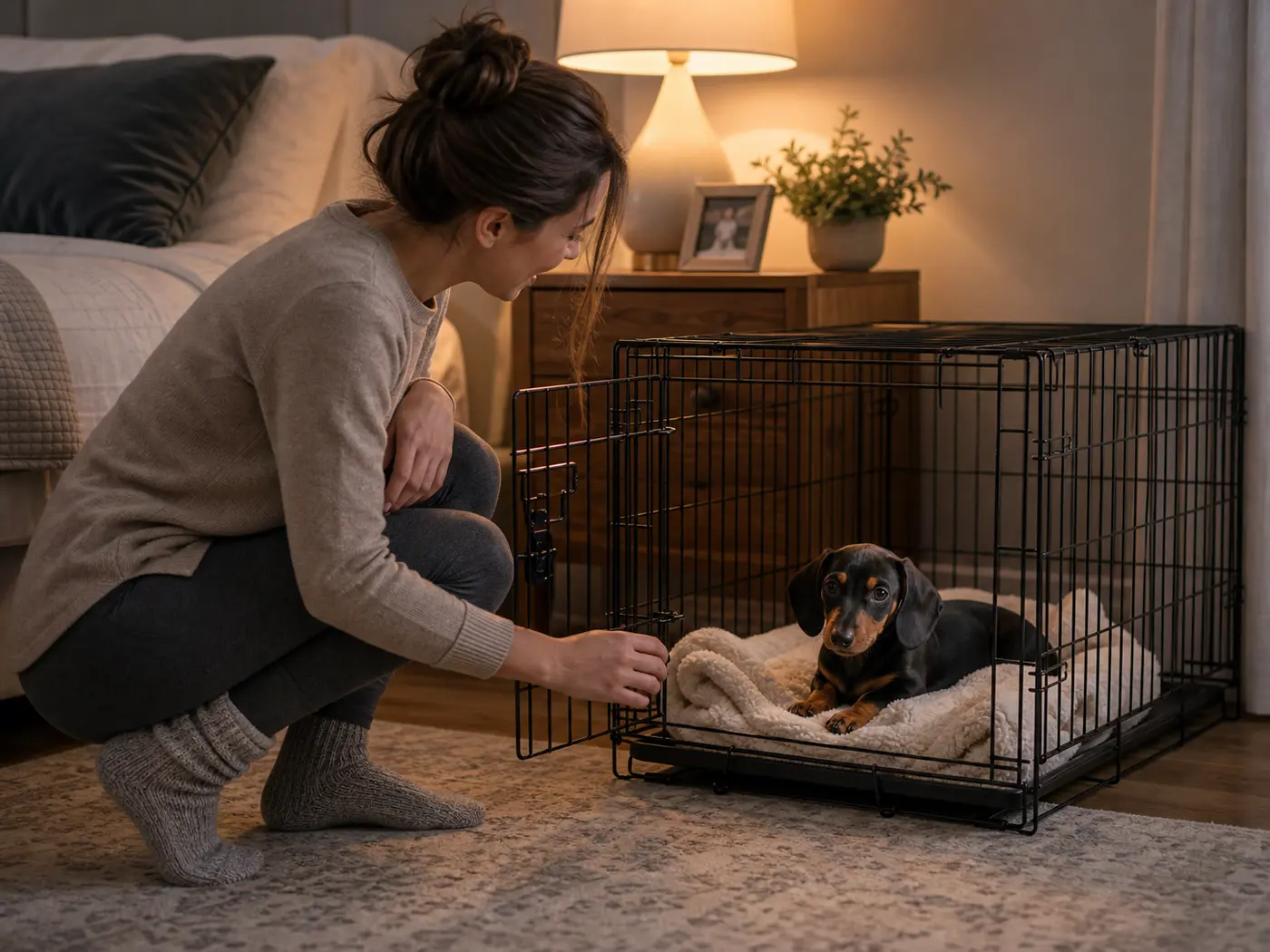
Washable crate mat
A low-profile washable mat keeps the crate comfortable while still being easy to clean after normal puppy messes.
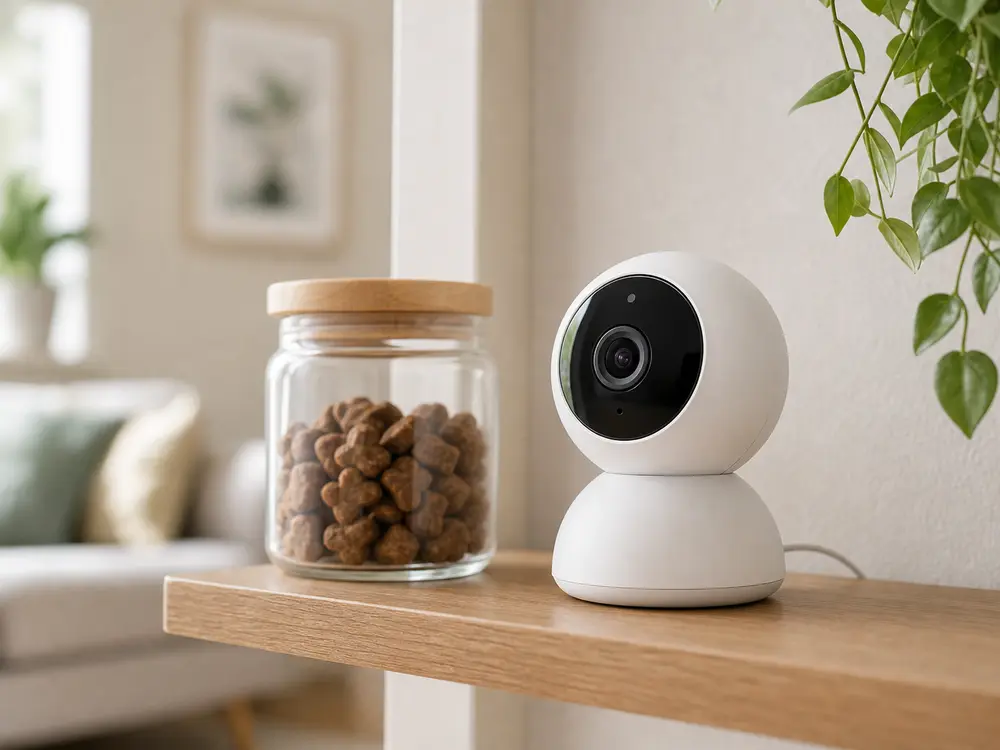
Pet camera
A camera shows whether your puppy is napping, lightly fussing, or escalating after you step away.
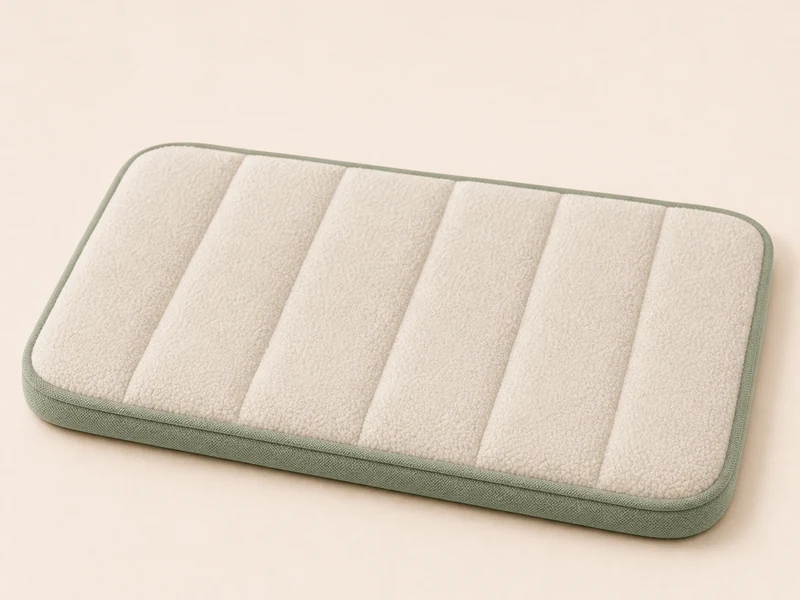
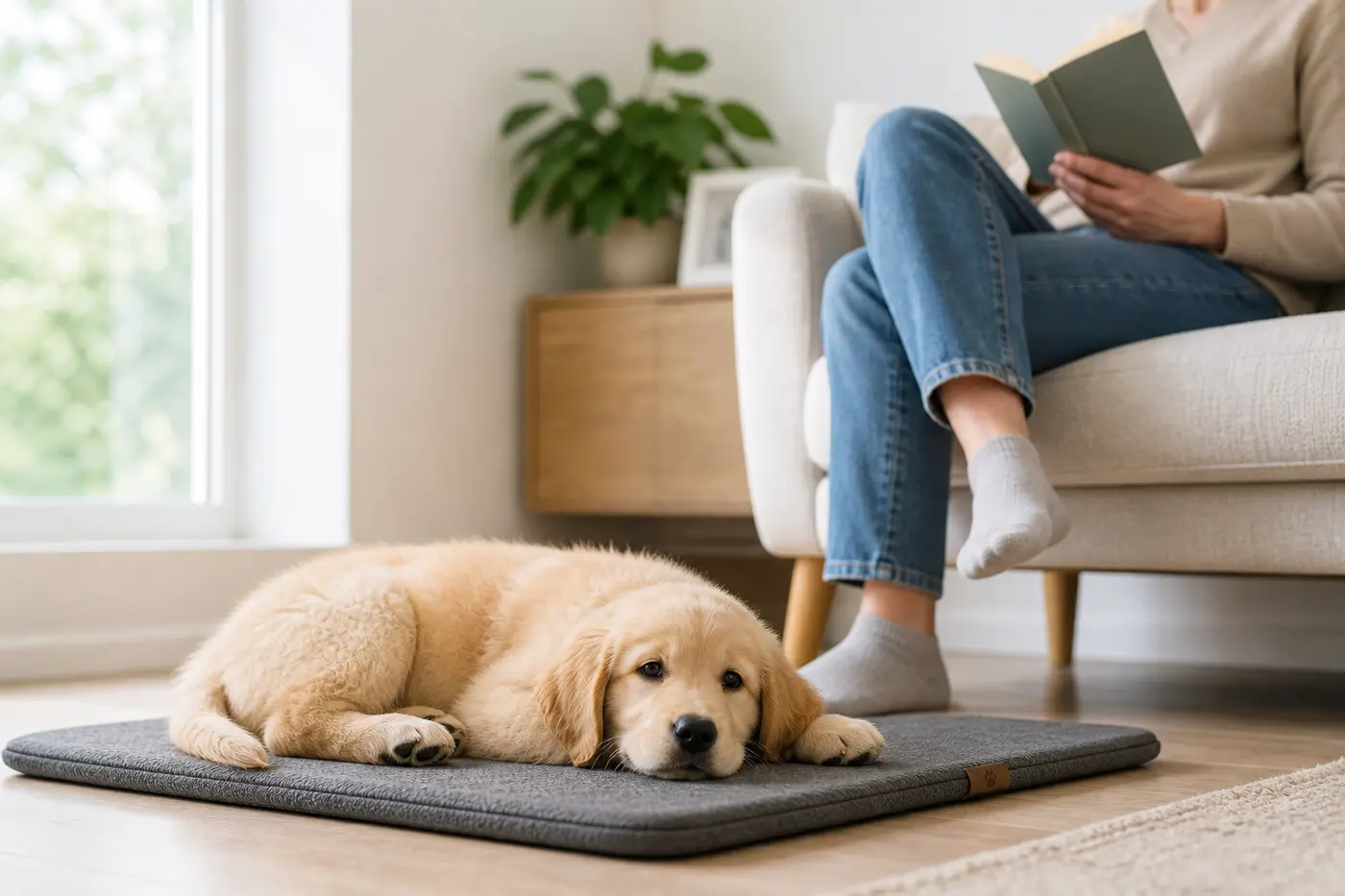
Washable dog mat
A mat near the crate gives your puppy a landing spot for door-open games, release practice, and calm resets.
Questions people ask
Is it bad to keep the crate in my bedroom?
No. For many puppies it is a helpful first step, especially while potty timing and sleep routines are new.
How do I move the crate away later?
Move it gradually after several calm nights. If your puppy struggles, go back to the last easy spot.
Should I let my puppy sleep in bed instead?
That is a household choice, but if you want crate comfort, keep practicing easy crate routines in daylight too.