Updated
Puppy crate training
Right Crate Spot
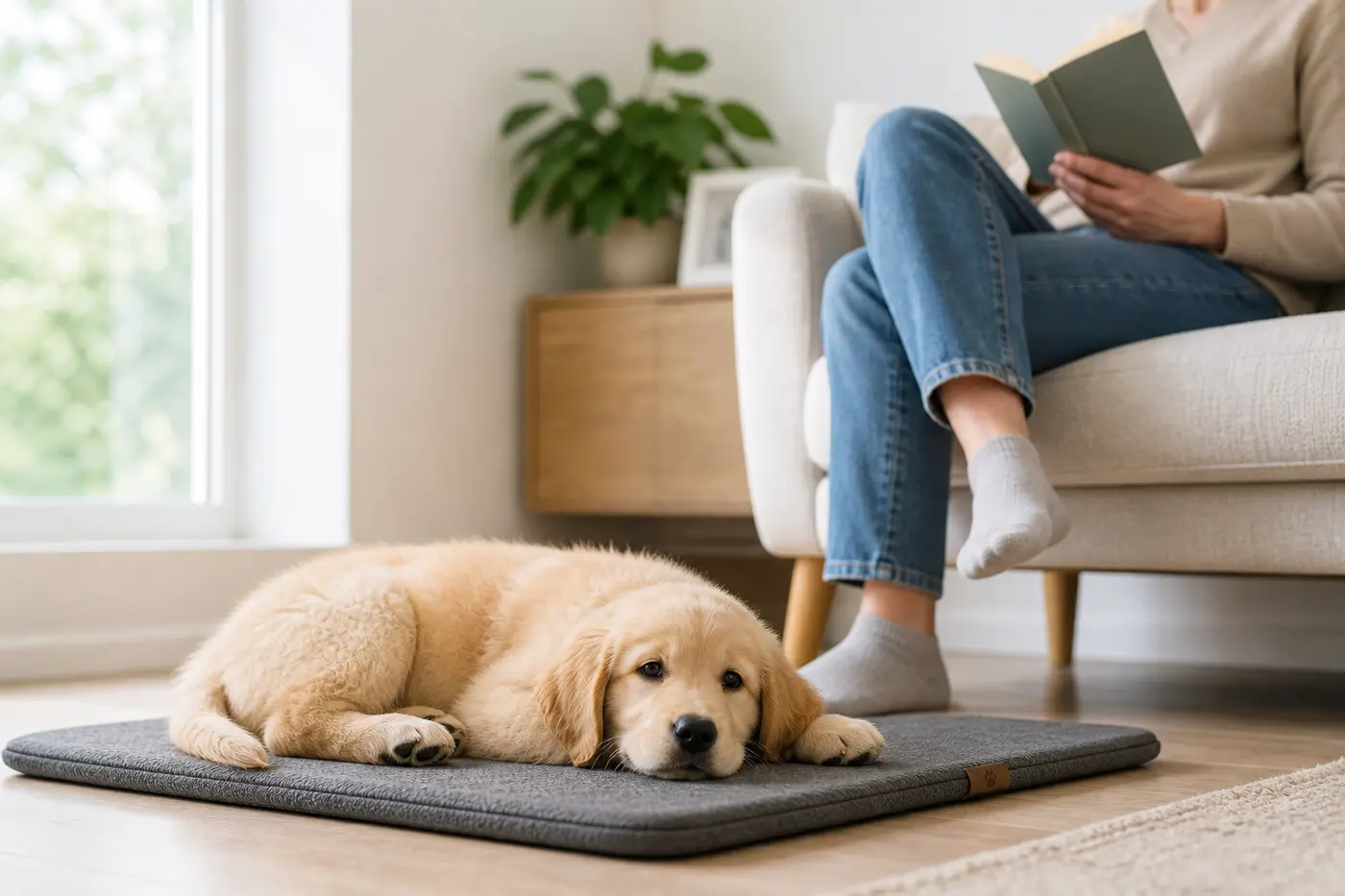
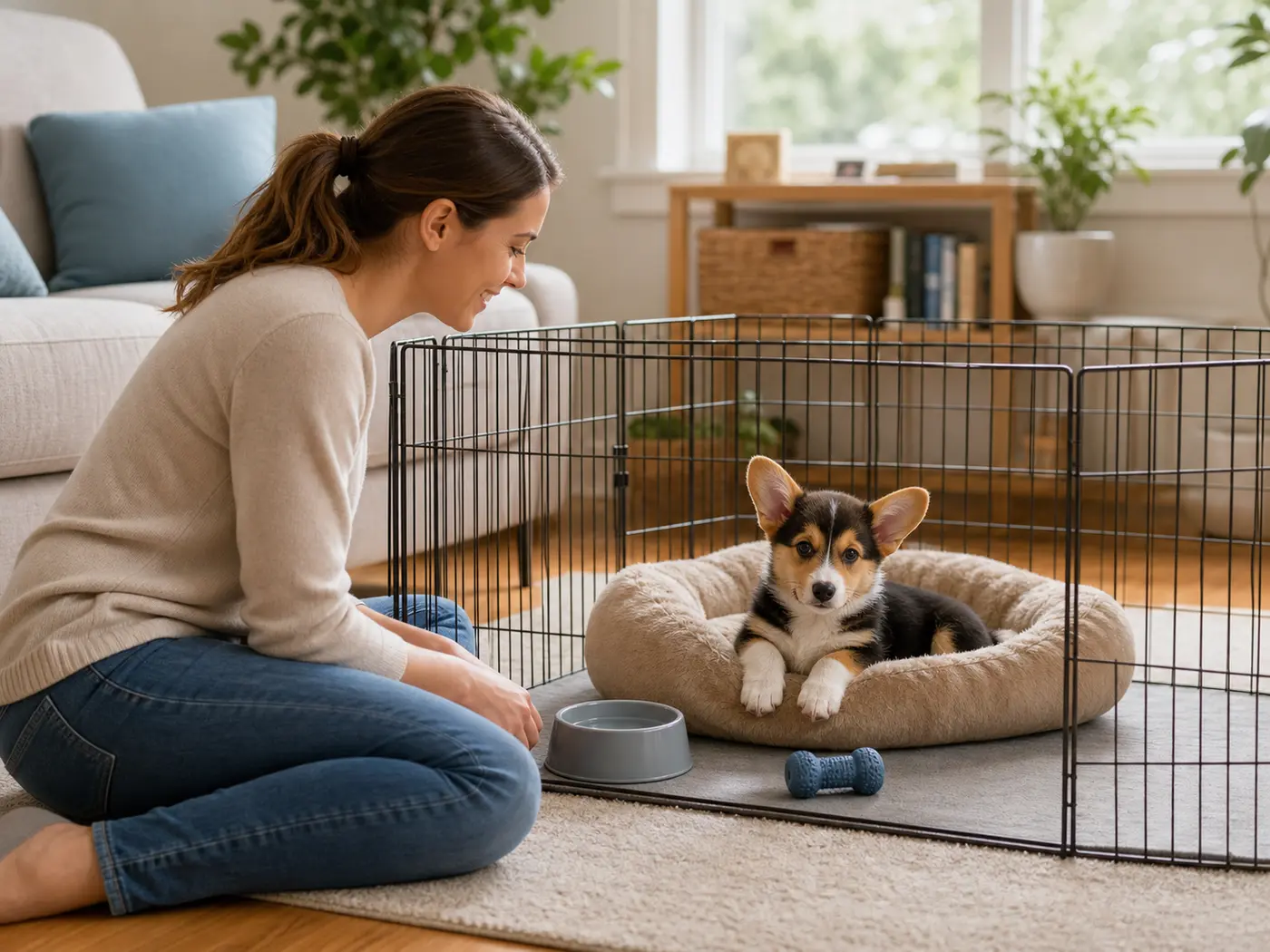
The right crate spot is close enough for your puppy to feel included and quiet enough for real sleep.
Think of the crate as a little bedroom. Location shapes whether your puppy can relax, hear normal family life, and recover between potty trips, play, and meals.
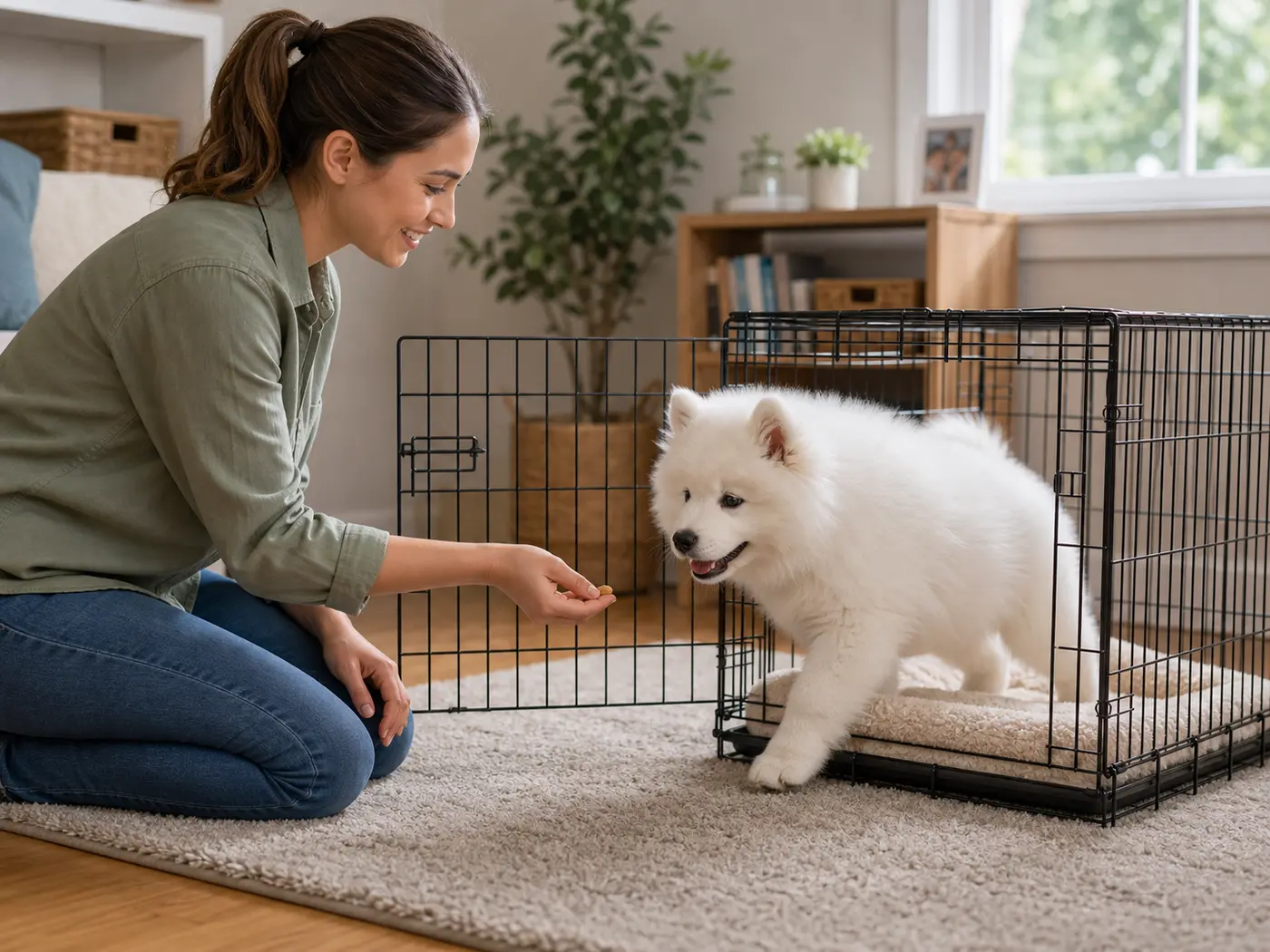
A crate in the wrong spot can make a good plan feel impossible. A hallway with constant feet, a hot window, or a far corner can keep a puppy alert even when they are tired.
Start with a place that lets your puppy hear you without being in the middle of every household moment. You can move the crate later as sleep and confidence improve.
Great for
- Puppies who fuss because the crate feels too isolated.
- Families setting up the first week at home.
- Dogs who nap better with a predictable, low-traffic rest spot.
Wait a bit if
- Your puppy is panicking, drooling, or trying to hurt themselves in the crate.
- The room is too hot, too cold, drafty, or noisy to sleep in.
- Children or visitors can reach into the crate while the puppy rests.
Build crate comfort
Choose the sleep job first
Decide whether this crate is mainly for naps, night sleep, short safe breaks, or travel practice. A puppy sleeps better when the crate has one clear job.
Pick nearby but not busy
Try a bedroom corner, quiet living-room edge, or office wall. Avoid doorways, stair traffic, and places where people step over the crate.
Check heat, light, and sound
Look for direct sun, cold drafts, loud appliances, and bright windows. A puppy who cannot get comfortable may cry even when the training is kind.
Make family rules clear
The crate is not a petting booth. Teach kids and guests to let the puppy rest there without tapping, calling, or reaching in.
Test one nap
Use the spot for a short daytime nap after potty and play. If your puppy keeps popping up at every sound, try a quieter edge of the room.
Adjust instead of forcing it
If the spot is not working, move the crate a few feet and try again. Better setup is training, not cheating.
Little things that help
Use normal household sound
Total silence can make every tiny noise feel huge later. Let your puppy hear soft normal life while they rest.
Keep the door side easy
Leave enough room to open the door fully, sit nearby, and reward calmly.
Protect the retreat
A crate feels safer when nobody bothers the puppy inside it.
Helpful little extras
Affiliate links: Furball Cove may earn from qualifying purchases at no extra cost to you.
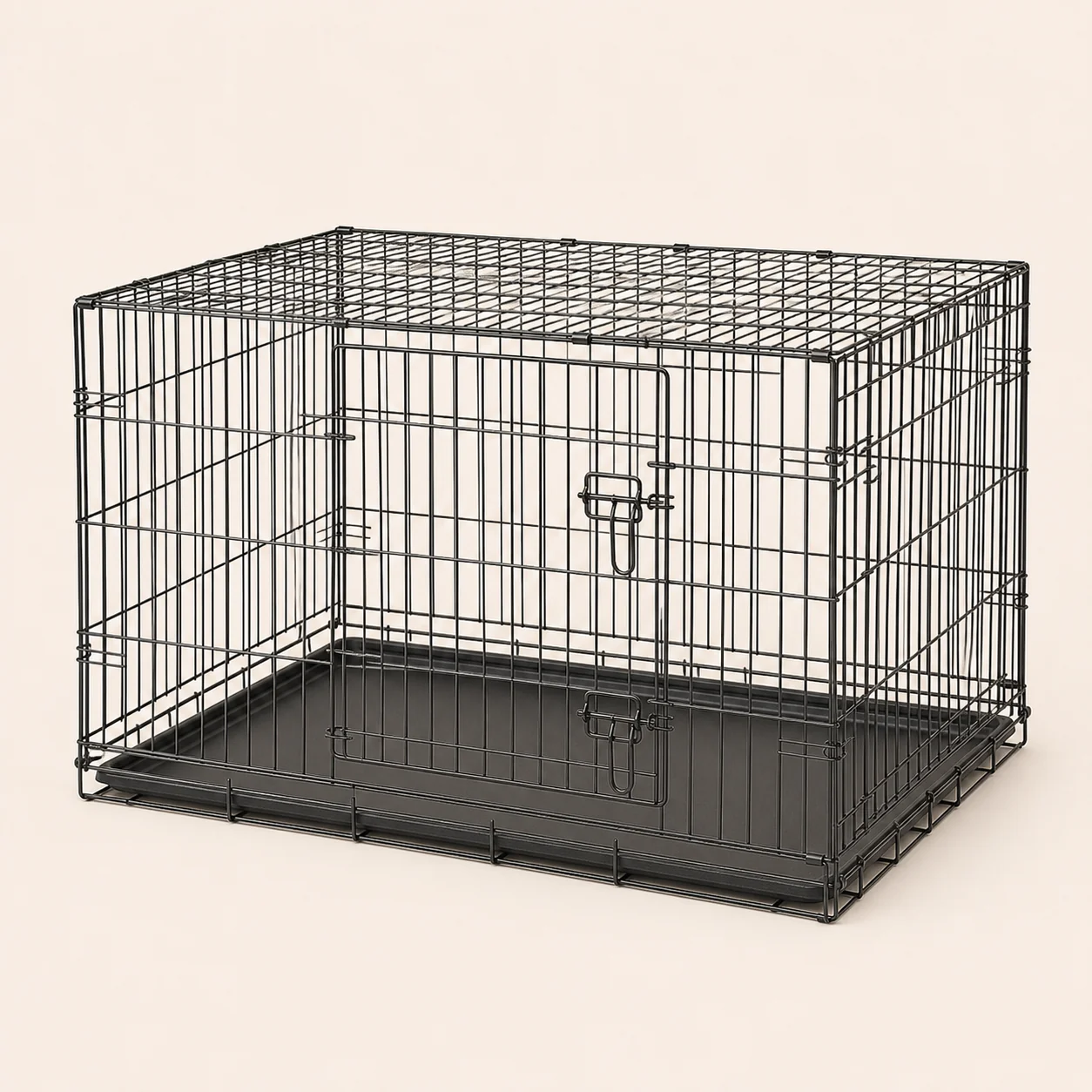
Puppy crate with divider
A divider lets the crate fit your puppy now without leaving a giant space that feels more like a playroom than a sleep spot.
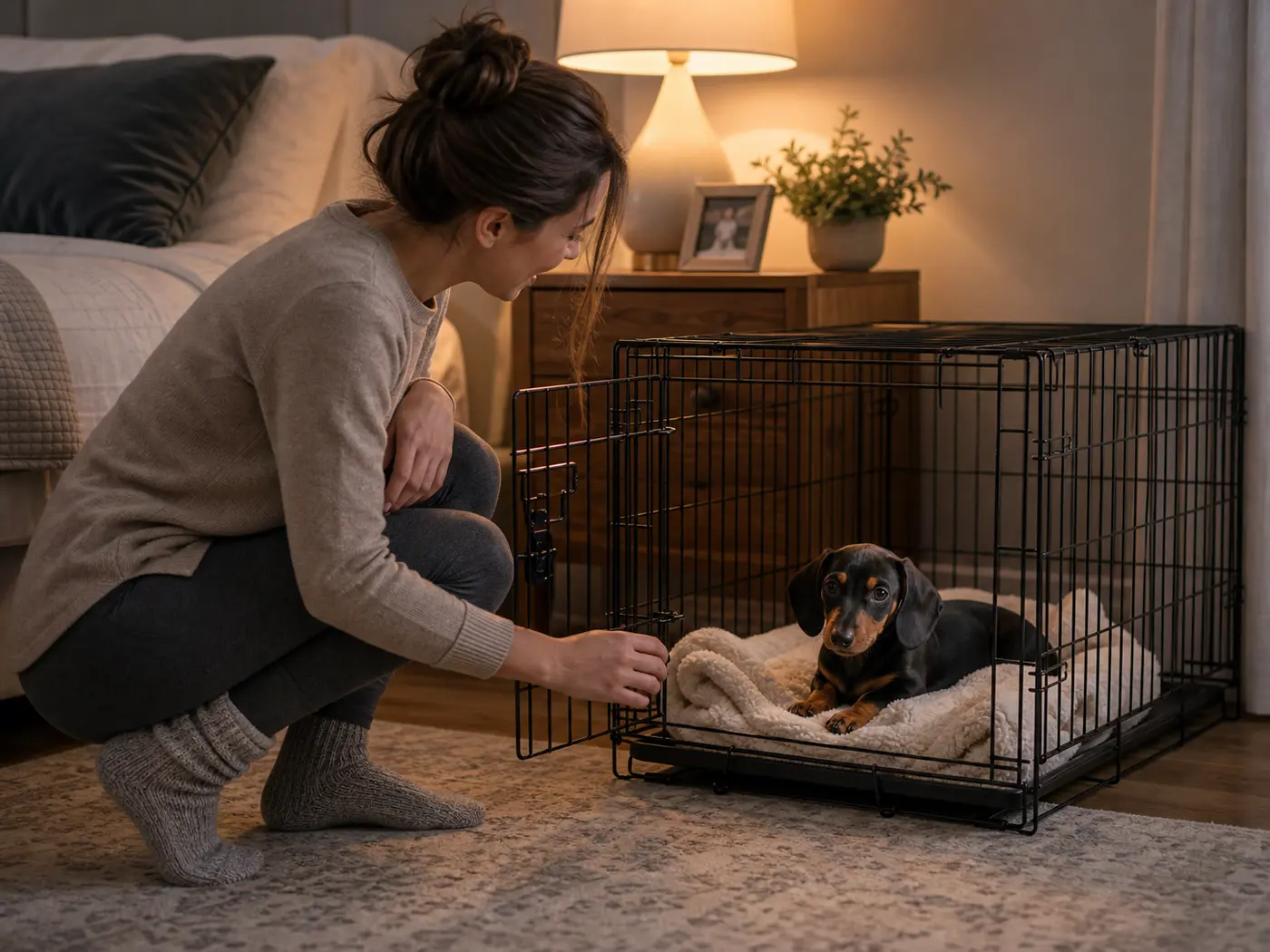
Washable crate mat
A low-profile washable mat keeps the crate comfortable while still being easy to clean after normal puppy messes.
Soft puppy training treats
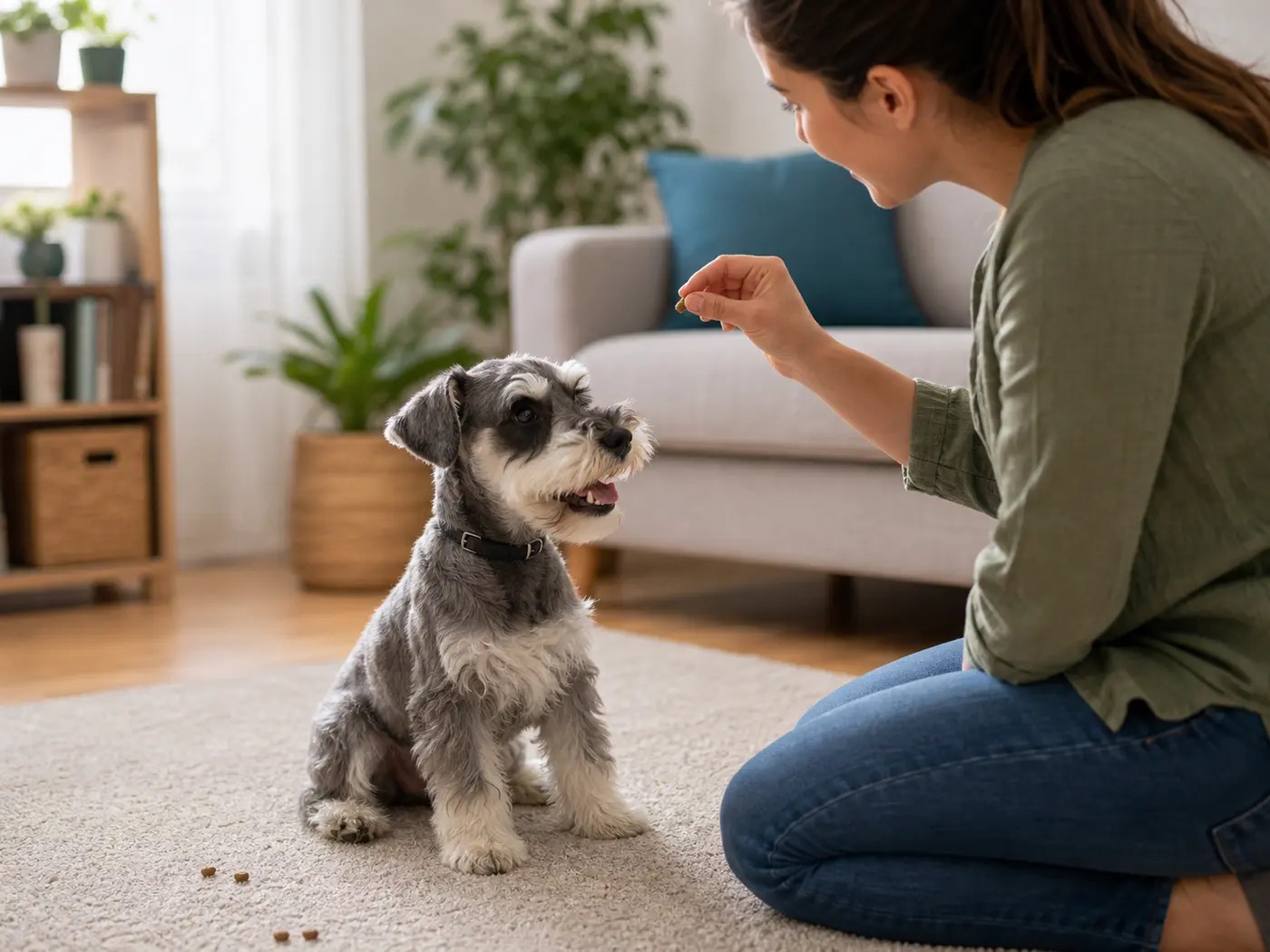
Tiny soft rewards let you pay crate entries, quiet door moments, and calm releases without turning the session into a feast.
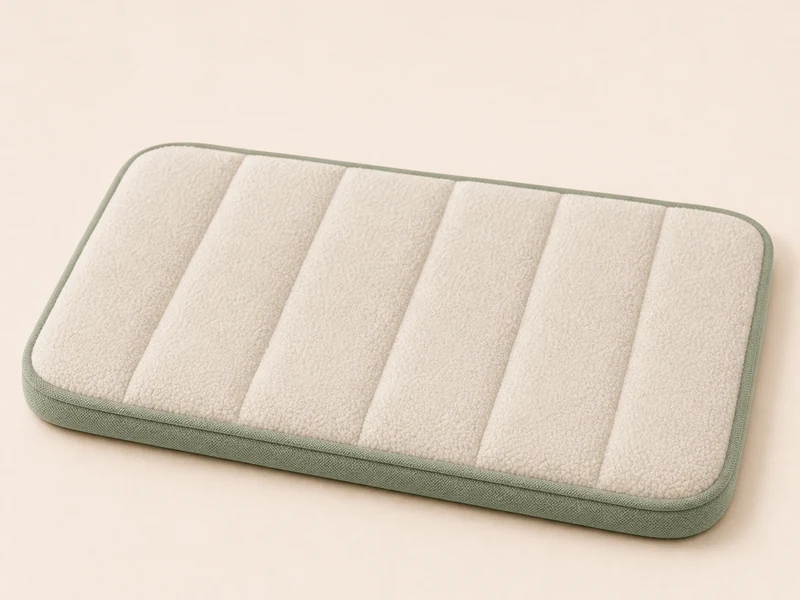
Washable dog mat
A mat near the crate gives your puppy a landing spot for door-open games, release practice, and calm resets.
Questions people ask
Should the crate be in my bedroom?
For many young puppies, yes at first. Being close can reduce fear and make potty trips easier. You can move the crate gradually later.
Is the living room okay?
Yes if it has a quiet edge and your puppy can actually sleep there. Avoid the busiest traffic lane in the house.
Should I cover the crate?
Some dogs like a light cover and some do not. Keep airflow safe and watch whether your puppy relaxes or gets more worried.