Updated
Puppy biting help
Puppy Biting
Puppy biting usually means your puppy is excited, tired, teething, or needs a better outlet.
The goal is not to scare your puppy away from hands. It is to teach softer play, better choices, and calmer breaks before biting takes over.
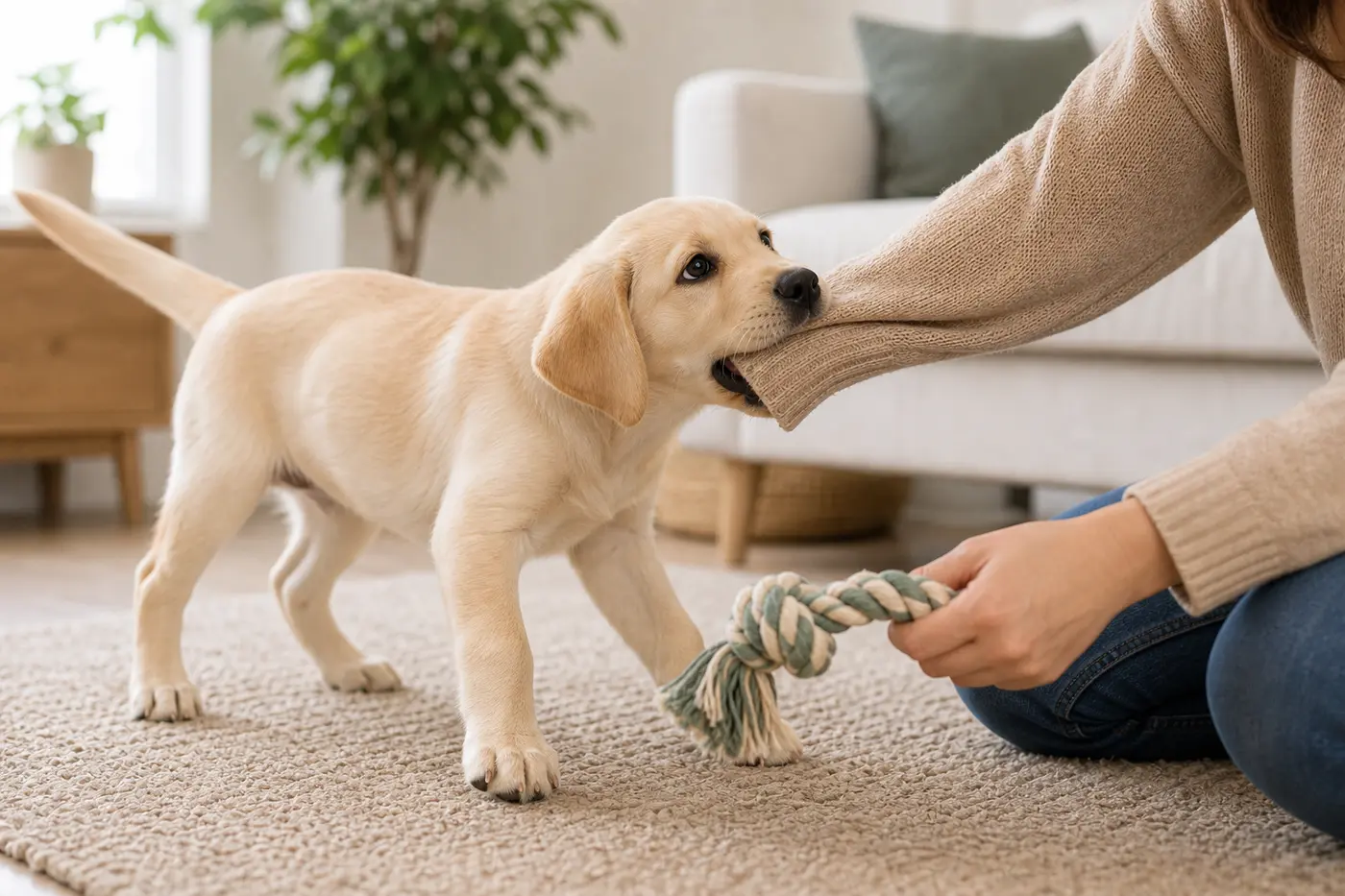
Puppy biting is usually communication from a baby dog with sharp teeth: excitement, fatigue, teething, hunger, or a need for a better outlet. It is normal, but it still needs a plan.
The trick is to act before teeth become the game. Short play, legal chews, quick pauses, and naps usually teach more than loud reactions.
Great for
- Puppies who nip hands, sleeves, ankles, or pant legs during play.
- Families trying to tell teething, overexcitement, and overtiredness apart.
- Owners who want kind rules that children can understand with adult help.
Wait a bit if
- Hard bites with guarding, fear, escalating conflict, or injury without professional help.
- Rough wrestling that encourages more mouth contact.
- Using pain, intimidation, or physical corrections to stop biting.
Turn practice into a habit
Redirect Before Teeth Land
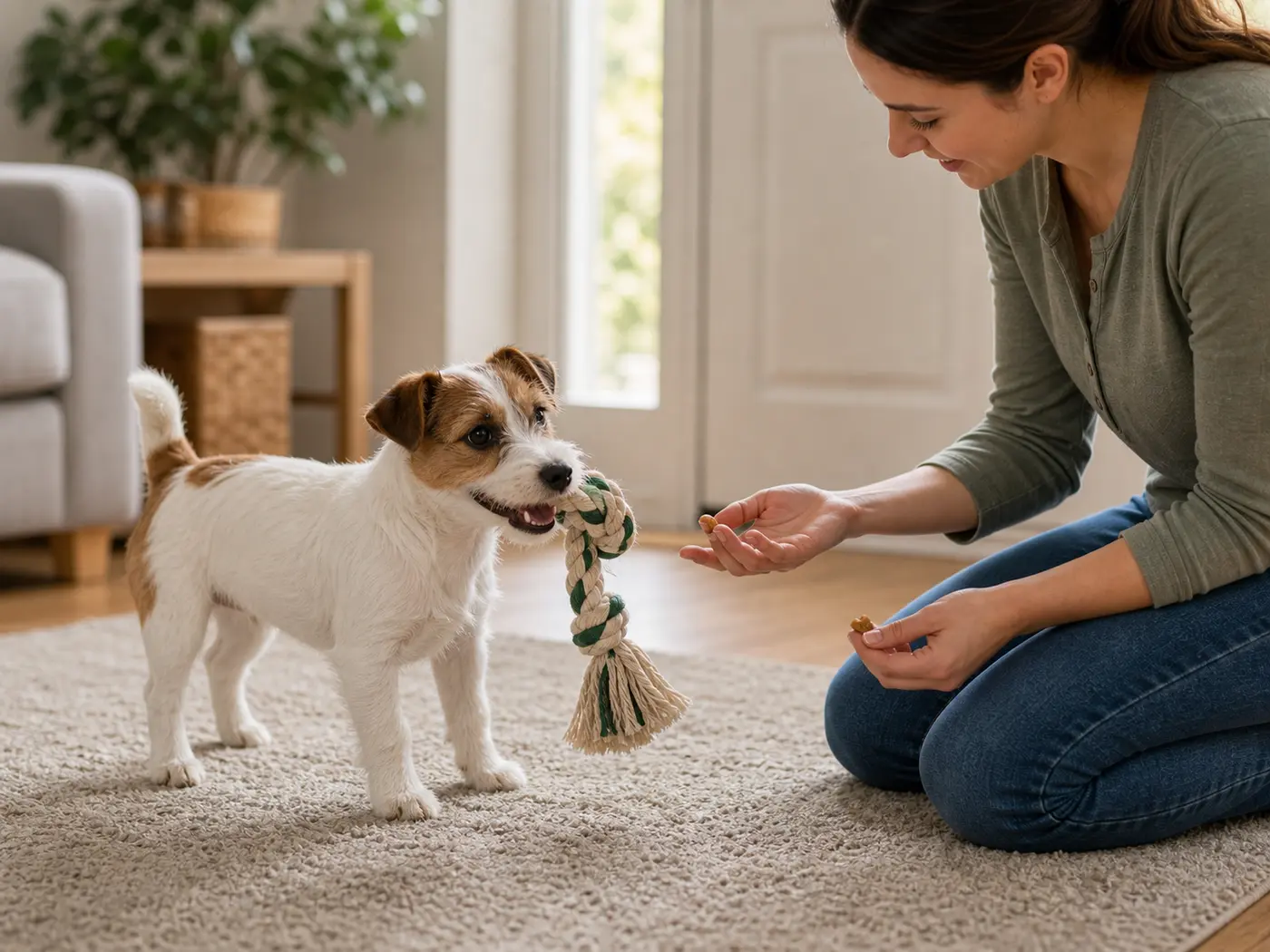
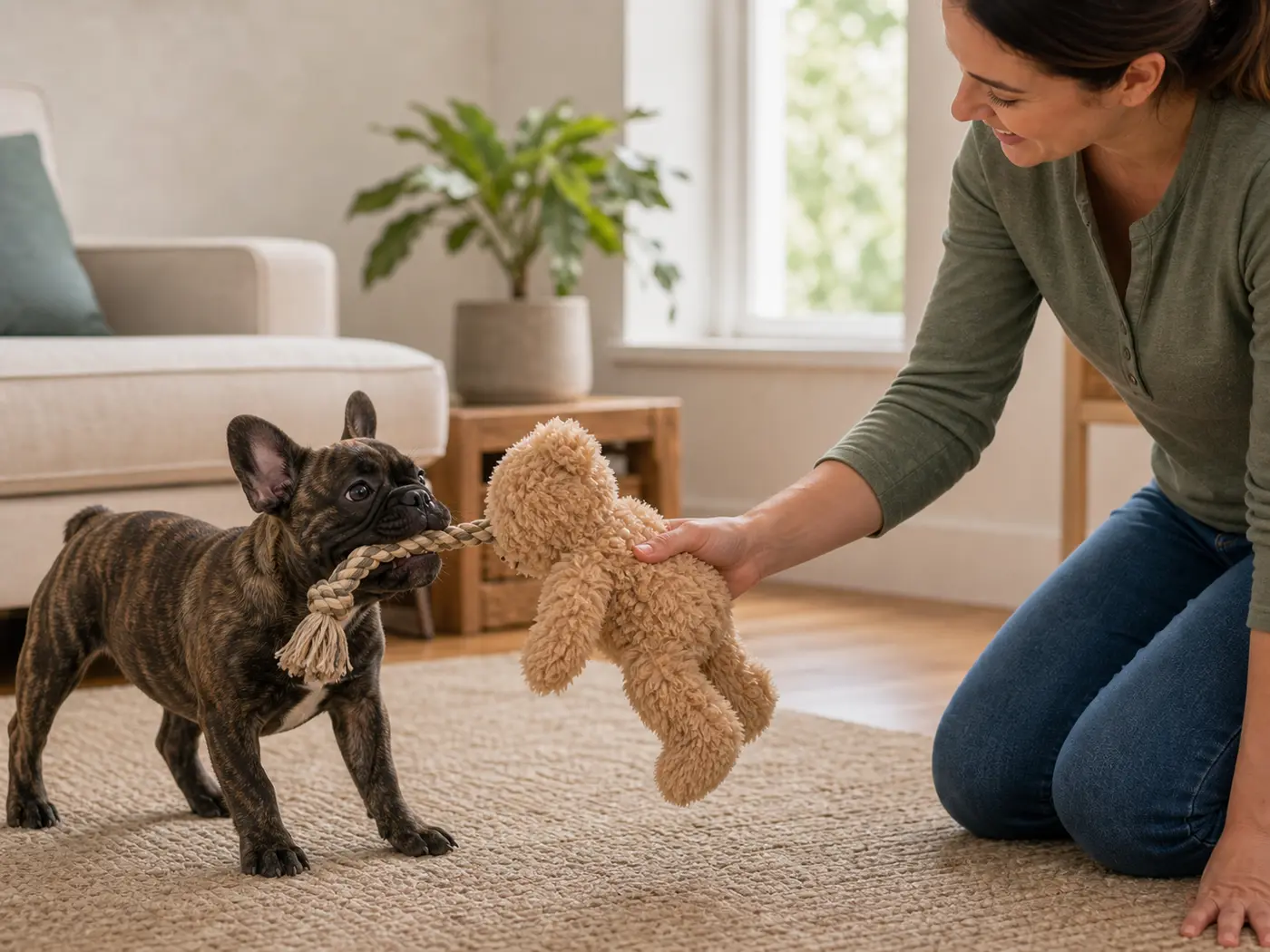
Keep a toy nearby during play. When your puppy starts aiming for sleeves, hands, or pant legs, move the toy low and make it the easiest thing to grab.
Pause Play When Teeth Stay On Skin
If your puppy keeps biting skin, calmly freeze, remove attention for a few seconds, then offer a toy again. Big reactions can make the game more exciting.
Watch The Tired-Bite Window
Many puppies bite hardest right before they need sleep. If the biting gets frantic, take a potty trip and help your puppy settle for a nap.
Give Legal Chews Every Day
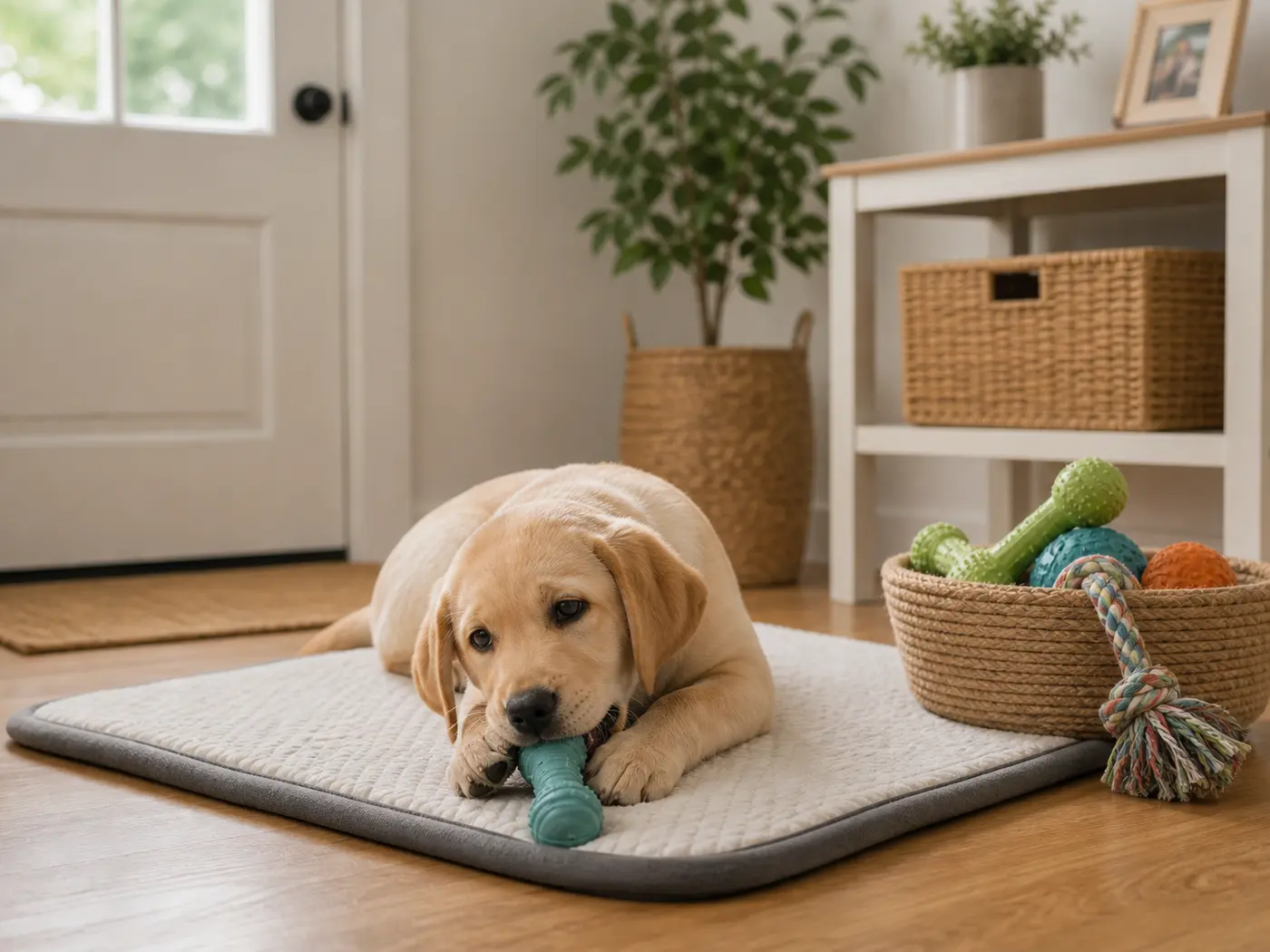
Teething puppies need safe chewing. Put legal chews where biting usually happens so the right choice is already waiting.
Little things that help
Redirect early
Offer the toy before your puppy is already latched onto skin or clothing.
Watch the tired window
If biting gets wild after play, visitors, or evening energy, your puppy may need a nap more than another lesson.
Make play pause calmly
When teeth stay on skin, pause attention and reset. Keep the room quieter instead of adding more excitement.
Helpful little extras
Affiliate links: Furball Cove may earn from qualifying purchases at no extra cost to you.
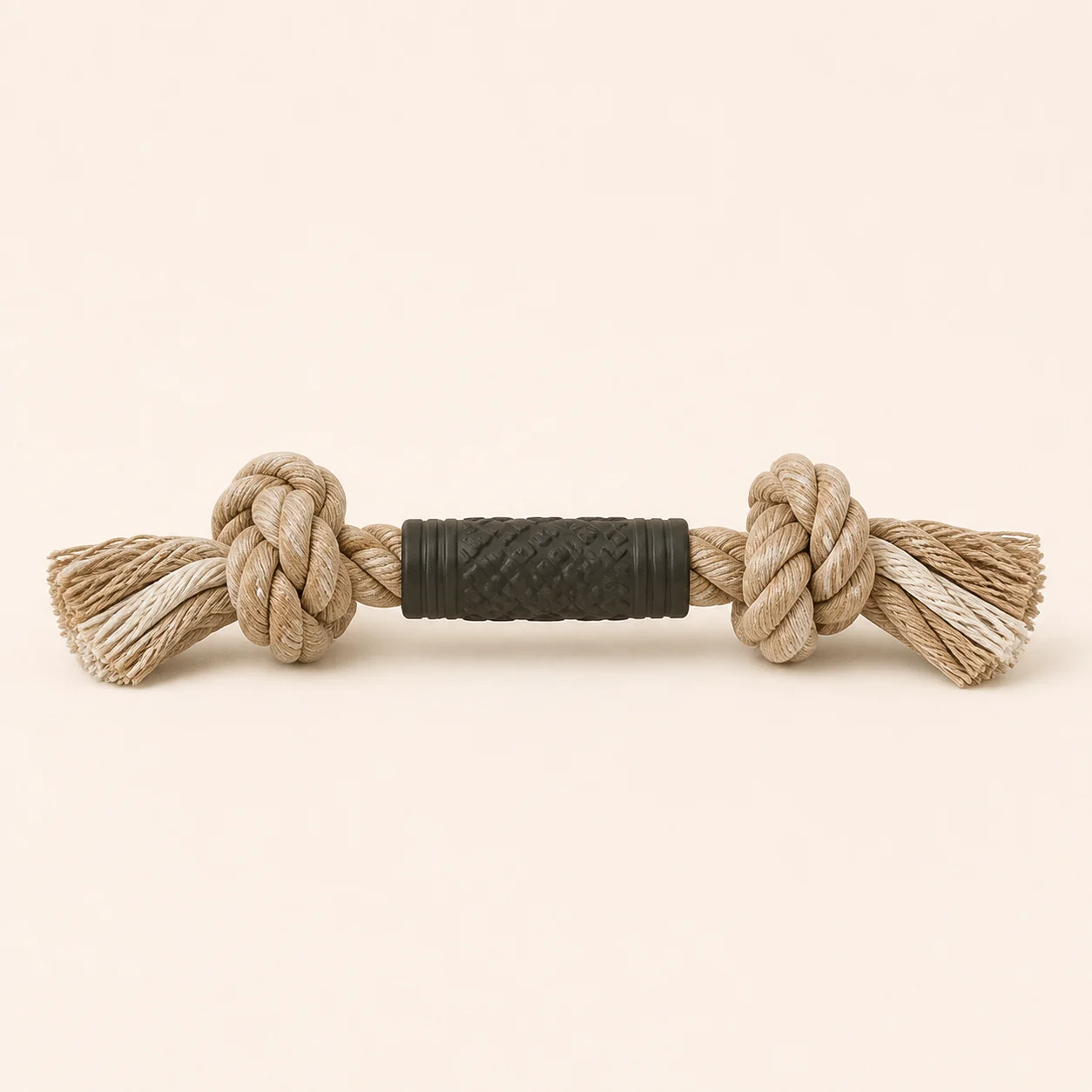
Soft tug toy
A longer soft toy gives your puppy something legal to bite while keeping teeth away from hands.

Puppy chew toys
Safe chews help teething puppies settle their mouths without practicing on furniture or fingers.
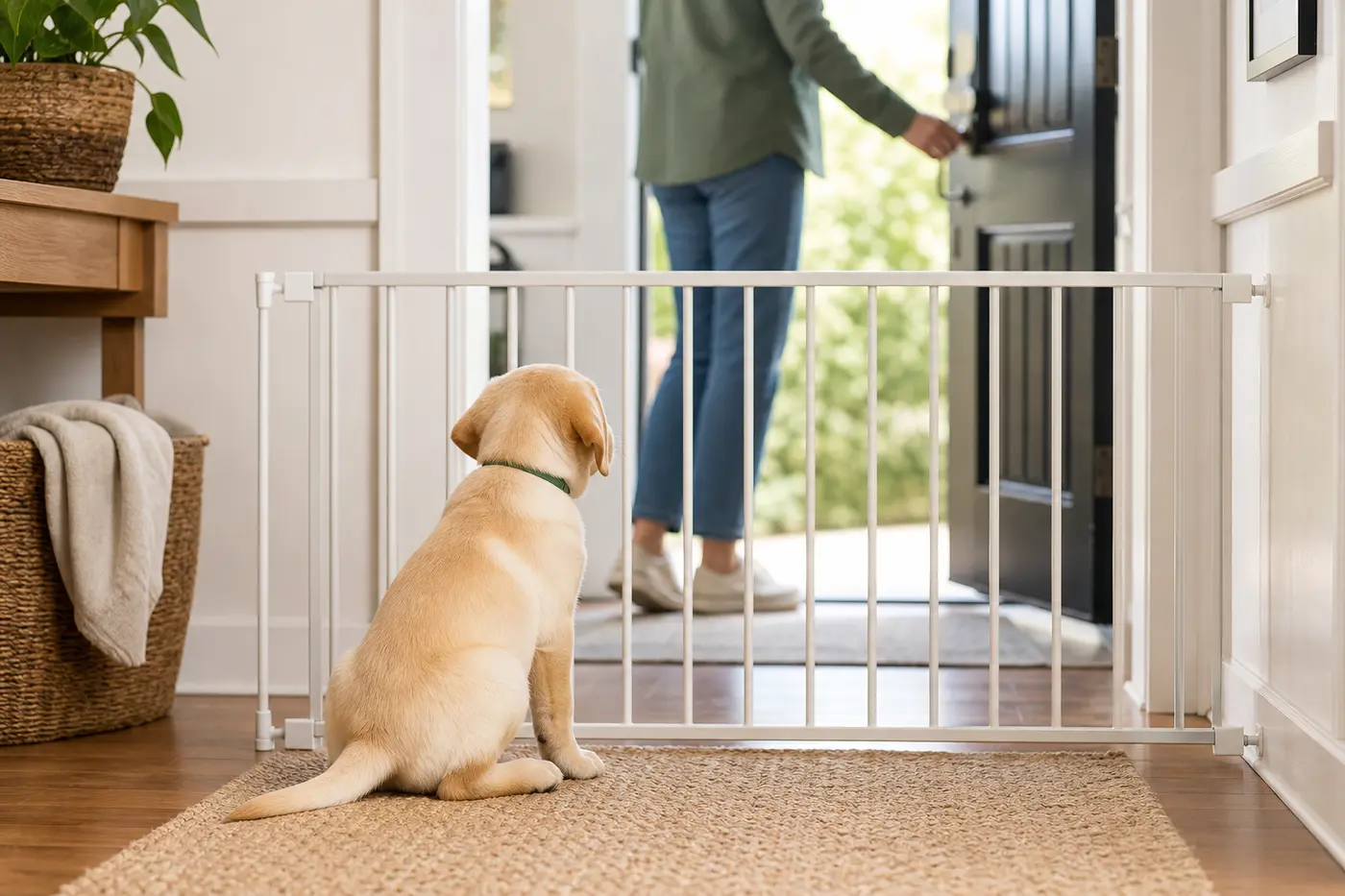
Indoor puppy gate
A gate gives kids and puppies a calm reset when play gets too toothy.
Lick mat
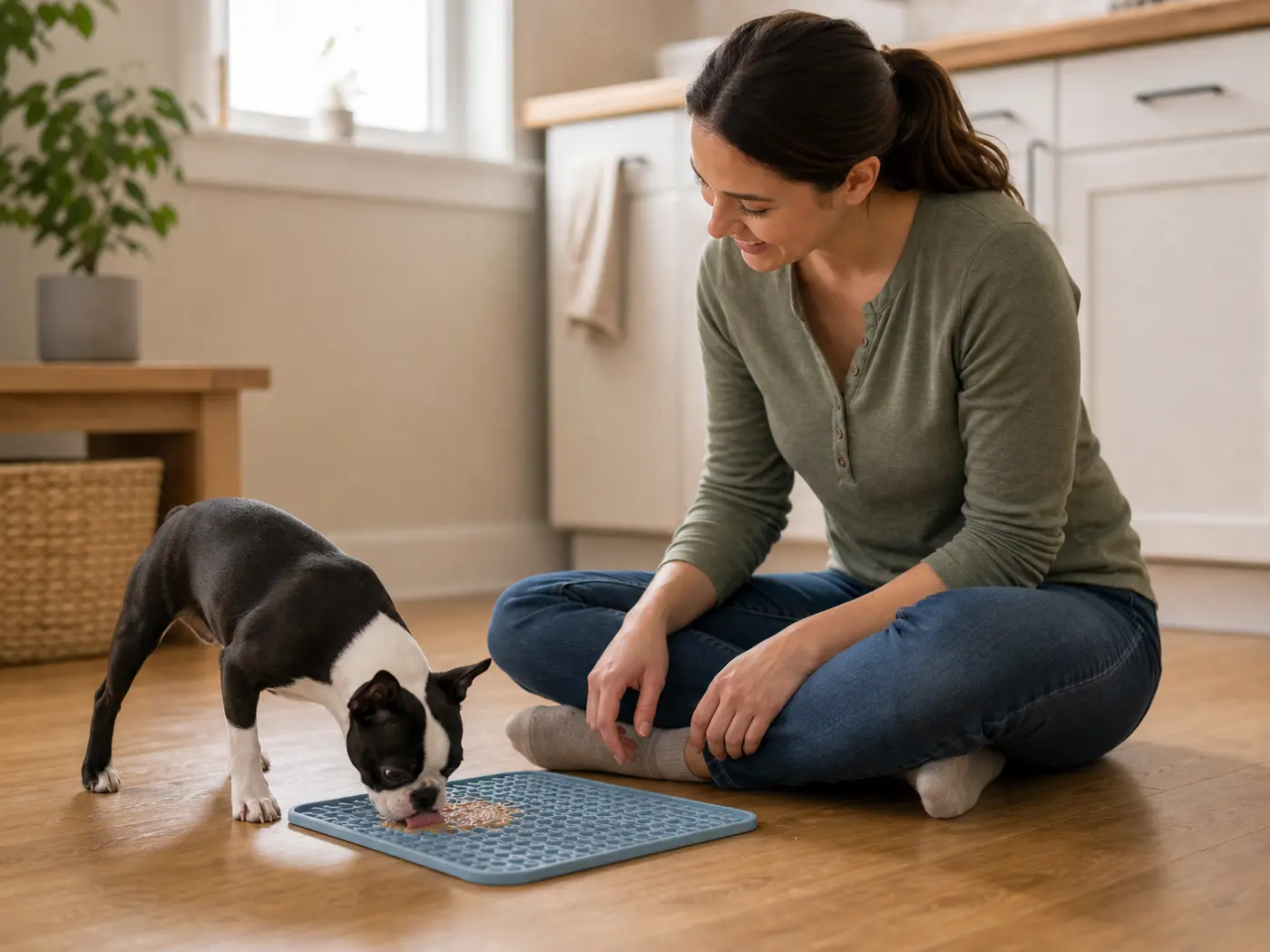
Licking can help some puppies downshift after wild play.
Questions people ask
Is puppy biting normal?
Yes. Puppies explore and play with their mouths. The job is to guide the mouth to toys and prevent overtired biting from becoming the daily pattern.
Should I yelp when my puppy bites?
Only if it actually calms your puppy. Many puppies get more excited by yelping, so a quiet pause and toy redirect often works better.
When does puppy biting improve?
It usually improves with age, sleep, teething progress, and consistent play rules. If it is worsening or feels aggressive, get professional help early.