Updated
Puppy walking setup
Puppy Harness Fit
A good harness lets your puppy move normally, breathe easily, and learn walks without rubbing or fear.
Fit the harness before the walk gets exciting. Check the neck, shoulders, chest, belly strap, clips, and your puppy's comfort in short, kind sessions.
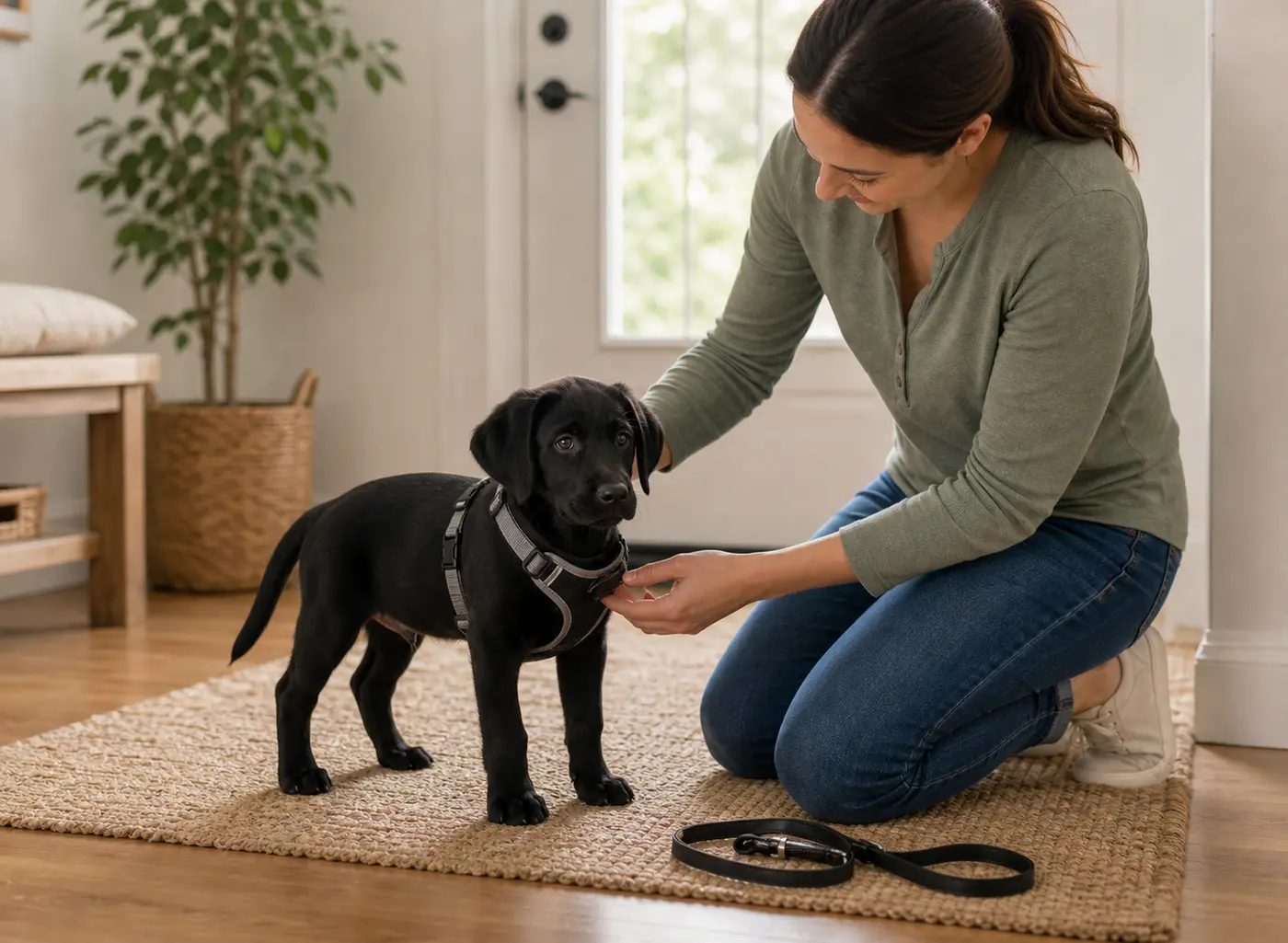
A harness is not just walking equipment. For a puppy, it is a new feeling around the chest, shoulders, clips, and belly, often right before the exciting outside world appears.
Fitting it indoors first keeps the lesson gentle. Your puppy can sniff, step in, hear clips, move normally, and learn that straps do not predict wrestling.
Great for
- Puppies starting leash walks.
- Dogs who duck away from harnesses or freeze after clips close.
- Owners checking fit before longer walks, car rides, or long-line practice.
Wait a bit if
- Harnesses that rub behind the elbows, restrict shoulder movement, or slide around.
- Dragging a puppy into gear while they are frightened.
- Ignoring redness, hair loss, limping, coughing, or discomfort. Ask your vet or a good trainer if you are unsure.
Build comfort with the equipment
Start indoors
Try the harness in a calm room before a real walk. Let your puppy sniff it, reward interest, and keep the first fitting short enough that it does not become a wrestling match.
Check shoulder movement
Your puppy should be able to walk, sit, turn, sniff, and lower their head without the harness blocking the front legs or rubbing behind the elbows.
Use the two-finger check
Most straps should be snug enough not to slide around but loose enough for two fingers to fit comfortably. Check again after your puppy moves.
Watch the armpits
Rubbing often shows up behind the front legs. After short walks, check for redness, hair breakage, damp fur, or your puppy turning to bite at the strap.
Choose clips for the job
A back clip is simple for easy walks. A front clip can help with pulling practice. The best choice is the one that fits your puppy well and lets you train kindly.
Practice putting it on
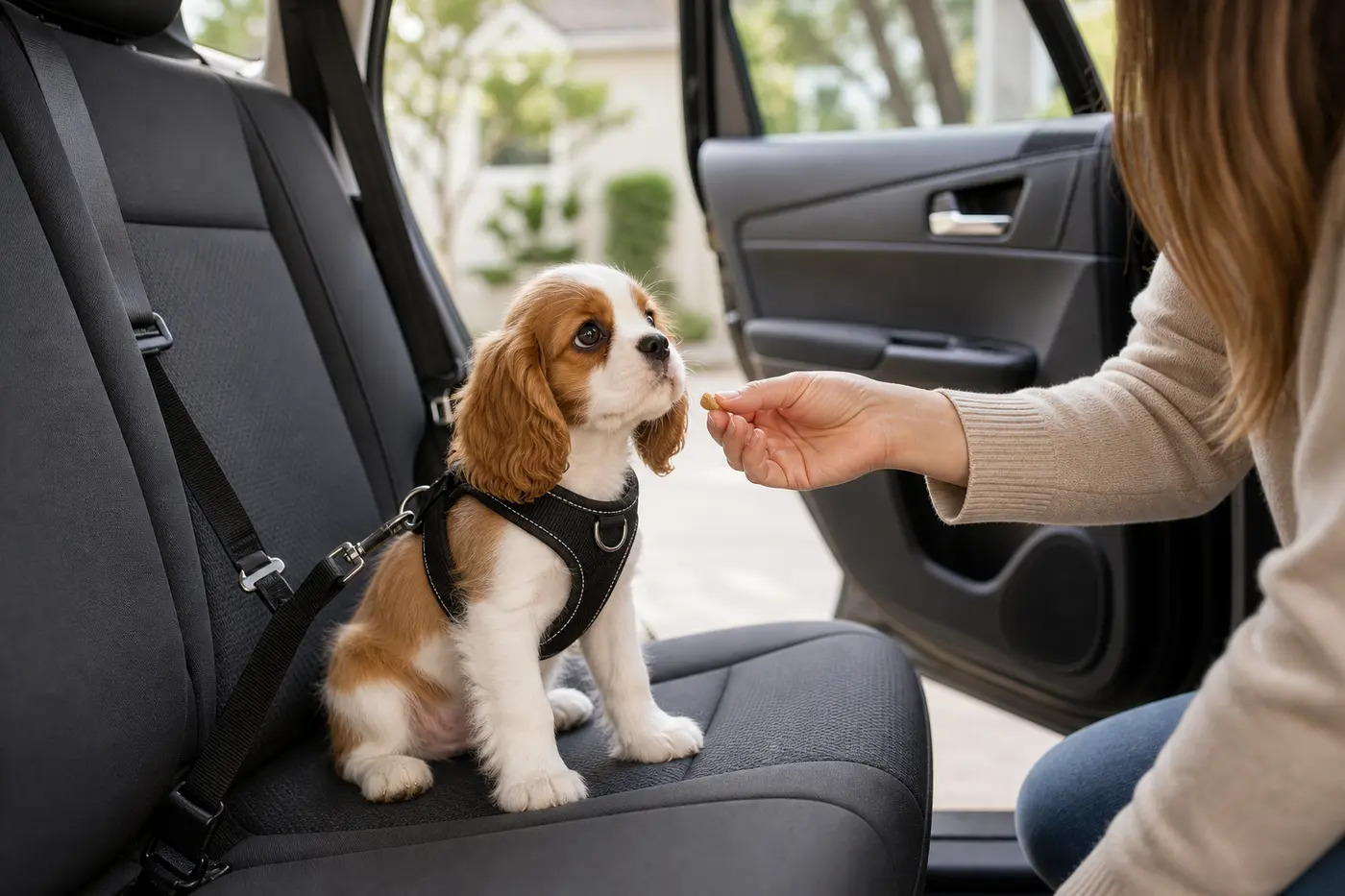
Reward your puppy for moving their head through, standing still, and hearing clips close. If they duck away, slow down and make the next rep easier.
Little things that help
Check movement
Your puppy should walk, sit, sniff, and turn without the harness blocking normal motion.
Use tiny rewards
Pay head-through, standing still, clip sounds, and calm movement separately.
Recheck after walks
Look behind the front legs and along the chest for rubbing, damp fur, redness, or chewing at straps.
Helpful little extras
Affiliate links: Furball Cove may earn from qualifying purchases at no extra cost to you.
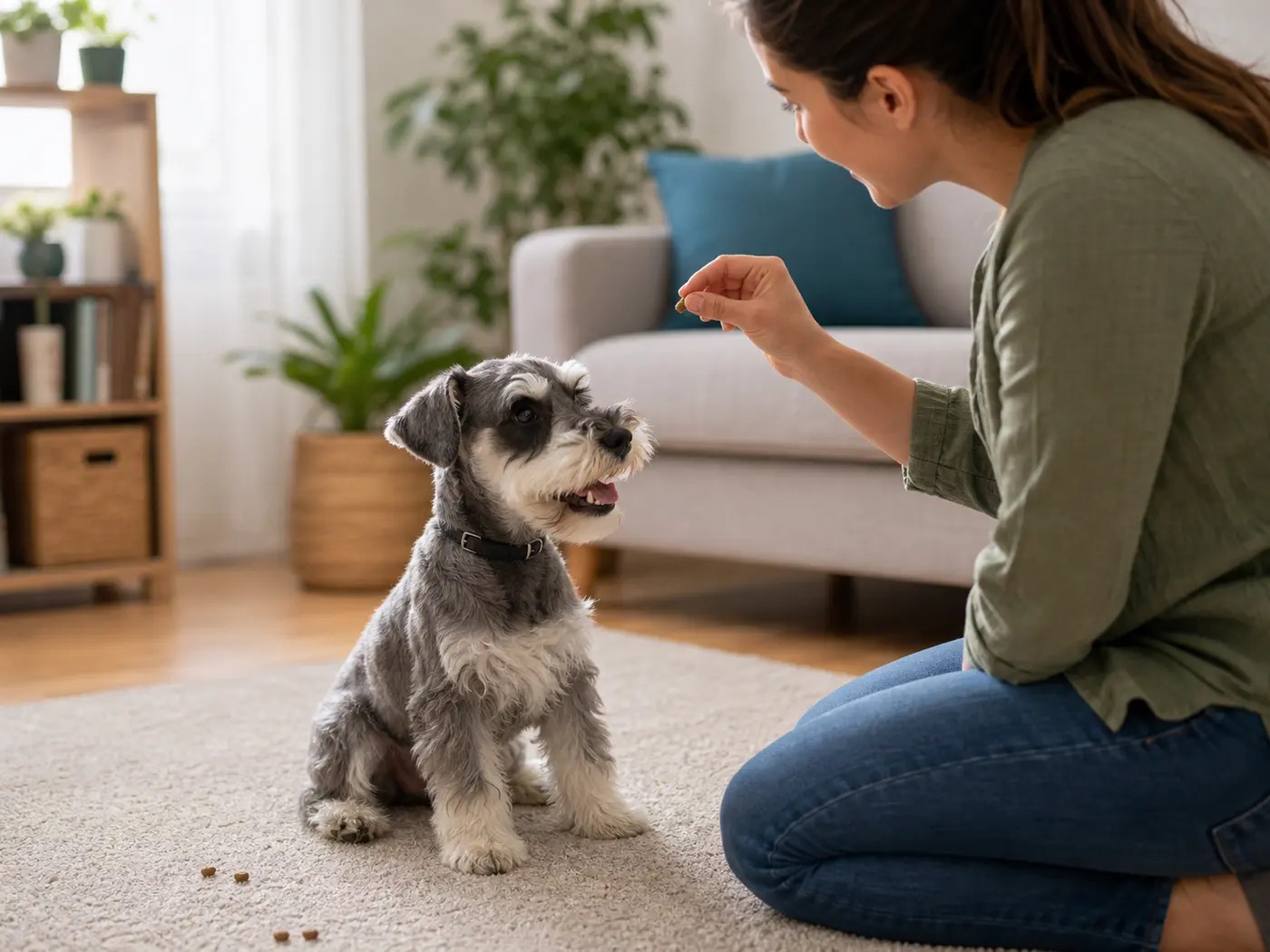
Adjustable puppy harness
Multiple adjustment points make fit easier while your puppy is growing quickly.
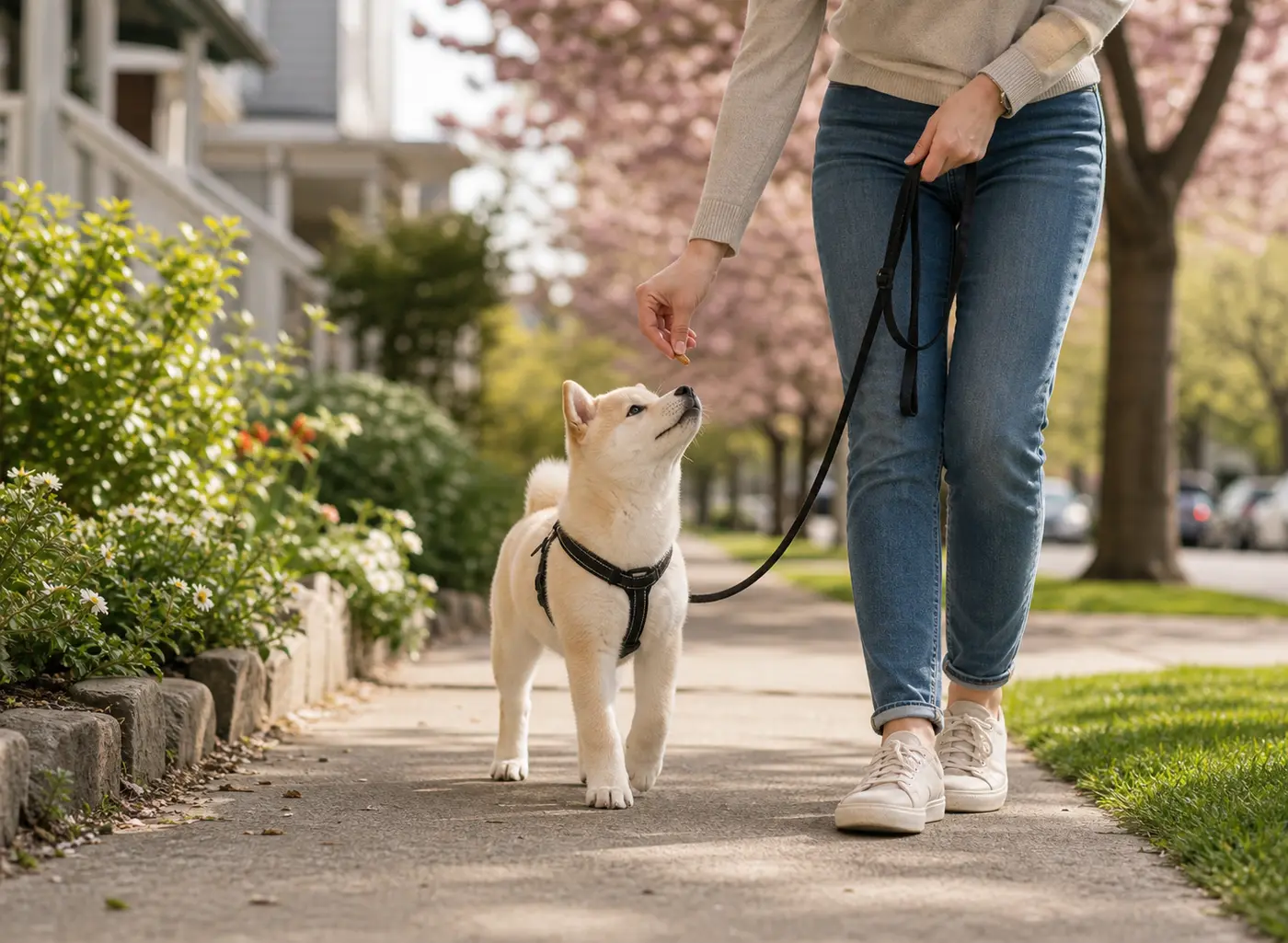
Front-clip harness
Useful for loose-leash practice when the shape fits comfortably and does not restrict shoulders.
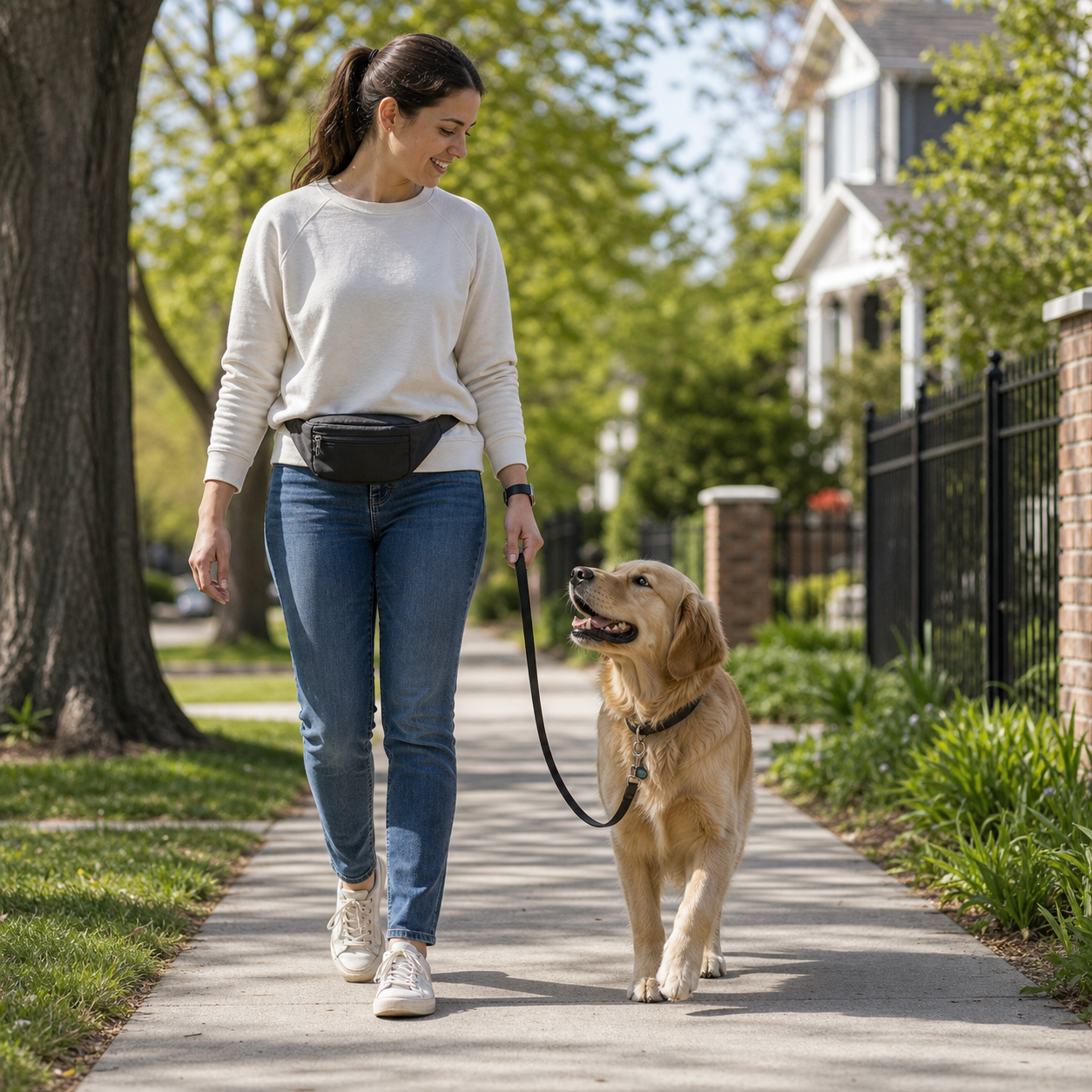
Lightweight leash
A lighter leash is easier for small puppies to ignore during early walk practice.
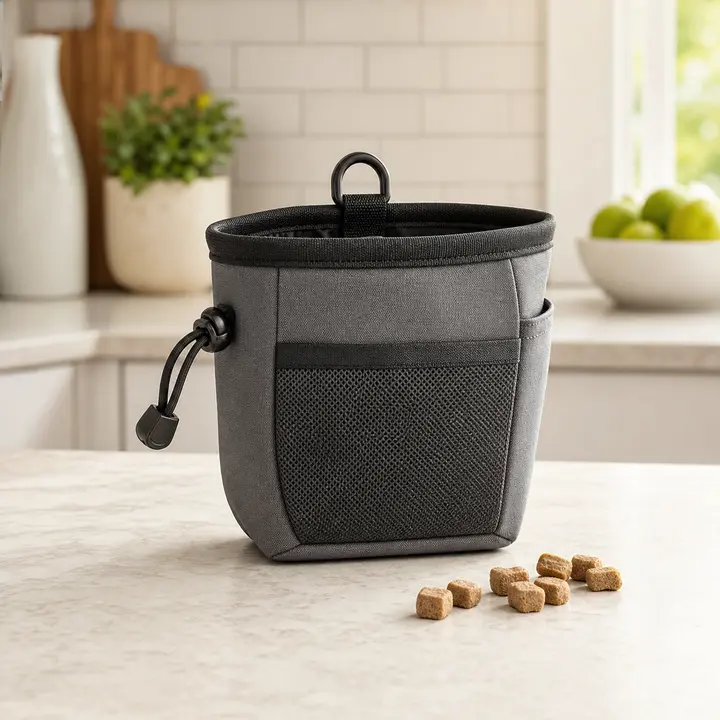
Training treat pouch
Keeps rewards ready for clipping, check-ins, and calm steps outside.
Questions people ask
How tight should a puppy harness be?
Snug enough not to twist or slip, but loose enough for two fingers under most straps. Watch your puppy move after adjusting.
Can a harness stop pulling?
A harness can make pulling easier to manage, but it does not train loose-leash walking by itself. Pair good fit with rewards for connection.
How often should I refit a puppy harness?
Check weekly during fast growth and anytime your puppy looks uncomfortable, backs out, rubs, coughs, or moves differently.