A healthy weight is easier to protect when you measure meals and watch how your dog moves.
The scale matters, but your dog's ribs, waist, stamina, joints, appetite, and treat routine tell the daily story.
01
Use your hands, not just your eyes
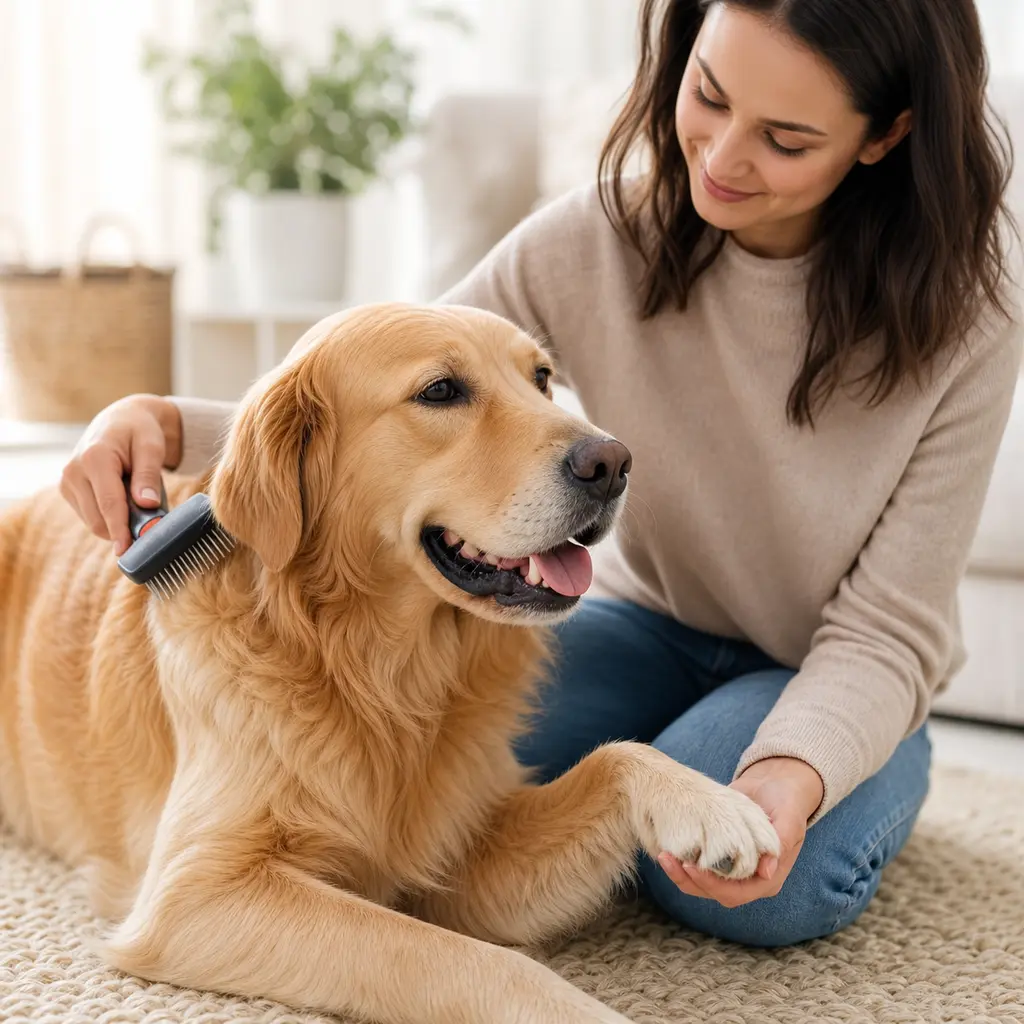
Fluffy coats and stocky builds can hide weight changes. Run your hands along your dog's ribs with light pressure, then look from above for a waist that fits their build. You should not have to dig through a thick layer to find ribs, but very sharp ribs can also mean your dog needs a vet conversation.
02
Measure the normal meal
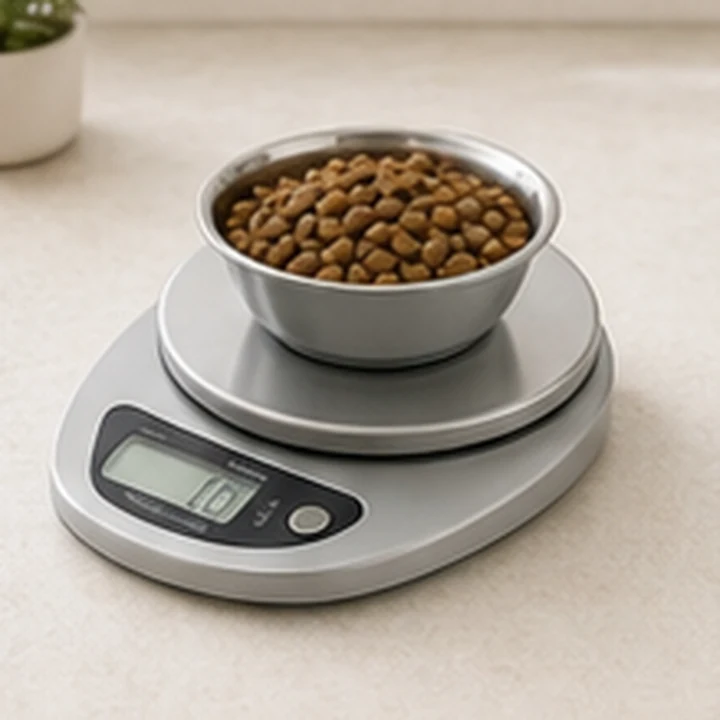
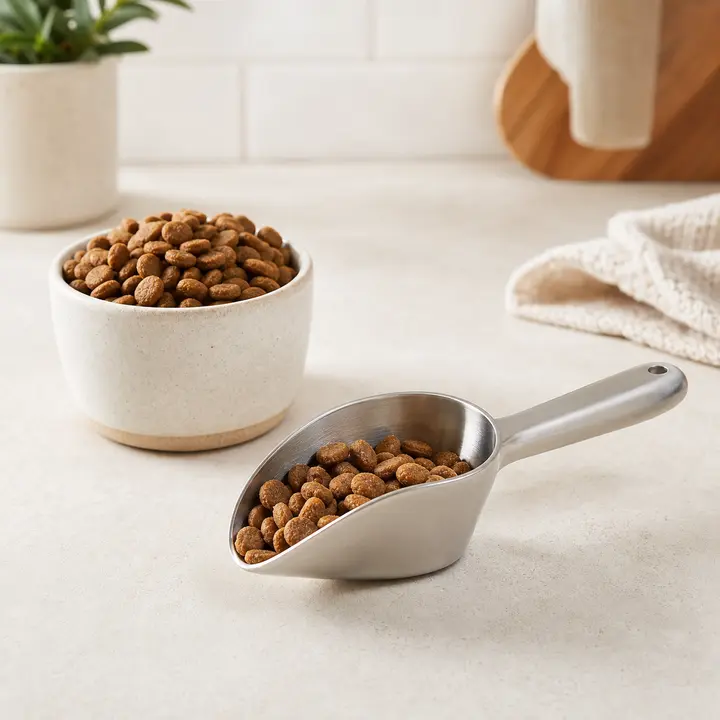
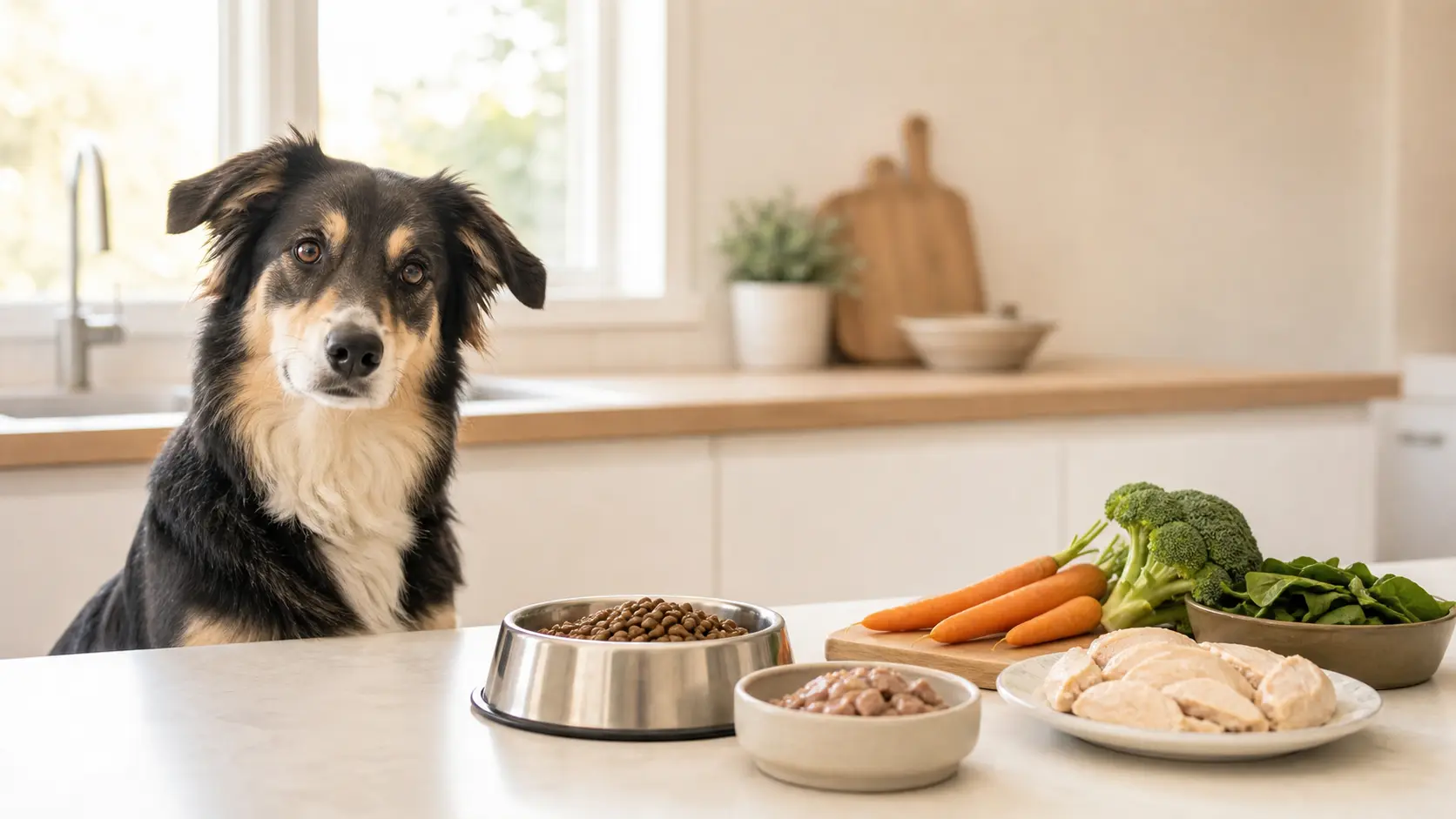
A scoop can drift from generous to huge without anyone noticing. Use a measuring cup or kitchen scale, keep treats in the count, and write down what actually goes into the bowl. If two people feed the dog, make the plan visible so breakfast, dinner, chews, and training treats do not quietly stack up.
03
Treats are part of the diet
Training treats, dental chews, table bites, peanut butter, lick mats, and puzzle toys all count. That does not mean fun food is banned. It means the routine needs a budget. Tiny treats, measured portions, and using part of dinner for training can keep rewards in the day without turning them into a second meal.
04
Movement should match the dog
Weight care is not just longer walks. A sore senior, a growing puppy, a flat-faced dog in summer, and a fit young retriever need different plans. Watch breathing, heat tolerance, limping, enthusiasm, and recovery after activity. Ask your vet before making a major exercise change if your dog is overweight, ill, elderly, or suddenly weak.
05
Sudden changes need attention
Slow seasonal changes can happen when activity shifts, but sudden weight gain, weight loss, increased thirst, vomiting, diarrhea, weakness, or a dog who cannot handle normal walks deserves a vet call. Do not solve a medical change by simply cutting food or adding hard exercise.
06
Make the plan livable
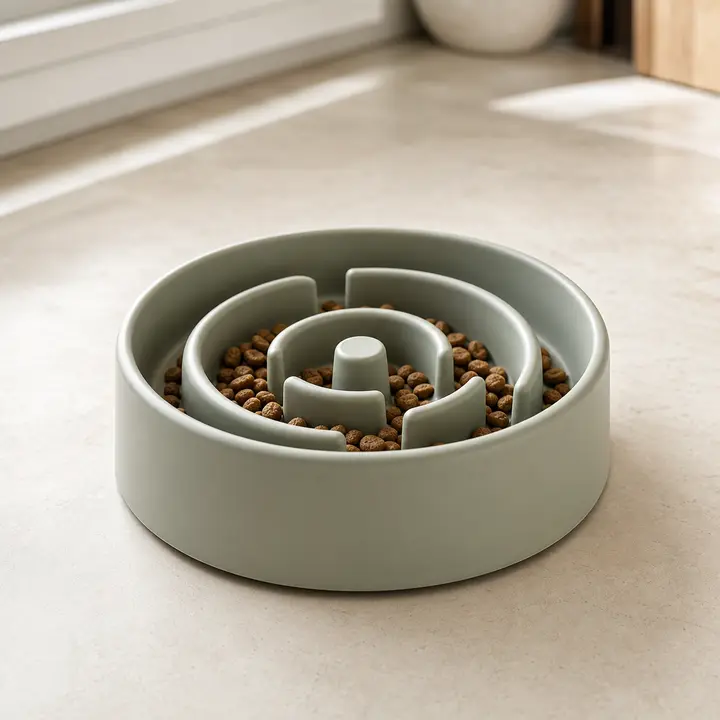
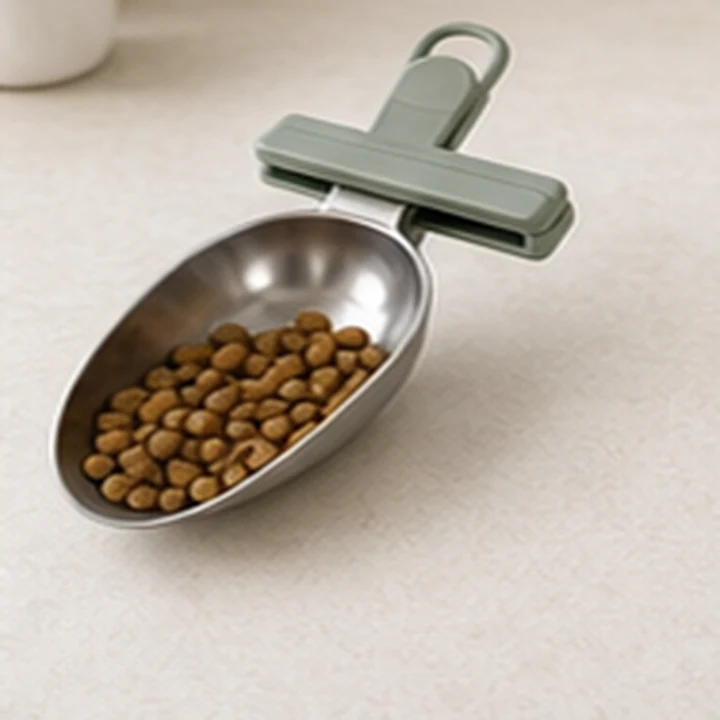
The best weight routine is the one your household can repeat. Put the scoop in the food bin, use a treat jar with a daily limit, schedule weigh-ins, and choose enrichment that slows eating without adding calories. A dog who feels satisfied is easier to help than a dog who thinks every meal vanished.
Quick checks
Ribs, waist, belly tuck, stamina, breathing after activity, and ability to rise comfortably.
Meal amount, treat count, chews, table scraps, puzzle food, and who feeds the dog.
Sudden appetite, thirst, vomiting, diarrhea, weakness, or weight changes.
Next steps
Ask your vet for a target weight or body condition score if you are unsure.
Measure meals for at least a week before deciding the plan is not working.
Avoid crash dieting, especially for puppies, seniors, or dogs with medical conditions.
Useful portion tools
Portion tools work best when the whole household uses the same system.
Affiliate links: Furball Cove may earn from qualifying purchases at no extra cost to you.
Start with ribs, waist, and movement, then ask your vet for a body condition score. Coats and breed shape can make guessing hard.
Should I just feed less?
Not without a plan. Measure the current routine first, count treats, and ask your vet before major changes, especially for puppies, seniors, or dogs with health issues.
Can puzzle feeders help with weight?
They can help meals last longer, but only if you use the same measured portion instead of adding extra food.