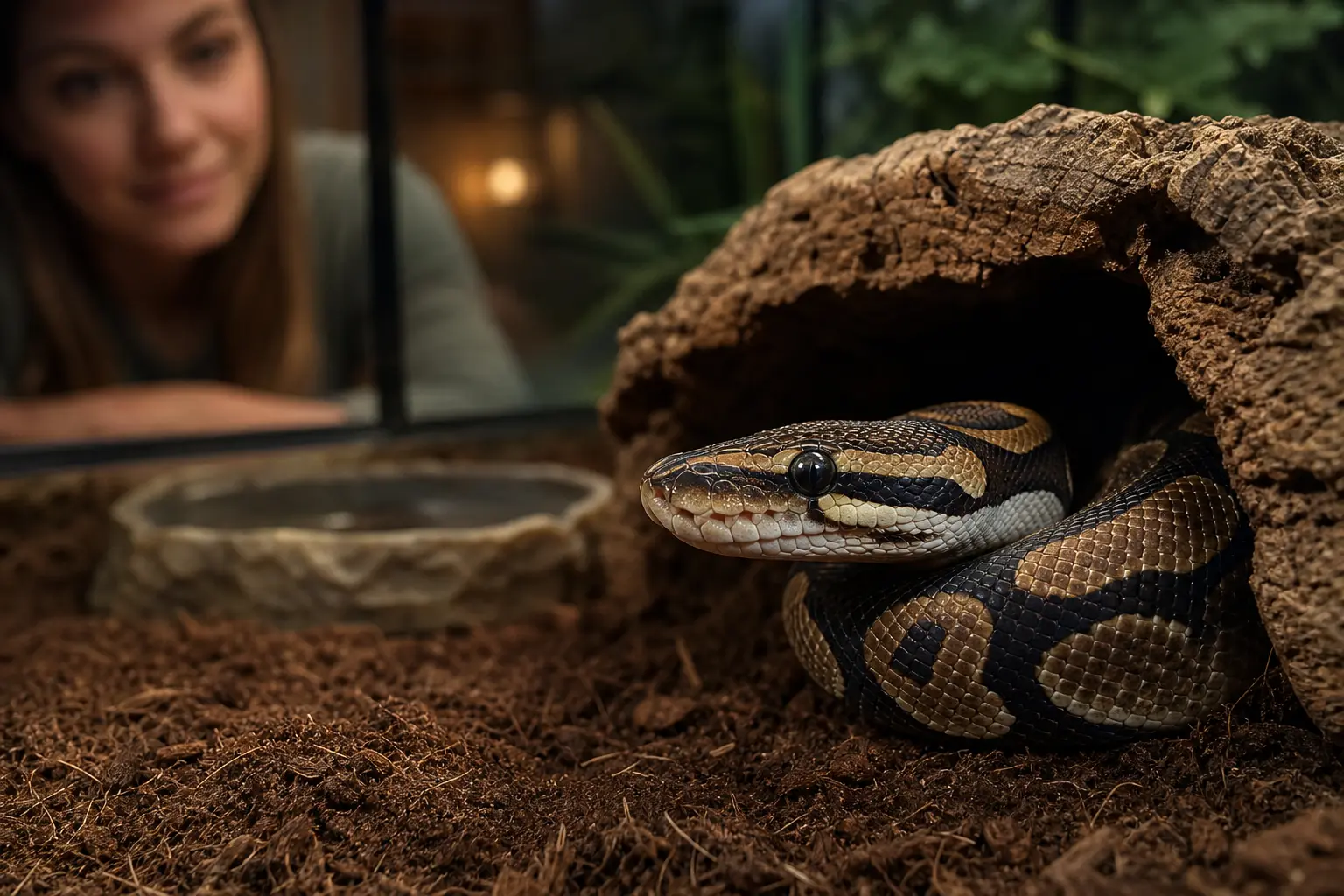
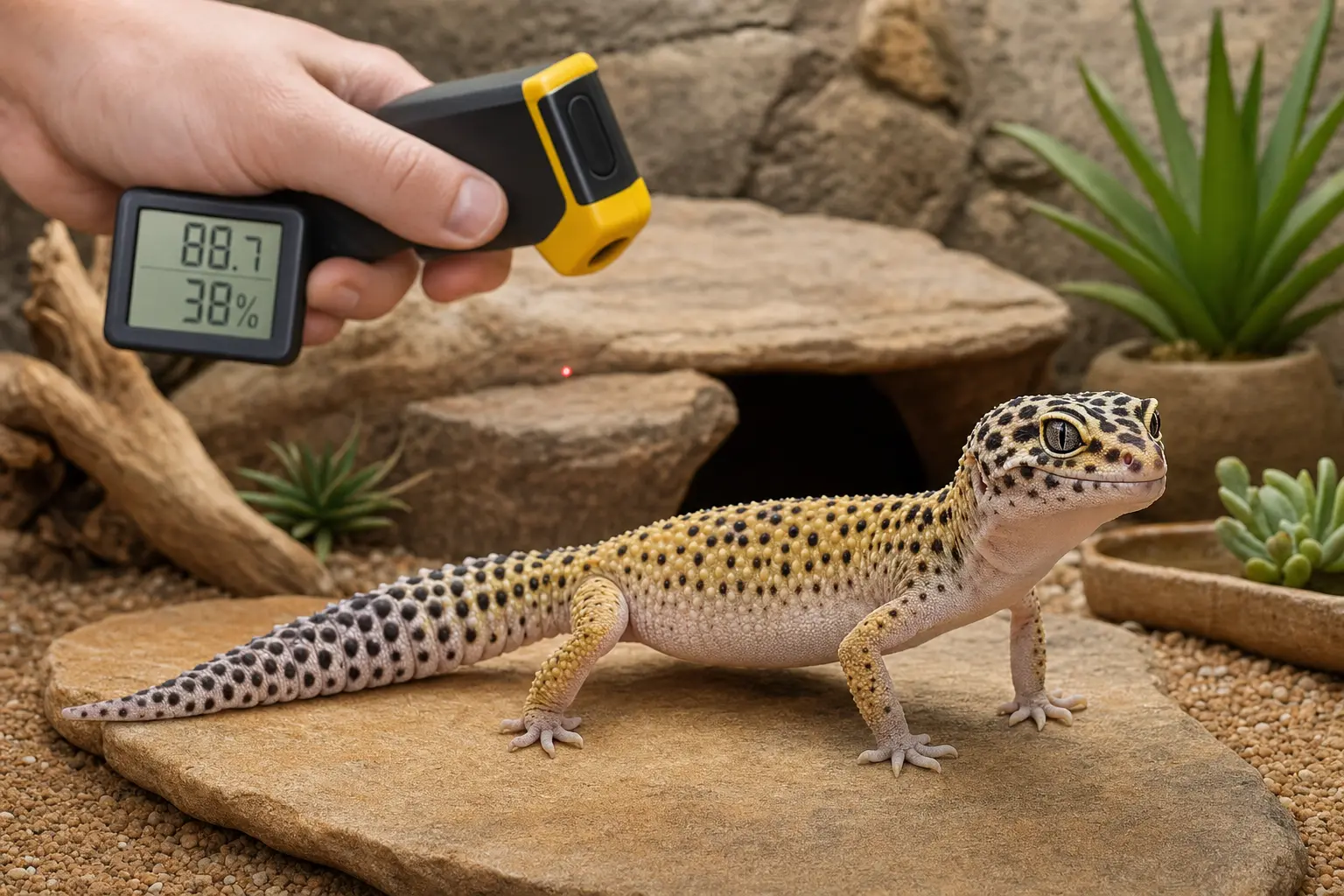
Keep normal hiding available
Provide snug cover in the usable warm, cool, humid, bright, and shaded areas required by the species. An animal should not have to choose between feeling safe and regulating its body.
Behavior
Hiding can be normal. A sudden or lasting change matters when the rest of the animal's pattern changes too.
Protect the animal's sense of security while checking the measured habitat and everyday routine.
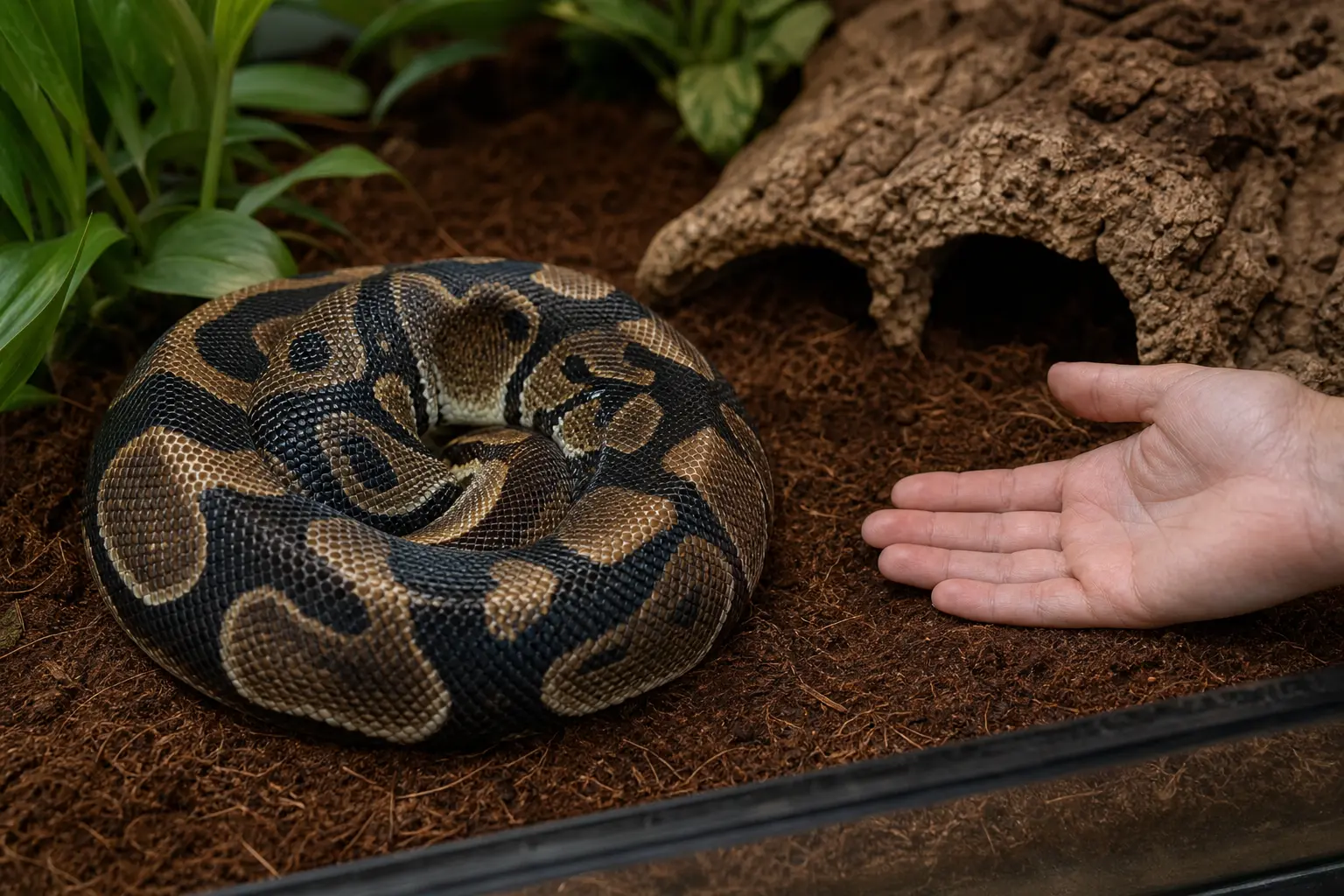
Provide snug cover in the usable warm, cool, humid, bright, and shaded areas required by the species. An animal should not have to choose between feeling safe and regulating its body.
New arrivals often need quiet, predictable care with minimal handling. Keep household traffic low, maintain the established food and light rhythm, and avoid repeatedly rearranging the habitat.
Recheck temperatures, humidity, lighting, waste, feeding, shed, and body condition. Call a reptile veterinarian when hiding comes with weight loss, breathing change, poor movement, injury, repeated refusal, or another persistent departure from normal.
Choose the next focused guide for stress, hiding & settling in.
Three optional picks matched to this page. Check adult size, species-specific care targets, and product compatibility before buying.
Affiliate links: Furball Cove may earn from qualifying purchases at no extra cost to you.
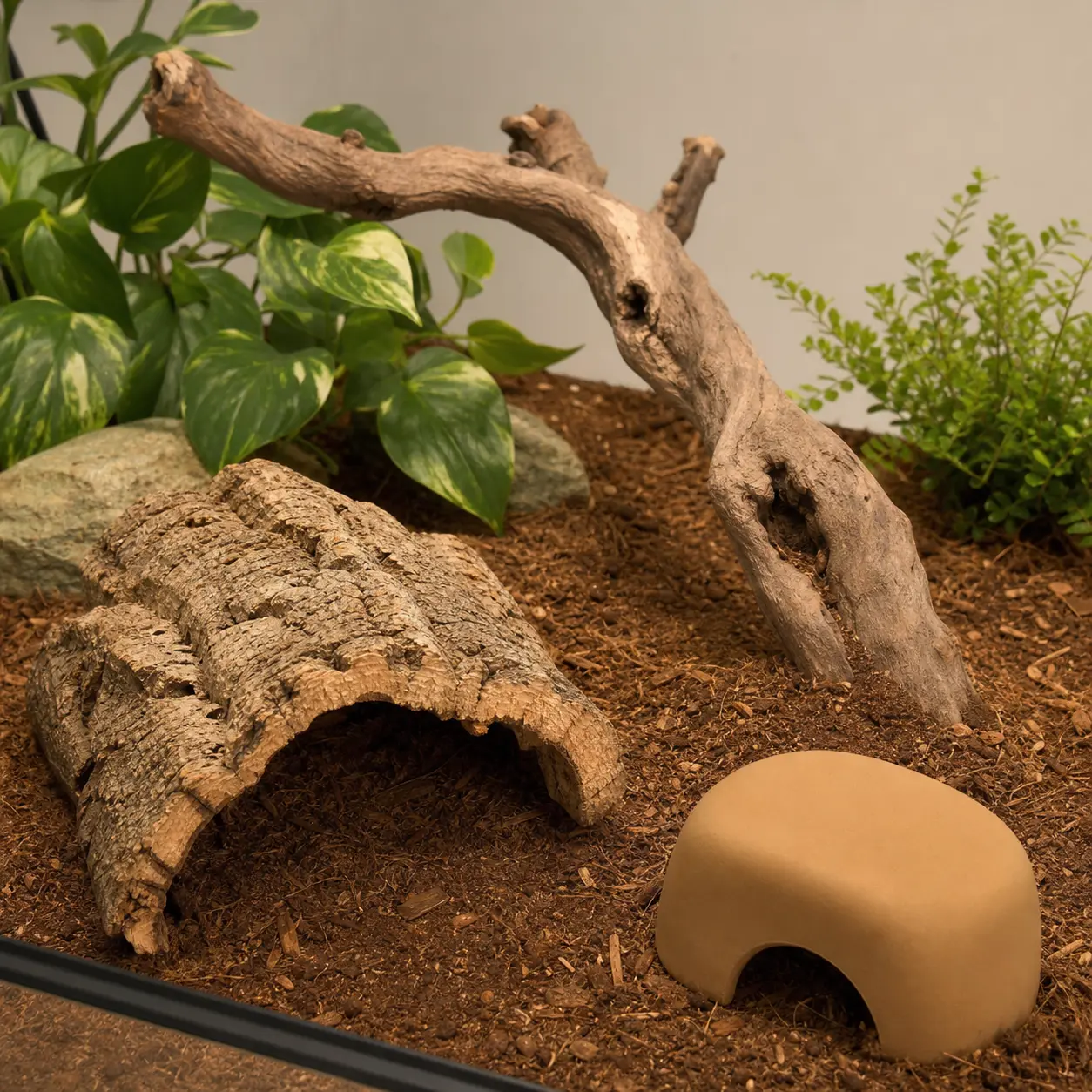
Adds textured cover that can work on the ground or as stable climbing structure when firmly supported.
Secure cover · Stabilize before useCompare Cork-bark hide options
Makes consistent weight checks possible between veterinary visits; use the same safe container and schedule each time.
Trend tool only · Use a safe containerCompare Digital gram scale options
Keeps dates, readings, weight, appetite, shedding, waste, and questions together for clearer veterinary conversations.
Observation record · Not a diagnosisCompare Reptile care log options