Urgent help
When Your Reptile Needs Help Now
A reptile in sudden serious distress needs an urgent call to a reptile veterinarian or emergency clinic.
Call before you travel, keep your reptile quiet, and follow the clinic's transport advice.
Call now for these signs
One urgent sign is enough to make the call.
Breathing is hard
Gasping, a stretched neck, clear effort with each breath, or open-mouth breathing away from normal basking should not wait.
Movement changes that should not wait
Seizures, severe weakness, loss of balance, paralysis, or being unable to right the body needs an immediate call to a reptile veterinarian.
There is a serious injury
Uncontrolled bleeding, a deep wound, a burn, a shell fracture, crushing injury, or exposed tissue needs hands-on care.
They become very unwell very quickly
Unresponsiveness, repeated regurgitation, severe swelling, or straining with weakness is enough reason to call now.
While you call
Keep the next steps simple and useful.
Phone before leaving
Tell the clinic which reptile you have, what you can see, when it began, and whether breathing and movement look normal.
Keep the trip calm
Give your reptile quiet, security, and as little handling as possible while you prepare to travel.
Bring the useful details
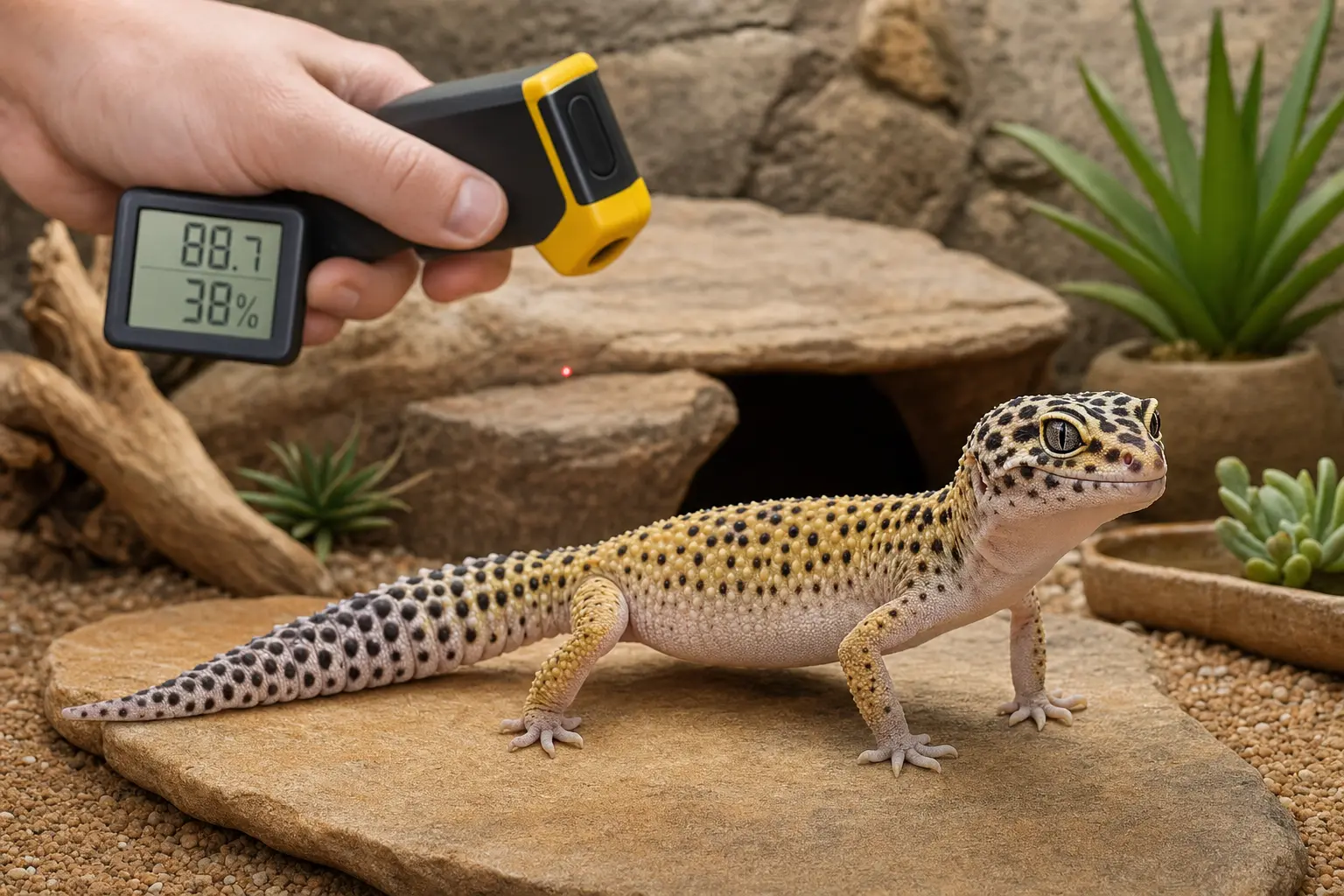
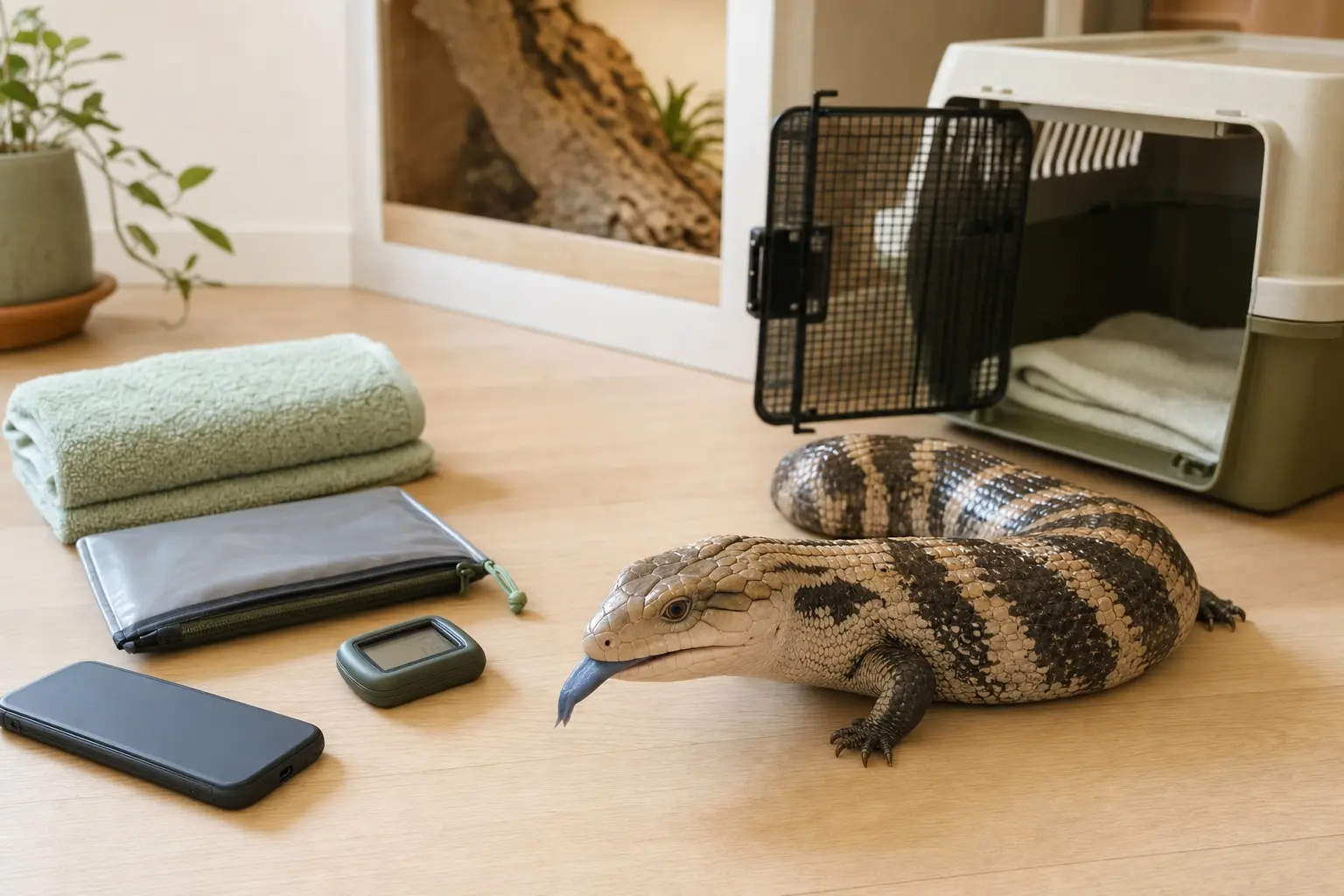
Take recent weight, meals, waste, shed, and measured habitat readings, along with a photo or short video if you already have one.
Travel securely
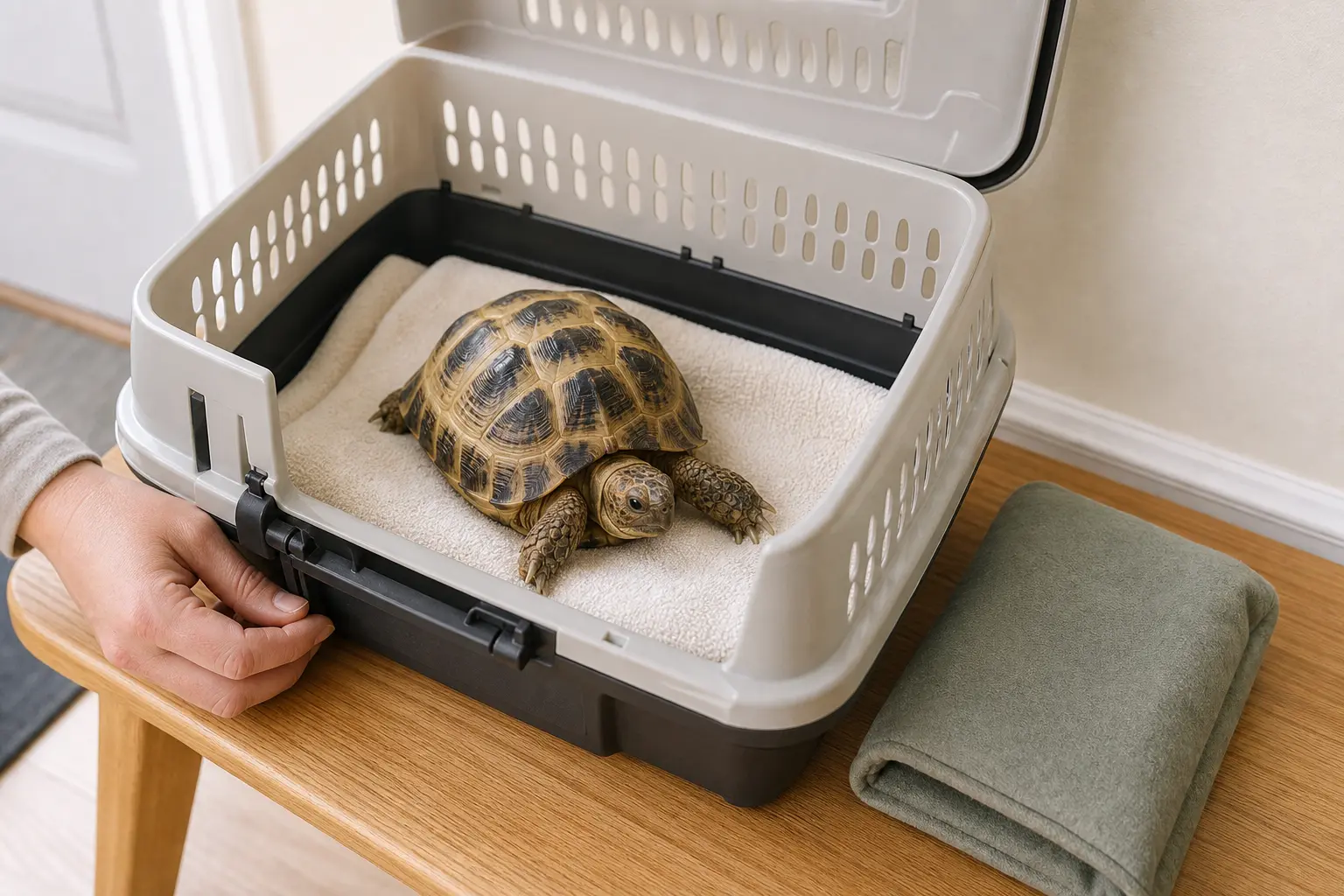
Use a ventilated, escape-resistant carrier with a clean liner.
Keep home care simple
The useful things you can do are call, observe, keep your reptile secure, and prepare a calm journey.
- Do not force food, water, or medicineWait for instructions from the veterinarian who is helping with this case.
- Do not add unregulated heatKeep the familiar species-appropriate setup stable unless the clinic advises a change.
- You do not need a diagnosis firstDescribe what changed and how quickly. The clinic can decide what the next step should be.